Articles by Adam Thierer 
 Senior Fellow in Technology & Innovation at the R Street Institute in Washington, DC. Formerly a senior research fellow at the Mercatus Center at George Mason University, President of the Progress & Freedom Foundation, Director of Telecommunications Studies at the Cato Institute, and a Fellow in Economic Policy at the Heritage Foundation.
What would it take to create a more secure Internet? That’s what John Markoff explores in his latest New York Times article, “Do We Need a New Internet?” Echoing some of the same fears Jonathan Zittrain articulates in his new book The Future of the Internet, Markoff wonders if online viruses and other forms of malware have gotten so out-of-control that extreme measures may be necessary to save the Net. Compared to when cyber-security attacks first started growing over 20 years ago, Markoff argues that:
[T]hings have gotten much, much worse. Bad enough that there is a growing belief among engineers and security experts that Internet security and privacy have become so maddeningly elusive that the only way to fix the problem is to start over.
Like many others, Markoff fingers anonymity as one potential culprit:
The Internet’s current design virtually guarantees anonymity to its users. (As a New Yorker cartoon noted some years ago, “On the Internet, nobody knows that you’re a dog.”) But that anonymity is now the most vexing challenge for law enforcement. An Internet attacker can route a connection through many countries to hide his location, which may be from an account in an Internet cafe purchased with a stolen credit card. “As soon as you start dealing with the public Internet, the whole notion of trust becomes a quagmire,” said Stefan Savage, an expert on computer security at the University of California, San Diego.
Consequently, Markoff suggests that:
A more secure network is one that would almost certainly offer less anonymity and privacy. That is likely to be the great tradeoff for the designers of the next Internet. One idea, for example, would be to require the equivalent of drivers’ licenses to permit someone to connect to a public computer network. But that runs against the deeply held libertarian ethos of the Internet.
Indeed, not only does it run counter to the ethos of the Net, but as Markoff rightly notes, “Proving identity is likely to remain remarkably difficult in a world where it is trivial to take over someone’s computer from half a world away and operate it as your own. As long as that remains true, building a completely trustable system will remain virtually impossible.” I’ve spent a lot of time writing about that fact here and won’t belabor the point other than to say that efforts to eliminate anonymity for the entire Internet would prove extraordinarily intrusive and destructive — of both the Internet’s current architecture and the rights of its users. There’s just something about a “show-us-you-papers,” national ID card-esque system of online identification that creeps most of us out. That’s why I spend so much time fighting age verification mandates for social networking sites and other websites; it’s the first step down a very dangerous road.
But what if we could apply such solutions in a narrower sense? That is, could we create more secure communities within the overarching Internet superstructure that might provide greater security? Markoff starts thinking along those lines when he suggests…
Continue reading →
Here’s some good background and analysis from the Congressional Research Service (CRS) about the history and constitutional issues surrounding the Fairness Doctrine. (Matt Lasar has a summary of it over at Ars). The report, authored by CRS legislative attorney Kathleen Ann Ruane, does a nice job of outlining why, given heightened Supreme Court scrutiny of speech controls since the Red Lion days, the Fairness Doctrine would face serious constitutional scrutiny is it was re-instituted today:
It is possible that, in light of the proliferation of different types of media outlets since Red Lion, the Supreme Court will abandon the scarcity rationale for applying a lower standard of scrutiny to restrictions on broadcasters’ speech. If the scarcity rationale is abandoned, the Court will likely begin to apply strict scrutiny to broadcaster speech restrictions like the Fairness Doctrine. Because the Supreme Court has struck down regulations similar to the Fairness Doctrine when applied to other types of media, it seems unlikely that the Fairness Doctrine would survive review under strict scrutiny.
[…]
Assuming that the Supreme Court would continue to apply intermediate scrutiny to government restrictions on broadcasters’ speech, the Court would then need to decide whether the Fairness Doctrine withstands such scrutiny. The Court may choose to uphold
Red Lion and the Fairness Doctrine under the principle of stare decisis, which requires courts to adhere to precedent. The Court also may choose to analyze a newly established Fairness Doctrine in light of evidence regarding its effects on speech that has developed since the Red Lion decision. To do so, it would have to answer two questions: (1) whether the Fairness Doctrine advances a substantial government interest, and (2) whether the doctrine is narrowly tailored to achieve that interest.
But it most certainly would not pass muster is applied to cable or satellite:
Continue reading →
So, the Federal Trade Commission (FTC) released its revised “Self-Regulatory Principles for Online Behavioral Advertising” today and it’s bound to generate a lot of commentary from those privacy advocates who seem to believe that we can never go far enough in regulating the flow of information online or limiting commercial marketing. Berin Szoka and I will have a PFF paper out shortly [update: here it is] discussing the report in more detail, but for now I just wanted to mention one thing that peeves me about this report and the debate about online advertising in general.
The thing I find so intriguing about reports like this is the way that they implicitly assume that consumers are utterly helpless sheep who completely fail to understand how to protect their own privacy,
to the extent those consumers are even sensitive about it at all. Specifically, there’s always this argument about how consumers don’t have “adequate notice” or “meaningful choice” when it comes to website privacy policies or how their information might be collected or used to serve up better ads.
Frankly, I think these concerns have been completely blown out of proportion by privacy zealots who would make just about any use of information, or effort to use it to target ads, a federal crime. Worse yet, there’s a ‘something-for-nothing’ element to these debates that always irks me. Some of these regulatory advocates seem to be under the impression that all these free Internet services and innovations fall to us like manna from heaven and that the good times will just keep on rollin’ right along even as they advocate regulations that would completely undercut the Internet’s primary economic engine: targeted advertising.
Regardless, here’s my little contribution to the movement toward simpler privacy policies to make sure web users understand what they are getting into and why they have to give a little to get a little. I want every Internet company to adopt the following privacy policy:
Continue reading →
Sorry, this has nothing to do with tech policy, but I just had to comment on Eugene Robinson’s latest column in the Washington Post singing the praises of an unbounded stimulus plan. For those of you not familiar with Robinson’s work, you’re really missing a treat. Eugene Robinson and his colleague Harold Meyerson compete on a weekly basis in the Post for the title of “World’s Most Rhetorically Outrageous (and Economically Illiterate) Newspaper Columnist.” It’s a heated race. These guys really know no shame. [Note my earlier essay about Meyerson’s effort to equate media reinvention efforts with terrorism!]
Anyway, in his latest column, Robinson firmly establishes himself as the new leader in this ongoing race with the following gem:
The House of Representatives loaded up the bill like a Christmas tree as powerful Democrats found room for their pet projects. This was a good thing, not an outrage. Hundreds of millions of dollars for contraceptives? To the extent that those condoms or birth-control pills are made in the United States and sold in U.S. drugstores, that spending would be stimulative in more ways than one.
Oh, wow. Just wow. Taxpayer funding for birth control as a stimulus to drugstores and domestic pill makers. By that same reasoning, “stimulating” the sale of sex toys would benefit adult bookstores and the domestic dildo industry.
Hey, why not. The more spending the better, right? Who cares if we’re bankrupting our children.
Over at Ars, Ryan Paul has an appropriately sharp-tongued response to the Mozilla Foundation’s troubling move to become a cheerleader for the European Commission’s ongoing antitrust efforts against Microsoft. Apparently Mozilla will assist the EC’s investigation “by offering expertise about the browser market.”
Paul focuses on what’s wrong with this in both a micro and macro sense. He rightly points out that the potential remedies here do not bode well for the future of this sector, since regulatory tinkering with high-tech product standards is bound to end badly and create a terrible precedent for future interventions. “It’s hard to find a rational argument in favor of mandatory standards enforcement,” Paul says. “It would be punitive and unhelpful to the advancement of the web.” Moreover, Paul notes that things have never looked better on the browser front:
Claims that Microsoft’s monopoly status has eliminated competition in the browser market sound hollow in the face of the profoundly vibrant browser market that exists today. The record-setting launch of Firefox 3 added up to over 8 million downloads in the first 24 hours alone. Firefox’s global market share continues to climb every month and the browser has grabbed almost 30 percent of the European market.
And let’s not forget about those two little companies called Google and Apple who have competing products in the field! They’re making serious inroads in the browser wars. Moreover, Microsoft is struggling to hold on to whatever “dominance” they have left in their core market: OS. As Paul concludes:
To the observant tech enthusiast, all signs seem to indicate that Microsoft’s monopoly is on its way out. The Redmond giant is in no danger of annihilation, but it’s definitely not positioned to dictate terms to the rest of the industry anymore.
But what is perhaps most shocking about Mozilla’s call for intervention is the way that Mozilla Foundation chairperson Mitchell Baker minimizes the importance of not just Firefox, but the entire open source movement, when justifying EC intervention in this marketplace.
Continue reading →
 On this episode of “Tech Policy Weekly,” we’re launching a new format called “Tech Book Corner” that will feature occasional conversations with the authors of important new books about technology policy and the other issues that we debate frequently at the Tech Liberation Front blog.
On this debut episode of Book Corner, we are joined by John Palfrey, a professor of law at Harvard University and the co-director of the Berkman Center for Internet & Society at Harvard. Along with his Berkman Center colleague Urs Gasser, Prof. Palfrey has recently co-authored Born Digital: Understanding the First Generation of Digital Natives, which was published last summer by Basic Books and which you can find out more information about at www.borndigitalbook.com. [Incidentally, I reviewed Born Digital here last October and I also named it one of the most important technology policy books of 2008.]
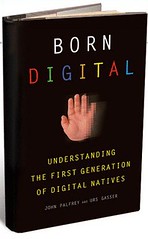
In our discussion, Prof. Palfrey explains who exactly counts as a “digital native” and tells us why he decided to write a book about them. He discusses why he believes that there has been some overreaction by older generations to fears about this Digital Generation and he argues that we need “to separate what we need to worry about from what’s not so scary” and “what we ought to resist from what we ought to embrace.” He then outlines how we should think about these issues and concerns going forward, and he stresses the importance of “balancing caution with encouragement” as we do so. Finally, he then applies that framework to three specific issues: privacy, child safety, and copyright.
It’s an interesting conversation and you can begin listening to it immediately by downloading the MP3 file here or by just clicking the play button below!
[display_podcast]
 Google’s latest major launch is “Latitude,” a geo-location service that lets users find friends on a digital map and then network with them. These services are often referred to as “LBS,” which stands for “location-based services.” I wrote about LBS here before in my essay on “The Next Great Technopanic: Wireless Geo-Location / Social Mapping.” As I pointed out in that piece, LBS raise privacy concerns with some people because, by their nature, these technologies involve the tracking of users.
But I’ve argued that those concerns are generally over-blown, especially because you have to download and opt-in to these services. In other words, you know what you’re getting into. Moreover, companies who offer these services, like Loopt and now Google, go out of their way to offer privacy safeguards. Indeed, even some privacy activists agree.
For example, Michael Zimmer of the School of Information Studies at the University of Wisconsin-Milwaukee, is someone who pays close attention to privacy issues and is often critical of Google and other companies for supposedly not paying enough attention to privacy concerns. In the case of Latitude, however, he argues that “Google Actually Got it (Mostly) Right.” Here’s his snapshot of “what Google’s done to help give users control of their information flows in Latitude”:
Continue reading →
 Eric Goldman is the man. His “Technology & Marketing Law Blog” is must-reading for cyberlaw geeks; packed with indispensable updates and insights about breaking development in the world of Internet law.
Anyway, he’s just published his “2008 Cyberlaw Year-in-Review,” which provides a comprehensive overview of the major developments and cases from the past year. This is the sort of compendium that I used to have to spend big bucks to get from DC law firms. And Eric just gives it away as a public resource. God bless him.
I’ve been hammering Jonathan Zittrain pretty hard here over the past year for the thesis he sets forth in The Future of the Internet and How to Stop It that digital “generativity” is at risk today. The reason I have been doing so is because all signs point in the exact opposite direction, and more so with each passing day. Contrary to Jonathan’s fear that the Internet and digital technologies are growing more closed, tethered, and sterile, I have argued that the facts on the ground show us how the world is actually becoming far more open, untethered, and innovative. And that’s true even for the technology that Jonathan singles out in the book for special scorn — the iPhone.
Consider David Pogue’s post today on the
New York Times‘ technology blog today entitled “So Many iPhone Apps, So Little Time.” Pogue reports that:
there are now 15,000 programs available on the App Store, and so many more are flooding in that Apple’s army of screeners can’t even keep up. I keep meaning to write a thoughtful, thorough roundup of the very best of these amazing programs, but every day that I don’t do it, the job becomes more daunting.
[…]
Apple, which runs the store, keeps 30 percent of each sale. Even so, Ocarina [an application Pogue discusses in his essay] demonstrates that a programmer can make a staggering amount of money from the iPhone store. It’s a crazy new software model that I don’t remember seeing anywhere else. It’s not a boxed software program for $600, or even a shareware program you download for $25. It’s a buck a copy.
The beauty here is that at these prices, there’s very little risk in trying something out. How many software programs have you bought for your Mac or PC? Two? Four? Well, the average iPhone owner may wind up installing 10, 20 or 30 programs. In all, according to Apple, iPhone owners have downloaded 500 million copies of these programs. Half a billion–since last July.
There’s a lot of gloom in the tech industry (and every industry, for that matter). But even when the economy is crashing down around us, there’s still amazing power in a single good idea. And the one on display here–pricing software so low that millions of people buy it without batting an eye–is turning a few clever programmers into millionaires.
I ask you: Does this sound like a world that is growing less generative, as Zittrain argues? Because it sure doesn’t sound like it to me. Moreover, if you still don’t think the iPhone is open enough, then there’s always a simple solution to that: just buy another phone!
Online child safety — especially the fear of predators lurking on social networking sites (SNS) — continues to spur calls by state and federal lawmakers for regulation. At first, some federal lawmakers advocated outright bans on SNS in schools and libraries via the Deleting Online Predators Act (DOPA). Meanwhile, state and local lawmakers — specifically state Attorneys General (AGs) — have been even more vociferous in their calls for regulation in the form of mandatory age verification for social networking sites, which would cover a broad swath of online sites and activities according to their definitions of SNS. But the question that ultimately gets lost in this debate is: Just how much risk do social networking sites really pose for teens? Which risks are real and which are overblown? And what’s the best way to deal with the risks that we find to be legitimate?
 Nancy Willard devotes her life to answering those questions. Willard is one of America’s leading experts on online safety and risk prevention. She runs the Center for Safe and Responsible Internet Use and she is the author of two outstanding books, Cyberbullying and Cyberthreats and Cyber-Safe Kids, Cyber-Savvy Teens. In my opinion, Willard’s general approach to online child safety is the most enlightened, level-headed, and likely to be effective. That’s because Willard focuses on putting fears in perspective, identifying the actual risks that kids face online, and devising sensible strategies to deal with risks and problems as they are discovered. Her approach is holistic and built upon sound data, targeted risk-identification strategies, and time-tested education and mentoring methods. For my money, it’s the most sensible approach to online safety issues. In fact, when other parents ask me for “just one thing” to read on the topic, I usually recommend Willard’s work — especially her amazing book Cyber-Safe Kids, Cyber-Savvy Teens. And her background in early childhood education, special education for “at risk” children with emotional and behavior difficulties, as well as experience in computer law, means she is uniquely suited to be analyzing these issues. In sum, this is woman we should all be closely listening to on these issues.
Recently, Willard has been responding to criticisms that state AGs have leveled against the Internet Safety Technical Task Force (ISTTF) and its final report. [Disclaimer: I was a member of the ISTTF.] I’ve already outlined the ISTTF’s work at length here, but the three key takeaways from the report were that:
- the risk of predation on social network sites has been over-stated; the data suggest that cyber-bullying is the bigger problem on SNS;
- there is no silver-bullet technical solution to online child safety concerns, and mandatory age verification, in particular, would not make kids safer online but could even create bigger problems in the long-run;
- education and empowerment are the real keys to keeping kids safer online.
Continue reading →

 The Technology Liberation Front is the tech policy blog dedicated to keeping politicians' hands off the 'net and everything else related to technology.