In an earlier post, I mentioned an important new online child safety task force report that has just been released from the “Point Smart. Click Safe.” Blue Ribbon Working Group. It’s a great report and I encourage you to read the whole thing. It was my great pleasure to serve on this task force, and as we started finalizing our conclusions and recommendations, I started thinking about how much of what we were finding and recommending was consistent with what past online safety task forces had also concluded.
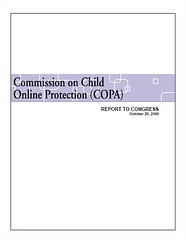
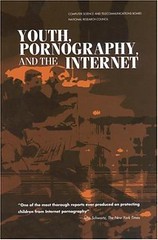
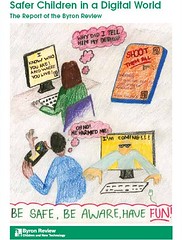
By way of background, over the past decade, five major online safety task forces or blue ribbon commissions have been convened to study online safety issues. Two of these task forces were convened in the United States and issued reports in 2000 (“COPA Commission”) and 2002 (“Thornburgh Commission“). Another was commissioned by the British government in 2007 and issued in a major report in March 2008 (“Byron Review“). Finally, two additional online safety task forces were formed in the U.S. in 2008 and concluded their work, respectively, in January (“Internet Safety Technical Task Force“) and July (“Point Smart. Click Safe.“) of 2009. [And yet another task force — the Online Safety Technology Working Group — was recently formed and has now gotten underway.]
In a new PFF white paper, ”
Five Online Safety Task Forces Agree: Education, Empowerment & Self-Regulation Are the Answer,” I walk through a chronological summary of each of these past task forces [click on covers of each report below to read them in their entirety] and highlight some of the similar themes and recommendations from them.

 Continue reading →
You really have to hand it to the folks over at the (Un)
Ah yes, “Internet fairness.” Who can possibly be against it? Well, before you rush to click send on that UnFree Press form letter, let’s be clear what this effort is really all about. Free Press claims that the Massa bill is needed because “phone and cable giants [are] weighing schemes to hike prices, shut down the free-flowing Web and keep user innovation in check.” How are those companies doing that? Tiered pricing! Rep. Massa says that, “Time Warner has announced an ill-conceived plan to charge residential and business broadband fees based on the amount of data they download.” Oh my God, no… you mean some people might be charged for the costs they impose? What’s next? Are we going to force people to pay for their own energy use by metering gasoline, electricity, or water? Think of the horror! (This is sarcasm, folks. All those things are metered currently. And yet, somehow, the Earth hasn’t spun off its axis.)
Like all the other propaganda produced at the Free Press techno-spin factory, their latest crusade is based on a combination of outright lies and blatant economic ignorance. Metering broadband access is not an effort “to restrict Internet use,” as Free Press claims. Rather, like every other metered system under the sun, it’s an effort to price a scarce resource in such a way so as to
maximize use. Broadband operators don’t sit around all day scheming to find ways to decrease network usage. They wouldn’t make any money that way!! They need to find business models that encourage increased uptake while also investing in and growing their networks to meet new demand and competitive challenges.
Moreover, there are other pro-consumer reasons for companies to consider metering options. Unless it is your goal to allow some particularly aggressive users to be subsidized by all other users, it is sometimes sensible to price usage based on demand. If you don’t, you potentially create a perverse incentive for a small handful of over-grazers to to be feeding at the trough at everyone else’s expense. As economist Russell Roberts aptly noted in the title of a famous 1995 Wall Street Journal editorial, “If You’re Paying, I’ll Have Top Sirloin.” Thus, you would never want to make the “all-you-can-eat” pricing model the only option for the provision of a scarce resource. Even if you choose not to deploy it, it is useful to have the metered pricing model available in case you need to charge the over-grazers at some point.
Continue reading →
As I mentioned in a post last month, dozens of comments were filed with the Federal Communications Commission (FCC) as part of the agency’s “Child Safe Viewing Act” Notice of Inquiry. Again, this proceeding was required under the “Child Safe Viewing Act of 2007,” which Congress passed last year and President Bush signed last December. The goal of the bill and the FCC’s proceeding (MB 09-26) is to study “advanced blocking technologies” that “may be appropriate across a wide variety of distribution platforms, including wired, wireless, and Internet platforms.” I filed 150+ pages worth of comments in this matter, and here’s my analysis of why this bill and the FCC’s proceeding are worth monitoring closely.
Anyway, this week saw many of the same groups that filed before (and some new ones) file reply comments about those earlier submissions. To make things simple, I have collected most of the notable reply comments down below in case anyone is interested.
Continue reading →
As part of our ongoing series that tracks the gradual transition of video content to the boob tube to online outlets, I want to draw everyone’s attention to two excellent articles in today’s Washington Post about this trend. One is by Paul Fahri (“Click, Change: The Traditional Tube Is Getting Squeezed Out of the Picture“) and the other by Monica Hesse (“Web Series Are Coming Into A Prime Time of Their Own“). I love the way Paul opens his piece with a look forward at how many of us will be explaining the “old days” of TV viewing to our grand kids:
S
it down, kids, and let Grandpa tell you about something we used to call “watching television.”
Why, back when, we had to tune to something called a “channel” to see our favorite programs. And we couldn’t take the television set with us
; we had to go see it!
Ah, those were simpler times.
Oh, sure, we had some technology we thought was pretty fancy then, too, like your TiVo and your cable and your satellite, which gave us a few hundred “channels” of TV at a time. Imagine that — just a few hundred! And we had to pay for it every month! Isn’t the past quaint, children?
Well, it all started to change around aught-eight, or maybe ’09, for sure. That’s when you no longer needed a television to watch all the television you could ever want.
Yes, I still remember it like it was yesterday . . .
Too true. Anyway, Paul goes on to document how some folks have already completely made the jump to an online-online TV existence and are doing just fine, although the idea of us all gathering around the tube to share common experiences may be a causality of the migration to smaller screens, he notes.
Continue reading →
I’ve been blathering on about this week’s big Supreme Court decision in FCC v. Fox, [See Parts 1, 2, 3, 4, 5], so I thought I would just wrap this series of essays up with a collection of other articles and views on the decision in case readers are looking for alternative perspectives:
Mainstream Media Stories
Conservative, Religious, & “Family” Groups
Free Speech Advocates or Other Views
I’ve been commenting on yesterday’s Supreme Court decision in FCC v. Fox, and criticizing the logic of the majority’s decision the case, which was driven solely by procedural / admin law considerations. [See Part 3.] I also discussed Justice Thomas’s very interesting concurring opinion, which took a serious look at the constitutional issues in play here and signaled his willingness to potentially overturn Red Lion and Pacifica. [See Part 4.] In this fifth installment, I will briefly outline some of the dissenting arguments.
Justice Stephen Breyer penned a lengthy dissent and was joined by Justices Stevens, Souter and Ginsburg. Like the Scalia majority decision, the Breyer dissent also focused on the procedural / APA-related issues at stake in the case. Breyer, however, was not buying the FCC’s assertion that it had adequately justified its significant expansion of indecency enforcement in recent years. Whereas the majority deferred to the agency and found “no basis in the Act or this Court’s opinions for a requirement that all agency change be subjected to more searching review,” the four dissenting justices saw things quite differently. Breyer noted that while the “law grants those in charge of independent administrative agencies broad authority to determine relevant policy,” it “does not permit them to make policy choices for purely political reasons nor to rest them primarily upon unexplained policy preferences.” He goes on to appropriately note that:
Federal Communications Commissioners have fixed terms of office; they are not directly responsible to the voters; and they enjoy an independence expressly designed to insulate them, to a degree, from “‘the exercise of political oversight.’” [citations omitted] That insulation helps to secure important governmental objectives, such as the constitutionally related objective of maintaining broadcast regulation that does not bend too readily before the political winds. But that agency’s comparative freedom from ballot-box control makes it all the more important that courts review its decision making to assure compliance with applicable provisions of the law — including law requiring that major policy decisions be based upon articulable reasons.
Breyer goes on to restate much of what is already clear from the APA and all that surrounds it. “[A]n agency must act consistently. The agency must follow its own rules,” he notes. Moreover: Continue reading →
With today’s historic Supreme Court decision in FCC v. Fox, I have been commenting on the logic and implications of the decision. Part 3 dealt with the majority’s decision in the case, which was driven solely by procedural / admin law considerations. This installment will discuss the very interesting concurring opinion penned by Justice Thomas, which is the only one that takes a serious look at the constitutional foundations of the FCC’s current regulatory regime. While I was sad to see Justice Thomas join the majority’s decision upholding the FCC’s radical expansion of speech regulation in recent years, he joined that majority only on straightforward procedural grounds. On the underlying constitutional issues at stake here, it is clear from his concurring statement that he is ready for the Court to hear a challenge to the previous court precedents and traditional regulatory doctrines that have long supported FCC speech and media controls.
“I write separately,” Justice Thomas says “to note the questionable viability of the two precedents that support the FCC’s assertion of constitutional authority to regulate the programming at issue in this case.” Specifically, he addresses the two key cases upon which almost all FCC speech regulation rests: Red Lion Broadcasting Co. v. FCC, 395 U. S. 367 (1969) and FCC v. Pacifica Foundation, 438 U. S. 726 (1978). Thomas continues: “Red Lion and Pacifica were unconvincing when they were issued, and the passage of time has only increased doubt regarding their continued validity.”
BOOM! With those words, Justice Thomas has dropped the hammer and taken what will hopefully be the first swing at toppling the house of cards that is modern FCC speech regulation. Justice Thomas goes on to itemize the many problems with what I have referred to as “America’s Jurisprudential Twilight Zone” when it comes to how we apply the First Amendment to media platforms in this country. He states:
Continue reading →
As I noted earlier, the U.S. Supreme Court today handed down a historical First Amendment decision in the case of Federal Communications Commission v. Fox Television Stations. The Court ruled in the FCC’s favor by a 5-4 margin. My initial general thoughts are here. In this piece, I’ll talk a bit more about the majority’s decision in the case.
The most important thing to realize about the Court’s 5-4 decision in
FCC v. Fox is that the Court has intentionally dodged all the serious constitutional issues in play here and instead decided the case solely on procedural grounds. “We decline to address the constitutional questions at this time,” the majority says. (p. 26) Writing for the majority, Justice Scalia says:
There is… no basis in the Act or this Court’s opinions for a requirement that all agency change be subjected to more searching review. Although an agency must ordinarily display awareness that it is changing position… and may sometimes need to account for prior fact finding or certain reliance interests created by a prior policy, it need not demonstrate to a court’s satisfaction that the reasons for the new policy are better than the reasons for the old one. It suffices that the new policy is permissible under the statute, that there are good reasons for it, and that the agency believes it to be better, which the conscious change adequately indicates.
Of course, it’s not entirely unusual for the Court to decide important regulatory cases by sticking to administrative law / APA issues, but what’s different in this case is that we’re not talking about the regulation of widgets here. We are talking about the regulation of freedom of speech and expression. Shouldn’t the administrative law analysis change a bit when the issues at stake implicate profound constitutional imperatives? I think so, but the majority doesn’t address that.
Continue reading →
As anyone who has spent time searching for comments on the FCC’s website can tell you, the agency doesn’t exactly have the most user-friendly website. In the interest of making it easier for others to read the comments that came in last week in the agency’s “Child Safe Viewing Act” Notice of Inquiry, I have compiled all the major comments (those over 3 or 4 pages) and provided links to them below the fold.
Again, this proceeding was required under the “Child Safe Viewing Act of 2007,” which Congress passed last year and President Bush signed last December. The goal of the bill and the FCC’s proceeding (MB 09-26) is to study “advanced blocking technologies” that “may be appropriate across a wide variety of distribution platforms, including wired, wireless, and Internet platforms.” I filed 150+ pages worth of comments in this matter last week, and here’s my analysis of why this bill and the FCC’s proceeding are worth monitoring closely.
Continue reading →

 The Technology Liberation Front is the tech policy blog dedicated to keeping politicians' hands off the 'net and everything else related to technology.
Reply Comments in FCC’s “Child Safe Viewing Act” Notice of Inquiry
by Adam Thierer on May 20, 2009 · 17 comments
As I mentioned in a post last month, dozens of comments were filed with the Federal Communications Commission (FCC) as part of the agency’s “Child Safe Viewing Act” Notice of Inquiry. Again, this proceeding was required under the “Child Safe Viewing Act of 2007,” which Congress passed last year and President Bush signed last December. The goal of the bill and the FCC’s proceeding (MB 09-26) is to study “advanced blocking technologies” that “may be appropriate across a wide variety of distribution platforms, including wired, wireless, and Internet platforms.” I filed 150+ pages worth of comments in this matter, and here’s my analysis of why this bill and the FCC’s proceeding are worth monitoring closely.
Anyway, this week saw many of the same groups that filed before (and some new ones) file reply comments about those earlier submissions. To make things simple, I have collected most of the notable reply comments down below in case anyone is interested. Continue reading →