This week, the Trump Administration proposed a new policy framework for artificial intelligence (AI) technologies that attempts to balance the need for continued innovation with a set of principles to address concerns about new AI services and applications. This represents an important moment in the history of emerging technology governance as it creates a policy vision for AI that is generally consistent with earlier innovation governance frameworks established by previous administrations.
Generally speaking, the Trump governance vision for AI encourages regulatory humility and patience in the face of an uncertain technological future. However, the framework also endorses a combination of “hard” and “soft” law mechanisms to address policy concerns that have already been raised about developing or predicted AI innovations.
AI promises to revolutionize almost every sector of the economy and can potentially benefit our lives in numerous ways. But AI applications also raise a number of policy concerns, specifically regarding safety or fairness. On the safety front, for example, some are concerned about the AI systems that control drones, driverless cars, robots, and other autonomous systems. When it comes to fairness considerations, critics worry about “bias” in algorithmic systems that could deny people jobs, loans, or health care, among other things.
These concerns deserve serious consideration and some level of policy guidance or else the public may never come to trust AI systems, especially if the worst of those fears materialize as AI technologies spread. But
how policy is formulated and imposed matters profoundly. A heavy-handed, top-down regulatory regime could undermine AI’s potential to improve lives and strengthen the economy. Accordingly, a flexible governance framework is needed and the administration’s new guidelines for AI regulation do a reasonably good job striking that balance. Continue reading →
Over at the Mercatus Center Bridge blog, Trace Mitchell and I just posted an essay entitled, “A Non-Partisan Way to Help Workers and Consumers,” which discusses the new Federal Trade Commission’s (FTC) Economic Liberty Task Force report on occupational licensing.
We applaud the FTC’s calls for greater occupational licensing uniformity and portability, but regret the missed opportunity to address root problem of excessive licensing more generally. But while FTC is right to push for greater occupational licensing uniformity and portability, policymakers need to confront the sheer absurdity of licensing so many jobs that pose
zero risk to public health & safety. Licensing has become completely detached from risk realities and actual public needs.
As the FTC notes, excessive licensing limits employment opportunities, worker mobility, and competition while also “resulting in higher prices, reduced quality, and less convenience for consumers.” These are unambiguous facts that are widely accepted by experts of all stripes. Both the Obama and Trump Administrations, for example, have been completely in league on the need for comprehensive licensing reforms. Continue reading →
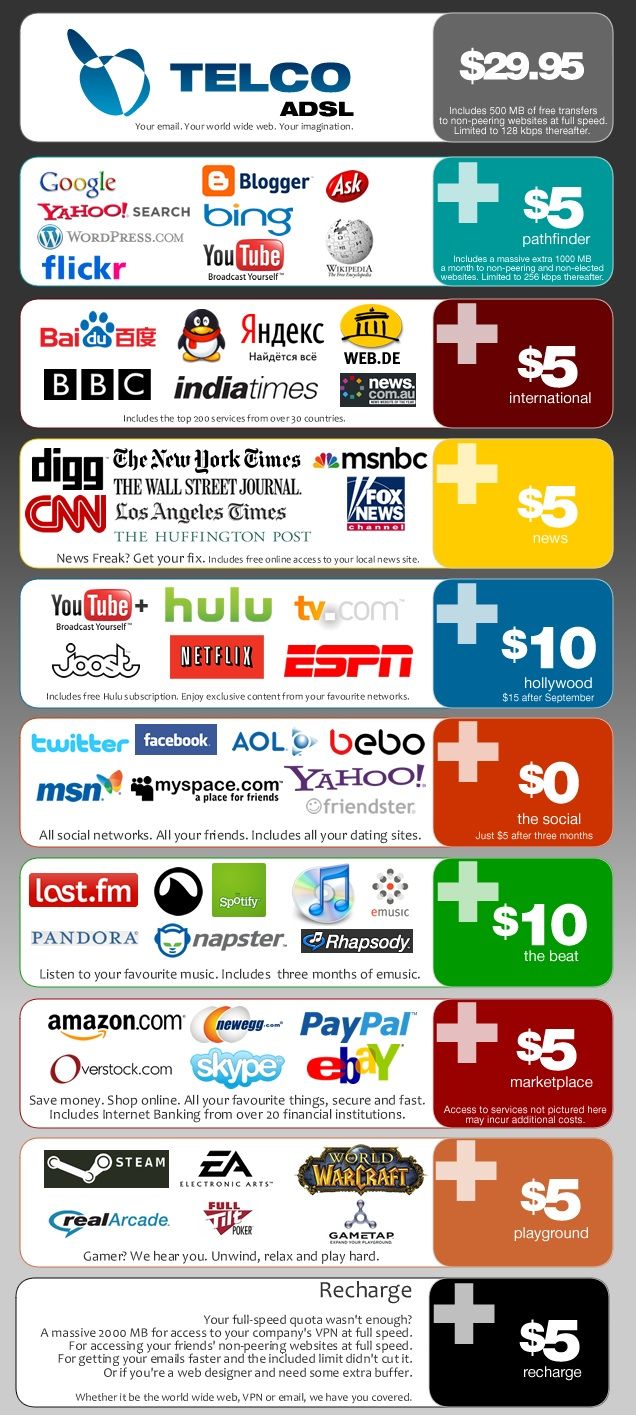
It’s becoming clearer why, for six years out of eight, Obama’s appointed FCC chairmen resisted regulating the Internet with Title II of the 1934 Communications Act. Chairman Wheeler famously did not want to go that legal route. It was only after President Obama and the White House called on the FCC in late 2014 to use Title II that Chairman Wheeler relented. If anything, the hastily-drafted 2015 Open Internet rules provide a new incentive to ISPs to curate the Internet in ways they didn’t want to before.
The 2016 court decision upholding the rules was a Pyrrhic victory for the net neutrality movement. In short, the decision revealed that the 2015 Open Internet Order provides no meaningful net neutrality protections–it allows ISPs to block and throttle content. As the judges who upheld the Order said, “The Order…specifies that an ISP remains ‘free to offer ‘edited’ services’ without becoming subject to the rule’s requirements.”
The 2014 White House pressure didn’t occur in a vacuum. It occurred immediately after Democratic losses in the November 2014 midterms. As Public Knowledge president Gene Kimmelman tells it, President Obama needed to give progressives “a clean victory for us to show that we are standing up for our principles.” The slapdash legal finessing that followed was presaged by President Obama’s November 2014 national address urging Title II classification of the Internet, which cites the wrong communications law on the Obama White House website to this day.
The FCC staff did their best with what they were given but the resulting Order was aimed at political symbolism and acquiring jurisdiction to regulate the Internet, not meaningful “net neutrality” protections. As internal FCC emails produced in a Senate majority report show, Wheeler’s reversal that week caught the non-partisan career FCC staff off guard. Literally overnight FCC staff had to scrap the “hybrid” (non-Title II) order they’d been carefully drafting for weeks and scrape together a legal justification for using Title II. This meant calling in advocates to enhance the record and dubious citations to the economics literature. Former FCC chief economist, Prof. Michael Katz, whose work was cited in the Order, later stated to Forbes that he suspected the “FCC cited my papers as an inside joke, because they know how much I think net neutrality is a bad idea.”
Applying 1934 telegraph and telephone laws to the Internet was always going to have unintended consequences, but the politically-driven Order increasingly looks like an own-goal, even to supporters. Former FCC chief technologist, Jon Peha, who supports Title II classification of ISPs almost immediately raised the alarm that the Order offered “massive loopholes” to ISPs that could make the rules irrelevant. This was made clear when the FCC attorney defending the Order in court acknowledged that ISPs are free to block and filter content and escape the Open Internet regulations and Title II. These concessions from the FCC surprised even AT&T VP Hank Hultquist:
Wow. ISPs are not only free to engage in content-based blocking, they can even create the long-dreaded fast and slow lanes so long as they make their intentions sufficiently clear to customers.
So the Open Internet Order not only permits the net neutrality “nightmare scenario,” it provides an incentive to ISPs to curate the Internet. Despite the activist PR surrounding the Order, so-called “fast lanes”–like carrier-provided VoIP, VoLTE, and IPTV–have existed for years and the FCC rules allow them. The Order permits ISP blocking, throttling, and “fast lanes”–what remains of “net neutrality”?
I have lost faith in our ability to write about code in words, and I’m confident that any attempt at writing down network neutrality will be so qualified, gutted, eviscerated, and emptied that it will end up being worse than useless.
Aside from some religious ISPs, ISPs don’t want to filter Internet content. But the Obama FCC, via the “net neutrality” rules, gives them a new incentive: the Order deregulates ISPs that filter. ISPs will fight the rules because they want to continue to offer their conventional Internet service without submitting to the Title II baggage. This is why ISPs favor scrapping the Order–not only is it the FCC’s first claim to regulate Internet access, if the rules are not repealed, ISPs will be compelled to make difficult decisions about their business models and technologies in the future.
The Obama Administration has just released a draft “Consumer Privacy Bill of Rights Act of 2015.” Generally speaking, the bill aims to translate fair information practice principles (FIPPs) — which have traditionally been flexible and voluntary guidelines — into a formal set of industry best practices that would be federally enforced on private sector digital innovators. This includes federally-mandated Privacy Review Boards, approved by the Federal Trade Commission, the agency that will be primarily responsible for enforcing the new regulatory regime.
Many of the principles found in the Administration’s draft proposal are quite sensible as best practices, but the danger here is that they could soon be converted into a heavy-handed, bureaucratized regulatory regime for America’s highly innovative, data-driven economy.
No matter how well-intentioned this proposal may be, it is vital to recognize that restrictions on data collection could negatively impact innovation, consumer choice, and the competitiveness of America’s digital economy.
Online privacy and security is vitally important, but we should look to use alternative and less costly approaches to protecting privacy and security that rely on education, empowerment, and targeted enforcement of existing laws. Serious and lasting long-term privacy protection requires a layered, multifaceted approach incorporating many solutions.
That is why flexible data collection and use policies and evolving best practices will ultimately serve consumers better than one-size-fits all, top-down regulatory edicts. Continue reading →
President Obama recently announced his wish for the FCC to preempt state laws that make building public broadband networks harder. Per the White House, nineteen states “have held back broadband access . . . and economic opportunity” by having onerous restrictions on municipal broadband projects.
Much of the White House announcement misrepresents the situation. Most of these so-called state restrictions on public broadband are reasonable considering the substantial financial risk public networks pose to taxpayers. Minnesota and Colorado, for instance, require approval from local voters before spending money on a public network. Nevada’s “restriction” is essentially that public broadband is only permitted in the neediest, most rural parts of the state. Some states don’t allow utilities to provide broadband because utilities have a nasty habit of raising, say, everyone’s electricity bills because the money-losing utility broadband network fails to live up to revenue expectations. And so on. Continue reading →
Jerry Ellig, senior research fellow at the Mercatus Center at George Mason University, discusses the the FCC’s lifeline assistance benefit funded through the Universal Service Fund (USF). The program, created in 1997, subsidizes phone services for low-income households. The USF is not funded through the federal budget, rather via a fee from monthly phone bills — reaching an all-time high of 17% of telecomm companies’ revenues last year. Ellig discusses the similarities between the USF fee and a tax, how the fee fluctuates, how subsidies to the telecomm industry have boomed in recent years, and how to curb the waste, fraud and abuse that comes as a result of the lifeline assistance benefit.
Adam Thierer, Senior Research Fellow at the Mercatus Center discusses his recent working paper with coauthor Brent Skorup, A History of Cronyism and Capture in the Information Technology Sector. Thierer takes a look at how cronyism has manifested itself in technology and media markets — whether it be in the form of regulatory favoritism or tax privileges. Which tech companies are the worst offenders? What are the consequences for consumers? And, how does cronyism affect entrepreneurship over the long term?
A few days ago, the big news in the telecom world was that President Obama again ordered federal agencies to share and sell their spectrum to expand commercial mobile broadband use. This effort is premised on the fact that agencies use their gifted airwaves poorly while demand for mobile broadband is surging. While the presidential memorandum half-heartedly supports clearing out agencies from some bands and selling it off, the focus of the memo is shared access, whereby federal agencies agree to allow non-federal users to use the same spectrum bands with non-interfering technologies.
The good news is that there is no mention of PCAST’s 2012 recommendation to the president to create a 1000 MHz “superhighway” of unlicensed federal spectrum accessed by sensing devices. This radical proposal would replace the conventional clearing-and-auction process with a spectrum commons framework reliant on unproven sensing technologies. Instead of consumers relying on carriers’ spectrum for mobile broadband, this plan would crudely imitate (in theory) wifi on steroids, where devices would search out access over a huge portion of valuable spectrum, avoiding federal users. Its omission in the recent memo likely means the unlicensed superhighway won’t be pursued.
Still, this doubling-down on other forms of dynamic spectrum sharing is unfortunate for several reasons. Continue reading →
Declan McCullagh, chief political correspondent for CNET and former Washington bureau chief for Wired News, discusses recent leaks of NSA surveillance programs. What do we know so far, and what more might be unveiled in the coming weeks? McCullagh covers legal challenges to the programs, the Patriot Act, the fourth amendment, email encryption, the media and public response, and broader implications for privacy and reform.
This morning I spoke at a U.S. Chamber of Commerce event on “Responsible Data Uses: Benefits to Consumers, Businesses and the Economy.” In preparing for the event, I dusted off some old working notes for speeches I had delivered at other events about privacy policy and “big data” and expanded them a bit to account for recent policy developments. For what it’s worth, I figured I would post those notes here. (I apologize about the informality but I never write out my speeches, I just work from bullet points.)
—————–
Benefits of “Big Data”
“big data” has numerous micro- and macroeconomic benefits
Micro benefits:
data aggregation of all varieties has powerful social and economic benefits that are sometimes invisible to consumers and citizens but are nonetheless enjoyed by them
big data can positively impact the 3 key micro variables – quality, quantity & price – and benefit consumers / citizens in the process
Macro benefits:
Data is the lifeblood of the information economy and it has an increasing bearing on the global competitiveness of companies and countries
In the old days, when we talked about comparative and competitive advantage, the focus was on natural resources, labor, and capital.
Today, we increasingly talk about another variable: information
Data is increasing one of the most important resources that can benefit economic growth, innovation, and the competitive advantage of firms and nations.
Privacy Concerns
of course, “big data” also raises big privacy concerns for many groups and individuals
this has led to calls for regulatory action and virtually all levels of government – federal, state, local, and international – are considering expanded controls on data collection and aggregation
The Technology Liberation Front is the tech policy blog dedicated to keeping politicians' hands off the 'net and everything else related to technology. Learn more about TLF →

 The Technology Liberation Front is the tech policy blog dedicated to keeping politicians' hands off the 'net and everything else related to technology.