The New York Times today published my response to an oped by Senators Lindsey Graham & Elizabeth Warren calling for a new “Digital Consumer Protection Commission” to micromanage the high-tech information economy. “Their new technocratic digital regulator would do nothing but hobble America as we prepare for the next great global technological revolution,” I argue. Here’s my full response:
Senators Lindsey Graham and Elizabeth Warren propose a new federal mega-regulator for the digital economy that threatens to undermine America’s global technology standing.
A new “licensing and policing” authority would stall the continued growth of advanced technologies like artificial intelligence in America, leaving China and others to claw back crucial geopolitical strategic ground.
America’s digital technology sector enjoyed remarkable success over the past quarter-century — and provided vast investment and job growth — because the U.S. rejected the heavy-handed regulatory model of the analog era, which stifled innovation and competition.
The tech companies that Senators Graham and Warren cite (along with countless others) came about over the past quarter-century because we opened markets and rejected the monopoly-preserving regulatory regimes that had been captured by old players.
The U.S. has plenty of federal bureaucracies, and many already oversee the issues that the senators want addressed. Their new technocratic digital regulator would do nothing but hobble America as we prepare for the next great global technological revolution.
There is a war going on in the conservative movement over free speech issues and FCC Commissioner Mike O’Reilly just became a causality of that skirmish. Neil Chilson and I just posted a new essay about this over on the Federalist Society blog. As we note there:
Plenty of people claim to favor freedom of expression, but increasingly the First Amendment has more fair-weather friends than die-hard defenders. Michael O’Rielly, a Commissioner at the Federal Communications Commission (FCC), found that out the hard way this week.
Last week, O’Rielly delivered an important speech before the Media Institute highlighting a variety of problematic myths about the First Amendment, as well as “a particularly ominous development in this space.” In a previous political era, O’Rielly’s remarks would have been mainstream conservative fare. But his well-worded warnings are timely with many Democrats and Republicans – including some in the White House – looking to resurrect analog-era speech mandates and let Big Government reassert control over speech decisions in the United States.
Shortly after delivering his remarks, the White House yanked O’Rielly’s nomination to be reappointed to the agency. It was a shocking development that was likely motivated by growing animosities between Republicans on the question of how much control the federal government–and the FCC in particular–should exercise over speech platforms, including platforms that the FCC has no authority to regulate.
For the 30 years that I have been covering media and technology policy, I’ve heard conservatives rail against the Fairness Doctrine, Net Neutrality and arbitrary Big Government only to see many of them now reverse suit and become the biggest defenders of these things as it pertains to speech controls and FCC regulation. It will certainly be interesting to see what a potential future Biden Administration does with the various new regulations that some in the GOP are seeking to impose. Continue reading →
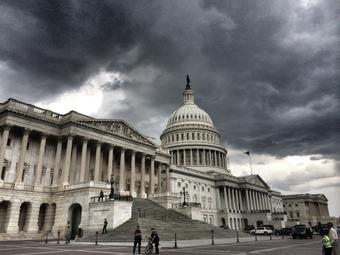 Congress has become a less important player in the field of technology policy. Why did that happen, and what are the ramifications for technological governance efforts going forward?
I’ve spent almost 30 years covering technology policy. There was a time in my life when I spent almost all my time as a policy analyst preoccupied with developments in the federal legislative arena. I lived in the trenches of Capitol Hill and interacted with lawmakers and their staff morning, noon, and night.
In recent years, however, I have spent very little time focused on the Legislative Branch because it has effectively become a non-actor on technology policy. It is not that congressional lawmakers stopped caring about tech policy. Interest actually remains quite high—perhaps higher than ever before. Congress also continues to introduce lots of bills, host plenty of hearings, and issue mountains of press releases related to tech policy issues.
Nonetheless, all that interest and activity has not really translated into much important legislation. Continue reading →
Autonomous vehicles are quickly becoming a reality. Waymo just launched a driverless taxi service in Arizona. Part of GM’s cuts were based on a decision to refocus their efforts around autonomous vehicle technology. Tesla seems to repeatedly be promising more and more features that take us closer than ever to a self-driving future. Much of this progress has been supported by the light touch approach that has been taken by both state and federal regulators up to this point. This approach has allowed the technology to rapidly develop, and the potential impact of federal legislation that might detour this progress should be cautiously considered.
For over a year, the Senate has considered passing federal legislation for autonomous vehicle technology, the AV START Act, after similar legislation already passed the House of Representatives. This bill would clarify the appropriate roles for state and federal authorities and preempting some state actions when it comes to regulating autonomous vehicles and will hopefully end some of the patchwork problems that have emerged. While federal legislation regarding preemption may be necessary for autonomous vehicles to truly revolutionize transportation, other parts of the bill could create increased regulatory burdens that actually add speed bumps on the path of this life-saving innovation.
Continue reading →
 Today, the U.S. Department of Transportation and the Federal Aviation Administration (FAA) announced that it will soon require Unmanned Aircraft Systems (UAS) or private drones, used for both personal and commercial purposes, to be registered in a national database. To facilitate this process, the agencies announced the creation of a new federal task force that will develop recommendations for a UAS registration process. Rules are to be published by November 20th (presumably to cover new devices sold before Christmas).
Here are some quick initial reactions on the proposed registration rules: Continue reading →
In a recent Senate Commerce Committee hearing on the Internet of Things, Senators Ed Markey (D-Mass.) and Richard Blumenthal (D-Conn.) “announced legislation that would direct the National highway Traffic Safety Administration (NHTSA) and the Federal Trade Commission (FTC) to establish federal standards to secure our cars and protect drivers’ privacy.” Spurred by a recent report from his office (Tracking and Hacking: Security and Privacy Gaps Put American Drivers at Risk) Markey argued that Americans “need the equivalent of seat belts and airbags to keep drivers and their information safe in the 21st century.”
Among the many conclusions reached in the report, it says, “nearly 100% of cars on the market include wireless technologies that could pose vulnerabilities to hacking or privacy intrusions.” This comes across as a tad tautological given that everything from smartphones and computers to large-scale power grids are prone to being hacked, yet the Markey-Blumenthal proposal would enforce a separate set of government-approved, and regulated, standards for privacy and security, displayed on every vehicle in the form of a “Cyber Dashboard” decal.
Leaving aside the irony of legislators attempting to dictate privacy standards, especially in the post-Snowden world, it would behoove legislators like Markey and Blumenthal to take a closer look at just what it is they are proposing and ask whether such a law is indeed necessary to protect consumers. Continue reading →
If you want a devastating portrait of how well-intentioned regulation sometimes has profoundly deleterious unintended consequences, look no further than the Federal Aviation Administration’s (FAA) current ban on commercial drones in domestic airspace. As Jack Nicas reports in a story in today’s Wall Street Journal (“Regulation Clips Wings of U.S. Drone Makers“), the FAA’s heavy-handed regulatory regime is stifling America’s ability to innovate in this space and remain competitive internationally. As Nicas notes:
as unmanned aircraft enter private industry—for purposes as varied as filming movies, inspecting wind farms and herding cattle—many U.S. drone entrepreneurs are finding it hard to get off the ground, even as rivals in Europe, Canada, Australia and China are taking off.
The reason, according to interviews with two-dozen drone makers, sellers and users across the world: regulation. The FAA has banned all but a handful of private-sector drones in the U.S. while it completes rules for them, expected in the next several years. That policy has stifled the U.S. drone market and driven operators underground, where it is difficult to find funding, insurance and customers.
Outside the U.S., relatively accommodating policies have fueled a commercial-drone boom. Foreign drone makers have fed those markets, while U.S. export rules have generally kept many American manufacturers from serving them.
Of course, the FAA simply responds that they are looking out for the safety of the skies and that we shouldn’t blame them. Continue reading →
Ladar Levison, founder of encrypted email service Lavabit, discusses recent government action that led him to shut down his firm. When it was suspected that NSA whistleblower Edward Snowden used Lavabit’s email service, the FBI issued a National Security Letter ordering Levison to hand over SSL keys, jeopardizing the privacy of Lavabit’s 410,000 users. Levison discusses his inspiration for founding Lavabit and why he chose to suspend the service; how Lavabit was different from email services like Gmail; developments in his case and how the Fourth Amendment has come into play; and his involvement with the recently-formed Dark Mail Technical Alliance.
Download
Related Links
Jerry Ellig, senior research fellow at the Mercatus Center at George Mason University, discusses the the FCC’s lifeline assistance benefit funded through the Universal Service Fund (USF). The program, created in 1997, subsidizes phone services for low-income households. The USF is not funded through the federal budget, rather via a fee from monthly phone bills — reaching an all-time high of 17% of telecomm companies’ revenues last year. Ellig discusses the similarities between the USF fee and a tax, how the fee fluctuates, how subsidies to the telecomm industry have boomed in recent years, and how to curb the waste, fraud and abuse that comes as a result of the lifeline assistance benefit.
Download
Related Links
Adam Thierer, Senior Research Fellow at the Mercatus Center discusses his recent working paper with coauthor Brent Skorup, A History of Cronyism and Capture in the Information Technology Sector. Thierer takes a look at how cronyism has manifested itself in technology and media markets — whether it be in the form of regulatory favoritism or tax privileges. Which tech companies are the worst offenders? What are the consequences for consumers? And, how does cronyism affect entrepreneurship over the long term?
Download
Related Links

 The Technology Liberation Front is the tech policy blog dedicated to keeping politicians' hands off the 'net and everything else related to technology.
Quick Thoughts on FAA’s Proposed Drone Registration System
by Adam Thierer on October 19, 2015 · 3 comments
Here are some quick initial reactions on the proposed registration rules: Continue reading →