Posts tagged as:

And so begins another fight over data retention. As Declan summarizes:

Republican politicians on Thursday called for a sweeping new federal law that would require all Internet providers and operators of millions of Wi-Fi access points, even hotels, local coffee shops, and home users, to keep records about users for two years to aid police investigations. The legislation, which echoes a measure proposed by one of their Democratic colleagues three years ago, would impose unprecedented data retention requirements on a broad swath of Internet access providers and is certain to draw fire from businesses and privacy advocates. […] Two bills have been introduced so far — S.436 in the Senate and H.R.1076 in the House. Each of the companion bills is titled “Internet Stopping Adults Facilitating the Exploitation of Today’s Youth Act,” or Internet Safety Act.

Julian also has coverage over at Ars and quotes CDT’s Greg Nojeim who says the data retention language is “invasive, risky, unnecessary, and likely to be ineffective.”  I think that’s generally correct.  Moreover, I find it ironic that at a time when so many in Congress seemingly want online providers to collect and retain LESS data about users, this bill proposes that ISPs be required to collect and retain MORE data. One wonders how those two legislative priorities will be reconciled!!

Don’t get me wrong. It’s good that Congress is taking steps to address the scourge of child pornography — especially with stiffer sentences for offenders and greater resources for law enforcement officials. Extensive data retention mandates, however, would be unlikely to help much given the ease with which bad guys will likely circumvent those requirements using alternative access points or proxies.  Finally, retention mandates pose a threat to the privacy of average law-abiding citizens and impose expensive burdens of online intermediaries.

We’ve had more to say about data retention here at the TLF over the years.  Here’s a few things to read: Continue reading →

facebook-logoOn this episode “Tech Policy Weekly,” Technology Liberation Front contributors Ryan Radia and Berin Szoka join me for a discussion of the flare-up over Facebook’s recent changes to the data retention provisions of its Terms of Use agreement and whether there are any serious privacy issues in play here—or if this is all much ado about nothing. [Ryan blogged about it here, and I did here.]

Earlier this month, Facebook announced changes to the way it handled or retained user data on its site after a user quits Facebook, raising questions about who actually owns that data and whether any privacy issues were raised by the company’s new policy. Following some intense scrutiny in the blogosphere, Facebook decided this week to revert to their old terms of service until they figured out a new approach to data management and ownership.

You can begin listening by downloading the MP3 file here or by just clicking the play button below.  Or subscribe to our Podcast ( iTunes, other).

[display_podcast]

facebook-logoMuch like the Beacon incident before it, I have mixed feeling about this latest kerfuffle over Facebook’s changes to its privacy policy.

On one hand, I just don’t see what the big deal is. People act like Facebook is taking away all their “rights” or possessions, which is just silly. They were just clarifying how information would be used. In one sense, I feel like saying ‘Chill out. And if you don’t like Facebook’s policies, go use some other social networking site for God’s sake!’

On the other hand, I appreciate the fact that some people are far more sensitive about these things and are seeking to collectively pressure Facebook to change its approach to information use and ownership, and I’m fine with that. In fact, like the Beacon hullabaloo, it’s an example of what Berin Szoka and I have argued is the power of voluntary persuasion and social pressure to remedy privacy concerns before we call on government to adopt coercive, top-down, ham-handed, one-size-fits-all regulatory solutions. As we noted in our recent paper about the looming threat of online advertising regulation:

there are many indirect pressures and reputational incentives that provide an important check on the behavior of firms and the privacy policies they craft.  Just as the Internet increases the ways advertisers can reach audiences, it increases the power audiences have to influence advertisers.  For example, when Facebook introduced its Beacon program in 2007, which shared users’ online purchases with their friends without sufficient warning about how the program worked and the ability to opt-out of the program, the response was swift and effective:  Users “collectively raised their voices” and “the privacy pendulum [swung] back into equilibrium” [according to the Interactive Advertising Bureau.]  Within two weeks of the Beacon program being first deployed, Facebook had created an opt-out procedure.

Continue reading →

Statue at FTC Headquarters: “Man Controlling Trade” (We’re rooting for the horse!)

Adam Thierer and I have just released a new PFF paper entitled “Targeted Online Advertising: What’s the Harm & Where Are We Heading?” (PDF) about the FTC’s new “Self-Regulatory Principles for Online Behavioral Advertising.”  Adam lampooned some of the attitudes at play in this debate in a great rant yesterday.

But we give the FTC credit for resisting calls to abandon self-regulation, and for its thoughtful consideration of the danger in stifling advertising-the economic engine that has supported a flowering of creative expression and innovation online content and services.  That said, we continue to have our doubts about the FTC’s approach, however-well intentioned:

  1. Where is this approach heading?  Will a good faith effort to suggest best practices eventually morph into outright government regulation of the online advertising marketplace?
  2. What, concretely, is the harm we’re trying to address?  We have asked this question several times before and have yet to see a compelling answer.
  3. What will creeping “co-regulation” mean for the future of “free” Internet services?  Is the mother’s milk of the Internet-advertising-about to be choked off by onerous privacy mandates?

We stand at an important crossroads in the debate over the online marketplace and the future of a “free and open” Internet. Many of those who celebrate that goal focus on concepts like “net neutrality” at the distribution layer, but what really keeps the Internet so “free and open” is the economic engine of online advertising at the applications and content layers. If misguided government regulation chokes off the Internet’s growth or evolution, we would be killing the goose that laid the golden eggs.

The dangers of regulation to the health of the Internet are real, but the ease with which government could disrupt the economic motor of the Internet (advertising) is not widely understood-and therein lies the true danger in this debate.  The advocates of regulation pay lip service to the importance of advertising in funding online content and services but don’t seem to understand that this quid pro quo is a fragile one: Tipping the balance, even slightly, could have major consequences for continued online creativity and innovation.

Continue reading →

John Palfrey, co-author of Born DigitalOn this episode of “Tech Policy Weekly,” we’re launching a new format called “Tech Book Corner” that will feature occasional conversations with the authors of important new books about technology policy and the other issues that we debate frequently at the Tech Liberation Front blog.


On this debut episode of Book Corner, we are joined by John Palfrey, a professor of law at Harvard University and the co-director of the Berkman Center for Internet & Society at Harvard. Along with his Berkman Center colleague Urs Gasser, Prof. Palfrey has recently co-authored Born Digital: Understanding the First Generation of Digital Natives, which was published last summer by Basic Books and which you can find out more information about at www.borndigitalbook.com. [Incidentally, I reviewed Born Digital here last October and I also named it one of the most important technology policy books of 2008.]

Born Digital cover

In our discussion, Prof. Palfrey explains who exactly counts as a “digital native” and tells us why he decided to write a book about them. He discusses why he believes that there has been some overreaction by older generations to fears about this Digital Generation and he argues that we need “to separate what we need to worry about from what’s not so scary” and “what we ought to resist from what we ought to embrace.” He then outlines how we should think about these issues and concerns going forward, and he stresses the importance of “balancing caution with encouragement” as we do so. Finally, he then applies that framework to three specific issues: privacy, child safety, and copyright.

It’s an interesting conversation and you can begin listening to it immediately by downloading the MP3 file here or by just clicking the play button below!

[display_podcast]

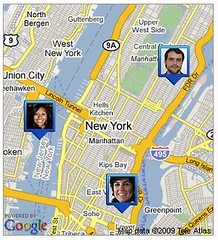
Google LatitudeGoogle’s latest major launch is “Latitude,” a geo-location service that lets users find friends on a digital map and then network with them. These services are often referred to as “LBS,” which stands for “location-based services.” I wrote about LBS here before in my essay on “The Next Great Technopanic: Wireless Geo-Location / Social Mapping.” As I pointed out in that piece, LBS raise privacy concerns with some people because, by their nature, these technologies involve the tracking of users.

But I’ve argued that those concerns are generally over-blown, especially because you have to download and opt-in to these services. In other words, you know what you’re getting into. Moreover, companies who offer these services, like Loopt and now Google, go out of their way to offer privacy safeguards. Indeed, even some privacy activists agree.

For example, Michael Zimmer of the School of Information Studies at the University of Wisconsin-Milwaukee, is someone who pays close attention to privacy issues and is often critical of Google and other companies for supposedly not paying enough attention to privacy concerns. In the case of Latitude, however, he argues that “Google Actually Got it (Mostly) Right.”  Here’s his snapshot of “what Google’s done to help give users control of their information flows in Latitude”: Continue reading →

The DHS Privacy Committee meets at 1:00 p.m. (Eastern) today, via telephone, and you can listen in! From the Federal Register notice:

Members of the public are welcome to listen to the meeting by calling (800) 320-4330 and entering Pin Number 215132. The number of teleconference lines is limited, however, and lines will be available on a first-come, first-served basis.

Planet GoogleI finally got around to reading Planet Google: One Company’s Audacious Plan to Organize Everything We Know, by Randall Stross. It’s very well done. Stross is a frequently contributor to the New York Times and the author of several other interesting books on the technology industry. He knows how to weave a story together, and it helps that Google’s story is a pretty amazing one.

Each chapter discusses a different part of Google’s growing family of services — GMail, Google Maps, Google Earth, Book Search, and YouTube. Of course, it all started with search and Stross does a good job explaining how the ingenious Google search algorithm has grown from dorm room project to the greatest aggregator of human knowledge that the world has ever known. This, in turn, has powered Google’s hugely successful online advertising system. The real secret of their success with online advertising, Stross argues, is that “Google’s impersonal, mathematical approach search also provides you with the ability to serve advertisements that are tailored to a search, rather than to the person submitting the search request, whose identity would have to be known.”

Despite the benefits of such generally anonymous searching, as Google has grown and added new services and capabilities, concerns about the sheer volume of data that the company collects have led to heightened privacy concerns. Indeed, privacy is a core theme that Stross uses in the book to tie many of the chapters and issues together. Google is constantly struggling to strike the right balance between providing more access to the world’s information while also being careful not to raise privacy concerns. But it’s unclear exactly how much more information collection that users (or public officials) will tolerate before advocating stricter limits on Google’s reach.  As Stross points out:

Guided by its founding mission, to organize all the world’s information, Google has created storage capacity that allows it to gain control of what its users are you doing in a comprehensive way that no other company has done, and to preserve those records indefinitely, without the need to clear out old records to make way for new ones. Moreover, Google differentiates its service by refining its own proprietary software formula to mine and massage the data, technology that it zealously protects from the sight of rivals. This sets up a conflict between Google’s wish to operate a “black box” (completely opaque to the outside) and its users’ wish for transparency.

Continue reading →

Scott Cleland is nothing if not interesting. And I was interested by a post he has up this morning: The Growing Privacy-Publicacy Fault-line – The Tension Underneath World Data Privacy Day.

Today is World Data Privacy Day. You can tell by the demonstrations and fireworks displays in capitals around the world. (ahem)

I’ll be speaking at a Dialogue on Diversity Internet privacy briefing on Capitol Hill this afternoon, in case you’re interested and have time.

But Scott’s point – privacy is in tension with the “publicacy” ethos of the Web 2.0 world – I think it’s a very interesting point.

My differences with him are two.

The first is semantic: I think the word he should use is “publicity.” It has the benefit of already being a word – and it’s capable of being pronounced as well!

The second, and more important, is where the ethos comes from: It’s a demand of people – not the Web 2.0 set, but all people.

Privacy and publicity are two sides of the same personal-information coin. People want some information to be kept private – we know that. But they have at least equal or greater demands to make information public – to give it publicity. This is why restaurants and bars are open, curtainless rooms. It’s why email, blogs, Flickr, Facebook and other social networking sites are popular.

The reason why privacy is sought-after and its twin “publicity” is ignored, is because publicity is the default. The laws of physics mean that information about you is automatically displayed when you walk on the street. Photons of light bounce off your body and convey personal information to the photo-receptors (or “eyes”) of people around you.

The ‘physical’ laws of the Internet are similar. You have to ‘publicize’ your IP address to have any contact with another on the Internet. You have to publicize lots of identity, biographical, and other personal information to have any meaningful contact with others on the Internet.

But imagine a world where privacy was the default and information did not naturally travel to others. People would demand publicity. Poeple would demand to be seen and remembered, to have details about their lives recounted by others.

Publicity is not an incursion on social norms being perpetrated by Google and other Web 2.0 types. Web 2.0ish things are a response to the broad implicit demand for publicity. Oh, it’s implicit to the point of contradictory: People say they want privacy even as their actions betray their longing for publicity.

The trick is for people to figure out how to give themselves publicity in the things they want known, and to maintain privacy in the things they don’t. That’s a problem that will most likely be solved by the passage of a few generations, when the technologies that are new today are familiar, and when people have reset their personal information practices and their expectations.

Adam raises some important questions below about the legislation introduced in Congress to ban silent cell phone cameras. Like many things Congress does, I wonder if the proposed solution might end up being worse than the perceived problem.

Is cell phone camera voyeurism actually a serious problem in the U.S.? Or is this just another problem being blown out of proportion by politicians? Some actual data on the incidence of camera phone “predation” would be useful in deciding whether digital voyeurism is a matter that demands Congress’s attention. The bill’s current language offers up only the vague statement, “Congress finds that children and adolescents have been exploited by photographs taken in dressing rooms and public places with the use of a camera phone.”

I also wonder why the legislation targets phones rather than silent compact cameras of all sorts. Ridding from the market all silent mobile phone cameras would just make bad guys switch to compact, silent cameras with memory cards. (That’s not to say that Congress should ban them, either).

There’s a case to be made that in some situations, it might actually be a good thing for people to have cell phones equipped with silent cameras. What about somebody who’s being assaulted, or mugged, or raped and wants to photograph their attacker but fears retaliation? Or someone who’s just witnessed a crime, unbeknownst to the perpretator, and is trying to get a snapshot of the fleeing suspect? Or a whistleblower who wants to collect evidence of illicit activity by snapping covert photos?

To be sure, these are all hypothetical, unlikely scenarios. But for all we know, incidents involving “cell phone predators” are just as unlikely. And the person with the “good” use for their silent cell phone camera is much more likely to be impacted by a ban, because the bad guys will just skirt the law by hacking their phones or buying regular cameras.