California’s recently enacted digital privacy legislation, the “California Consumer Privacy Act,” may be getting a sequel in the form of an initiative called the “California Privacy Rights and Enforcement Act of 2020.” While the fallout of CCPA has yet to be seen, since the Act does not go into effect until next year and the regulations governing its application have yet to be finalized, CPREA promises to double-down on its approach by creating yet more largely superfluous – and hugely expensive – digital “rights”.
How did we get here? Well, CCPA, the original, was the brainchild of a wealthy real estate investor named Alastair Mactaggart who, inspired by a cocktail party conversation, used California’s initiative process as a cudgel to get the full attention of the legislature in Sacramento. The body was given an ultimatum, negotiate and pass privacy legislation or Mactaggart would place his creation on the ballot. Continue reading →
by Andrea O’Sullivan & Adam Thierer
This essay originally appeared on The Bridge on September 25, 2019.
It is quickly becoming one of the iron laws of technology policy that by attempting to address one problem (like privacy, security, safety, or competition), policymakers often open up a different problem on another front. Trying to regulate to protect online safety, for example, might give rise to privacy concerns, or vice versa. Or taking steps to address online privacy through new regulations might create barriers to new entry, thus hurting online competition.
In a sense, this is simply a restatement of the law of unintended consequences. But it seems to be occurring with greater regularity in the technology policy today, and it serves as another good reminder why humility is essential when considering new regulations for fast-moving sectors.
Consider a few examples.
Privacy vs security & competition
Many US states and the federal government are considering data privacy regulations in the vein of the European Union’s wide-reaching General Data Privacy Regulation (GDPR). But as early experiences with the GDPR and various state efforts can attest, regulations aimed at boosting consumer privacy can often butt against other security and competition concerns. Continue reading →
Last week, I had the honor of being a panelist at the
Information Technology and Innovation Foundation’s event
on the future of privacy regulation. The debate question was simple enough: Should the US copy the EU’s new privacy law?
When we started planning the event, California’s Consumer Privacy Act (CCPA) wasn’t a done deal. But now that it has passed and presents a deadline of 2020 for implementation, the terms of the privacy conversation have changed. Next year, 2019, Congress will have the opportunity to pass a law that could supersede the CCPA and some are looking to the EU’s General Data Protection Regulation (GDPR) for guidance. Here are some reasons for not taking that path. Continue reading →
There are a growing number of voices raising concerns about privacy rights and data security in the wake of news of data breaches and potential influence. The European Union (EU) recently adopted the heavily restrictive General Data Privacy Rule (GDPR) that favors individual privacy over innovation or the right to speak. While there has been some discussion of potential federal legislation related to data privacy, none of these attempts has truly gained traction beyond existing special protections for vulnerable users (like children) or specific information (like that of healthcare and finances). Some states, notably including California, are attempting to solve this perceived problem of data privacy on their own, but often are creating bigger problems and passing potentially unconstitutional and often poorly drafted solutions.
Continue reading →
Privacy is an
essentially contested concept
. It evades a clear definition and
when it is defined
, scholars do so inconsistently. So, what are we to do now with this fractured term? Ryan Hagemann suggests a bottom up approach. Instead of beginning from definitions, we should be building a
folksonomy of privacy harms
:
By recognizing those areas in which we have an interest in privacy, we can better formalize an understanding of when and how it should be prioritized in relation to other values. By differentiating the harms that can materialize when it is violated by government as opposed to private actors, we can more appropriately understand the costs and benefits in different situations.
Hagemann aims to route around definitional problems by exploring the spaces where our interests intersect with the concept of privacy, in our relations to government, to private firms, and to other people. It is a subtle but important shift in outlook that is worth exploring. Continue reading →
A curious thing happened last week. Facebook’s stock, which had seem to have weathered the 2018 controversies, took a beating.
In the Washington Post, Craig Timberg and Elizabeth Dwoskin
explained
that the stock market drop was representative of a larger wave:
The cost of years of privacy missteps finally caught up with Facebook this week, sending its market value down more than $100 billion Thursday in the largest single-day drop in value in Wall Street history.
Jeff Chester of the Center for Digital Democracy piled on, describing the drop as “a privacy wake-up call that the markets are delivering to Mark Zuckerberg.”
But the downward pressure was driven by more fundamental changes. Simply put, Facebook missed its earnings target. But it is important to peer into why the company didn’t meet those targets. Continue reading →
In preparation for a Federalist Society teleforum call that I participated in today about the compliance costs of the EU’s General Data Protection Regulation (GDPR), I gathered together some helpful recent articles on the topic and put together some talking points. I thought I would post them here and try to update this list in coming months as I find new material. (My thanks to Andrea O’Sullivan for a major assist on coming up with all this.)
Key Points
:
- GDPR is no free lunch; compliance is very costly
-
-
- All regulation entails trade-offs, no matter how well-intentioned rules are
- $7.8 billion estimated compliance cost for U.S. firms already
- Punitive fees can range from €20 million to 4 percent of
global
firm revenue
- Vagueness of language leads to considerable regulatory uncertainty — no one knows what “compliance” looks like
- Even EU member states do not know what compliance looks like: 17 of 24 regulatory bodies polled by
Reuters
said they were unprepared for GDPR
- GDPR will hurt competition & innovation; favors big players over small
-
-
- Google, Facebook & others beefing up compliance departments. (“ EU official, Vera Jourova: “They have the money, an army of lawyers, an army of technicians and so on.”)
- Smaller firms exiting or dumping data that could be used to provide better, more tailored services
- PwC survey found that 88% of companies surveyed spent more than $1 million on GDPR preparations, and 40% more than $10 million.
- Before GDPR, half of all EU ad spend went to Google. The first day after it took effect, an astounding 95 percent went to Google.
- In essence, with the GDPR, the EU is surrendering on the idea of competition being possible going forward
- The law will actually benefit the same big companies that the EU has been going after on antitrust grounds. Meanwhile, the smaller innovators and innovations will suffer.
Continue reading →
On Friday, the Supreme Court ruled on Carpenter v.
United
States, a case involving the cell-site location information. In the 5 to 4 decision, the Court declared that “The Government’s acquisition of Carpenter’s cell-site records was a Fourth Amendment search.” What follows below is a roundup of reactions and comments to the decision. Continue reading →
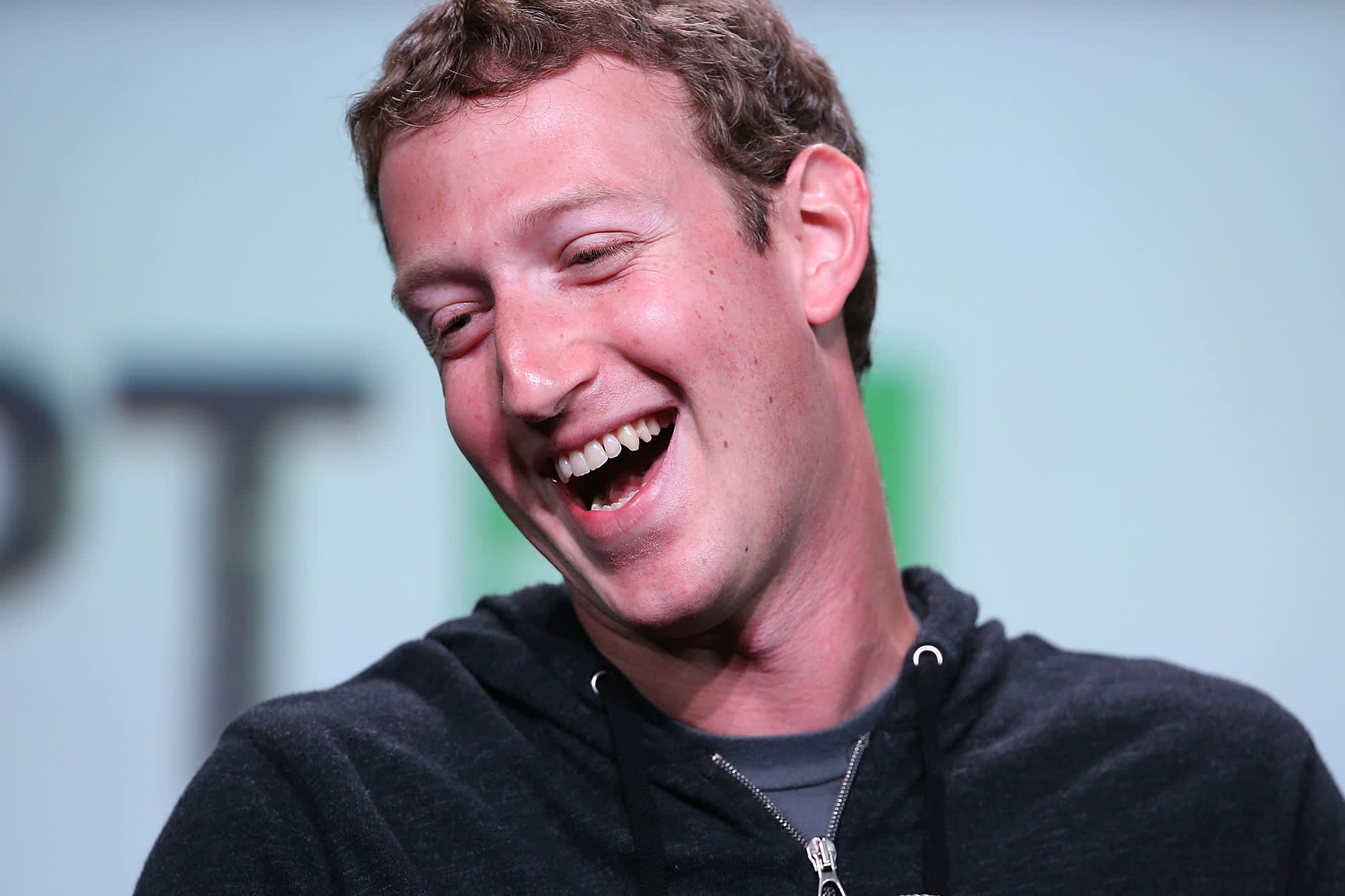
Two weeks ago, as Facebook CEO Mark Zuckerberg was getting grilled by Congress during a two-day media circus set of hearings, I wrote a counterintuitive essay about how it could end up being Facebook’s greatest moment. How could that be? As I argued in the piece, with an avalanche of new rules looming, “Facebook is potentially poised to score its greatest victory ever as it begins the transition to regulated monopoly status, solidifying its market power, and limiting threats from new rivals.”
With the exception of probably only Google, no firm other than Facebook likely has enough lawyers, lobbyists, and money to deal with layers of red tape and corresponding regulatory compliance headaches that lie ahead. That’s true both here and especially abroad in Europe, which continues to pile on new privacy and “data protection” regulations. While such rules come wrapped in the very best of intentions, there’s just no getting around the fact that
regulation has costs. In this case, the unintended consequence of well-intentioned data privacy rules is that the emerging regulatory regime will likely discourage (or potentially even destroy) the chances of getting the new types of innovation and competition that we so desperately need right now.
Others now appear to be coming around to this view. On April 23, both the
New York Times and
The Wall Street Journal ran feature articles with remarkably similar titles and themes. The
New York Times article by Daisuke Wakabayashi and Adam Satariano was titled, “
How Looming Privacy Regulations May Strengthen Facebook and Google,” and
The Wall Street Journal’s piece, “
Google and Facebook Likely to Benefit From Europe’s Privacy Crackdown,” was penned by Sam Schechner and Nick Kostov.
“In Europe and the United States, the conventional wisdom is that regulation is needed to force Silicon Valley’s digital giants to respect people’s online privacy. But new rules may instead serve to strengthen Facebook’s and Google’s hegemony and extend their lead on the internet,” note Wakabayashi and Satariano in the
NYT essay. They continue on to note how “past attempts at privacy regulation have done little to mitigate the power of tech firms.” This includes regulations like Europe’s “right to be forgotten” requirement, which has essentially put Google in a privileged position as the “chief arbiter of what information is kept online in Europe.”
Continue reading →
With Facebook CEO Mark Zuckerberg in town this week for a political flogging, you might think that this is darkest hour for the social networking giant. Facebook stands at a regulatory crossroads, to be sure. But allow me to offer a cynical take, and one based on history: Facebook is potentially poised to score its greatest victory ever as it begins the transition to regulated monopoly status, solidifying its market power, and limiting threats from new rivals.
By slowly capitulating to critics (both here and abroad) who are thirsty for massive regulation of the data-driven economy, Facebook is setting itself up as a servant of the state. In the name of satisfying some amorphous political “public interest” standard and fulfilling a variety of corporate responsibility objectives, Facebook will gradually allow itself to be converted into a sort of digital public utility or electronic essential facility.
That sounds like trouble for the firm until you realize that Facebook is one of the few companies who will be able to sacrifice a pound of flesh like that and remain alive. As layers of new regulatory obligations are applied, barriers to new innovations will become formidable obstacles to the very competitors that the public so desperately needs right now to offer us better alternatives. Gradually, Facebook will recognize this and go along with the regulatory schemes. And then eventually they will become the biggest defender of all of it.
Welcome to Facebook’s broadcast industry moment. The firm is essentially in the same position the broadcast sector was about a century ago when it started cozying up to federal lawmakers. Over time, broadcasters would warmly embrace an expansive licensing regime that would allow all parties—regulatory advocates, academics, lawmakers, bureaucrats, and even the broadcasters themselves—to play out the fairy tale that broadcasters would be good “public stewards” of the “public airwaves” to serve the “public interest.”
Alas, the actual listening and viewing public got royally shafted in this deal. Continue reading →

 The Technology Liberation Front is the tech policy blog dedicated to keeping politicians' hands off the 'net and everything else related to technology.