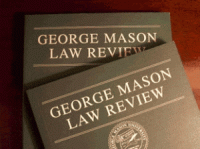
 I’m pleased to announce the release of my latest law review article, “A Framework for Benefit-Cost Analysis in Digital Privacy Debates.” It appears in the new edition of the George Mason University Law Review. (Vol. 20, No. 4, Summer 2013)
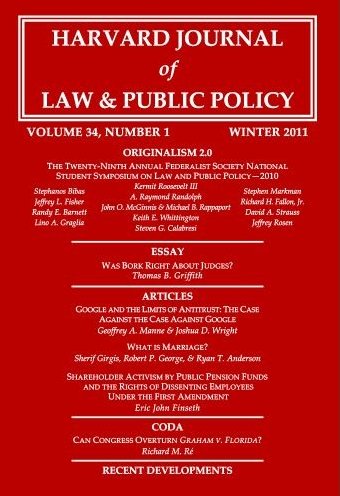
This is the second of two complimentary law review articles I am releasing this year dealing with privacy policy. The first, “The Pursuit of Privacy in a World Where Information Control is Failing,” was published in Vol. 36 of the Harvard Journal of Law & Public Policy
this Spring. (FYI: Both articles focus on privacy claims made against private actors — namely, efforts to limit private data collection — and not on privacy rights against governments.)
My new article on benefit-cost analysis in privacy debates makes a seemingly contradictory argument: benefit-cost analysis (“BCA”) is extremely challenging in online child safety and digital privacy debates, yet it remains essential that analysts and policymakers attempt to conduct such reviews. While we will never be able to perfectly determine either the benefits or costs of online safety or privacy controls, the very act of conducting a regulatory impact analysis (“RIA”) will help us to better understand the trade-offs associated with various regulatory proposals. Continue reading →
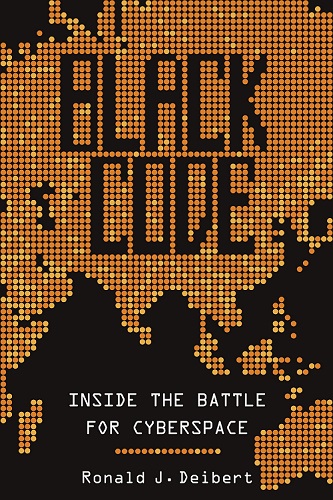
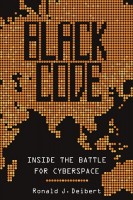 Ronald J. Deibert is the director of The Citizen Lab at the University of Toronto’s Munk School of Global Affairs and the author of an important new book, Black Code: Inside the Battle for Cyberspace, an in-depth look at the growing insecurity of the Internet. Specifically, Deibert’s book is a meticulous examination of the “malicious threats that are growing from the inside out” and which “threaten to destroy the fragile ecosystem we have come to take for granted.” (p. 14) It is also a remarkably timely book in light of the recent revelations about NSA surveillance and how it is being facilitated with the assistance of various tech and telecom giants.
The clear and colloquial tone that Deibert employs in the text helps make arcane Internet security issues interesting and accessible. Indeed, some chapters of the book almost feel like they were pulled from the pages of techno-thriller, complete with villainous characters, unexpected plot twists, and shocking conclusions. “Cyber crime has become one of the world’s largest growth businesses,” Deibert notes (p. 144) and his chapters focus on many prominent recent examples, including cyber-crime syndicates like Koobface, government cyber-spying schemes like GhostNet, state-sanctioned sabotage like Stuxnet, and the vexing issue of zero-day exploit sales.
Deibert is uniquely qualified to narrate this tale not just because he is a gifted story-teller but also because he has had a front row seat in the unfolding play that we might refer to as “How Cyberspace Grew Less Secure.” Continue reading →
Adam Thierer, Senior Research Fellow at the Mercatus Center discusses his recent working paper with coauthor Brent Skorup, A History of Cronyism and Capture in the Information Technology Sector. Thierer takes a look at how cronyism has manifested itself in technology and media markets — whether it be in the form of regulatory favoritism or tax privileges. Which tech companies are the worst offenders? What are the consequences for consumers? And, how does cronyism affect entrepreneurship over the long term?
Download
Related Links
 The Internet’s greatest blessing — its general openness to all speech and speakers — is also sometimes its biggest curse. That is, you cannot expect to have the most widely accessible, unrestricted communications platform the world has ever known and not also have some imbeciles who use it to spew insulting, vile, and hateful comments.
It is important to put things in perspective, however. Hate speech is not the norm online. The louts who spew hatred represent a small minority of all online speakers. The vast majority of online speech is of a socially acceptable — even beneficial — nature.
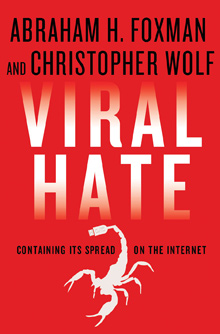
Still, the problem of hate speech remains very real and a diverse array of strategies are needed to deal with it. The sensible path forward in this regard is charted by Abraham H. Foxman and Christopher Wolf in their new book, Viral Hate: Containing Its Spread on the Internet. Their book explains why the best approach to online hate is a combination of education, digital literacy, user empowerment, industry best practices and self-regulation, increased watchdog / press oversight, social pressure and, most importantly, counter-speech. Foxman and Wolf also explain why — no matter how well-intentioned — legal solutions aimed at eradicating online hate will not work and would raise serious unintended consequences if imposed.
In striking this sensible balance, Foxman and Wolf have penned the definitive book on how to constructively combat viral hate in an age of ubiquitous information flows. Continue reading →
Declan McCullagh, chief political correspondent for CNET and former Washington bureau chief for Wired News, discusses recent leaks of NSA surveillance programs. What do we know so far, and what more might be unveiled in the coming weeks? McCullagh covers legal challenges to the programs, the Patriot Act, the fourth amendment, email encryption, the media and public response, and broader implications for privacy and reform.
Download
Related Links
David Garcia, post doctoral researcher at the Swiss Federal Institute of Technology and co-author of Social Resilience in Online Communities: The Autopsy of Friendster, discusses the concept of social resilience and how online communities, like Facebook and Friendster, withstand changes in their environment.
Garcia’s paper examines one of the first online social networking sites, Friendster, and analyzes its post-mortem data to learn why users abandoned it.
Garcia goes on to explain how opportunity cost and cost benefit analysis can affect a user’s decision whether or not to remain in an online community.
Download
Related Links
Defining “privacy” is a legal and philosophical nightmare. Few concepts engender more definitional controversies and catfights. As someone who is passionate about his own personal privacy — but also highly skeptical of top-down governmental attempts to regulate and/or protect it — I continue to be captivated by the intellectual wrangling that has taken place over the definition of privacy. Here are some thoughts from a wide variety of scholars that make it clear just how frustrating this endeavor can be:
- “Perhaps the most striking thing about the right to privacy is that nobody seems to have any very clear idea what it is.” – Judith Jarvis Thomson, “The Right to Privacy,” in Philosophical Dimensions of Privacy: An Anthology, 272, 272 (Ferdinand David Schoeman ed., 1984).
- privacy is “exasperatingly vague and evanescent.” – Arthur Miller, The Assault on Privacy: Computers, Data Banks, and Dossiers, 25 (1971).
- “[T]he concept of privacy is infected with pernicious ambiguities.” – Hyman Gross, The Concept of Privacy, 42 N.Y.U. L. REV. 34, 35 (1967).
- “Attempts to define the concept of ‘privacy’ have generally not met with any success.” – Colin Bennett, Regulating Privacy: Data Protection and Public Policy In Europe and the United States, 25 (1992).
- “When it comes to privacy, there are many inductive rules, but very few universally accepted axioms.” – David Brin, The Transparent Society: Will Technology Force Us To Choose Between Privacy and Freedom? 77 (1998).
- “Privacy is a value so complex, so entangled in competing and contradictory dimensions, so engorged with various and distinct meanings, that I sometimes despair whether it can be usefully addressed at all.” – Robert C. Post, Three Concepts of Privacy, 89 GEO. L.J. 2087, 2087 (2001).
- “[privacy] can mean almost anything to anybody.” – Fred H. Cate & Robert Litan, Constitutional Issues in Information Privacy, 9 Mich. Telecomm. & Tech. L. Rev. 35, 37 (2002).
- privacy has long been a “conceptual jungle” and a “concept in disarray.” “[T]he attempt to locate the ‘essential’ or ‘core’ characteristics of privacy has led to failure.” – Daniel J. Solove, Understanding Privacy 196, 8 (2008).
- “Privacy has really ceased to be helpful as a term to guide policy in the United States.” – Woodrow Hartzog, quoted in Cord Jefferson, Spies Like Us: We’re All Big Brother Now, Gizmodo, Sept. 27, 2012.
- “for most consumers and policymakers, privacy is not a rational topic. It’s a visceral subject, one on which logical arguments are largely wasted.” – Larry Downes, A Rational Response to the Privacy “Crisis,” Cato Institute, Policy Analysis No. 716 (Jan. 7, 2013), at 6.
In my new
Harvard Journal of Law & Public Policy article, “The Pursuit of Privacy in a World Where Information Control is Failing” I build on these insights to argue that: Continue reading →
Susan W. Brenner, associate dean and professor of law at the University of Dayton School of Law, discusses her new paper published in the Minnesota Journal of Law, Science & Technology entitled “Cyber-threats and the Limits of Bureaucratic Control.”
Brenner argues that the approach the United States, like other countries, uses to control threats in real-space is ill-suited for controlling cyberthreats. She explains that because this approach evolved to deal with threat activity in a physical environment, it is predicated on a bureaucratic organizations. This is not an effective way of approaching cyber-threat control, she argues.
Brenner also explains why congressional efforts at cybersecurity legislation are flawed and why U.S. authorities persist in pursuing antiquated strategies that cannot provide an effective cyberthreats defense system. She outlines an alternative approach to the task of protecting the country from cyberthreats, and approach that is predicated on older, more fluid threat control strategies.
Download
Related Links
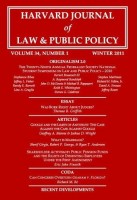 I’m excited to announce the release of my latest law review article, “The Pursuit of Privacy in a World Where Information Control is Failing,” which appears in the next edition (vol. 36) of the Harvard Journal of Law & Public Policy. This is the first of two complimentary law review articles that I will be releasing this year dealing with privacy policy. The second, which will be published later this summer by the George Mason University Law Review, is entitled, “A Framework for Benefit-Cost Analysis in Digital Privacy Debates.” (FYI: Both articles focus on privacy claims made against private actors — namely, efforts to limit private data collection — and not on privacy rights against governments.)
The new
Harvard Journal article is divided into three major sections. Part I focuses on some of normative challenges we face when discussing privacy and argues that there may never be a widely accepted, coherent legal standard for privacy rights or harms here in the United States. It also explores the tensions between expanded privacy regulation and online free speech. Part II turns to the many enforcement challenges that are often ignored when privacy policies are being proposed or formulated and argues that legislative and regulatory efforts aimed at protecting privacy must now be seen as an increasingly intractable information control problem. Most of the problems policymakers and average individuals face when it comes to controlling the flow of private information online are similar to the challenges they face when trying to control the free flow of digitalized bits in other information policy contexts, such as online safety, cybersecurity, and digital copyright.
If the effectiveness of law and regulation is limited by the normative considerations discussed in Part I and the practical enforcement complications discussed in Part II, what alternatives remain to assist privacy-sensitive individuals? I address that question in Part III of the paper and argue that the approach America has adopted to deal with concerns about objectionable online speech and child safety offers a path forward on the privacy front as well. Continue reading →
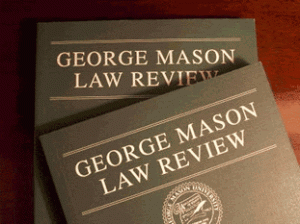 I’m pleased to announce the release of my latest law review article, “A Framework for Benefit-Cost Analysis in Digital Privacy Debates.” It appears in the new edition of the George Mason University Law Review. (Vol. 20, No. 4, Summer 2013)
 The Technology Liberation Front is the tech policy blog dedicated to keeping politicians' hands off the 'net and everything else related to technology.