Posts tagged as:

The FCC announced today that it will consider adopting net neutrality rules. The announcement comes in a speech by Chairman Julies Genachowski, which you can read here and watch here. Genachowski says,

To date, the Federal Communications Commission has addressed these issues by announcing four Internet principles that guide our case-by-case enforcement of the communications laws. … The principles were initially articulated by Chairman Michael Powell in 2004 as the “Four Freedoms,” and later endorsed in a unanimous 2005 policy statement[.] … Today, I propose that the FCC adopt the existing principles as Commission rules, along with two additional principles that reflect the evolution of the Internet and that are essential to ensuring its continued openness.

By suggesting that they must be codified, Genachowski is implicitly (if not explicitly) conceding that the FCC’s Internet principles are a mere policy statement and not a binding and enforceable rule. I’ve explained why this is the case previously. So, someone should call the D.C. Circuit, considering the Comcast case, and let them know their job just got a lot easier.

Second, Genachowski gives “limited competition” as a reason to consider regulation. However, the best available data from the FCC show that 98% of zip codes have 2 or more broadband providers, 88% of zip codes have 4 or more broadband providers, and 77% of zip codes have 5 or more broadband providers. That said, some have questioned whether the FCC’s data are accurate, and the FCC’s next broadband report is supposed to have data gathered at the census tract level for a more detailed set of speed categories. So, the FCC is proposing a regulation before it has completed an ongoing study to discover whether there is a real problem. It’s almost as if Kevin Martin is still running the place.


In a past life — that is, from roughly 1994-2004 — I spent an enormous amount of time countering the proponents of “open access” regulation for communications and high-tech networks.  My work in that field culminated in the publication of a 2003 book with my old Cato colleague Wayne Crews entitled, What’s Yours is Mine: Open Access & the Rise of Infrastructure Socialism. We aimed to counter the efforts of bureaucrats and central planners to command technology companies and industry sectors to share networks, facilities, or specific technologies with rivals in the name of “competition.”  Simply stated, sharing is not competing, and competition in the creation of networks is just as important as competition in the goods, services, and information that move across those networks.  Moreover, there are property right considerations that come into play when governments seek to commandeer networks or take over network management decisions.

But let’s just stick to the economic issue here regarding the incentives created by the network-sharing mentality of the “forced access” movement and the fiction associated with the belief that network sharing can create competition.  My old PFF colleague Randy May, who currently serves as President of the Free State Foundation, continues to cover developments in this field far closer than I do, and has always done much better work on the subject than me.  Recently, Randy addressed some new fictions put forth by the radical Leftist activity group, the (Un-)Free Press who are, once again, spinning a revisionist history of telecom and media policy.  Specifically, Free Press has recently suggested that in the late 1990s we lived in a veritable communications nirvana, with thousands of Internet Service Providers and/or “competitive exchange carriers” hotly “competing” for our business.  Here’s how Randy May addresses this:

Continue reading →

Make sure to read George Ou’s two recent articles over at the Digital Society blog setting the record straight about broadband usage caps: “Putting American Bandwidth Caps into Context” and “We Need to be Reasonable about Broadband Usage Caps.”   George is one sharp cookie. I particularly like the way he takes apart Free Press for their hypocrisy on this issue, something I have commented on here before after George brought it to my attention. See:

… and here’s some older material on the issue…

libertyby Adam Thierer & Berin Szoka — (Ver. 1.0 — Summer 2009)

We are attempting to articulate the core principles of cyber-libertarianism to provide the public and policymakers with a better understanding of this alternative vision for ordering the affairs of cyberspace. We invite comments and suggestions regarding how we should refine and build-out this outline. We hope this outline serves as the foundation of a book we eventually want to pen defending what we regard as “Real Internet Freedom.” [Note:  Here’s a printer-friendly version, which we also have embedded down below as a Scribd document.]

I. What is Cyber-Libertarianism?

Cyber-libertarianism refers to the belief that individuals—acting in whatever capacity they choose (as citizens, consumers, companies, or collectives)—should be at liberty to pursue their own tastes and interests online.

Generally speaking, the cyber-libertarian’s motto is “Live & Let Live” and “Hands Off the Internet!”  The cyber-libertarian aims to minimize the scope of state coercion in solving social and economic problems and looks instead to voluntary solutions and mutual consent-based arrangements.

Cyber-libertarians believe true “Internet freedom” is freedom from state action; not freedom for the State to reorder our affairs to supposedly make certain people or groups better off or to improve some amorphous “public interest”—an all-to convenient facade behind which unaccountable elites can impose their will on the rest of us.

Continue reading →

I’ve spent a lot of time here deconstructing and criticizing the proposals set forth by the Free Press, the radical media “reformista” group founded by the prolific Marxist media theorist Robert McChesney.  I have been trying to shine more light on their proposals and activities because I believe they are antithetical to freedom of speech and a free society.  That’s because, as media scholar Ben Compaine has noted, “What the hard core reformistas really want, it seems, is not diversity or an open debate but a media that promotes their own vision of society and the world.”  That’s exactly right and, more specifically, as I argued in my 2005 Media Myths book, the media reformistas want to impose this control by taking the fantasy that “the public owns the [broadcast] airwaves” and extending it to ALL media platforms and outlets.  In other words, McChesney and the Free Press want an UnFree Press.  To cast things in neo-Marxist terms that they could appreciate, they want to take control of the information means of production.  And it begins, McChesney argues, by all of us having to give up this “sort of religious attachment to the idea of a ‘free-press'” from which we all suffer.

Some people accuse me of “red-baiting” or “McCarthyite” tactics when I use the “M-word” (Marxism) or the “S-Word” (socialism) to describe McChesney, the Free Press, and the movement they have spawned.  But these are labels with real meaning and ones that McChesney himself embraces in his work. In his 1999 book Rich Media, Poor Media, he says that “Media reform cannot win without widespread support and such support needs to be organized as part of a broad anti-corporate, pro-democracy movement.” He casts everything in “social justice” terms and speaks of the need “to rip the veil off [corporate] power, and to work so that social decision making and power may be made as enlightened and as egalitarian as possible.”  What exactly would all that mean in practice for media? In his 2002 book Our Media, Not Theirs: The Democratic Struggle against Corporate Media with John Nichols of The Nation, McChesney argues that media reform efforts must begin with “the need to promote an understanding of the urgency to assert public control over the media.” They go on to state that, “Our claim is simply that the media system produces vastly less of quality than it would if corporate and commercial pressures were lessened.”

If you want additional proof of his intentions, then I encourage you to read this lengthy interview with McChesney that appears in the new edition of The Bullet, an online newsletter produced by the Canada-based “Socialist Project.”  (If you ask me, there’s something strangely appropriate about a socialist newsletter named “The Bullet” in light of the millions of people who died while living under socialist tyranny!)  Anyway, let’s ignore that and focus on what neo-Marxist media reform entails according to McChesney.  Because never before has he laid his cards on the table as clearly as he does in this interview. Continue reading →

A few months ago, Adam Thierer penned The Pragmatic (Internet) Optimist’s Creed in response to calls from “Internet pessimists” for increased regulation of the Internet on many fronts. Adam‘s recent 4-way debate with pessimists Larry Lessig and Jonathan Zittrain (as well as optimist Declan McCullagh) inspired me to pen the following cheeky homage to Lessig, the Father of Internet Pessimism, whose work has launched a thousand efforts to increase government control of the Internet in the name, ironically, of “freedom:”

Our Lessig, who art in Harvard, Hallowed be thy blog. Thy Free Culture come. Thy Code be done, In Washington as it is in thy Ivory Tower.

This is the third in a series of articles about Internet technologies. The first article was about web cookies. The second article explained the network neutrality debate. This article explains network management systems. The goal of this series is to provide a solid technical foundation for the policy debates that new technologies often trigger. No prior knowledge of the technologies involved is assumed.

There has been lots of talk on blogs recently about Cox Communications’ network management trial. Some see this as another nail in Network Neutrality’s coffin, while many users are just hoping for anything that will make their network connection faster.

As I explained previously, the Network Neutrality debate is best understood as a debate about how to best manage traffic on the Internet.

Those who advocate for network neutrality are actually advocating for legislation that would set strict rules for how ISPs manage traffic. They essentially want to re-classify ISPs as common carriers. Those on the other side of the debate believe that the government is unable to set rules for something that changes as rapidly as the Internet. They want ISPs to have complete freedom to experiment with different business models and believe that anything that approaches real discrimination will be swiftly dealt with by market forces. But what both sides seem to ignore is that traffic must be managed. Even if every connection and router on the Internet is built to carry ten times the expected capacity, there will be occasional outages. It is foolish to believe that routers will never become overburdened–they already do. Current routers already have a system for prioritizing packets when they get overburdened; they just drop all packets received after their buffers are full. This system is fair, but it’s not optimized. The network neutrality debate needs to shift to a debate on what should be prioritized and how. One way packets can be prioritized is by the type of data they’re carrying. Applications that require low latency would be prioritized and those that don’t require low latency would not be prioritized.

Google has—as I noted it would last June—finally released (PCWorld, Google’s policy blog)  its eagerly-awaited suite of tools available for free (of course) at MeasurementLab.net that allow users to monitor how their ISP might be tweaking (degrading, deprioritizing, etc.) their traffic—among other handy features.  Huzzah!

So, now that we have visibility into traffic management practices on a large scale, remind me again why the FCC would need to  mandate “net neutrality” requirements?  Why not just leave the matter up to the FTC to enforce each ISP’s terms of use under the agency’s existing authority to punish unfair and deceptive trade practices?  Won’t the threat of users switching to another broadband provider discipline ISPs’ traffic management?  (As long as ISPs have traffic nationwide traffic management policies, even those users in areas lacking meaningful broadband competition will be protected from discriminatory network management practices by pressure in other markets.)

“If you believe that network neutrality government regulation is not needed, if you believe that the market will handle this … then you should also welcome Measurement Labs,” [Princeton Center for Information Technology Policy director Ed] Felten said. “What you are appealing to is a process of public discussion … in which consumers move to the ISP [Internet service provider] that gives them the best performance. It’s a market that’s facilitated by better information.”

Yes, it’s true (as PCWorld article linked to above points out) that a consumer might not be able to discern whether apparent degradation of their traffic was actually caused by the ISP or whether it might be the result of, say, spyware or simple Internet congestion.  But they don’t need to figure that out for themselves.  Although the relatively small percentage of users who install this tool are likely to be highly sophisticated (at least the early adopters), all they need to is “sound the alarm” about what they think might be a serious violation of “net neutrality” principles, and a small cadre of technical experts can do the rest:  examining these allegations to determine what ISPs are actually doing.  

Sure, there will be false alarms and of course many advocates of “net neutrality” regulation will still insist that ISPs shouldn’t be allowed to practice certain kinds of network management, no matter how transparently the ISPs might disclose their practices.  But the truth will emerge, and in the ongoing tug-of-war between public pressure and ISPs’ practical needs to manage their networks smartly, between the desire of some to have practices disclosed very specifically and the ISPs’ desire to maintain operational flexibility, I suspect we’ll find a relatively stable (if constantly-evolving) equilibrium.  It won’t be perfect, but do we really think government bureaucrats will do a better job of finding that happy medium?

The Entertainment Consumers Association (ECA) is a group that does some good things to mobilize gamers to fight misguided regulation of video games. I greatly appreciate their tireless efforts to fight stereotypes and myths about games and gamers, and to specifically counter the hysteria about video games that we sometimes see in the press, and definitely see in political circles on a regular basis.  They’re a great ally in the fight for freedom of speech and artistic expression in this field.

That’s why I was so sorry to see the ECA launch a new campaign that encourages gamers to petition their congressional leaders and encourage them to regulate the high-tech economy more and waste more taxpayer dollars on inefficient universal service programs and subsidies:

Net Neutrality and Universal Broadband are not only great for America; they allow us to play the games we want at high speeds! … ECA believes that Universal Broadband and Net Neutrality are vital for the development of the national infrastructure, and believes that this bill is an important opportunity to let Congress know that you agree.

Continue reading →

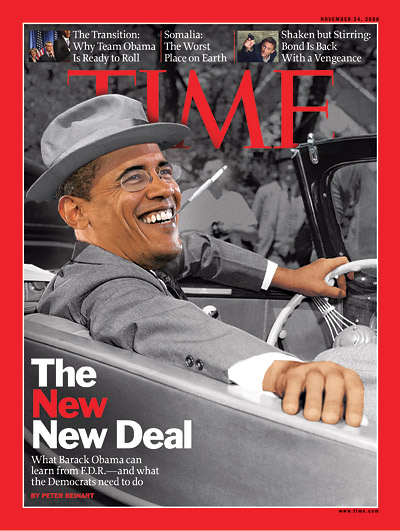
Is $1,200,000,000,000.00.  That’s the expected 2009 Federal budget deficit.  Since the current Federal debt is estimated at a “mere” $10.6 trillion, this means that we’re expected to add nearly 9% in a single year to a debt accumulated over 233 years (since 1774).  This number also amounts to more than 8% of the U.S. economy. 

So what does this have to do with technology policy?  To start with, this figure comes from Congressional Budget Office estimates, which “don’t account for the huge economic stimulus bill Obama is expected to propose soon to try to jolt the economy.”  So, while the Obama team has talked about big “public works” and “infrastructure” spending (which used to be called, variously, “make-work,” “pork barrel” and “corporate welfare”), there’s sure to be huge pressure not to waste more taxpayer money on top of this staggering figure.  Whatever blame Bush deserves, Obama probably doesn’t want to go down in history as the man who finally caused the U.S. government to default on its unmanageable debt burden.

One certainly could make an argument that the kind of technology-related “infrastructure” stimulus Obama has talked about (e.g., broadband subsidies) would be less of a waste of money than, say, simply building more bridges (as Japan did in the 1990s, its “lost decade”) or other reflexively Keynesian responses.  But even so, I suspect that the total amount of funding made available for such projects won’t be anywhere near enough to satisfy the technology policy Left.  

This could result in increased pressure on the Administration to increase regulation of the technology sector in order to implement tech-leftist ideas about “protecting” users’ privacy, promoting media diversity or “fairness”, mandating net “neutrality,” “opening up” spectrum, etc.  Such  proposals might seem attractive precisely because they generally wouldn’t require increased Federal expenditures other than the cost of hiring more bureaucrats (which means more government employee union jobs anyway—hardly a bad thing for Democrats)—while the economic consequences of such proposals for companies and consumers will probably surely be trivialized.  For example, if the advocates of government control at the so-called “Free Press” can’t get universal broadband, they’ll probably press that much harder to cripple online advertising and traffic management by ISPs, just to name two popular bogeymen.obamas-new-new-deal

One might think that a sharp economic decline would cause policy-makers to think twice before undermining the business models that have supported IT innovation and real infrastructure investment.  But one has only to look at the policies of FDR’s first two terms to see how even an amiable, soft-spoken president elected on a mantra of change and “uniting” the nation in a time of crisis could consistently choose to place “Reform” (i.e., increased regulation) over “Recovery” (i.e., the health of the economy)—with devastating economic consequences.

Continue reading →