Arnold Kling on the Sergey Brin effect and inequality:
Income inequality in the United States consists of two gaps. The first gap is an upper-lower gap, between those with a college education and those without. The second is an upper-upper gap, between those with high incomes and those with extraordinarily high incomes.
The upper-lower gap reflects changes in the structure of the economy. New technologies place a premium on cognitive ability. Harvard University economists Claudia Goldin and Lawrence Katz have dubbed this “skill-biased technological change.” In today’s economy, more value added comes from knowledge work, and relatively less comes from unskilled labor.
A little XKCD-style humor:
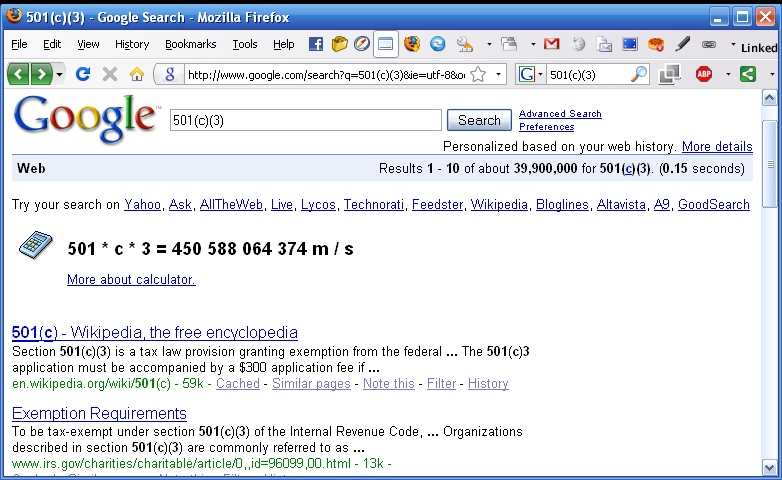
If you don’t get it, “c” this. Incidentally, you can easily add links to other search engines (as I have) by installing the CustomizeGoogle Firefox extension, among many other cool features.
Information Week has an article in its September 29th issue that illustrates why regulatory interventions to temper Google’s dominance are folly – things like antitrust scrutiny of the Yahoo! deal. But it takes a little understanding of how markets work.
The article lists all kinds of innovative startups that plan to challenge Google and take the field of search in all kinds of new directions. “The burst of activity over the past 12 months is more befitting a land rush than a market dominated by one powerhouse,” it says. Read it. There’s lots of interesting stuff going on.
But it’s not going
just because. It’s going on because there’s a dominant player in the market. It’s going on because venture capitalists, innovators, and entrepreneurs can see the large profit that Google is making, and they want a piece of it. Excess profits act as an invitation and a spur to others, bringing new businesses and business ideas to that market.
If profits are “managed” and “brought under control” by curtailing a company’s ability to make deals (like Google would make with Yahoo!), that signal – that there is money to be made here – dissipates. Fewer innovators come to the market.
A second signal also goes out: “If you come up with something truly revolutionary in this field, we’re going to reward you with a haircut.” That dissuades investors – telling them that high profits will not come to them if they produce something great.
It’s a shame that the federal government is working to stanch the flow of innovation coming to search by going after Google.
Register
here for what looks like a very interesting event:
In 1995, Internet entrpreneur Craig Newmark started Craigslist — an online community featuring free classified ads. Thirteen years later, Craigslist serves 567 cities in 55 countries and is a good example of how the power, reach and openness of the Internet can help turn a simple idea into a global phenomenon.
As part of the ongoing “Google D.C. Talks” series, Craig — who still helps users in a customer service role at Craigslist — will speak about the founding of the future of Craigslist, the future direction of the Internet, and what public policy makers can do to keep the Internet and American democracy free, open and vibrant. For anyone who’s ever bought or sold a used piece of furniture or concert tickets on Craigslist, you won’t want to miss hearing from the man who started it all.
Speaker:
Craig Newmark, Customer Service Rep & Founder, craigslist
Moderator:
Alan Davidson, Director, Public Policy and Government Affairs, Google
“Hasn’t Steve Jobs learned anything in the last 30 years?” asks Farhad Manjoo of Slate in an interesting piece about “The Cell Phone Wars” currently raging between Apple’s iPhone and the Google’s new G1, Android-based phone. Manjoo wonders if whether Steve Jobs remembers what happen the last time he closed up a platform: “because Apple closed its platform, it was IBM, Dell, HP, and especially Microsoft that reaped the benefits of Apple’s innovations.” Thus, if Jobs didn’t learn his lesson, will he now with the iPhone? Manjoo continues:
Well, maybe he has—and maybe he’s betting that these days, “openness” is overrated. For one thing, an open platform is much more technically complex than a closed one. Your Windows computer crashes more often than your Mac computer because—among many other reasons—Windows has to accommodate a wider variety of hardware. Dell’s machines use different hard drives and graphics cards and memory chips than Gateway’s, and they’re both different from Lenovo’s. The Mac OS, meanwhile, has to work on just a small range of Apple’s rigorously tested internal components—which is part of the reason it can run so smoothly. And why is your PC glutted with viruses and spyware? The same openness that makes a platform attractive to legitimate developers makes it a target for illegitimate ones.
I discussed these issues in greater detail in my essay on”Apple, Openness, and the Zittrain Thesis” and in a follow-up essay about how the Apple iPhone 2.0 was cracked in mere hours. My point in these and other essays is that the whole “open vs. closed” dichotomy is greatly overplayed. Each has its benefits and drawbacks, but there is no reason we need to make a false choice between the two for the sake of “the future of the Net” or anything like that.
In fact, the hybrid world we live in — full of a wide variety of open and proprietary platforms, networks, and solutions — presents us with the best of all worlds. As I argued in my original review of Jonathan Zittrain’s book, “Hybrid solutions often make a great deal of sense. They offer creative opportunities within certain confines in an attempt to balance openness and stability.” It’s a sign of great progress that we now have different open vs. closed models that appeal to different types of users. It’s a false choice to imagine that we need to choose between these various models.
Continue reading →
By Berin Szoka & Adam Thierer
Progress Snapshot 4.19 (PDF)
Since the fall of 2008, a debate has raged in Washington over “targeted online advertising,” an ominous-sounding shorthand for the customization of Internet ads to match the interests of users. Not only are these ads more relevant and therefore less annoying to Internet users than untargeted ads, they are more cost-effective to advertisers and more profitable to websites that sell ad space. While such “smarter” online advertising scares some—prompting comparisons to a corporate “Big Brother” spying on Internet users—it is also expected to fuel the rapid growth of Internet advertising revenues from $21.7 billion in 2007 to $50.3 billion in 2011-an annual growth rate of more than 24%. Since this growing revenue stream ultimately funds the free content and services that Internet users increasingly take for granted, policymakers should think very carefully about what’s really best for consumers before rushing to regulate an industry that has thrived for over a decade under a layered approach that combines technological “self-help” by privacy-wary consumers, consumer education, industry self-regulation, existing state privacy tort laws, and Federal Trade Commission (FTC) enforcement of corporate privacy policies.
In an upcoming PFF
Special Report, we will address the many technical, economic, and legal aspects of this complicated policy issue-especially the possibility that regulation may unintentionally thwart market responses to the growing phenomenon of users blocking online ads.
We will also issue a three-part challenge to those who call for regulation of online advertising practices:
- Identify the harm or market failure that requires government intervention.
- Prove that there is no less restrictive alternative to regulation.
- Explain how the benefits of regulation outweigh its costs.
Continue reading →
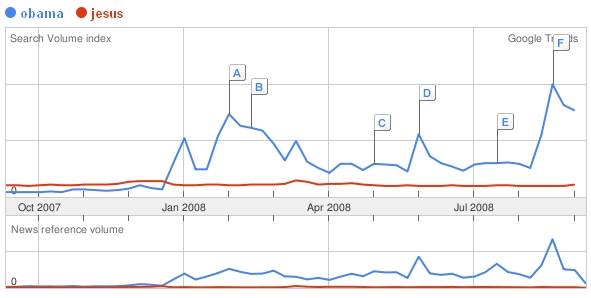
In the beginning, there was Obamamania:
Just FYI, the latest update of my booklet on “Parental Controls and Online Child Protection: A Survey of Tools & Methods” is now live. The new version, Version 3.1, provides minor updates to all sections of the book and a new appendix of relevant research in the field. I issue major updates early each year and 1 or 2 tweaks during the course of the year to reflect the evolution of the parental control and online child safety market and debate. 
For those not familiar with the report, it explores the market for parental control tools, rating schemes, education efforts, and initiatives aimed at promoting online child safety. I believe that the parental controls and content management tools cataloged in the report represent a better, less restrictive alternative to government regulation. As I conclude after evaluating that state of the market: “There has never been a time in our nation’s history when parents have had more tools and methods at their disposal to help them decide what constitutes acceptable media content in their homes and in the lives of their children.”
The report is available free-of-charge on the PFF website, and the previous editions of the report are housed there too in case you want to see how it has evolved over the past two years. For those interested in taking a quick look at the report, I have embedded it down below the fold as a Scribd file. Finally, as is always the case, I encourage readers to send me updates and suggestions for how to improve the report and I will incorporate them into future versions.
Continue reading →
The introduction below was originally written by Berin Szoka, but now that I (Adam Marcus) am a full-fledged TLF member, I have taken authorship.
Adam Marcus, our exceptionally tech-savvy new research assistant at PFF, has published his first piece
at the PFF blog, which I reprint here for your edification.
Today Google’s DC office hosted an interesting panel on cloud computing. What was missing was a good definition of what “cloud computing” actually is.
While Wikipedia has its own broad definition of cloud computing, many think of cloud computing more narrowly as strictly web-based for which clients need nothing but a web browser. But that definition doesn’t cover things like Skype and SETI@home. And just because PFF has implemented Outlook Web Access so we can access the Exchange server via the Web, doesn’t necessarily mean we’ve implemented what most people might think of as “cloud computing.” Yet these are all variations on a common theme, which leads me to propose my own basic definition: any client/server system that operates over the Internet.
To understand the potential policy and legal issues raised by cloud computing so-defined, one must break down the discussion into a 4-part grid. One axis is divided into private data (
e.g., email) and public data (e.g., photo sharing). The other axis is divided into data hosted on a single server or centralized server farm and data hosted on multiple computers in a dynamic peer-to-peer network (e.g., BitTorrent file sharing).
Continue reading →
In response to Adam and Berin’s excellent introduction to their Googlephobia series, invaluable TLF commenter Richard Bennett succinctly sums up the rap on Google.
There’s no denying that Google has the capacity to do some pretty heinous things with all the sensitive data stored on its servers. But the relevant question isn’t whether Google could do evil, but whether it realistically will. What incentive is there for Google to do anything but keep private data as secure as humanly possible? Sure, Google could earn a nice chunk of change if it were to sell user search queries to the highest bidder. But why would Google put its entire business on the line for a comparatively insignificant short-term gain?
A major privacy breach is Google’s nightmare scenario. If anything happened to cause users to lose trust in Google, they’d go someplace else for email and search. Advertisers would follow suit, causing Google’s stock price to plummet. Google might never be able to recover from a severe privacy fiasco. Obviously, Google is well aware of its vulnerabilities on privacy, which is why Google has incredibly strong safeguards to ensure that sensitive data can’t be uncovered by a rogue product manager with an itchy trigger finger.
Then there’s the liability issue. The multi-billion dollar lawsuits that would ensue were Google to suffer a data breach or an internal leak would deal a serious financial blow to the company, especially because Google’s privacy policy is more than just a comforting statement—it’s legally binding.
Continue reading →

 The Technology Liberation Front is the tech policy blog dedicated to keeping politicians' hands off the 'net and everything else related to technology.