Articles by Adam Thierer 
 Senior Fellow in Technology & Innovation at the R Street Institute in Washington, DC. Formerly a senior research fellow at the Mercatus Center at George Mason University, President of the Progress & Freedom Foundation, Director of Telecommunications Studies at the Cato Institute, and a Fellow in Economic Policy at the Heritage Foundation.
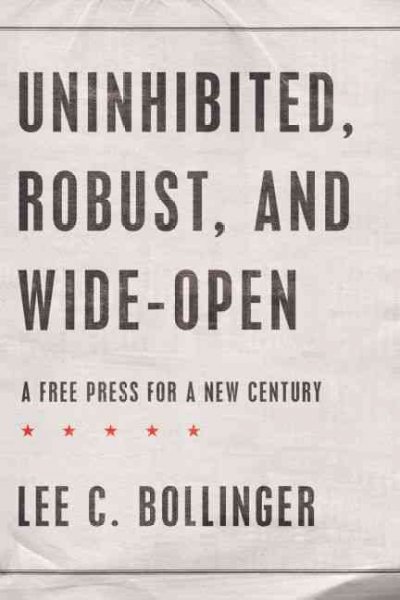
 Earlier this year, while I was preparing this mega-filing to the Federal Communications Commission in its “Future of Media” proceeding, I read Uninhibited, Robust, and Wide-open: A Free Press for a New Century, by Lee C. Bollinger, who is the president of Columbia University. I had planned on reviewing it since I try to review almost every book I read, but it was hard for me to believe that anyone would take this book too seriously, so I just moved along.
I hate to be that dismissive of any text but this is a book, after all, that proposes the creation of a massive U.S. propaganda machine. Bollinger doesn’t just want our government to help out a bit at the margins like it currently does; he wants the State to get under the covers, cuddle tight and become intimate lovers with the Press. And then he wants the Big Press to
project itself more, especially overseas, to compete with other State-owned or subsidized media enterprises. Again, it’s a propaganda machine, pure and simple. In a new Wall Street Journal editorial today entitled, “Journalism Needs Government Help,” he argues:
To me a key priority is to strengthen our public broadcasting role in the global arena. In today’s rapidly globalizing and interconnected world, other countries are developing a strong media presence. In addition to the BBC, there is China’s CCTV and Xinhua news, as well as Qatar’s Al Jazeera. The U.S. government’s international broadcasters, like Voice of America and Radio Free Europe, were developed during the Cold War as tools of our anticommunist foreign policy. In a sign of how anachronistic our system is in a digital age, these broadcasters are legally forbidden from airing within the U.S. This system needs to be revised and its resources consolidated and augmented with those of NPR and PBS to create an American World Service that can compete with the BBC and other global broadcasters.
China’s CCTV and Xinhua news? Qatar’s Al Jazeera?
Really?! As Jeff Jarvis rightly asks in his terrific response essay, “No American BBC,”: “In what sane world is the Chinese government’s relationship with news a model?” Indeed, this is frightening stuff. Has Bollinger not studied the Chinese system of state media meddling? Needless to say, it’s not pretty. And while I would agree that the BBC model shows that some State-funded media can be quite impressive and free of most meddling, that’s not been the case across the board. Continue reading →

[cross-posted from BigGovernment.com]
In the battle over media and communications freedom, no group poses a more serious threat to a free and independent press than the insultingly misnamed regulatory activist group Free Press. Along with their founders, the prolific neo-Marxist media theorist Robert W. McChesney and Nation correspondent John Nichols, Free Press has engaged in relentless agitation for a truly radical media and communications policy agenda, and their influence is now spreading throughout the Obama Administration.
The Free Press-McChesney blueprint for media “reform” reads more like a script for State servitude. On the regulatory side, they call for media ownership restrictions, “localism” mandates, “Net neutrality” regulations, price controls on broadband, advertising and copyright restrictions, and layers of additional regulatory edicts. Once all that red tape smothers the life out the independent press and private communications providers, they plan to have the State step in become the primary benefactor of the Fourth Estate and high-tech infrastructure. For starters, McChesney and Nichols advocate a $35 billion annual “public works” program for the press modeled after the Works Progress Administration of the New Deal era. Their media WPA would include a “News AmeriCorps” for out-of-work journalists, a “Citizenship News Voucher” to funnel taxpayer support to struggling media entities, a significant expansion of postal subsidies, a massive new subsidy for journalism schools, corporate welfare for newspapers sufficient to pay 50 percent of the salaries of all “journalistic employees,” municipal government ownership of press and infrastructure, and many more bureaucratic programs. Continue reading →
 I’m hoping to get some input from readers as I look to finish up an amicus brief for the forthcoming Schwarzenegger v. EMA video game case. (Respondent briefs are due in mid-Sept and the State of California just filed its brief with the Court today). You will recall that the Supreme Court accepted the case for review in April, meaning it will be the first major case regarding video game speech rights heard by our nation’s highest court. It raises questions about the First Amendment status of games and what rights minors have to buy or play “violent” video games. One section I hope to include in the brief I’m working on deals with how other forms of media content are increasingly intertwined with video game content. In it, I explain how video games are less of a discreet category of visual entertainment than they once were. I’d welcome ideas for other examples to use relative to the ones you see below.
I begin by discussing games that were inspired by major motion pictures, such as both the recent
Star Wars and Lord of the Rings movie trilogies, for example. I also note that many games were inspired by notable books, such as the LotR games being inspired by Tolkien, and The Godfather video games that were inspired by Mario Puzo’s novel of the same name. I also make mention of The Terminator movies starring California Governor Arnold Schwarzenegger, which inspired a wide variety of video games, many of which featured his likeness.
More importantly, I highlight how many video games are now inspiring movies, music, books, and comics, including:
Prince of Persia, Max Payne, Resident Evil, Tomb Raider, Doom, Final Fantasy, Halo, and Gears of War. The characters and storylines in the books, comics, and movies based on these games often closely track the video games that inspired them. Increasingly, therefore, games are developed along parallel tracks with these other forms of content. Thus, to regulate games under the standard California proposes in this case raises the question of whether those other types of media should be regulated in a similar fashion. Should every iteration of the original game title be regulated under the standard California has suggested if those books, comics, or movies contain violent themes?
Continue reading →
 If you are an avid reader of everything Clay Skirky pens — and I’m going to assume most readers of this blog are — then the chapters you’ll find in his new book, Cognitive Surplus: Creativity and Generosity in a Connected Age, will seem quite familiar. In fact, as I was working my way through the book, I was reminded of a piece of advice my old boss David Boaz gave me once (but that I foolishly ignored several times over): Sometimes there’s no need to write a book when a good article with suffice.
We’ve seen or heard most of the material in
Cognitive Surplus many times before and I think we got the point: The Internet and digital technology has freed up an enormous amount of time for more productive / worthwhile endeavors that was previously squandered — most by too much coach potato television consumption. He spells out his thesis a bit more eloquently on pg. 63:
The harnessing of our cognitive surplus allows people to behave in increasingly generous, public, and social ways, relative to their old status as consumers and couch potatoes. The raw material of this change is the free time available to us, time we can commit to projects that range from the amusing to the culturally transformative. […] Flexible, cheap, and inclusive media now offers us opportunities to do all sorts of things we once didn’t do. In the world of “the media,” we were like children, sitting quietly at the edge of a circle and consuming whatever the grown-ups in the center of the circle produced. That has given way to a world in which most forms of communication, public and private, are available to everyone in some form. (p. 63)
Shirky spends 200+ pages here trying to bolster that claim in various ways. But, again, I’m not sure he needed to. I think he had most of us at “hello.” The notion that the Net has made us and our culture better off seems fairly uncontroversial to most of us. Of course, one could argue, as Jonah Lehrer or Wired Magazine has, that “the consumption of culture is not always worthless,” and that just because the Internet and digital technologies have empowered the audience to talk back doesn’t mean they’ll have anything all that much more interesting to say. Lehrer’s critique of Shirky continues: Continue reading →
Common Sense Media (CSM) is a media “watchdog” group that provides a terrifically useful service to the public through independent reviews of popular media content (movies, music, TV, games, and more). As a parent, I find their service indispensable and, as a policy analyst, I have praised their rating system and their media literacy / digital citizenship programs again and again, including numerous endorsements in my special report on Parental Controls & Online Child Protection and other testimony and filings before Congress and federal regulatory agencies.
Thus, being such a big fan of CSM, I was quite dismayed to see the comments they just submitted to the Federal Trade Commission (FTC) as part of the agency’s review of the Children’s Online Privacy Protection Act (COPPA). They advocate not just expanded educational efforts, which are great, but also expanding COPPA’s age scope to cover all kids under 18 as well as opt-in mandates for the collection and use of any “personal information” or “behavioral marketing.” For all the background on the law and the FTC’s resulting COPPA rule, see this beefy paper Berin Szoka and I authored last year and this testimony and follow-up submission Berin did for the Senate Commerce Committee. And then read the joint submission made by PFF, CDT, and EFF in the same FTC proceeding that CSM just filed in.
Sadly, it’s clear to me that Common Sense Media didn’t take anything we warned about in those papers or filings seriously—or perhaps that they just didn’t bother to read them very carefully, if at all. Their filing is a classic example of good intentions gone wrong. I understand that they want to take additional steps to protect children online, but they completely ignore the practical realities of COPPA expansion and its associated trade-offs:
Continue reading →
 Those of you interested in transparency and “Government 2.0” issues will absolutely want to pick up Open Government: Collaboration, Transparency, and Participation in Practice, a terrific collection of 34 essays edited by Daniel Lathrop and Laurel Ruma. Much like Access Controlled, the collection of essays on global Internet filtering and censorship that I praised here last month, Open Government is a resource like no other in its field. It offers an amazing diversity of viewpoints covering virtual every aspect of the debate over transparency and open government.
The collection was published by O’Reilly Media and Tim O’Reilly himself has one of the best chapters in the book on “Government as a Platform.” “The magic of open data is that the same openness that enables transparency also enables innovation, as developers build applications that reuse government data in unexpected ways.” (p. 25) This explains why in their chapter on “Enabling Innovation for Civic Engagement,” David G. Robinson, Harlan Yu, and Edward W. Felten, of the Center for Information Technology Policy at Princeton University, speak of “a new baseline assumption about the public response to government data: when government puts data online, someone, somewhere will do something valuable and innovative with it.” (p.84) “By publishing its data in a form that is free, open, and reusable,” they continue, “government will empower citizens to dream up and implement their own innovative ideas of how to best connect with their governments.” (p. 89)
Indeed, just think about some of the many exciting sites and projects (both public and private) that have been developed thanks to government data becoming more accessible in recent years. Here’s a short list of some of the best: Continue reading →
Over the weekend, the always-terrific Lenore Skenazy published a provocative editorial in Forbes entitled, “Shred Your Sex Offender Map.” (For more on Skenazy, see my review of her amazing book Free-Range Kids here last year). In her Forbes essay, Skenazy argues that, as currently constructed, America’s sex offender registries “are making our kids LESS safe.” How can that possibly be? I explained why in a lengthy essay on this topic I penned last summer entitled, “
Rethinking ‘Sex Crimes’ and Sex Offender Registries.” In it, I made an argument similar to Lenore’s. In a nutshell, if we really want to keep kids safe from real sex offenders, we need to completely rethink the way we define and punish sex offenses in this country because a significant percentage of the people listed on sex offender registries pose almost no threat to children, making it difficult for us to know who really does pose a threat to our kids and what we should do about them.
Consider two groups of people. Let’s call Group #1 the “petty sex crime crowd.” This would include anyone convicted of indecent exposure (streaking / public nudity / public urination); a 19-year-old teen who gets caught having sex with a 17-year-old girlfriend; two gay men who had consensual sex in a state where sodomy was previously illegal; etc, etc. The crucial distinction for this group is that their actions were consensual and non-violent. No serious harm came from their actions, even if
some of these activities are less than socially desirable. Now, let’s talk about Group #2: violent rapists, child molesters, child pornographers, and other creeps who sexually abused people (or even animals!) These people are the wretched scum of the Earth.
Anyway, here’s the first problem with the current sex offender registries: Group 1 and Group 2 are all mixed together! There’s a word for this:
Insanity. How in the hell did it ever come to pass that non-violent, consensual sex “offenders” got stuck on the same list as sadists, pedophiles, rapists, and other violent, evil scum? Honestly, I don’t know and I don’t care. I just want that nonsense to end and end right now because as I noted in my earlier essay and Lenore argues in her’s, this means current sex offender lists / maps are largely worthless to parents like me unless I take the time to drill down into the details of who was guilty of what. (Even when you do, it can still be confusing since some crimes aren’t made clear). But the public is basically being subjected to a panic attack when they hear sex offender registry numbers or see maps of sex offenders in their neighborhood because the overall number of “offenders on the lists,” or dots on the offender maps, is being artificially raised by the presence of Group 1 “offenders.”
Continue reading →
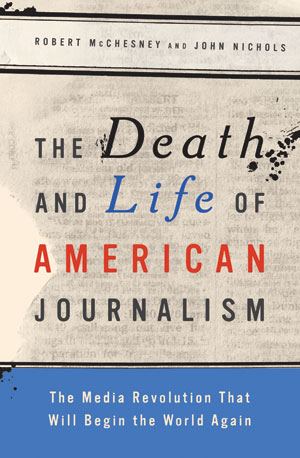
 I’ve been so busy trying to cover breaking developments related to Washington’s new efforts to “save journalism” (FTC) and steer the “future of media” (FCC) — see all my recent essays & papers here — that I forgot to do a formal book review of the book that is partially responsible for whipping policymakers into a lather about this issue: The Death and Life of American Journalism, the media-takeover manifesto by the neo-Marxist media scholar Robert W. McChesney and Nation editor John Nichols. Their book is horrifying in its imperial ambitions since it invites the government become the High Lord and Protector of the Fourth Estate. [For an in-depth look at all of McChesney’s disturbing views on these issues, see: “Free Press, Robert McChesney & the “Struggle” for Media.”] Anyway, I put together a formal review of the book for City Journal. It’s online here and I’ve also pasted it down below.
A Media Welfare State?
by Adam Thierer
Imagine a world of “post-corporate” newsrooms, where the state serves as the primary benefactor of the Fourth Estate. Billions flow from bureaucracies to media entities and individual journalists in the name of sustaining a “free press.” And this new media welfare state is funded by steep taxes on our mobile phones, broadband connections, and digital gadgets.
Sound Orwellian? Well, it’s the blueprint for a press takeover drawn up by Robert W. McChesney and John Nichols in their new book,
The Death and Life of American Journalism. McChesney, the prolific neo-Marxist media scholar who teaches at the University of Illinois at Urbana-Champaign, and Nichols, a journalist with The Nation, aren’t shy about their intentions. Along with Free Press, the absurdly misnamed regulatory activist group they co-founded, McChesney and Nichols outline a self-described “radical” agenda for what they hope will become a media “revolution.” And, shockingly, some folks in the Obama administration are listening. Continue reading →
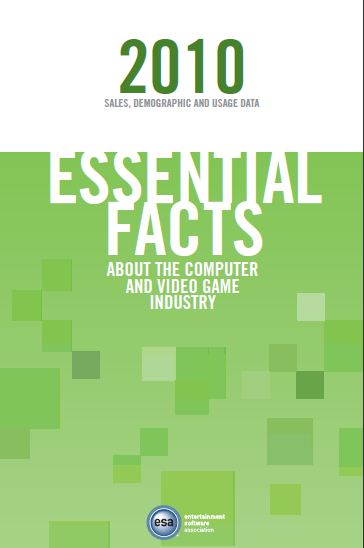
 The Entertainment Software Association, which represents the video game industry, has just released its latest “Essential Facts about the Computer and Video Game Industry” publication. It’s a handy annual resource that I always look forward to reading. There are many interesting facts and figures found in the report, but here a few worth calling out from the data they have aggregated:
- 93% of the time parents are present at the time games are purchased or rented
- 64% of parents believe games are a positive part of their children’s lives
- 86% of the time children receive their parents’ permission before purchasing or renting a game
- 48% of parents play computer and video games with their children at least weekly
- 97% of parents report always or sometimes monitoring the games their children play
- 76% of parents believe that the parental controls available in all new video game consoles are useful
The survey also bolsters the findings of many other polls and reports which have found that parents employ a variety of what I have labeled “household media rules” to monitor or control their children’s media consumption: Continue reading →
Today, the Federal Communications Commission (FCC) voted along party lines to adopt a Notice of Inquiry opening a new proceeding to regulate the Internet by reclassifying it under Title II of the Communications Act. FCC Chairman Julius Genachowski calls this his “Third Way” plan. In a PFF press release, I issued the following response:
In its ongoing ‘by-any-means-necessary’ quest to regulate the Internet via Net Neutrality mandates, Chairman Genachowski’s FCC continues to flaunt the rule of law and magically invent its own authority as it goes along. If this Chairman wants to bring the Net under his thumb and regulate broadband networks like plain-vanilla public utilities, he should ask Congress for the authority to pursue such imperial ambitions. As the law stands today, the FCC has no such authority. Indeed, the unambiguously deregulatory thrust of the Telecom Act of 1996 stands in stark contrast to Chairman Genachowski’s outdated vision for Big Government Broadband.
The FCC stands on the cusp of killing one of the great deregulatory success stories of modern economic history by reviving the discredited regulatory industrial policies of the 19th Century. The revisionism about that epoch is dead wrong: Price controls and protected markets limited choice and stifled innovation. With the agency rolling back the regulatory clock in this fashion, today marks the beginning of the Internet’s “Lost Decade” of stymied investment, innovation, and job creation as all sides wage battle over the legality of reclassification and its implementation.
 Earlier this year, while I was preparing this mega-filing to the Federal Communications Commission in its “Future of Media” proceeding, I read Uninhibited, Robust, and Wide-open: A Free Press for a New Century, by Lee C. Bollinger, who is the president of Columbia University. I had planned on reviewing it since I try to review almost every book I read, but it was hard for me to believe that anyone would take this book too seriously, so I just moved along.

 The Technology Liberation Front is the tech policy blog dedicated to keeping politicians' hands off the 'net and everything else related to technology.