We are entering a new era for technology policy in which many pundits and policymakers will use “algorithmic fairness” as a universal Get Out of Jail Free card when they push for new regulations on digital speech and innovation. Proposals to regulate things like “online safety,” “hate speech,” “disinformation,” and “bias” among other things often raise thorny definitional questions because of their highly subjective nature. In the United States, efforts by government to control these things will often trigger judicial scrutiny, too, because restraints on speech violate the First Amendment. Proponents of prior restraint or even ex post punishments understand this reality and want to get around it. Thus, in an effort to avoid constitutional scrutiny and lengthy court battles, they are engaged in a rebranding effort and seeking to push their regulatory agendas through a techno-panicky prism of “algorithmic fairness” or “algorithmic justice.”
Hey, who could possibly be against FAIRNESS and JUSTICE? Of course, the devil is always in the details as Neil Chilson and I discuss in our new paper for the The Federalist Society and Regulatory Transparency Project on, “The Coming Onslaught of ‘Algorithmic Fairness’ Regulations.” We document how federal and state policymakers from both parties are currently considering a variety of new mandates for artificial intelligence (AI), machine learning, and automated systems that, if imposed, “would thunder through our economy with one of the most significant expansions of economic and social regulation – and the power of the administrative state – in recent history.” Continue reading →
[Cross-posted from Medium.]
In an age of hyper-partisanship, one issue unites the warring tribes of American politics like no other: hatred of “Big Tech.” You know, those evil bastards who gave us instantaneous access to a universe of information at little to no cost. Those treacherous villains! People are quick to forget the benefits of moving from a world of Information Poverty to one of Information Abundance, preferring to take for granted all they’ve been given and then find new things to complain about.
But what mostly unites people against large technology platforms is the feeling that they are just too big or too influential relative to other institutions, including government. I get some of that concern, even if I strongly disagree with many of their proposed solutions, such as the highly dangerous sledgehammer of antitrust breakups or sweeping speech controls. Breaking up large tech companies would not only compromise the many benefits they provide us with, but it would undermine America’s global standing as a leader in information and computational technology. We don’t want that. And speech codes or meddlesome algorithmic regulations are on a collision course with the First Amendment and will just result in endless litigation in the courts.
There’s a better path forward. As President Ronald Reagan rightly said in 1987 when vetoing a bill to reestablish the Fairness Doctrine, “History has shown that the dangers of an overly timid or biased press cannot be averted through bureaucratic regulation, but only through the freedom and competition that the First Amendment sought to guarantee.” In other words, as I wrote in a previous essay about “The Classical Liberal Approach to Digital Media Free Speech Issues,” more innovation and competition are always superior to more regulation when it comes to encouraging speech and speech opportunities.
Continue reading →

[last updated 4/3/2025 – Check my Medium page for latest posts]
This a running list of all the essays and reports I’ve already rolled out on the governance of artificial intelligence (AI), machine learning (ML), and robotics. Why have I decided to spend so much time on this issue? Because this will become the most important technological revolution of our lifetimes. Every segment of the economy will be touched in some fashion by AI, ML, robotics, and the power of computational science. It should be equally clear that public policy will be radically transformed along the way.
Eventually, all policy will involve AI policy and computational considerations. As AI “eats the world,” it eats the world of public policy along with it. The stakes here are profound for individuals, economies, and nations. As a result, AI policy will be the most important technology policy fight of the next decade, and perhaps next quarter century. Those who are passionate about the freedom to innovate need to prepare to meet the challenge as proposals to regulate AI proliferate.
There are many socio-technical concerns surrounding algorithmic systems that deserve serious consideration and appropriate governance steps to ensure that these systems are beneficial to society. However,
there is an equally compelling public interest in ensuring that AI innovations are developed and made widely available to help improve human well-being across many dimensions. And that’s the case that I’ll be dedicating my life to making in coming years.
Here’s the list of what I’ve done so far. I will continue to update this as new material is released: Continue reading →
A growing number of conservatives are calling for Big Government censorship of social media speech platforms. Censorship proposals are to conservatives what price controls are to radical leftists: completely outlandish, unworkable, and usually unconstitutional fantasies of controlling things that are ultimately much harder to control than they realize. And the costs of even trying to impose and enforce such extremist controls are always enormous.
Earlier this year,
The Wall Street Journal ran a response I wrote to a proposal set forth by columnist Peggy Noonan in which she proposed banning everyone under 18 from all social-media sites (“We Can Protect Children and Keep the Internet Free,” Apr. 15). I expanded upon that letter in an essay here entitled, “Should All Kids Under 18 Be Banned from Social Media?” National Review also recently published an article penned by Christine Rosen in which she also proposes to “Ban Kids from Social Media.” And just this week, Zach Whiting of the Texas Public Policy Foundation published an essay on “Why Texas Should Ban Social Media for Minors.”
I’ll offer a few more thoughts here in addition to what I’ve already said elsewhere. First, here is my response to the Rosen essay. National Review gave me 250 words to respond to her proposal:
While admitting that “law is a blunt instrument for solving complicated social problems,” Christine Rosen (“Keep Them Offline,” June 27) nonetheless downplays the radicalness of her proposal to make all teenagers criminals for accessing the primary media platforms of their generation. She wants us to believe that allowing teens to use social media is the equivalent of letting them operate a vehicle, smoke tobacco, or drink alcohol. This is false equivalence. Being on a social-media site is not the same as operating two tons of steel and glass at speed or using mind-altering substances.
Teens certainly face challenges and risks in any new media environment, but to believe that complex social pathologies did not exist before the Internet is folly. Echoing the same “lost generation” claims made by past critics who panicked over comic books and video games, Rosen asks, “Can we afford to lose another generation of children?” and suggests that only sweeping nanny-state controls can save the day. This cycle is apparently endless: Those “lost generations” grow up fine, only to claim it’s the
next generation that is doomed!
Rosen casually dismisses free-speech concerns associated with mass-media criminalization, saying that her plan “would not require censorship.” Nothing could be further from the truth. Rosen’s prohibitionist proposal would deny teens the many routine and mostly beneficial interactions they have with their peers online every day. While she belittles media literacy and other educational and empowerment-based solutions to online problems, those approaches continue to be a better response than the repressive regulatory regime she would have Big Government impose on society.
I have a few more things to say beyond these brief comments. Continue reading →
On December 13th, I will be participating in an Atlas Network panel on, “Big Tech, Free Speech, and Censorship: The Classical Liberal Approach.” In anticipation of that event, I have also just published a new op-ed for The Hill entitled, “Left and right take aim at Big Tech — and the First Amendment.” In this essay, I expand upon that op-ed and discuss the growing calls from both the Left and the Right for a variety of new content regulations. I then outline the classical liberal approach to concerns about free speech platforms more generally, which ultimately comes down to the proposition that innovation and competition are always superior to government regulation when it comes to content policy.
In the current debates, I am particularly concerned with calls by many conservatives for more comprehensive governmental controls on speech policies enforced by various private platforms, so I will zero in on those efforts in this essay. First, here’s what both the Left and the Right share in common in these debates: Many on both sides of the aisle desire more government control over the editorial decisions made by private platforms. They both advocate more political meddling with the way private firms make decisions about what types of content and communications are allowed on their platforms. In today’s hyper-partisan world,” I argue in my
Hill column, “tech platforms have become just another plaything to be dominated by politics and regulation. When the ends justify the means, principles that transcend the battles of the day — like property rights, free speech and editorial independence — become disposable. These are things we take for granted until they’ve been chipped away at and lost.”
Despite a shared objective for greater politicization of media markets, the Left and the Right part ways quickly when it comes to the underlying objectives of expanded government control. As I noted in my
Hill op-ed:
there is considerable confusion in the complaints both parties make about “Big Tech.” Democrats want tech companies doing more to limit content they claim is hate speech, misinformation, or that incites violence. Republicans want online operators to do less, because many conservatives believe tech platforms already take down too much of their content.
This makes life very lonely for free speech defenders and classical liberals. Usually in the past, we could count on the Left to be with us in some free speech battles (such as putting an end to “indecency” regulations for broadcast radio and television), while the Right would be with us on others (such as opposition to the “Fairness Doctrine,” or similar mandates). Today, however, it is more common for classical liberals to be fighting with both sides about free speech issues.
My focus is primarily on the Right because, with the rise of Donald Trump and “national conservatism,” there seems to be a lot of soul-searching going on among conservatives about their stance toward private media platforms, and the editorial rights of digital platforms in particular. Continue reading →
Over at Discourse magazine I’ve posted my latest essay on how conservatives are increasingly flirting with the idea of greatly expanding regulatory control of private speech platforms via some sort of common carriage regulation or new Fairness Doctrine for the internet. It begins:
Conservatives have traditionally viewed the administrative state with suspicion and worried about their values and policy prescriptions getting a fair shake within regulatory bureaucracies. This makes their newfound embrace of common carriage regulation and media access theory (i.e., the notion that government should act to force access to private media platforms because they provide an essential public service) somewhat confusing. Recent opinions from Supreme Court Justice Clarence Thomas as well as various comments and proposals of Sen. Josh Hawley and former President Trump signal a remarkable openness to greater administrative control of private speech platforms.
Given the takedown actions some large tech companies have employed recently against some conservative leaders and viewpoints, the frustration of many on the right is understandable. But why would conservatives think they are going to get a better shake from state-regulated monopolists than they would from today’s constellation of players or, more importantly, from a future market with other players and platforms?
I continue on to explain why conservatives should be skeptical of the administrative state being their friend when it comes to the control of free speech. I end by reminding conservatives what President Ronald Reagan said in his 1987 veto of legislation to reestablish the Fairness Doctrine: “History has shown that the dangers of an overly timid or biased press cannot be averted through bureaucratic regulation, but only through the freedom and competition that the First Amendment sought to guarantee.”
Read more at
Discourse, and down below you will find several other recent essays I’ve written on the topic.
After a slight delay, Jurimetrics has finally published my latest law review article, “Soft Law in U.S. ICT Sectors: Four Case Studies.” It is part of a major symposium that Arizona State University (ASU) Law School put together on “Governing Emerging Technologies Through Soft Law: Lessons For Artificial Intelligence” for the journal. I was 1 of 4 scholars invited to pen foundational essays for this symposium. Jurimetrics is a official publication of the American Bar Association’s Section of Science & Technology Law.
This report was a major undertaking that involved dozens of interviews, extensive historic research, several events and presentations, and then numerous revisions before the final product was released. The final PDF version of the journal article is attached.
Here is the abstract: Continue reading →
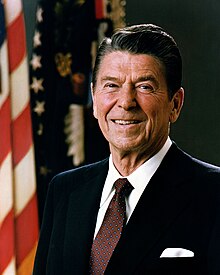 With many conservative policymakers and organizations taking a sudden pro-censorial turn and suggesting that government regulation of social media platforms is warranted, it’s a good time for them to re-read President Ronald Reagan’s 1987 veto of Fairness Doctrine legislation. Here’s the key line:
History has shown that the dangers of an overly timid or biased press cannot be averted through bureaucratic regulation, but only through the freedom and competition that the First Amendment sought to guarantee.
That wisdom is just as applicable today when some conservatives suggest that government intervention is needed to address what they regardless as “bias” or “unfair” treatment on Twitter, Facebook, YouTube, or whatever else. Ignoring the fact that such meddling would likely violate property rights and freedom of contract — principles that most conservatives say they hold dear — efforts to empower the Federal Communications Commission, the Federal Trade Commission, or other regulators would be hugely misguided on First Amendment grounds.
President Reagan understood that there was a better way to approach these issues that was rooted in innovation and First Amendment protections. Here’s hoping that conservatives remember his sage advice. Read his entire veto message here.
Additional Reading:
[Co-authored with Connor Haaland and originally published on The Bridge as, “Do Our Leaders Believe in Free Speech and Online Freedom Anymore?”]
 A major policy battle has developed regarding the wisdom of regulating social media platforms in the United States, with the internet’s most important law potentially in the crosshairs. Leaders in both major parties are calling for sweeping regulation.
Specifically, President Trump and his presumptive opponent in the coming presidential election, former Vice President Joe Biden, have both called for “Section 230” of the Communications Decency Act to be repealed. Last week, the president took a misguided step in this direction by signing an executive order that, if fully carried out, will result in significantly greater regulation of the internet and of speech.
A Growing Call to Regulate Internet Platforms
The ramifications of these threats and steps could not be more profound. Without Section 230—also known as “the 26 words that created the internet”—we would have a much less advanced internet ecosystem. Twitter, Facebook, YouTube, and Wikipedia would have never grown as quickly. Indeed, the repeal of Section 230 means many fewer jobs, less information distribution, and, frankly, less joy.
Shockingly, by backing Trump’s recent push for regulating these internet platforms, many conservatives are betraying their own principles—the ones that support freedom of expression and the ability to run private businesses without government interference.
Section 230 limits the liability online intermediaries face for the content and communications that travel over their networks. The immunities granted by Section 230 let online speech and commerce flow freely, without the constant threat of legal action or onerous liability looming overhead for digital platforms. To put it another way, without this provision, today’s vibrant internet ecosystem likely would not exist. Continue reading →
President Trump and his allies have gone to war with social media sites and digital communications platforms like Twitter, Facebook, and Google. Decrying supposed anti-conservative “bias,” Trump has even floated an Executive Order aimed at “Preventing Online Censorship,” that entails many new forms of government meddling with these private speech platforms. Section 230 is their crosshairs and First Amendment restraints are being thrown to the wind.
Various others have already documented the many legal things wrong with Trump’s call for greater government oversight of private speech platforms. I want to focus on something slightly different here: The surprising ideological origins of what Trump and his allies are proposing. Because for those of us who are old-timers and have followed communications and media policy for many decades, this moment feels like deja vu all over again, but with the strange twist that supposed “conservatives” are calling for a form of communications collectivism that used to be the exclusive province of hard-core Leftists.
To begin, the truly crazy thing about President Trump and some conservatives saying that social media should be regulated as public forums is not just that they’re abandoning free speech rights, it’s that they’re betraying
property rights, too. Treating private media like a “public square” entails a taking of private property. Amazingly, Trump and his followers have taken over the old “media access movement” and given it their own spin. Continue reading →

 The Technology Liberation Front is the tech policy blog dedicated to keeping politicians' hands off the 'net and everything else related to technology.
Running List of My Research on AI, ML & Robotics Policy
by Adam Thierer on July 29, 2022 · 0 comments
[last updated 4/3/2025 – Check my Medium page for latest posts]
This a running list of all the essays and reports I’ve already rolled out on the governance of artificial intelligence (AI), machine learning (ML), and robotics. Why have I decided to spend so much time on this issue? Because this will become the most important technological revolution of our lifetimes. Every segment of the economy will be touched in some fashion by AI, ML, robotics, and the power of computational science. It should be equally clear that public policy will be radically transformed along the way.
Eventually, all policy will involve AI policy and computational considerations. As AI “eats the world,” it eats the world of public policy along with it. The stakes here are profound for individuals, economies, and nations. As a result, AI policy will be the most important technology policy fight of the next decade, and perhaps next quarter century. Those who are passionate about the freedom to innovate need to prepare to meet the challenge as proposals to regulate AI proliferate.
There are many socio-technical concerns surrounding algorithmic systems that deserve serious consideration and appropriate governance steps to ensure that these systems are beneficial to society. However, there is an equally compelling public interest in ensuring that AI innovations are developed and made widely available to help improve human well-being across many dimensions. And that’s the case that I’ll be dedicating my life to making in coming years.
Here’s the list of what I’ve done so far. I will continue to update this as new material is released: Continue reading →