A growing number of conservatives are calling for Big Government censorship of social media speech platforms. Censorship proposals are to conservatives what price controls are to radical leftists: completely outlandish, unworkable, and usually unconstitutional fantasies of controlling things that are ultimately much harder to control than they realize. And the costs of even trying to impose and enforce such extremist controls are always enormous.
I’ll offer a few more thoughts here in addition to what I’ve already said elsewhere. First, here is my response to the Rosen essay. National Review gave me 250 words to respond to her proposal:
While admitting that “law is a blunt instrument for solving complicated social problems,” Christine Rosen (“Keep Them Offline,” June 27) nonetheless downplays the radicalness of her proposal to make all teenagers criminals for accessing the primary media platforms of their generation. She wants us to believe that allowing teens to use social media is the equivalent of letting them operate a vehicle, smoke tobacco, or drink alcohol. This is false equivalence. Being on a social-media site is not the same as operating two tons of steel and glass at speed or using mind-altering substances.
Teens certainly face challenges and risks in any new media environment, but to believe that complex social pathologies did not exist before the Internet is folly. Echoing the same “lost generation” claims made by past critics who panicked over comic books and video games, Rosen asks, “Can we afford to lose another generation of children?” and suggests that only sweeping nanny-state controls can save the day. This cycle is apparently endless: Those “lost generations” grow up fine, only to claim it’s the
next generation that is doomed!
Rosen casually dismisses free-speech concerns associated with mass-media criminalization, saying that her plan “would not require censorship.” Nothing could be further from the truth. Rosen’s prohibitionist proposal would deny teens the many routine and mostly beneficial interactions they have with their peers online every day. While she belittles media literacy and other educational and empowerment-based solutions to online problems, those approaches continue to be a better response than the repressive regulatory regime she would have Big Government impose on society.
I have a few more things to say beyond these brief comments. Continue reading →
Slate recently published an astonishing piece of revisionist history under the title, “Bring Back the Golden Age of Broadcast Regulation,” which suggested that the old media regulatory model of the past would be appropriate for modern digital media providers and platforms. In the essay, April Glaser suggests that policymakers should resurrect the Fairness Doctrine and a host of old Analog Era content controls to let regulatory bureaucrats address Digital Age content moderation concerns.
In a tweetstorm, I highlighted a few examples of why the so-called Golden Era wasn’t so golden in practice. I began by noting that the piece ignores the troubling history of FCC speech controls and unintended consequences of regulation. That regime gave us limited, bland choices–and a whole host of First Amendment violations. We moved away from that regulatory model for very good reasons.
Policy incentives matter and have a profound affect on the innovative capacity of a nation. If policymakers erect more obstacles to innovation, it will encourage entrepreneurs to look elsewhere when considering the most hospitable place to undertake their innovative activities. This is “global innovation arbitrage,” a topic we’ve discussed many times here in the past. I’ve defined it as, “the idea that innovators can, and will with increasingly regularity, move to those jurisdictions that provide a legal and regulatory environment more hospitable to entrepreneurial activity.” We see innovation arbitrage happening in high-tech fields as far-ranging as drones, driverless cars, and genetics,among others.
US policymakers might want to consider this danger before the nation loses its competitive advantage in various high-tech fields. Today’s most pressing example arrives in the form of potentially burdensome new export control regulations. In late 2018, the US Department of Commerce’s Bureau of Industry and Security announced a “Review of Controls for Certain Emerging Technologies,” which launched an inquiry about whether to greatly expand the list of technologies that would be subjected to America’s complex export control regulations. Most of the long list of technologies under consideration (such as artificial intelligence, robotics, 3D printing, and advanced computing technologies) were “dual-use” in nature, meaning that they have many peaceful applications.
This week I will be traveling to Montreal to participate in the 2018 G7 Multistakeholder Conference on Artificial Intelligence. This conference follows the G7’s recent Ministerial Meeting on “Preparing for the Jobs of the Future” and will also build upon the G7 Innovation Ministers’ Statement on Artificial Intelligence. The goal of Thursday’s conference is to, “focus on how to enable environments that foster societal trust and the responsible adoption of AI, and build upon a common vision of human-centric AI.” About 150 participants selected by G7 partners are expected to participate, and I was invited to attend as a U.S. expert, which is a great honor.
I look forward to hearing and learning from other experts and policymakers who are attending this week’s conference. I’ve been spending a lot of time thinking about the future of AI policy in recent books, working papers, essays, and debates. My most recent essay concerning a vision for the future of AI policy was co-authored with Andrea O’Sullivan and it appeared as part of a point/counterpoint debate in the latest edition of the Communications of the ACM. The ACM is the Association for Computing Machinery, the world’s largest computing society, which “brings together computing educators, researchers, and professionals to inspire dialogue, share resources, and address the field’s challenges.” The latest edition of the magazine features about a dozen different essays on “Designing Emotionally Sentient Agents” and the future of AI and machine-learning more generally.
In our portion of the debate in the new issue, Andrea and I argue that “Regulators Should Allow the Greatest Space for AI Innovation.” “While AI-enabled technologies can pose some risks that should be taken seriously,” we note, “it is important that public policy not freeze the development of life-enriching innovations in this space based on speculative fears of an uncertain future.” We contrast two different policy worldviews — the precautionary principle versus permissionless innovation — and argue that:
artificial intelligence technologies should largely be governed by a policy regime of permissionless innovation so that humanity can best extract all of the opportunities and benefits they promise. A precautionary approach could, alternatively, rob us of these life-saving benefits and leave us all much worse off.
That’s not to say that AI won’t pose some serious policy challenges for us going forward that deserve serious attention. Rather, we are warning against the dangers of allowing worst-case thinking to be the default position in these discussions. Continue reading →
“He’s making a list and checking it twice. Gonna find out who’s naughty and nice.”
With the Christmas season approaching, apparently it’s not just Santa who is making a list. The Trump Administration has just asked whether a long list of emerging technologies are naughty or nice — as in whether they should be heavily regulated or allowed to be developed and traded freely.
If they land on the naughty list, these technologies could be subjected to complex export control regulations, which would limit research and development efforts in many emerging tech fields and inadvertently undermine U.S. innovation and competitiveness. Worse yet, it isn’t even clear there would be any national security benefit associated with such restrictions.
From Light-Touch to a Long List
Generally speaking, the Trump Administration has adopted a “light-touch” approach to the regulation of emerging technology and relied on more flexible “soft law” approaches to high-tech policy matters. That’s what makes the move to impose restrictions on the trade and usage of these emerging technologies somewhat counter-intuitive. On November 19, the Department of Commerce’s Bureau of Industry and Security launched a “Review of Controls for Certain Emerging Technologies.” The notice seeks public comment on “criteria for identifying emerging technologies that are essential to U.S. national security, for example because they have potential conventional weapons, intelligence collection, weapons of mass destruction, or terrorist applications or could provide the United States with a qualitative military or intelligence advantage.” Continue reading →
On Thursday, it was my great pleasure to participate in a Washington Legal Foundation (WLF) event on “Online Privacy Regulation: The Challenge of Defining Harm.” The entire event video can be found on YouTube here, but down below I pasted the clip of just my remarks. Other speakers at the event included: FTC Commissioner Maureen K. Ohlhausen, Commissioner; John B. Morris, Jr., the Associate Administrator and Director of Internet Policy athe U.S. Department of Commerce’s National Telecommunications and Information Administration; and Katherine Armstrong, Counsel at the law firm of Hogan Lovells. Glenn Lammi of the WLF moderated the session.
My remarks drew upon a few recent law review articles I have published relating digital privacy debates to previous debates over free speech and online child safety issues. (Here are those articles: 1, 2, 3).
If there are two general principles that unify my recent work on technology policy and innovation issues, they would be as follows. To the maximum extent possible:
We should avoid preemptive and precautionary-based regulatory regimes for new innovation. Instead, our policy default should be innovation allowed (or “permissionless innovation”) and innovators should be considered “innocent until proven guilty” (unless, that is, a thorough benefit-cost analysis has been conducted that documents the clear need for immediate preemptive restraints).
We should avoid rigid, “top-down” technology-specific or sector-specific regulatory regimes and/or regulatory agencies and instead opt for a broader array of more flexible, “bottom-up” solutions (education, empowerment, social norms, self-regulation, public pressure, etc.) as well as reliance on existing legal systems and standards (torts, product liability, contracts, property rights, etc.).
Weaver argues that new robot technology “is going to develop fast, almost certainly faster than we can legislate it. That’s why we need to get ahead of it now.” In order to preemptively address concerns about new technologies such as driverless cars or commercial drones, “we need to legislate early and often,” Weaver says. Stated differently, Weaver is proposing “precautionary principle”-based regulation of these technologies. The precautionary principle generally refers to the belief that new innovations should be curtailed or disallowed until their developers can prove that they will not cause any harms to individuals, groups, specific entities, cultural norms, or various existing laws, norms, or traditions.
Calo argues that we need “the establishment of a new federal agency to deal with the novel experiences and harms robotics enables” since there exists “distinct but related challenges that would benefit from being examined and treated together.” These issues, he says, “require special expertise to understand and may require investment and coordination to thrive.
I’ll address both Weaver and Calo’s proposals in turn. Continue reading →
We spend a lot of time here defending the simple proposition that flexible free-market pricing is a good thing. You would think that in 2012 we wouldn’t need to do so, but there’s a growing movement afoot today by some academics, regulatory activists, and public policymakers to have government start asserting more authority over broadband pricing. In particular, they want Congress, the FCC, or state officials to investigate and possibly even regulate efforts by wireline and wireless broadband carriers to use usage-based pricing and data caps as a method of calibrating supply and demand. This was the focus of my last weekly Forbes column, “The Specter Of Broadband Price Controls.” In the piece I note that:
Data caps and usage-based pricing are forms of what economists refer to as price discrimination. Although viewed with suspicion by some policymakers and regulatory-minded academics and activists, price discrimination is widely recognized to improve consumer welfare. Price-differentiated and prioritized services are part of almost every industrial sector in our capitalist economy. Notable examples include airline and hotel reservations, prioritized shipping services, amusement park passes, and fuel and energy pricing. Economists agree that price discrimination represents a sensible way to calibrate supply and demand while ensuring the fixed costs of doing business get covered. Consumers benefit from such pricing experimentation by gaining more options while firms gain more certainty about investment and service decisions.
This week, we’ve seen reports in both The New York Times (“Stage Set for Showdown on Online Privacy“) and The Wall Street Journal (“Watchdog Planned for Online Privacy“) that the Obama Administration is inching closer toward adopting a new Internet regulatory regime in the name of protecting privacy online. In this essay, I want to talk about information control regimes, not from a normative perspective, but from a practical one. In doing so, I will compare the relativecomplexities associated with controlling various types of information flows to protect against four theoretical information harms: objectionable content, defamation, copyright, and privacy.
From a normative perspective, there are many arguments for and against various forms of information control. Here, for example, are the reasons typically given for why society might want to impose regulations on the Internet (or other communications channels) to address each of the four issues identified above:
Content control / Censorship: We must control information flows to protect children from objectionable content or all citizens against some other form of supposedly harmful speech (hate speech, terrorist recruitment, etc).
Defamation control: We must control information flows to protect people’s reputations.
Copyright control: We must control information flows to protect the property rights of creators against unauthorized use / distribution.
Privacy control: We must control information flows to protect against information flows that include information about individuals.
Again, there are plenty of good normative arguments in the opposite direction, many of which are based on free speech considerations since, by definition, information control regimes limit the flow of forms of speech. For privacy, I discussed such speech-related considerations in my essay on “Two Paradoxes of Privacy Regulation.” But what about the administrative or enforcement burdens associated with each form of information control? I increasingly find that question as interesting as the normative considerations.
The Parents Television Council (PTC) released a new report today entitled Women in Peril: A Look at TV’s Disturbing New Storyline Trend. The report argues that “by depicting violence against women with increasing frequency, or as a trivial, even humorous matter, the broadcast networks may ultimately be contributing to a desensitized atmosphere in which people view aggression and violence directed at women as normative, even acceptable,” said PTC President Tim Winter. As evidence the report cites… Nicole Kidman. OK, it cites more than Nicole Kidman, but the 7-page report and accompanying press release does seem to place a lot of stock in the fact that, while being questioning by a House Foreign Affairs subcommittee hearing about violence against women overseas, “Ms. Kidman conceded that Hollywood has probably contributed to violence against women by portraying them as weak sex objects, according to the Associated Press.” I’m not sure what Ms. Kidman was doing testifying before Congress on the matter of violence against women overseas — dare I suggest some congressmen were out for another photo-op with a Hollywood celeb? — but the better question is whether Ms. Kidman’s opinion has any bearing on the question of what relationship, if any, there is between televised violence and real-world violence against women. (Incidentally, if she really feels passionately about all this, is she prepared to go back and recut some of her old scenes in “Dead Calm,” “To Die For,” and “Eyes Wide Shut“?)
But let’s not nitpick about the credentials Ms. Kidman brings to the table or whether it makes any sense for PTC to elevate her opinions to proof of theory when it comes to a supposed connection between depictions of violence against women in film or television and real world acts of violence against women. PTC, however, suggests that’s exactly what is going on today. They allude to a few lab studies which are of the “monkey see, monkey do” variety — where the results of artificial lab experiments are used to claim that watching depictions of violence will turn us all into killing machines, rapists, robbers, or just plain ol’ desensitized thugs.
There’s just one problem with such studies, and the PTC report: Reality. Continue reading →
The Technology Liberation Front is the tech policy blog dedicated to keeping politicians' hands off the 'net and everything else related to technology. Learn more about TLF →

 This week I will be traveling to Montreal to participate in the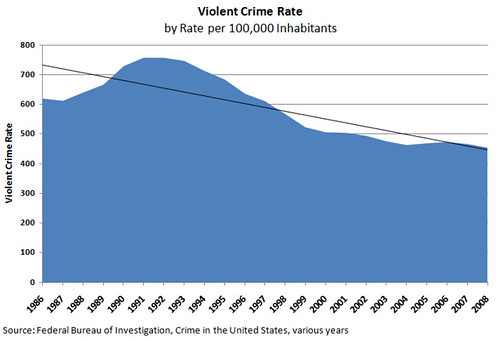
 The Technology Liberation Front is the tech policy blog dedicated to keeping politicians' hands off the 'net and everything else related to technology.