As a cyber-libertarian, I’ve been lucky enough to work with people of all ideological stripes in pursuit of various public policy objectives. I’ve made selective alliances with people on the Right on economic policy issues (like opposing Net Neutrality regulation, Internet taxes, etc) and also worked closely with folks on the Left on speech and culture issues (content controls, anonymity, online safety concerns, etc).
While engaging with with people on both sides of the political fence, I’m often struck by some of their internal inconsistencies. Conservatives, for example, talk about a big game about personal responsibility on some issues, but quickly abandon that notion when they claim media content or online speech should be regulated by the State (typically “for the children.”) In this essay, I’d like to discuss interesting inconsistencies on the political Left, especially among advocates of strong privacy regulation (most of whom tend to be Left-leaning in their worldview). In particular, here are the two things I find most interesting about modern privacy advocates:
(1)
Most privacy advocates are vociferous First Amendment supporters, yet they abandon their free speech values and corresponding constitutional tests when it comes to privacy regulation. When it comes to proposals to regulate media content or online speech, most folks on the Left have a very principled, clear-cut position: people (or parents) should take responsibility for unwanted information flows in their lives (or the lives of their children). In particular, they rightly argue that the many user empowerment tools on the market (filters, monitoring software, other parental control technologies) constitute a so-called “less-restrictive means” of controlling content when compared to government regulation.
Advocacy groups that I have a great deal of respect for and work with quite closely on these issues–such as EFF, CDT and ACLU—all take this position. Generally speaking, they argue that, when it comes to speech regulation, “household standards” (user-level controls) should trump “community standards” (government regulation). And in Court—where I frequently file joint amicus briefs with them—they repeatedly employ the “less-restrictive means” test to counter government efforts to regulate information flows.
But when it comes to privacy, they throw all this out the window! Continue reading →
 Emotions ran high at this week’s Privacy Identity and Innovation conference in Seattle. They usually do when the topic of privacy and technology is raised, and to me that was the real take-away from the event.
As expected, the organizers did an excellent job providing attendees with provocative panels, presentations and keynotes talks—in particular an excellent presentation from my former UC Berkeley colleague Marc Davis, who has just joined Microsoft.
Continue reading →
Two articles of interest in today’s Wall Street Journal with indirect impact on the debate over the future of Internet policy. First, there’s a front-page story (“Facing Budget Gaps, Cities Sell Parking, Airports, Zoo“) documenting how many cities are privatizing various services — including some considered “public utilities” — in order to help balance budgets. The article worries about “fire-sale” prices and the loss of long-term revenue because of the privatizations. But the author correctly notes that the more important rationale for privatization is that, “In many cases, the private takeover of government-controlled industry or services can result in more efficient and profitable operations.” Moreover, any concern about “fire-sale” prices and long-term revenue losses have to be stacked again the massive inefficiencies / costs associated with ongoing government management of resources /networks.
Of course, what’s so ironic about this latest privatization wave is that it comes at a time when some regulatory activists are clamoring for more regulation of the Internet and calling for broadband to be converted into a plain-vanilla public utility. For example, Free Press founder Robert McChesney has argued that “What we want to have in the U.S. and in every society is an Internet that is not private property, but a public utility.” That certainly doesn’t seem wise in light of the track record of past experiments with government-owned or regulated utilities. And the fact that we are talking about something as complex and fast-moving as the Internet and digital networks makes the task even more daunting.
Government mismanagement of complex technology projects was on display in a second article in today’s
Journal (“U.S. Reviews Tech Spending.”) Amy Schatz notes that “Obama administration officials are considering overhauling 26 troubled federal technology projects valued at as much as $30 billion as part of a broader effort by White House budget officials to cut spending. Projects on the list are either over budget, haven’t worked as expected or both, say Office of Management and Budget officials.” I’m pleased to hear that the Administration is taking steps to rectify such waste and mismanagement, but let’s not lose sight of the fact that this is the same government that the Free Press folks want to run the Internet. Not smart.
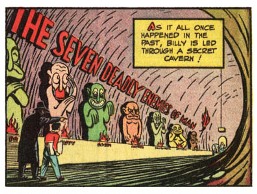
The Progress and Freedom Foundation has just published a white paper I wrote for them titled “The Seven Deadly Sins of Title II Reclassification (NOI Remix).” This is an expanded and revised version of an earlier blog post that looks deeply into the FCC’s pending Notice of Inquiry regarding broadband Internet access. You can download a PDF here.
I point out that beyond the danger of subjecting broadband Internet to extensive new regulations under the so-called “Third Way” approach outlined by FCC Chairman Julius Genachowski, a number of other troubling features in the Notice indicate an even broader agenda for the agency with regard to the Internet. Continue reading →
I continue to be mystified by the contention of some Net neutrality advocates that it is not a form of economic regulation. The reality, of course, is that Net neutrality would ban business models and necessitate price controls. If that ain’t regulation, I don’t know what is. As Robert Litan and Hal Singer note in their new Harvard Business Review essay, “Why Business Should Oppose Net Neutrality,” “Non-discrimination under the FCC’s net neutrality proposal means that ISPs cannot offer enhanced services beyond the plain-vanilla access service to content providers at any price.” Thus, any type of service prioritization or price discrimination would be prohibited under the FCC’s Net neutrality regulatory regime.
As I explained in this earlier essay and in the video below, this would be a disaster for investment, innovation, and consumer welfare. Differentiated and prioritized services and pricing are part of almost every industrial sector in a capitalistic economy, and there’s no reason things should it be any different for broadband. As Litan and Singer note, “The concept of premium services and upgrades should be second-nature to businesses. From next-day delivery of packages to airport lounges, businesses value the option of upgrading when necessary. That one customer chooses to purchase the upgrade while the next opts out would never be considered ‘discriminatory.'”
And let’s not forget, something has to pay for Internet access and investment in new facilities. Differentiated services can help by allowing carriers to price more intensive or specialized users and uses to ensure that carriers don’t have to hit everyone – including average household users – with the same bill for service. Why would we want to make that illegal through Net neutrality regulation and the misguided price control schemes of a bygone regulatory era?
http://www.youtube.com/v/AgxzFwqqFGw?fs=1&hl=en_US
The release of a joint policy framework from Google and Verizon this week touched off even more activity in the never-ending saga of Net Neutrality than the rumors about the possibility such an agreement was in the works did the week before.
Op-ed pages, business and technology news programs, and public radio’s precious moments were overrun with anxious talking heads denouncing or praising the latest developments, or even a few of us trying just to explain what was and was not actually being said and done.
That’s not how August is supposed to be in policyland, when Washington reverts to the swamp from which it came. (John Adams left early one summer during his Presidency and refused to return long after the heat had broken.) I had hoped at long last to get around to finalizing last year’s tax return or maybe fixing my perennially-broken irrigation system, but oh well. Continue reading →
 At ten A.M. Pacific this morning, CNET News.com asked if I could write an article unraveling the legal implications of a rumored deal between Google and Verizon on net neutrality. I didn’t see how I could analyze a deal whose terms (and indeed, whose existence) are unknown, but I thought it was a good opportunity to make note of several positive developments in the net neutrality war this summer.
Just as I was finishing the piece a few hours later, another shocker came when the FCC announced it was concluding talks it had been holding since June with the major net neutrality stakeholders. It’s possible the leaked story about Google and Verizon, and the feverish response to it, whipped up by the straggling remnants of a coalition aimed at getting an extreme version of net neutrality into U.S. law by any means necessary, soured the agency on what appeared to be productive negotiations. Or maybe they’ve just gone as far as they can for now. Continue reading →
If I ever had any hope of “keeping up” with developments in the regulation of information technology—or even the nine specific areas I explored in The Laws of Disruption—that hope was lost long ago. The last few months I haven’t even been able to keep up just sorting the piles of printouts of stories I’ve “clipped” from just a few key sources, including The New York Times, The Wall Street Journal, CNET News.com and The Washington Post.
I’ve just gone through a big pile of clippings that cover April-July. A few highlights: In May, YouTube surpassed 2 billion daily hits. Today, Facebook announced it has more than 500,000,000 members. Researchers last week demonstrated technology that draws device power from radio waves.
Continue reading →
 Better late than never, I’ve finally given a close read to the Notice of Inquiry issued by the FCC on June 17th. (See my earlier comments, “FCC Votes for Reclassification, Dog Bites Man”.) In some sense there was no surprise to the contents; the Commission’s legal counsel and Chairman Julius Genachowski had both published comments over a month before the NOI that laid out the regulatory scheme the Commission now has in mind for broadband Internet access.
Chairman Genachowski’s “Third Way” comments proposed an option that he hoped would satisfy both extremes. The FCC would abandon efforts to find new ways to meet its regulatory goals using “ancillary jurisdiction” under Title I (an avenue the D.C. Circuit had wounded, but hadn’t actually exterminated, in the Comcast decision), but at the same time would not go as far as some advocates urged and put broadband Internet completely under the telephone rules of Title II.
Continue reading →


 The Technology Liberation Front is the tech policy blog dedicated to keeping politicians' hands off the 'net and everything else related to technology.