In an earlier post, I mentioned an important new online child safety task force report that has just been released from the “Point Smart. Click Safe.” Blue Ribbon Working Group. It’s a great report and I encourage you to read the whole thing. It was my great pleasure to serve on this task force, and as we started finalizing our conclusions and recommendations, I started thinking about how much of what we were finding and recommending was consistent with what past online safety task forces had also concluded.
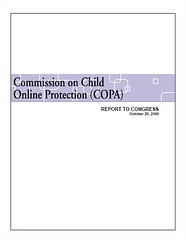
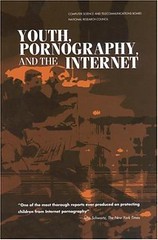
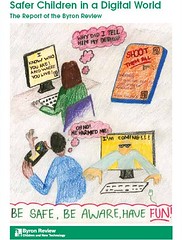
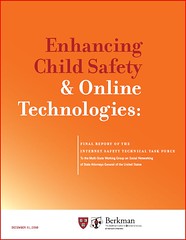
By way of background, over the past decade, five major online safety task forces or blue ribbon commissions have been convened to study online safety issues. Two of these task forces were convened in the United States and issued reports in 2000 (“COPA Commission”) and 2002 (“Thornburgh Commission“). Another was commissioned by the British government in 2007 and issued in a major report in March 2008 (“Byron Review“). Finally, two additional online safety task forces were formed in the U.S. in 2008 and concluded their work, respectively, in January (“Internet Safety Technical Task Force“) and July (“Point Smart. Click Safe.“) of 2009. [And yet another task force — the Online Safety Technology Working Group — was recently formed and has now gotten underway.]
In a new PFF white paper, ”
Five Online Safety Task Forces Agree: Education, Empowerment & Self-Regulation Are the Answer,” I walk through a chronological summary of each of these past task forces [click on covers of each report below to read them in their entirety] and highlight some of the similar themes and recommendations from them.
 Continue reading →
Rebecca MacKinnon has an important piece in the Wall Street Journal today about China’s “Green Dam Youth Escort” filtering mandate and the danger of this model catching on with other governments. “More and more governments — including democracies like Britain, Australia and Germany — are trying to control public behavior online, especially by exerting pressure on Internet service providers,” she notes. “Green Dam has only exposed the next frontier in these efforts: the personal computer.”
She’s right, and that’s cause for serious concern. Moreover, there’s the question of how corporations doing business in China should respond to demands and threats related to installing such filters. She notes:
In a world that includes child pornographers and violent hate groups, it is probably not reasonable to oppose all censorship in all situations. But if technical censorship systems are to be put in place, they must be sufficiently transparent and accountable so that they do not become opaque extensions of incumbent power — or get hijacked by politically influential interest groups without the public knowing exactly what is going on.
Which brings us back to companies: the ones that build and run Internet and telecoms networks, host and publish speech, and that now make devices via which citizens can go online and create more speech. Companies have a duty as global citizens to do all they can to protect users’ universally recognized right to free expression, and to avoid becoming opaque extensions of incumbent power — be it in China or Britain.
I generally agree with all that but this is a difficult issue and one that I have struggled with personally. (See this “Friendly Conversation about Corporate High-Tech Engagement with China” that Jim Harper and I had three years ago). But I do hope that more companies take a hard line with the Chinese as well as there own governemnts when it comes to filtering mandates or even restricitve parental control defaults and settings [an issue I wrote more about in this paper: “The Perils of Mandatory Parental Controls and Restrictive Defaults.”] On that note, kudos to the business groups that already signed on to a joint letter oppossing China’s new filtering mandate.
The first meeting of the Online Safety Technology Working Group (OSTWG) took place today and I just wanted to provide interested parties with relevant info and links in case they want to keep track of the task force’s work. As I mentioned back in late April, this new task force was established by the “Protecting Children in the 21st Century Act,” (part of the ‘‘Broadband Data Improvement Act’,’ Pub. L. No. 110-385) and it will report to the Assistant Secretary of Commerce for Communications and Information at the U.S. Department of Commerce’s National Telecommunications and Information Administration (NTIA).
I’m happy to be serving on this new working group and I am particularly honored to be serving as the chairman of 1 of the 4 subcommittees. The four subcommittees will address: data retention, child pornography, educational efforts, and parental controls technologies. I am chairing that last subcommittee on parental controls. The task force has about 35 members and we have a year to conduct our research and report back to Congress. Here are some relevant links from the NTIA website that provide additional details about this task force:
Of course, this is certainly not the first task force to explore online safety issues. There was the COPA Commission (2000), the “Thornburgh Commission” report (2002), the U.K. “Byron Commission” report (2008), the Harvard Berkman Center’s Internet Safety Technical Task Force (2008), and the NCTA-iKeepSafe-CommonSenseMedia “Point Smart, Click Safe” working group, which is due to issue its final report shortly. [Full disclosure: I was a member of that last two task forces as well.] I’m currently working on a short paper that attempts to summarize the remarkably similar findings of these important child safety working groups. Generally speaking, they all concluded that education and empowerment, not regulation, were the real keys to moving forward and making our kids safer online.
As I mentioned in a post last month, dozens of comments were filed with the Federal Communications Commission (FCC) as part of the agency’s “Child Safe Viewing Act” Notice of Inquiry. Again, this proceeding was required under the “Child Safe Viewing Act of 2007,” which Congress passed last year and President Bush signed last December. The goal of the bill and the FCC’s proceeding (MB 09-26) is to study “advanced blocking technologies” that “may be appropriate across a wide variety of distribution platforms, including wired, wireless, and Internet platforms.” I filed 150+ pages worth of comments in this matter, and here’s my analysis of why this bill and the FCC’s proceeding are worth monitoring closely.
Anyway, this week saw many of the same groups that filed before (and some new ones) file reply comments about those earlier submissions. To make things simple, I have collected most of the notable reply comments down below in case anyone is interested.
Continue reading →
The Federal Communications Commission (FCC) has just released a Notice of Inquiry (NOI) in the matter of “Implementation of the Child Safe Viewing Act; Examination of Parental Control Technologies for Video or Audio Programming.” (MB Docket No. 09-26) This NOI was required by S. 602, the “Child Safe Viewing Act of 2007,” which Congress passed last October and President Bush signed into law on December 2nd. The measure requires the FCC to examine:
(1) the existence and availability of advanced blocking technologies that are compatible with various communications devices or platforms;
(2) methods of encouraging the development, deployment, and use of such technology by parents that do not affect the packaging or pricing of a content provider’s offering; and
(3) the existence, availability, and use of parental empowerment tools and initiatives already in the market.
The Act defines the term “advanced blocking technologies” as “technologies that can improve or enhance the ability of a parent to protect his or her child from any indecent or objectionable video or audio programming, as determined by such parent.” Importantly, the Act also directs the agency to look into blocking technologies that “may be appropriate across a wide variety of distribution platforms, including
wired, wireless, and Internet platforms” and which “operate independently of ratings pre-assigned by the creator of such video or audio programming.” The Act requires that the FCC issue a report to Congress about these technologies no later than August 29, 2009.
When writing about the Child Safe Viewing Act shortly after its introduction in the summer of 2007, I noted that the measure potentially represented the beginning of “convergence-era content regulation” at the FCC. Those two clauses highlighted above are of particular importance in that regard. Congress has essentially invited the FCC to engage in unprecedented oversight of media platforms and ratings systems that the agency previously had very little ability to influence. Continue reading →
I’ve got a new PFF paper out today entitled, “Who Needs Parental Controls? Assessing the Relevant Market for Parental Control Technologies.” In this piece, I address the argument made by some media and Internet critics who say that government intervention (perhaps even censorship) may be necessary because parental control technologies are not widely utilized by most Americans. But, as I note in the paper, the question that these critics always fail to ask is: How many homes really need parental control technologies? The answer: Far fewer than you think. Indeed, the relevant universe of potential parental control users is actually quite limited.
I find that the percentage of homes that might need parental control technologies is certainly no greater than the 32% of U.S. households with children in them. Moreover, the relevant universe of potential parental control users is likely much less than that because households with very young children or older teens often have little need for parental control technologies. Finally, some households do not utilize parental control technologies because they rely on alternative methods of controlling media content and access in the home, such as household media rules. Consequently, policymakers should not premise regulatory proposals upon the limited overall “take-up” rate for parental control tools since only a small percentage of homes might actually need or want them.
If you don’t care to read the whole nerdy thing, I’ve created this short video summarizing the major findings of the paper.
http://www.youtube.com/v/a7Fnf3Ztt-U&hl=en&fs=1
And the document is embedded below the fold in a Scribd reader.
Continue reading →
The Internet Safety Technical Task Force (ISTTF), which was formed a year ago to study online safety concerns and technologies, today issued its final report to the U.S. Attorneys General who authorized its creation. It was a great honor for me to serve as a member of the ISTTF and I believe this Task Force and its report represent a major step forward in the discussion about online child safety in this country.
The ISTTF was very ably chaired by John Palfrey, co-director of Harvard University’s Berkman Center for Internet & Society, and I just want to express my profound thanks here to John and his team at Harvard for doing a great job herding cats and overseeing a very challenging process. I encourage everyone to examine the full ISTTF report and all the submissions, presentations, and academic literature that we collected. [It’s all here.] It was a comprehensive undertaking that left no stone unturned.
Importantly, the ISTTF convened (1) a Research Advisory Board (RAB),which brought together some of the best and brightest academic researchers in the field of child safety and child development and (2) a Technical Advisory Board (TAB), which included some of America’s leading technologists, who reviewed child safety technologies submitted to the ISTTF. I strongly recommend you closely examine the RAB literature review and TAB assessment of technologies because those reports provide very detailed assessments of the issues. They both represent amazing achievements in their respective arenas.
There are a couple of key takeaways from the ISTTF’s research and final 278-page report that I want to highlight here. Most importantly, like past blue-ribbon commissions that have studied this issue, the ISTTF has generally concluded
there is no silver-bullet technical solution to online child safety concerns. The better way forward is a “layered approach” to online child protection. Here’s how we put it on page 6 of the final report:
The Task Force remains optimistic about the development of technologies to enhance protections for minors online and to support institutions and individuals involved in protecting minors, but cautions against overreliance on technology in isolation or on a single technological approach. Technology can play a helpful role, but there is no one technological solution or specific combination of technological solutions to the problem of online safety for minors. Instead, a combination of technologies, in concert with parental oversight, education, social services, law enforcement, and sound policies by social network sites and service providers may assist in addressing specific problems that minors face online. All stakeholders must continue to work in a cooperative and collaborative manner, sharing information and ideas to achieve the common goal of making the Internet as safe as possible for minors.
Continue reading →
Today’s USA Today features a debate between the editors and me on the question of the impact media has on children and what should be done about it. Their editorial argues that “Today’s mass media penetrate deeply and quietly, inflicting real damage on young children, an increasing body of research shows.” Specifically, they are referring to a new study commissioned by Common Sense Media (CSM), which claims that a review of 173 studies shows “that a strong correlation exists between greater exposure and adverse health outcomes.”
In my response entitled “Don’t Scapegoat Media,” which appears in its entirety down below the fold, I argue that “Media have long been a convenient scapegoat for the woes of the world,” and that we must be careful not to assume correlation equals causation when surveying the impact of media on kids. After all, I argue, “how do [those studies] account for the other variables that influence youth development, including broken homes, bad parents, socioeconomic status, troubled peer relations, poor schools and so on? And how is media exposure weighted relative to these other influences? Is a beer ad really as much of a negative influence as an alcoholic parent?” Again, read my entire response below. [Of course, even if one assumes some media has an impact on some kids, there are plenty of ways for parents and guardians to take control over the media in their lives, as I have shown in my big book on the subject.]
I was also quoted in this Washington Post article about the new CSM study on Tuesday.
Continue reading →
Today, President Bush signed S. 602, “The Child Safe Viewing Act.”(CNet story here). The measure requires the Federal Communications Commission (FCC) to conduct an inquiry to examine the availability of, and methods of encouraging the use of, advanced blocking technologies that help parents protect their children from transmitted video and audio programming that the parents determine to be indecent or objectionable. The FCC has 270 days to complete the report.
I wrote about the measure more extensively when it passed the Senate back in October. As I noted in then, the measure was modified slightly when it passed through the Commerce Committee last year, but it still contains some provision that could be problematic. Specifically, as part of the FCC’s required study, the bill commands the FCC to “consider advanced blocking technologies” that:
- may be appropriate across a wide variety of distribution platforms, including wired, wireless, and Internet platforms;
- operate independently of ratings pre-assigned by the creator of such video or audio programming.
Those two provisions are cause for concern since they raise the specter of what I referred to as “convergence-era content regulation” in a PFF paper about the bill last year. It does so in two ways. First, it opens the door to FCC bureaucrats investigating media content controls for wireless and Internet platforms, something it has never been empowered to do before. Second, by specifying that these new advanced content blocking technologies should “operate independently of ratings pre-assigned by the creator,” the law seems to imply that existing voluntary rating and labeling systems cannot be trusted. That is a dangerous presumption that suggests the FCC might be able to come up with better media ratings on its own.
Continue reading →
Yesterday, the Senate passed S. 602, “The Child Safe Viewing Act of 2007,” which was introduced by Sen. Mark Pryor (D-AR) in February 2007. The bill requires the Federal Communications Commission (FCC) to study the market for “advance blocking technologies” (i.e., parental controls and rating systems) that parents can use to protect their kids from inappropriate content from various sources and platforms. On the surface, the measure seems harmless enough, but in practice, it could have some troubling long-term free speech implications if it leads to more government meddling with parental controls and ratings systems.
The measure requires the FCC to initiate a notice of inquiry to consider measures to examine:
- the existence and availability of advanced blocking technologies that are compatible with various communications devices or platforms;
- methods of encouraging the development, deployment, and use of such technology by parents that do not affect the packaging or pricing of a content provider’s offering; and
- the existence, availability, and use of parental empowerment tools and initiatives already in the market.
That all sounds harmless enough. Indeed, such a study could produce some useful information about the state of the parental controls marketplace. (Of course, I could save them some taxpayer dollars and just send copies of my big
Parental Controls & Online Child Safety report to all FCC officials!)
But it’s what comes next in the bill that causes me some heartburn. As part of the review mandated by the bill, S. 602 commands the FCC to “consider advanced blocking technologies that”:
Continue reading →

 The Technology Liberation Front is the tech policy blog dedicated to keeping politicians' hands off the 'net and everything else related to technology.
Reply Comments in FCC’s “Child Safe Viewing Act” Notice of Inquiry
by Adam Thierer on May 20, 2009 · 17 comments
As I mentioned in a post last month, dozens of comments were filed with the Federal Communications Commission (FCC) as part of the agency’s “Child Safe Viewing Act” Notice of Inquiry. Again, this proceeding was required under the “Child Safe Viewing Act of 2007,” which Congress passed last year and President Bush signed last December. The goal of the bill and the FCC’s proceeding (MB 09-26) is to study “advanced blocking technologies” that “may be appropriate across a wide variety of distribution platforms, including wired, wireless, and Internet platforms.” I filed 150+ pages worth of comments in this matter, and here’s my analysis of why this bill and the FCC’s proceeding are worth monitoring closely.
Anyway, this week saw many of the same groups that filed before (and some new ones) file reply comments about those earlier submissions. To make things simple, I have collected most of the notable reply comments down below in case anyone is interested. Continue reading →