 Tim Lee’s long anticipated Cato Institute Policy Analysis has been released today.
The Durable Internet: Preserving Network Neutrality without Regulation is a must-read for people on both sides of the debate over network neutrality regulation.
What I like best about this paper is how Tim avoids joining one “team” or another. He evenly gives each side its due – each side is right about some things, after all – and calls out the specific instances where he thinks each is wrong.
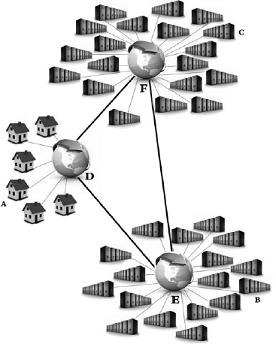
Tim makes the case for treating the “end-to-end principle” as an important part of the Internet’s fundamental design. Tim disagrees with the people who argue for a network with “smarter” innards and believes that neutrality advocates seek the best engineering for the network. But they are wrong to believe that the network is fragile or susceptible to control. The Internet’s end-to-end architecture is durable, despite examples where it is not an absolute.
Tim has history lessons for those who believe that regulatory control of network management will have salutary effects. Time and time again, regulatory agencies have fallen into service of the industries they regulate.
“In 1970,” Tim tells us, “a report released by a Ralph Nader group described the [Interstate Commerce Commission] as ‘primarily a forum at which transportation interests divide up the national transportation market.'” Such is the likely fate of the Internet were management of it given to regulators at the FCC and their lobbyist friends at Verizon, AT&T, Comcast, and so on.
This paper has something for everyone, and will be a reference work as the network neutrality discussion continues. Highly recommended: The Durable Internet: Preserving Network Neutrality without Regulation.
The conventional Beltway wisdom would be that net neutrality legislation should have a real chance now with the election of President-Elect Barack Obama and strengthened Democratic majorities in the Senate and House.
But there are two recent developments which make the case for net neutrality regulation less compelling.
Free Airwaves
The Federal Communications Commission approved the use of unlicensed wireless devices to operate in broadcast television spectrum on a secondary basis at locations where that spectrum is open, i.e., the television “white spaces.” In other words, a vast amount of spectrum will soon be available to provide broadband data and other services, and the spectrum will be free.
George Mason University Professor Thomas W. Hazlett notes that
[S]ome 250 million mobile subscribers in the US paid about $140 billion to make 2 trillion minutes’ worth of phone calls in 2007, accessing just 190MHz of radio spectrum. The digital TV band, in contrast, is allocated some 294MHz—and it’s more productive bandwidth. Tapping into this mother lode would unleash powerful waves of rivalry and innovation.
Continue reading →
SAN JOSE, Nov. 7 – This morning I’ve posted two articles on BroadbandCensus.com about the Wireless Communications Association’s conference here.
SAN JOSE, November 7 – Emboldened by their summertime victory against Comcast, advocates of network neutrality said Thursday that the next front in battle for the principle would be against wireless carriers who make “unreasonable” network management decisions.
read more
SAN JOSE, November 6 – It was Kevin Martin’s day to suck up praise from Silicon Valley. The chairman of the Federal Communications Commission – for about two more months – came to the Wireless Communications Association’s annual conference here on Thursday to be feted by many Googlers, including company co-founder Larry Page.
read more
Jesse Walker has a terrific feature story looking “Beyond the Fairness Doctrine” in this month’s issue of Reason magazine. I highly recommend it. It’s an in-depth exploration of what an Obama Administration means for the future of tech and media policy. Walker rightly opens the piece by noting that “The fairness doctrine is still dead, and it probably will stay dead even if Barack Obama becomes president.” The danger, however, is that an Obama FCC will still pursue a variety of onerous regulatory objectives that could do a great deal of damage to markets and free speech.
Walker touches upon the various issues that will likely be a priority for an Obama Administration and the Left-leaning media reformistas like Free Press, Media Access Project, Public Knowledge, and New America Foundation. Those policy issues include: net neutrality, “localism” mandates and increased “community oversight” regulations, media ownership rules, minority ownership requirements, increased merger meddling, spectrum policy, and other new “public interest” obligations.
Of course, as Walker also correctly points out, it is difficult to see how things could get much worse than they have been under Bush Administration’s FCC and the leadership of Chairman Kevin Martin. Walker was kind enough to quote my thoughts on this point: “Martin is the most regulatory Republican FCC Chairman in decades,” I told him. “He wants to control speech and will use whatever tools he has to get there.”
I stand by those words, but I am also aware that things could get worse — much worse — under a Democratic FCC influenced by radical Leftist activists like Free Press. Indeed, in our new book A Manifesto for Media Freedom, Brian Anderson and I inventory the many looming threats to media and technology freedom that exist today and show how most of them arise from the Left. As Walker notes in his article, however, it is unlikely that a re-empowered Democratic FCC would come right out of the gates with the same sort of command-and-control approaches they’ve employed in the past. And we’ll still have to worry about some right-of-center lawmakers and regulatory joining some of these misguided campaigns. “The real danger,” Walker concludes in his piece, “is more subtle and more mundane. It’s a bipartisan bureaucracy slowly, steadily increasing its power.” Make sure to read Jesse’s entire piece. Great stuff.
 The Progress & Freedom Foundation has just launched the new Center for Internet Freedom. CIF offers an alternative to the proliferation of advocacy groups calling for government intervention online by offering timely analyses and critiques of proposals that diminish the vital role of free markets, free speech and property rights. We aim to drive the Internet policy debate in new directions by emphasizing a layered approach of technological innovation, user education, user self-help, industry self-regulation, and the enforcement of existing laws consistent with the First Amendment. Such an approach is a less restrictive—and generally more effective—alternative to increased regulation.
Here are some of the issues I’ll be working on as CIF’s Director in conjunction with my esteemed colleagues Adam Thierer, Adam Marcus, and adjunct fellows:
- Defending online advertising as the lifeblood of online content & services, especially in the “Long Tail”;
- Emphasizing market solutions to problems of privacy protection, especially regarding the use of cookies and packet inspection data;
- Protecting online speech and expression both in the U.S. and abroad;
- Defending Section 230 immunity for Internet intermediaries;
- Opposing online taxation and legal barriers to e-commerce and digital payments, especially at the state and local levels; and
- Ensuring that Internet governance remains transparent and accountable without hampering the evolution of the Internet.
My colleague Barbara Esbin, a Senior Fellow and Director of the Center for Communications and Competition Policy at The Progress & Freedom Foundation, was asked to pen a short history of the net neutrality wars in the U.S. for a French publication, La Lettre de l’Autorité. Her essay provides an excellent, concise overview of where we’ve come from and where we might be heading on this front. I’ve pasted the entire essay down below, or you can download the PDF here.
Net Neutrality Regulation in the United States
by Barbara Esbin
PFF
Progress Snapshot
Release 4.21 October 2008
The United States moved closer to “Net Neutrality” regulation this year when the Federal Communications Commission found that Comcast, a cable broadband Internet service provider, violated a set of Internet policy principles the FCC adopted in 2005 by limiting peer-to-peer (P2P) traffic. The ruling was the culmination of a ten-year effort that began as a call for wholesale “open access” to the cable platform for third-party Internet service providers. Requests for open access first emerged in 1998 when the FCC considered AT&T’s acquisition of cable operator TCI. The FCC rejected open access, but the issue quickly re-emerged in a subsequent proceeding to determine the appropriate regulatory classification of cable Internet service. Depending on how the FCC categorized cable Internet service, it would either be subject to telecommunications “common carrier” requirements, “cable service” requirements, or treated as a then-unregulated “information service.”
In 2002, the FCC classified cable Internet service as an “information service.” This meant that the telecommunications common carrier requirements — that service be provided upon request, without unreasonable discrimination as to rates, terms and conditions of service — would not apply to cable Internet services. The FCC’s decision was upheld by the U.S. Supreme Court in
NCTA v. Brand X. Afterwards, advocates of open access re-directed their efforts away from advocating wholesale access for third-party ISPs, and towards rules aimed at consumer rights to a “neutral network” or “net neutrality.”
Continue reading →
Over at TechDirt, Tom Lee has a sharp critique of Muayyad Al-Chalabi’s much-circulated paper (via GigaOm) opposing bandwidth caps. Make sure to read Tom’s entire essay, but here’s the key take-away:
this whitepaper merely amounts to a complaint that a free lunch is ending. Bandwidth is clearly an increasingly limited resource. And in capitalist societies, money is how we allocate limited resources. The alternate solutions that Al-Chalabi proposes to the carriers on pages 6 and 8 — like P2P mirrors, improved service and “leveraging… existing relationships with content providers” — either assume that network improvements are free, would gut network neutrality, or are simply nonsense.
Indeed. But Tom generally agrees that “Comcast’s bandwidth cap is a drag” and that “Instead of disconnection, there should be reasonable fees imposed for overages. They should come up with a schedule defining how the cap will increase in the future. And the paper’s suggestion of loosened limits during off-peak times is a good one.”
Well, those are three different things but I generally agree with all of them. Let me just repeat, however, my strong endorsement of the first option — metering at the margin — and again highlight the optimal way to do it from an economic perspective. As I noted in one of my many previous articles about metering for bandwidth hogs:
Continue reading →
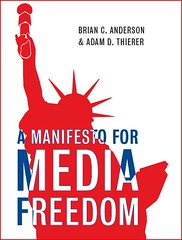 I’m pleased to announce the publication of A Manifesto for Media Freedom, which I co-authored with Brian C. Anderson of the Manhattan Institute. Brian serves as editor of Manhattan Institute’s excellent City Journal and he is the author of best-selling books like South Park Conservatives and Democratic Capitalism and Its Discontents.
In this little manifesto, we highlight one of the central ironies of the Information Age. Namely, that despite “the breathtaking abundance of new and old media outlets for obtaining news, information, and entertainment…”
many people hate this profusion, and never more than when it involves political speech. The current media market, they charge, doesn’t represent true diversity, or isn’t fair, or is subject to manipulation by a small and shrinking group of media barons. They want the government to regulate it into better shape, which just happens to be a shape that benefits them. Doing so… would be a disaster, a kind of soft or not-so-soft tyranny that would wipe out whole sectors of media, curtailing free speech and impoverishing our democracy.
In other words, instead of celebrating the unprecedented cornucopia of media choices at our collective disposal, many policymakers and media critics are calling for just as much media regulation as ever. We itemize these threats in our chapters and they include: efforts to revive the “Fairness Doctrine”, media ownership regulations, “localism” requirements, Net neutrality mandates, a la carte regulations, cable and satellite censorship, video game censorship, regulation of social networking sites, campaign finance-related speech restrictions, and so on.
In each case, we advance a pro-freedom paradigm to counter the advocates of media control. What do we mean by the “media freedom” that we advocate as the alternative to these new regulatory crusades? Here’s how we put it in the book:
Continue reading →
 Sorry if it seems like I am beating a dead horse here, but the folks at the City Journal asked me a pen a review of Jonathan Zittrain’s new book, The Future of the Internet and How to Stop It. Faithful readers here will no doubt remember that I have already penned a review of the book and several follow-up essays. (Part 1, 2, 3, 4). I swear I am not picking on Jonathan, but his book is probably the most important technology policy book of the year–Nick Carr’s Big Switch would be a close second–and deserves attention. Specifically, I think it deserves attention because I believe that Jonathan’s provocative thesis is wildly out of touch with reality. As I state in the City Journal review of his book:
[C]ontrary to what Zittrain would have us believe, reports of the Internet’s death have been greatly exaggerated. […] Not only is the Net not dying, but there are signs that digital generativity and online openness are thriving as never before. […]
Essentially, Zittrain creates a false choice regarding the digital future we face. He doesn’t seem to believe that a hybrid future is possible or desirable. In reality, however, we can have a world full of some tethered appliances or even semi-closed networks that also includes generative gadgets and open networks. After all, millions of us love our iPhones and TiVos, but we also take full advantage of the countless other open networks and devices at our disposal. […]
Continue reading →
Communications Daily (subscription) reported today on the avalanche of lawsuits being filed challenging the FCC’s Comcast “net neutrality” order. Four were filed this week in four different U.S. appeals circuits — the lucky court that will actually decide the case will be decided by lottery.
The story quotes Ben Scott of Free Press, the energizer rabbit of pro-regulation media groups, decrying Comcast’s appeal. “The Internet is too important to let Comcast tie it up in legal limbo,’ he says. “Congress should act now to pass Net Neutrality laws that clear up any uncertainty once and for all.”
Huh? On what planet, exactly, is Free Press based? Put aside for the moment the question of whether
Comcast is responsible for the legal chaos that has ensued from the FCC’s decision to regulate the way it manages Internet traffic. Strangely enough, when Free Press petitioned the Commission to get involved, I didn’t hear them decrying the “legal limbo” it would cause.
But even more jaw-dropping is the idea that Congress could “clear up any uncertainty” by adopting its own Internet regulations. The mind boggles. The last major congressional foray into communications policy was the Telecommunications Act of 1996, which spawned over half a decade of litigation. There are still children of telecom lawyers going to college off the fees generated by that one.
And
that legislation was a relative piece of chocolate cake compared to the torte of net neutrality. Proponents of mandated neutrality — which Commissioner Robert McDowell has likened to a regulatory Rorschach test — can’t even agree on what it is. Lord know how long it would take the courts to sort it out — if ever they are able to.
Free Press is right, of course, to worry about the endless litigation which will — and already is — being caused by FCC Internet regulation. Rather than even more rules from Congress, however, the solution is for the FCC to reverse course on the regulation it unwisely imposed last month.

 The Technology Liberation Front is the tech policy blog dedicated to keeping politicians' hands off the 'net and everything else related to technology.