Posts tagged as:

Tom BrokawI think I owe Tom Brokaw an apology. When I first started reading his most recent Wall Street Journal column, “Imagine the Tweets During the Cuban Missile Crisis,” I assumed that I was in for one of those hyper-nosalgic essays about how the ‘good ‘ol days’ of mass media had passed us by and why the new media era is an unmitigated disaster. Instead, I was pleased to read his very balanced and sensible view of the old versus news media environments. Reflecting on the evolution of the media marketplace over the past 50 years since JFK’s assassination, Brokaw notes that:

The media climate has changed dramatically. The New Frontier, as Kennedy liked to call his administration, received a great deal of attention, but 50 years ago the major national information sources consisted of a handful of big-city daily newspapers, a few weekly news periodicals and two dominant TV network evening newscasts. Now the political news comes at us 24/7 on cable, through the air, the digital universe, on radio and print. And it comes to us more and more as opinion rather than a recitation of the facts as best they can be determined. News is a hit-and-run game, for the most part, with too little accountability for error.

This leads Brokaw to wonder if the amazing media metamorphosis has been, on net, positive or negative. “The virtual town square has been wired and expanded,” he notes, “but the question remains whether more voices make for a healthier political climate. With a keystroke we can easily move from an online credible source of information to a website larded with opinion or deliberately malicious erroneous claims. Have we simply enlarged the megaphone, cranked up the decibel level, and rallied the like-minded without regard to facts or consequences?” Continue reading →

Anupam Chander, Director of the California International Law Center and Martin Luther King, Jr. Hall Research Scholar at the UC Davis School of Law, discusses his recent paper with co-author Uyen P. Lee titled The Free Speech Foundations of Cyberlaw. Chander addresses how the first amendment promotes innovation on the Internet; how limitations to free speech vary between the US and Europe; the role of online intermediaries in promoting and protecting the first amendment; the Communications Decency Act; technology, piracy, and copyright protection; and the tension between privacy and free speech.

Download

Related Links

Last week, the House held a hearing about the so-called IP Transition. The IP Transition refers to the telephone industry practice of carrying all wire-based consumer services–voice, Internet, and television–via faster, better fiber networks and not on the traditional copper wires that had fewer capabilities. Most consumers have not and will not notice the change. The completed IP Transition, however, has enormous implications for how the FCC regulates. As one telecom watcher said, “What’s at stake? Everything in telecom policy.”

For 100 years or so, phone service has had a special place in regulatory law given its importance in connecting the public. Phone service was almost exclusively over copper wires, a service affectionately called “plain old telephone service” (POTS). AT&T became the government-approved POTS national monopolist in 1913 (which ended with the AT&T antitrust breakup in the 1980s). The deal was: AT&T got to be a protected monopolist while the government got to require AT&T provide various public benefits. The most significant of these is universal service–AT&T had to serve virtually every US household and charge reasonable rates even to remote (that is, expensive) customers.

To create more phone competitors to the Baby Bells–the phone companies spun off from the AT&T break-up in the 1980s–the Congress passed the 1996 Telecom Act and the FCC put burdens on the Baby Bells to allow new phone companies to lease the Baby Bells’ AT&T-created copper wires at regulated rates. The market changed in ways never envisioned in the 1990s however. Today, phone companies face competition–not from the new phone companies leasing the old monopoly infrastructure but from entirely different technologies. You can receive voice service from your cable company (“digital voice”), your “phone” company (POTS), your wireless company, and even Internet-based providers like Vonage and Skype. Increasingly, households are leaving POTS behind in favor of voice service from cable or wireless providers. Yet POTS providers–like Verizon and AT&T (which also offer wireless service)–must abide by monopoly-era regulations that their cable and wireless competitors–Comcast, Sprint, and others–don’t have to abide by.

Understanding the significance of the IP Transition requires (unfortunately) knowing a little bit about Title I and Title II of the Communications Act. “Telecommunications services,” which are the phone companies with copper networks, are heavily regulated by the FCC under Title II. On the other hand, “information services,” which includes Internet service, are lightly regulated under Title I. This division made some sense in the 1990s. It is increasingly under stress now because burdened “telecommunications” companies like AT&T and Verizon are offering “information services” like Internet via DSL, FiOS, and U-Verse. Conversely, lightly-regulated “information services” companies like Comcast, Charter, and Time-Warner Cable are entering the regulated telephone market but face few of the regulatory burdens.

Which brings us to the IP Transition. As Title II phone companies replace their copper wires with fiber and deploy broadband networks to compete with cable companies, their customers’ phone service is being carried via IP packets. Functionally, these new networks act like a heavily-regulated Title II service since they carry voice, but they also act like the Title I broadband networks that cable providers built. So should these new fiber networks be burdened like Title II services or deregulated like Title I services? Or is it possible to achieve some middle ground using existing law? Those are the questions before the FCC and policymakers. Billions of dollars of investment will be accelerated or slowed and many firms will live or die depending on how the FCC and Congress act. Stay tuned.
Christopher Wolf, director of the law firm Hogan Lovells’ Privacy and Information Management group, addresses his new book with co-author Abraham Foxman, Viral Hate: Containing Its Spread on the Internet. To what extent do hateful or mean-spirited Internet users hide behind anonymity? How do we balance the protection of the First Amendment online while addressing the spread of hate speech? Wolf discusses how to define hate speech on the Internet; whether online hate speech leads to real-world violence; how news sites like the Huffington Post and New York Times have dealt with anonymity; lessons we should impart on the next generation of Internet users to discourage hate speech; and cases where anonymity has proved particularly beneficial or valuable.

Download

Related Links

Jon Brodkin at Ars Technica and Brian Fung at The Switch have posts featuring a New America Foundation study, The Cost of Connectivity 2013, comparing international prices and speeds of broadband. As I told Fung when he asked for my assessment of the study, I was left wondering whether lower prices in some European and Asian cities arise from more competition in those cities or unacknowledged tax benefits and consumer subsidies that bring the price of, say, a local fiber network down.

The report raised a few more questions in my mind, however, that I’ll outline here. Continue reading →

Oh man, I could not stop laughing at this old “Kids Guide to the Internet” video from the 90s. My thanks to my former colleague Amy Smorodin for tweeting it out today. I just had to post it here so that everyone could enjoy.

(Note: You can turn this video into a great drinking game. Just make everyone in the room raise their glass each time the lines “Does your computer have a modem?” and “Not all that cybernet stuff, OK?” are uttered.) And yes, as the opening line of the video notes, “the first thing you need to know about the Internet is that it is amazing.”

Thomas Rid on cyber war

by on September 3, 2013 · 0 comments

Thomas Rid, author of the new book Cyber War Will Not Take Place discusses whether so-called “cyber war” is a legitimate threat or not. Since the early 1990s, talk of cyber war has caused undue panic and worry and, despite major differences, the military treats the protection of cyberspace much in the same way as protection of land or sea. Rid also covers whether a cyber attack should be considered an act of war; whether it’s correct to classify a cyber attack as “war” considering no violence takes place; how sabotage, espionage and subversion come into play; and offers a positive way to view cyber attacks — have such attacks actually saved millions of lives?

Download

Related Links

10 commandmentsWhat works well as an ethical directive might not work equally well as a policy prescription. Stated differently, what one ought to do it certain situations should not always be synonymous with what they must do by force of law.

I’m going to relate this lesson to tech policy debates in a moment, but let’s first think of an example of how this lesson applies more generally. Consider the Ten Commandments. Some of them make excellent ethical guidelines (especially the stuff about not coveting neighbor’s house, wife, or possessions). But most of us would agree that, in a free and tolerant society, only two of the Ten Commandments make good law: Thou shalt not kill and Thou shalt not steal.

In other words, not every sin should be a crime. Perhaps some should be; but most should not. Taking this out of the realm of religion and into the world of moral philosophy, we can apply the lesson more generally as: Not every wise ethical principle makes for wise public policy. Continue reading →

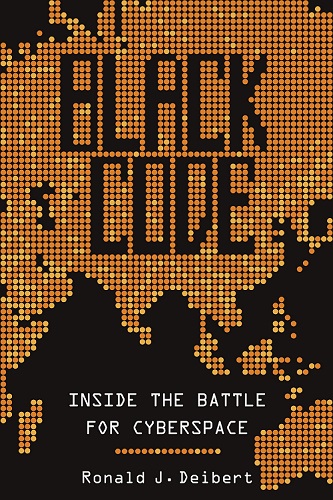
Black Code coverRonald J. Deibert is the director of The Citizen Lab at the University of Toronto’s Munk School of Global Affairs and the author of an important new book, Black Code: Inside the Battle for Cyberspace, an in-depth look at the growing insecurity of the Internet. Specifically, Deibert’s book is a meticulous examination of the “malicious threats that are growing from the inside out” and which “threaten to destroy the fragile ecosystem we have come to take for granted.” (p. 14) It is also a remarkably timely book in light of the recent revelations about NSA surveillance and how it is being facilitated with the assistance of various tech and telecom giants.

The clear and colloquial tone that Deibert employs in the text helps make arcane Internet security issues interesting and accessible. Indeed, some chapters of the book almost feel like they were pulled from the pages of techno-thriller, complete with villainous characters, unexpected plot twists, and shocking conclusions. “Cyber crime has become one of the world’s largest growth businesses,” Deibert notes (p. 144) and his chapters focus on many prominent recent examples, including cyber-crime syndicates like Koobface, government cyber-spying schemes like GhostNet, state-sanctioned sabotage like Stuxnet, and the vexing issue of zero-day exploit sales.

Deibert is uniquely qualified to narrate this tale not just because he is a gifted story-teller but also because he has had a front row seat in the unfolding play that we might refer to as “How Cyberspace Grew Less Secure.” Continue reading →

“In today’s globally competitive era, the United States cannot continue to delay its transition to Internet-enabled infrastructure.”

Last week the Department of Defense (DoD) filed comments with the FCC in its proceeding examining the transition from outdated telephone technologies to Internet Protocol (the “IP-transition”). The comments, which were filed “on behalf of the consumer interests” of the DoD by a civilian attorney in the Army’s Regulatory Law Office (emphasis added), ask the FCC to “consider potential adverse consequences on public safety and national security” of requiring federal agencies to “prematurely transition to different technologies.”

What are these potential adverse consequences? The italicized “interests” of the DoD provide the answer: It wants to avoid incurring any costs to upgrade its outdated telephone technologies to modern, Internet Protocol technologies when its current communications contracts expire in 2017. Continue reading →