Over at his new blog, our old TLF colleague Tim Lee has an interesting post up about “The Problem with Top-Down ‘App Stores’” in which he argues that “when app store approval becomes mandatory, it becomes a major impediment to the success of high-tech platforms.” But I have to wonder if the facts support that assertion. Here’s how I commented on his site:
Tim… What I don’t hear you articulating here is your vision of what a “bottom-up” app store would look like and why it would really produce vastly superior results. Nor do I hear you saying anything about the legitimate concerns that the handset makers might have about the security or stability factors associated with certain applications. I’m not saying those problems are extensive, but at the margins they could be real depending on the nature of the program and how it interacts with the handset and/or network.
Second, there needs to be some sense of proportionality here, at least about the iPhone (I can’t speak for the Palm experience). In just a little over a year, there’s been 2 billion downloads of over 85,000 apps from over 125,000 developers. So, when you talk about Apple’s approval process being “plagued by.. problems” and “rejections for trivial or non-sensical reasons” and “long delays in the review process have become a staple of the tech blogosphere” I think you are giving the impression that this is somehow the norm when it is very much the exception to the rule. Perhaps you would be willing to itemize the examples for us. Once you do, I’d appreciate you doing the math on what that looks like as a percentage of the total 85,000 apps that are already out there on the market today. I am willing to bet the result is something like 0.000001%.
Again, a sense of proportionality is really key here. While I am not an Apple fan and agree they have a bit too much of a control streak for my tastes, it’s hard to argue with results. In this case, a closed, top-down system has produced some fairly spectacular results.
I’m sure Tim will have more to say so head over to his blog for more discussion.
Over at TechDirt, Mike Masnick has an interesting post asking “Why Did Apple Approve Spotify?” which builds on an AdAge column asking a similar question: “Did Apple Sacrifice ITunes With Latest Apps?” As the title of that AdAge piece suggests, some folks are wondering if Apple shot itself in the foot by approving Spotify, a music streaming app that some regard as a potential iTunes killer. I don’t really have any comment on the business angle here, rather, I wanted to just comment on Mike’s suggestion that one possible explanation for Apple’s approval of the app is that:
As we noted when the app was approved, Apple appears to be somewhat gunshy, following the FCC inquiry into why it “blocked” Google Voice on the iPhone (and, yes, Apple still insists it didn’t actually block the app, but Google says otherwise). Given the scrutiny, Apple probably realized that it was in for some serious political trouble if it blocked an app like Spotify, which would have received a lot of press attention. Oddly, the AdAge article doesn’t mention this at all.
Indeed, it is odd that
AdAge didn’t bother mentioning that fact. But what I find doubly odd here is that nobody is even blinking an eye at the prospect of such political meddling with — or even possible FCC regulation of — Apple, iTunes, or music streaming market in general! Seriously, have we gotten to the point now in our Bold New World of Neutrality Regulation that innovative high-tech companies must live in fear of constant regulatory intervention even when they completely lack any statutory authority to play these games? Moreover, does anyone think that the a bunch of Beltway bureaucrats can micro-manage music and high-tech application markets and give us more options than we have today?
I know the prospect of such meddling makes some academics and regulatory activists groups happy, but I can’t see how this ends well for consumers or high-tech markets more generally. Regardless, for those of you who laugh when we suggest that the slippery slope of regulation is real, consider this case to be Exhibit A. Or perhaps it’s Exhibit B since the Google Voice spat with Apple was already moving the FCC in the direction of becoming a device regulator and applying “handset neutrality” principles that have no basis in law. It’s your anything-goes government at work.
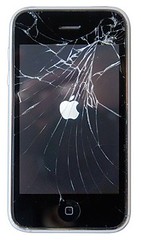 Despite my frequent disagreements with his policy conclusions, Farhad Manjooo of Slate is one of the most gifted tech policy pundits around today and everything he writes is worth reading (and I whole-heartedly agreed with his recent article on the high-tech and antitrust). Alas, I find myself again disagreeing with him again today.
In his latest column, “The Great iPhone Lockdown: Should the FCC force Apple to sell Google’s apps?” Manjoo responds to a recent essay by TLF contributor Ryan Radia (“Newsflash to FCC: The iPhone is a Closed Platform, and Consumers Love It“). In that essay, Ryan generally argued that: (a) a lot of people own and love the iPhone despite some silly restrictions on certain apps; and (b) if they don’t like that, there are plenty of other options from which they can choose. Consequently, regulation seems unwarranted and likely highly misguided in light of the potential unitended consequences in might yield. It’s an argument I very much agree with, of course. Anyway, Manjoo responds:
Radia’s argument isn’t crazy. Just the other day, I argued that the government shouldn’t go after Google for antitrust violations because the tech industry is fluid; companies that are on top today can fall tomorrow. So what if Apple rejects apps capriciously? If its actions are so terrible, consumers will eventually abandon it.
But then Manjoo counters that argument and goes completely off-the-rails with several assertions that I find quite perplexing: Continue reading →

 The Technology Liberation Front is the tech policy blog dedicated to keeping politicians' hands off the 'net and everything else related to technology.