As I noted in a recent paper with my PFF colleague Barbara Esbin (“An Offer They Can’t Refuse: Spectrum Reallocation That Can Benefit Consumers, Broadcasters & the Mobile Broadband Sector“) an official at the Federal Communications Commission (Blair Levin) recently suggested that it might be possible to craft a grand bargain whereby television broadcasters get cash for some (or all) of their current spectrum if they return it to the FCC for reallocation and auction. Such a deal could, eventually, open up significant amounts of prime spectrum for next-generation mobile broadband and data services.
Is such a deal feasible and in the best interests of broadcasters? Is the arrangement necessary to encourage growth in broadband penetration consistent with the goals of the Recovery Act? Will Congress go along with the deal, or would it be blocked as contrary to “the public interest?” Alternatively, would lawmakers back the deal but seek a significant cut of the auction proceeds, leaving less available for broadcasters? These and other policy issues will be discussed at “
Let’s Make a Deal: Broadcasters, Mobile Broadband, and a Market in Spectrum,” a congressional seminar hosted by The Progress & Freedom Foundation. The event will be held Tuesday, December 1st from 9:00am to 11:00am in the Holeman Lounge, 13th Floor, at the National Press Club, 529 14th Street, NW in Washington, DC.
Panelists confirmed so far for the event include:
- Blair Levin, Executive Director, Omnibus Broadband Initiative, Federal Communications Commission
- Coleman Bazelon, Principal, The Brattle Group
- David Donovan, President, Association for Maximum Service Television
- Kostas Liopiros, Principal, The Sun Fire Group
- John K. Hane, Counsel, Pillsbury Winthrop Shaw Pittman LLP
- and 1 or 2 more to come!
I will be moderating the event. Those interested in attending can
register here. Should be a spirited debate.
Be prepared next week for a cacophony of hand-wringing and prognosticating about retail sales figures reported on “Black Friday.” Retailers traditionally count on holiday shoppers to put them “in the black” for the year with a surge of purchases on the Friday after Thanksgiving.
But if you really want to understand this year’s retail sales picture, wait til the Monday after Thanksgiving. “Black Monday” is day a lot of people return to work, fire up the computer, and begin their online holiday shopping.
Recent reports suggest that the recession has boosted rather than harmed electronic commerce, for one simple reason: the Internet makes it a lot easier to find the best price for many common purchases. Numerous recent posts tell this story:
Harsh Economy Can’t Shake Love for Online Retailers
Internet Supermaket Booms in Bad Times
Is Online Shopping Affected by a Recession?
The most popular online sites on STORES Magazine’s list include those of established merchants, such as Walmart, Best Buy, JC. Penney, and Target. They also include the pure online plays, such as Amazon.com, eBay, and Overstock.com. Craigslist — the site where I hunt for used and free stuff — made Stores’ “Top 50” list for the first time this year. That’s surely a sign that the recession has been a boon to online shopping!
Great story in Wired about how Apple disrupted Microsoft’s mobile OS lead, again illustrating how quickly today’s leaders can, and probably will, become tomorrow’s laggards in the topsy-turvy tech biz.
And on the benefits of Apple’s heretical “closedness”:
The iPhone operates on a closed system, which can only run on Apple hardware, meaning third- party developers can produce apps and games that work exclusively with the iPhone Therefore, despite Apple’s questionable and controversial approval policy for iPhone apps developers can code one app that works with 40 million iPhone and iPod Touch devices which is less time consuming than developing several versions of one app for a variety of Windows Mobile smartphones. In turn, that spells out to a larger number of apps in the App Store, which enables Apple’s hardware to cater to a larger and broader audience.
I wrote here a couple of months ago about the shady practice among a few Internet retailers of handing off customers who accept a “special offer” to a company that charges people a monthly fee for some kind of credit monitoring service. And I argued hopefully that maybe technologists and the Internet community could generate a response to this problem:
Being a smart, informed, and aggressive consumer is each person’s responsibility if a free market is to operate well. The alternative is a negative feedback loop in which government authorities protect us, we rely on that protection and stop policing retailers. Thereby we abandon the field of consumer protection to government authorities, who—try as they might—can never do as good a job for us as we can for ourselves.
The Senate Commerce Committee is having a hearing today on “Aggressive Sales Tactics on the Internet and Their Impact on American Consumers.”
Adam has done yeoman’s work for years pointing out, and arguing against, the phenomenon of techno-panic as it relates to children. That’s not the only area in which techno-panic can tighten its grip on the neck of common sense and the constitution, of course.
But here’s a delight I ran across this morning: the
Los Angeles Times arguing against techno-panic despite the use of Web sites to research and case potential burglary victims (by the “bling ring,” soon to be the subject of a major motion picture).
The
Times editorializes:
[T]hieves [did not] have to wait for the invention of Google maps to reconnoiter neighborhoods in search of easily accessible homes. That’s worth remembering if, as we fear, some legislator decides that a law should be passed to prevent Internet surfers from looking at houses they easily could scope out from the sidewalk. . . . . A law against photographing a home or what occurs outside it in plain sight — or disseminating the images to others — would be overreaching, not to mention unconstitutional.
What a delight—a major newspaper arguing to keep a hot issue in perspective and citing the constitution as a limit on government power! Thank you,
L.A. Times.
Great NPR story today on how online social networking is helping to bring medical patients together to talk about their conditions and compare treatments.
The story quotes Susannah Fox of the Pew Internet and American Life Project:
“They are posting their first-person accounts of treatments and side effects from medications,” says Fox. “They are recording and posting those podcasts. They’re tagging content. They are part of the conversation. And that, I think, is an indicator of where we could be going in terms of the future of participatory medicine.”
For every story that talks about the bad on the Internet, there are are hundreds of positive examples about how online communities improves lives. If only we can get the doctors to use online technology more often….
This will be a busy week for those who follow privacy policy in Washington:
- Monday (11/16) 11 am: the coalition of 10 so-called “privacy advocacy” groups that recently demanded sweeping regulation of online data collection and use will be holding a briefing for congressional staffers on their demands in 2322 Rayburn House Office Building.
- Wednesday (11/17), 4 pm: A “bipartisan briefing for staff of Members on the Subcommittees” in 2322 Rayburn, followed by a Democratic staff briefing.
- Thursday (11/18), 10 am: The House Energy & Commerce Committee’s Subcommittee on Communications, Technology & the Internet and Subcommittee on Commerce, Trade & Consumer Protection will hold a joint hearing on “Exploring the Offline and Online Collection and Use of Consumer Information” in 2123 Rayburn.
The witness list for Thursday’s hearing has not yet been released, but reportedly includes Pam Dixon of the World Privacy Forum and Prof. Chris Hoofnagle of Berkeley Law, as well as three industry representatives (but no skeptics of regulation from outside of industry, who might ask “whether privacy advocates” really have consumers interests at heart). Dixon and Hoofnagle may well be the only two people on the planet who could rival Jeff Chester in their paranoia about online advertising.
 So I suspect the hearing will consist largely of the two of them trying to dodge the question Adam Thierer and I keep asking: What’s the harm that requires government regulation? For them—and for David Vladeck—the new head of the FTC’s Bureau of Consumer Protection—the answer seems to be that no real harm need be established to justify regulation, whatever the cost to consumers of regulation, because “harm” may be defined by anecdote and in terms of “dignity interests”—a legal standard that has all the intellectual and factual rigor of a plate full of Jell-O shots (intoxicating and fun for parties but squishy with little real substance).
Adam and I will be raising this and other questions at the FTC’s Exploring Privacy workshop on December 7. I will be participating in the online behavioral advertising panel, and PFF President Adam Thierer will be participating in the consumer expectations/surveys panel. Check out my comments to the FTC for more on our perspective. Continue reading →
Why do (most) stores have walls? Because, obviously, walls are generally (at least in the developing world) a cost-effective technology for enforcing the value exchange that stores offer customers: products or services for customers’ cash. Open-air markets exist, but tend to be reserved for items cheap enough that the costs of theft fall below some “acceptable loss threshold.” All stores ultimately rely on employees and the police to chase down shoplifters.
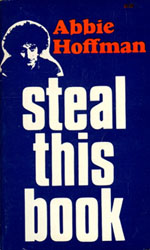 Yet many valuable media products have long been simply given away by their producers in the implicit value exchange of advertising: newspapers, magazines, radio, television and online content/services for customers’ attention. It’s as if publishers set up a store with no walls and put up a big “steal this book!” sign inviting shoplifters in. Advertisers simply have to hope that their ads are interesting enough to catch the attention of readers/viewers/listeners—and, on the Web, maybe even get users to click on the ad! It should be obvious that the lack of any “enforcement technology” simply means that there will be less funding for this “free” stuff enjoyed by consumers—just as there would be fewer goods and/or higher prices if stores were prevented from discouraging or punishing shoplifting.
Ethicists could debate until the cows come home whether ad-blocking (or ad-ignoring) is morally tantamount to shoplifting—taking without “paying” (through attention)—but who cares? Whatever the morality of it, the important, and undeniable, thing is that those who ignore/block commercials are free-riding on the economic value created by those who don’t.
Enter Apple, which recently filed a patent application for a technology intended to ensure that users are seeing, and actually paying attention to, ads. Randall Stross, author of the excellent book Planet Google, hates the idea of “compelling attention” and suggests that it would so annoy consumers that it would cost Apple more in reputational capital than it’s worth. Stross may well be proven right in the marketplace (and, if so, fine), but does that make Apple’s proposal wrong? The brilliantly satirical “Secret Diary of Steve Jobs” calls the idea “evil,” and suggests that, in the pretended voice of Steve Jobs: Continue reading →
I’m VERY impressed with my Droid, particularly its browser capabilities. I can even run the backend of Wordpress inside the browser (“Look, Ma, no app!”) to blog! (The WPtoGo app helps, as there are a few things that don’t work quite perfectly inside the browser.)
My Droid is a pretty darn good substitute for a desktop PC. In fact, since my desktop’s motherboard died the other day, the Droid is all I have at home right now–and it satisfies most of my computing needs, at least for home use. So… that means every wireless carrier with a strong android/iphone-class device is a substitute, meaningfully, but of course not perfectly, for traditional ISP options like DSL, cable, fiber, etc. So why don’t 3G networks get counted at all when assessing whether broadband markets are so uncompetitive that only net neutrality regulations can save us from corporate abuse?
Oh, and did I mention that, if my thumbs get tired, I will soon be able to tether my Droid to bring Verizon’s data network to my PC?
I got some feedback from readers about my post last night regarding the irony of the FCC’s newly-created MySpace page containing some rather vulgar user comments. I wondered if the agency would continue to allow such comments when the agency regulates similar words when they are uttered on broadcast TV or radio. A few people asked me why the agency hasn’t bother using the comment management tools that MySpace puts at the public’s disposal. It’s a good question, and actually I’m not sure why they didn’t do that right from the start. Perhaps the agency is concerned about being accused of censoring public comment. [Incidentally, the White House and some federal agencies have MySpace pages, so perhaps I need to look into how those agencies manage comments.]
Regardless, the FCC now
has taken steps to deal with this. John Eggerton of Broadcasting & Cable and Kim Hart of The Hill point out that the agency has removed some vulgar comments on their MySpace page (namely, any comment with the F-bomb in it). And I assume the agency is now taking steps to screen comments going forward. For those who are not aware, MySpace empowers users (including government agencies if they choose to set up profiles) to require approval before new comments appear on their profiles (accessed by clicking “My Account” and then “Spam”). Here are the options:

 Moreover, I should also mention that if people want to see the FCC’s MySpace profile but don’t want to see all the comments, they can always change their default view to MySpace’s “Lite View,” which hides all comments, third party applications, and some other sections of a page. To switch to Lite View, click on “My Account” in the upper-right corner of any MySpace page, then click on “Miscellaneous” to access the Default View setting. It’s another nice way that MySpace empowers users to control their site experience.
 Regardless, this will be a difficult issue for federal agencies to manage going forward. If agencies are going to take the plunge and boldly enter the social networking world, they’ll need to understand that the vibrant exchange of views will sometimes entail some salty language and occasional insults. Yet, when they take steps to deal with some of the most offensive comments posted on their pages, accusations of censorship are bound to fly. It’s a tough position for agencies to be in since they want to encourage maximum public interaction and input, and yet some of that input is bound to get heated, even ugly.
So, here are some questions that both agencies and policy wonks will need to consider going forward. Continue reading →

 The Technology Liberation Front is the tech policy blog dedicated to keeping politicians' hands off the 'net and everything else related to technology.
Federal Agencies Can Easily Manage Settings on Their MySpace Page, but How Should They?
by Adam Thierer on November 13, 2009 · 9 comments
I got some feedback from readers about my post last night regarding the irony of the FCC’s newly-created MySpace page containing some rather vulgar user comments. I wondered if the agency would continue to allow such comments when the agency regulates similar words when they are uttered on broadcast TV or radio. A few people asked me why the agency hasn’t bother using the comment management tools that MySpace puts at the public’s disposal. It’s a good question, and actually I’m not sure why they didn’t do that right from the start. Perhaps the agency is concerned about being accused of censoring public comment. [Incidentally, the White House and some federal agencies have MySpace pages, so perhaps I need to look into how those agencies manage comments.]
Regardless, the FCC now has taken steps to deal with this. John Eggerton of Broadcasting & Cable and Kim Hart of The Hill point out that the agency has removed some vulgar comments on their MySpace page (namely, any comment with the F-bomb in it). And I assume the agency is now taking steps to screen comments going forward. For those who are not aware, MySpace empowers users (including government agencies if they choose to set up profiles) to require approval before new comments appear on their profiles (accessed by clicking “My Account” and then “Spam”). Here are the options:
So, here are some questions that both agencies and policy wonks will need to consider going forward. Continue reading →