By: Jennifer Huddleston and Juan Martin Londoño
This year the E3 conference streamed live over Twitch, YouTube, and other online platforms—a reality that highlights the growing importance of platforms and user-generated content to the gaming industry. From streaming content on Twitch, to sharing mods on Steam Workshop, or funding small developing studios on services such as Patreon or Kickstarter, user-generated content has proven vital for the gaming ecosystem. While these platforms have allowed space for creative interaction—which we saw on the livestreams chats during E3—the legal framework that allows all of this interaction is under threat, and changes to a critical internet law could spell Game Over for user-created gaming elements.
This law, “Section 230,” is foundational to all user-generated content on the internet. Section 230 protects platforms from lawsuits over both the content they host as well as their moderation decisions, giving them the freedom to curate and create the kind of environment that best fits its customers. This policy is under attack, however, from policymakers on both sides of the aisle. Some Democrats argue platforms are not moderating enough content, thus allowing hate speech and voter suppression to thrive, while some Republicans believe platforms are moderating too much, which promotes “cancel culture” and the limitation of free speech.
User-generated content and the platforms that host it have contributed significantly to the growth of the gaming industry since the early days of the internet. This growth has only accelerated during the pandemic, as in 2020 the gaming industry grew 20 percent to a whopping $180 billion market. But changing Section 230 could seriously disrupt user-generated engagement with gaming, making content moderation costlier and riskier for some of gamers’ favorite platforms.
Continue reading →
Adam Thierer, Senior Research Fellow at the Mercatus Center discusses his recent working paper with coauthor Brent Skorup, A History of Cronyism and Capture in the Information Technology Sector. Thierer takes a look at how cronyism has manifested itself in technology and media markets — whether it be in the form of regulatory favoritism or tax privileges. Which tech companies are the worst offenders? What are the consequences for consumers? And, how does cronyism affect entrepreneurship over the long term?
Download
Related Links
 Today, the U.S. Supreme Court will hear arguments in Schwarzenegger v. EMA, a case that challenges California’s 2005 law banning the sale of “violent” video games to minors. The law has yet to take effect, as rulings by lower federal courts have found the law to be an unconstitutional violation of the First Amendment.
There’s little doubt that banning the sale of nearly any content to adults violates the protections of Free Speech, including, as decided last year, video depictions of cruelty to animals.
But over the years the Court has ruled that minors do not stand equal to adults when it comes to the First Amendment. The Court has upheld restrictions on the speech of students in and out of the classroom, for example, in the interest of preserving order in public schools.
Continue reading →
 Who among us does not like the bitch about their least favorite journalists, or reporting that we find disagreeable? Indeed, we Americans are all armchair media critics at heart. That’s generally a healthy thing in a democracy, but how often do we step back and appreciate those who provide us with in-depth reporting and journalistic excellence? Not enough, I dare say. Perhaps my early pursuit of a career in journalism and a college degree in the subject has left me more sensitive to this, but I think it is important on occasion to send out a big “thank you” to those whose investigative reporting — especially on niche subjects — contributes greatly to societal knowledge and a better understanding of important issues.
In the case of journalist Dennis McCauley, long-time editor of
Game Politics.com, I wish I would have gotten around to thanking him publicly sooner, because he has just announced his departure from Game Politics and the journalism profession in general. That’s a shame because Dennis was a trailblazer in a field that desperately needed attention from serious journalists. Until Dennis came on the beat, no wait, strike that… until Dennis created the beat, most journalists just didn’t bother taking a serious look at “where politics and video games collide,” which is the motto of Game Politics.com (which is now part of the Entertainment Consumers Association). Before Dennis, most journalists looked a video games as a “kiddie” thing, and to the extent they reported on developments in this field at all, their stories where typically relegated to the back pages of most papers or magazines. And there wasn’t much serious reporting by online sources either.
Continue reading →
 The latest edition (Version 4.0) of my PFF special report on “Parental Controls and Online Child Protection: A Survey of Tools & Methods” is now up. For those not familiar with the report, it explores the market for parental control tools, rating schemes, education and media literacy efforts, and various other tools, methods, and initiatives aimed at promoting online child safety. After evaluating that state of this market, I conclude: “There has never been a time in our nation’s history when parents have had more tools and methods at their disposal to help them decide what constitutes acceptable media content in their homes and in the lives of their children.” Moreover, I believe that the parental controls and content management tools cataloged in the report represent a better, less restrictive alternative to government regulation.
Version 4.0 of the report is now over 250 pages long (up from 200 pages in Version 3.0) and it contains almost 70 exhibits (up from 50), 725 references (up from roughly 500), and numerous updates in all five sections of the book. Major updates have been made to the Internet, social networking, and mobile media sections, reflecting the growing importance of those sectors and issues. Other new sections or appendices have also been added to the report, including:
- a new section examining how many households really need parental control tools;
- a new appendix on the downsides of mandatory parental controls and restrictive default settings;
- a new section on the dangers of “deputizing the online middleman” solution as an approach to solving child safety concerns;
- a new appendix reviewing the findings of 5 past online safety task forces;
- … and much more.
I issue major updates once a year and 1 or 2 minor tweaks during the course of the year to reflect the evolution of the parental control and online child safety marketplace and debate. The report is available free-of-charge on the PFF website, and the previous editions of the report are housed there too in case you want to see how it has evolved over the past couple of years. For those interested in taking a quick look at the report, I have embedded it down below the fold as a Scribd file. Finally, as is always the case, I encourage readers to send me updates and suggestions for how to improve the report and I will incorporate them into future versions.
Continue reading →
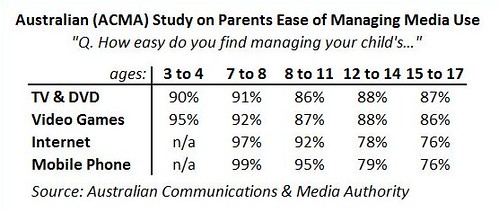
An interesting new survey has just been released by the Australian Communications and Media Authority (ACMA), which is the rough equivalent of the Federal Communications Commission here in the U.S., but with somewhat broader authority. ACMA’a latest report is entitled Use of Electronic Media and Communications: Early Childhood to Teenage Years and it takes a look at media technology usage among Australian youngsters in 5 age groupings (3 to 4 years of age, 7 to 8, 8 to 11, 12 to 14, and 15 to 17).
The survey also asked Australian parents “How easy do you find managing your child’s ___ use.” They asked that question for four different media or communications technologies: TV & DVD; video games; Internet; and mobile devices. They results, summarized in the table below, were quite interesting and seem to indicate that Australian parents find it much easier to manage their children’s media use than some of their elected leaders imagine.
Continue reading →
I’ve just had a new article published by the American Legislative Exchange Council (ALEC) in which I make the case against “techno-panics,” which refers to public and political crusades against the use of new media or technologies by the young. The article is entitled “Parents, Kids & Policymakers in the Digital Age: Safeguarding Against ‘Techno-Panics‘” and it appears in the July 2009 Inside ALEC newsletter. This is something I have spent a lot of time writing about here in recent years (See 1, 2, 3, 4, 5) and I finally got around to putting it altogether in a concise essay here. I have pasted the full text below. [And I just want to send a shout-out to my friend Anne Collier of Net Family News.org, whose work on this topic has been very influential on my thinking.]
“Parents, Kids & Policymakers in the Digital Age: Safeguarding Against ‘Techno-Panics‘”
by Adam Thierer
A cursory review of the history of media and communications technologies reveals a reoccurring cycle of “techno-panics” — public and political crusades against the use of new media or technologies by the young. From the waltz to rock-and-roll to rap music, from movies to comic books to video games, from radio and television to the Internet and social networking websites, every new media format or technology has spawned a fresh debate about the potential negative effects they might have on kids.
Inevitably, fueled by media sensationalism and various activist groups, these social and cultural debates quickly become political debates. Indeed, each of the media technologies or outlets mentioned above was either regulated or threatened with regulation at some point in its history. And the cycle continues today. During recent sessions of Congress, countless hearings were held and bills introduced on a wide variety of media and content-related issues. These proposals dealt with broadcast television and radio programming, cable and satellite television content, video games, the Internet, social networking sites, and much more. State policymakers, especially state Attorneys General (AGs), have also joined in such crusades on occasion. The recent push by AGs for mandatory age verification for all social networking sites is merely the latest example.
What is perhaps most ironic about these techno-panics is how quickly yesterday’s boogeyman becomes tomorrow’s accepted medium, even as the new villains replace old ones. For example, the children of the 1950s and 60s were told that Elvis’s hip shakes and the rock-and-roll revolution would make them all the tools of the devil. They grew up fine and became parents themselves, but then promptly began demonizing rap music and video games in the ‘80s and ‘90s. And now those aging Pac Man-era parents are worried sick about their kids being abducted by predators lurking on MySpace and Facebook. We shouldn’t be surprised if, a decade or two from now, today’s Internet generation will be decrying the dangers of virtual reality.
Continue reading →
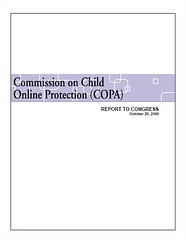
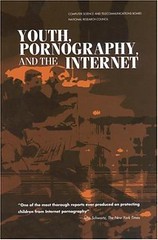
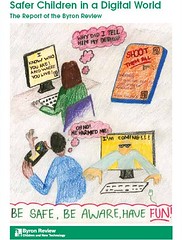
In an earlier post, I mentioned an important new online child safety task force report that has just been released from the “Point Smart. Click Safe.” Blue Ribbon Working Group. It’s a great report and I encourage you to read the whole thing. It was my great pleasure to serve on this task force, and as we started finalizing our conclusions and recommendations, I started thinking about how much of what we were finding and recommending was consistent with what past online safety task forces had also concluded.
By way of background, over the past decade, five major online safety task forces or blue ribbon commissions have been convened to study online safety issues. Two of these task forces were convened in the United States and issued reports in 2000 (“COPA Commission”) and 2002 (“Thornburgh Commission“). Another was commissioned by the British government in 2007 and issued in a major report in March 2008 (“Byron Review“). Finally, two additional online safety task forces were formed in the U.S. in 2008 and concluded their work, respectively, in January (“Internet Safety Technical Task Force“) and July (“Point Smart. Click Safe.“) of 2009. [And yet another task force — the Online Safety Technology Working Group — was recently formed and has now gotten underway.]
In a new PFF white paper, ”
Five Online Safety Task Forces Agree: Education, Empowerment & Self-Regulation Are the Answer,” I walk through a chronological summary of each of these past task forces [click on covers of each report below to read them in their entirety] and highlight some of the similar themes and recommendations from them.
 Continue reading →

He Wants to Terminate Your First Amendment Rights
Robert Corn-Revere, a partner with the law firm of Davis Wright Tremaine and one of America’s greatest living defenders of the First Amendment, has a new essay up on the Media Institute website entitled “The Terminator Cometh.” Corn-Revere takes on the former Terminator himself, California Gov. Arnold Schwarzenegger, who along with other Calif. lawmakers, has asked the Supreme Court to review a Ninth Circuit Court of Appeals decision holding that a California video game statute was unconstitutional. (More background in my previous post here). California’s decision to appeal the law up to the Supreme Court [petition is here] sets up a potential historic First Amendment decision (if they Court agrees to take the case, that is). Corn-Revere points out why this case is so important:
In seeking review, California is asking the Supreme Court to reverse 60 years of First Amendment jurisprudence and to hold that “excessively violent” material — whatever that may be –“deserves no constitutional protection.” It is also asking the Court to relieve government from actually having to demonstrate the purported harmfulness of speech it seeks to regulate, but instead to defer to “reasonable inferences” and “legislative judgments.”

The John Connor of Your First Amendment Freedoms
In other words, Corn-Revere notes, “the state is asking the Court simply to lower the bar so that protected speech may be regulated based on legislative whim.” He continues:
Thus, like the Terminator, no matter how many times you kill it, the government drive that motivates these laws keeps on going and going until it achieves its programmed goal. If California is successful, it will open the door to regulate not just video games, but a wide range of speech that is currently protected under the First Amendment.
Corn-Revere is right. The ramifications of this case could be profound. As I pointed out in my previous essay on this case:
Continue reading →
Says Epic Games founder and CEO Tim Sweeney. I wonder what the FTC will think about this prospect in the report Congress asked them to send this year about video games. I think it’s safe to assume that the thought of life-like sex and violence will create a true technopanic.


 The Technology Liberation Front is the tech policy blog dedicated to keeping politicians' hands off the 'net and everything else related to technology.