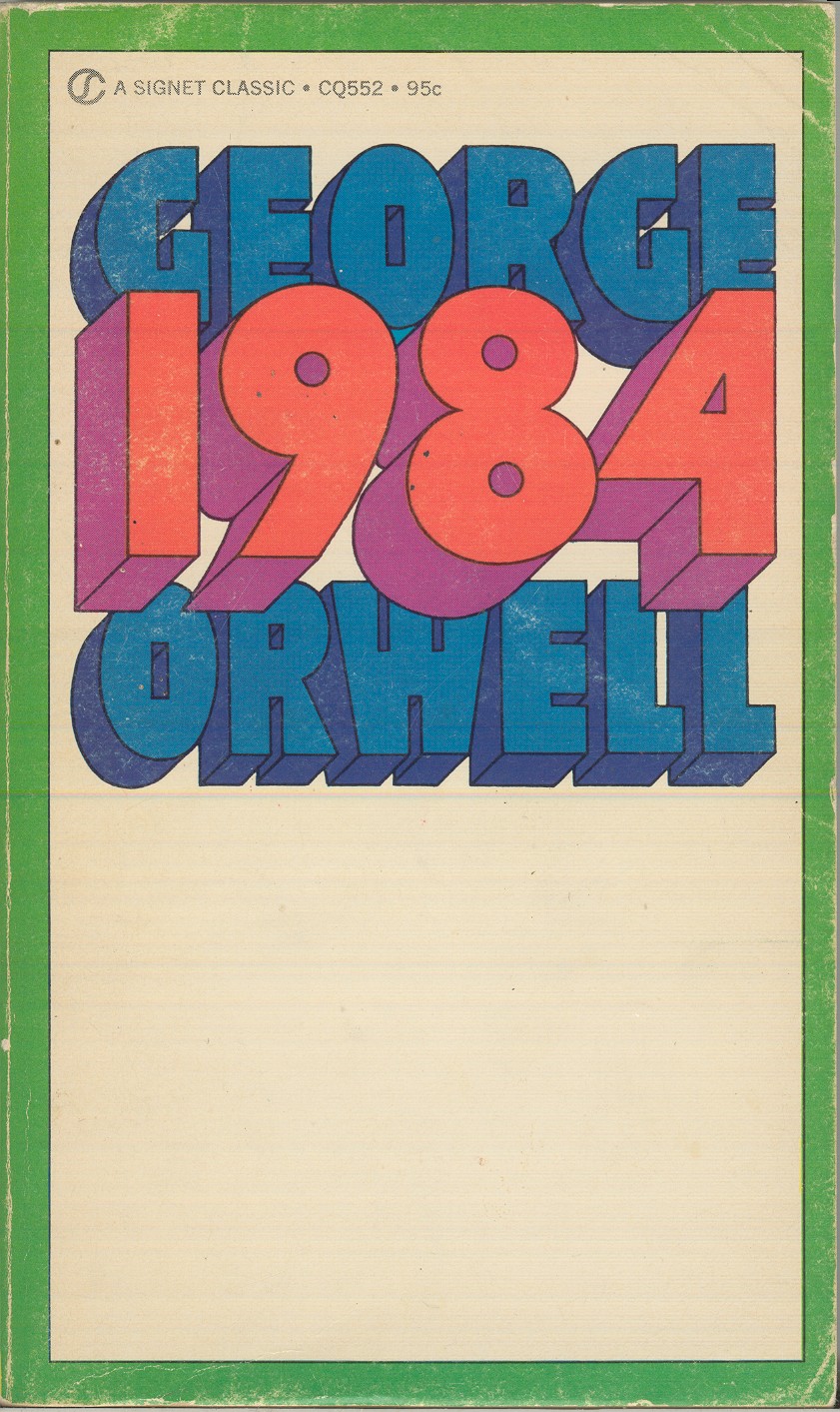
This Book is NOT about the Net
My latest Forbes column takes a look at Andrew Keen’s latest book, Digital Vertigo: How Today’s Online Social Revolution Is Dividing, Diminishing, and Disorienting Us. It’s an interesting book, and a much better one than his previous screed, Cult of the Amateur. Andrew raises valid concerns about the sheer volume of over-sharing taking place online today. As I note in my review:
Keen is on solid ground when outlining the many downsides of over-sharing, beginning with the privacy and reputational consequences for each of us. “Social media is the confessional novel that we are not only all writing but also collectively publishing for everyone else to read,” he says. That can be a problem because the Internet has a very long memory. A youngster’s silly pranks or soul-searching self-revelations may seem like a fun thing to upload when such juvenile antics or angst will win praise (and plenty of pageviews) from teen peers. Your 34-year-old self, however, will likely have a very different view of that same rant, picture, or video. Yet, that content will likely still be around for the world to see when you do reach adulthood.
And Keen offers many other reasons why we should be concerned about a world of over-sharing and “hypervisibility.” The problem is that Keen drowns out these valid concerns by assaulting the reader with layers of over-the-top pessimistic prognostications and apocalyptic rhetoric. In particular, again and again and again in the book he comes back to George Orwell and his dystopian novel, 1984. Keen insists that some sort of Orwellian catastrophe is set to befall humanity because of social media over-sharing. (See this other Forbes column on Keen’s book, “Why 1984 Is Upon Us,” to see just how far this theme can be pushed). Continue reading →
Forbes.com has just published an editorial that Berin Szoka and I penned about yesterday’s net neutrality announcement from the FCC.
by Adam Thierer & Berin Szoka
There was a time, not so long ago, when the term “Internet Freedom” actually meant what it implied: a cyberspace free from over-zealous legislators and bureaucrats. For a few brief, beautiful moments in the Internet’s history (from the mid-90s to the early 2000s), a majority of Netizens and cyber-policy pundits alike all rallied around the flag of “Hands Off the Net!” From censorship efforts, encryption controls, online taxes, privacy mandates and infrastructure regulations, there was a general consensus as to how much authority government should have over cyber-life and our cyber-liberties. Simply put, there was a “presumption of liberty” in all cyber-matters.
Those days are now gone; the presumption of online liberty is giving way to a presumption of regulation. A massive assault on real Internet freedom has been gathering steam for years and has finally come to a head. Ironically, victory for those who carry the banner of “Internet Freedom” would mean nothing less than the death of that freedom.
We refer to the gradual but certain movement to have the federal government impose “neutrality” regulation for all Internet actors and activities—and in particular, to yesterday’s announcement by Federal Communications Commission (FCC) Chairman Julius Genachowski that new rules will be floated shortly. “But wait,” you say, “You’re mixing things up! All that’s being talked about right now is the application of ‘simple net neutrality,’ regulations for the infrastructure layer of the net.” You might even claim regulations are not really regulation but pro-freedom principles to keep the net “free and open.”
Such thinking is terribly short-sighted. Here is the reality: Because of the steps being taken in Washington right now, real Internet Freedom—for all Internet operators and consumers, and for economic and speech rights alike—is about to start dying a death by a thousand regulatory cuts. Policymakers and activists groups are ramping up the FCC’s regulatory machine for a massive assault on cyber-liberty. This assault rests on the supposed superiority of common carriage regulation and “public interest” mandates over not just free markets and property rights, but over general individual liberties and freedom of speech in particular. Stated differently, cyber-collectivism is back in vogue—and it’s coming very soon to a computer near you! Continue reading →
Speaking of socializing media, acting FCC Chairman Michael Copps is someone who has devoted much of his life to regulating the media marketplace into the ground. If he had his way, federal bureaucrats would be controlling virtually every aspect of the media universe. Nothing would get done with Big Nanny’s permission.
That’s what makes his recent comments about the impact of media regulation so delicious.. and hypocritical. According to an article Bloomberg ran on Thursday, Copps is now saying that, with newspapers struggling to remain afloat, the FCC should now reconsider regulations that prohibit combined ownership of broadcast stations and newspapers. The agency should “visit this whole problem” before long, Copps apparently told Bloomberg.
“Visit this problem before long”?? Please! Congress and the FCC have had opportunities to “visit” and revisit this problem for many years now, but it has been Michael Copps and his merry band of media reformistas who have stopped every reform effort dead in its tracks. (See my essays “Congress Fiddles, Newspapers Burn” and “Media Deregulation is Dead” for more evidence of how these radicals hijacked media policy in this country.) As I documented in my 2005 Media Myths book, these charlatans have used hyperbolic rhetoric, shameless fear-mongering, and unsubstantiated claims in opposition to each and every sensible effort to reform our nation’s outdated media ownership policies. Those laws and regulations have created artificial market structures and hindered the ability of media operators to find new business models that might throw them a lifeline in difficult times.
Consider the fact that it was just 14 months ago that then-Commissioner Copps issued this gem of a hysteria-ridden statement in response to the agency’s last effort to ever-so-slightly loosen the newspaper-broadcast cross ownership rule:
Continue reading →
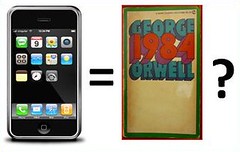 Channeling Jonathan Zittrain, Alex Curtis of Public Knowledge continues his incessant ranting against Apple and the iPhone for supposedly not being open enough and, therefore, somehow harming consumers and 3rd party developers. In his essay today about the supposed evils of the iPhone App Store, he accuses Apple of an “1984 kind of total control.”
Hmmm, let’s see… Apple creates a great new product that is so insanely sexy and innovative that even Apple-haters like me are forced to admit that it is the most brilliant tech gadget of the decade. Millions of people have flocked to Apple stores, stood in lines so long that you’d think they were giving away free pot and floor bongs inside, and then voluntarily handed over seemingly all their disposable monthly income to get their hands on one of these things.
OK, so how is this like
1984 again? Is evil Steve Jobs forcing the masses to buy this product? Of course not. So it strikes me that we can easily dispense with analogies to a book about coercive, totalitarian government control like 1984.
And if all this anti-iPhone ranting is just about the degree of control that Steve Jobs and Apple exercise over product add-ons then hey, I’ve got an easy answer for you: go get a different phone!
Continue reading →

 The Technology Liberation Front is the tech policy blog dedicated to keeping politicians' hands off the 'net and everything else related to technology.