Posts tagged as:

Gabrielle Bauer, a Toronto-based medical writer, has just published one of the most concise explanations of what’s wrong with the precautionary principle that I have ever read. The precautionary principle, you will recall, generally refers to public policies that limit or even prohibit trial-and-error experimentation and risk-taking. Innovations are restricted until their creators can prove that they will not cause any harms or disruptions. In an essay for The New Atlantis entitled, “Danger: Caution Ahead,” Bauer uses the world’s recent experiences with COVID lockdowns as the backdrop for how society can sometimes take extreme caution too far, and create more serious dangers in the process. “The phrase ‘abundance of caution’ captures the precautionary principle in a more literary way,” Bauer notes. Indeed, another way to look at it is through the prism of the old saying, “better to be safe than sorry.” The problem, she correctly observes, is that, “extreme caution comes at a cost.” This is exactly right and it points to the profound trade-offs associated with precautionary principle thinking in practice.

In my own writing about the problems associated with the precautionary principle (see list of essays at bottom), I often like to paraphrase an ancient nugget of wisdom from St. Thomas Aquinas, who once noted in his Summa Theologica that, if the highest aim of a captain were merely to preserve their ship, then they would simply keep it in port forever. Of course, that is not the only goal of a captain has. The safety of the vessel and the crew is essential, of course, but captains brave the high seas because there are good reasons to take such risks. Most obviously, it might be how they make their living. But historically, captains have also taken to the seas as pioneering explorers, researchers, or even just thrill-seekers.

This was equally true when humans first decided to take to the air in balloons, blimps, airplanes, and rockets. A strict application of the precautionary principle would have instead told us we should keep our feet on the ground. Better to be safe than sorry! Thankfully, many brave souls ignored that advice and took the heavens in the spirit of exploration and adventure. As Wilbur Wright once famously said, “If you are looking for perfect safety, you would do well to sit on a fence and watch the birds.” Needless to say, humans would have never mastered the skies if the Wright brothers (and many others) had not gotten off the fence and taken the risks they did. Continue reading →

In theory, the Food & Drug Administration (FDA) exists to save lives and improve health outcomes. All too often, however, that goal is hindered by the agency’s highly bureaucratic, top-down, command-and-control orientation toward drug and medical device approval.

Today’s case in point involves families of children with diabetes, many of whom are increasingly frustrated with the FDA’s foot-dragging when it comes to approval of medical devices that could help their kids. Writing today in The Wall Street Journal, Kate Linebaugh discusses how “Tech-Savvy Families Use Home-Built Diabetes Device” to help their kids when FDA regulations limit the availability of commercial options. She documents how families of diabetic children are taking matters into their own hands and creating their own home-crafted insulin pumps, which can automatically dose the proper amount of proper amount of the hormone in response to their child’s blood-sugar levels. Families are building, calibrating, and troubleshooting these devices on their own. And the movement is growing. Linebaugh reports that:

More than 50 people have soldered, tinkered and written software to make such devices for themselves or their children. The systems—known in the industry as artificial pancreases or closed loop systems—have been studied for decades, but improvements to sensor technology for real-time glucose monitoring have made them possible. The Food and Drug Administration has made approving such devices a priority and several companies are working on them. But the yearslong process of commercial development and regulatory approval is longer than many patients want, and some are technologically savvy enough to do it on their own.

Linebaugh notes that this particular home-built medical project (known as OpenAPS), was created by Dana Lewis, a 27-year-old with Type 1 diabetes in Seattle. Linebaugh says that: Continue reading →

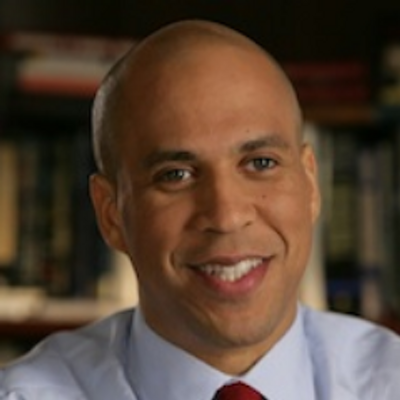
Cory BookerLast Wednesday, it was my great pleasure to testify at a Senate Commerce Committee hearing entitled, “The Connected World: Examining the Internet of Things.” The hearing focused “on how devices… will be made smarter and more dynamic through Internet technologies. Government agencies like the Federal Trade Commission, however, are already considering possible changes to the law that could have the unintended consequence of slowing innovation.”

But the session went well beyond the Internet of Things and became a much more wide-ranging discussion about how America can maintain its global leadership for the next-generation of Internet-enabled, data-driven innovation. On both sides of the aisle at last week’s hearing, one Senator after another made impassioned remarks about the enormous innovation opportunities that were out there. While doing so, they highlighted not just the opportunities emanating out of the IoT and wearable device space, but also many other areas, such as connected cars, commercial drones, and next-generation spectrum.

I was impressed by the energy and nonpartisan vision that the Senators brought to these issues, but I wanted to single out the passionate statement that Sen. Cory Booker (D-NJ) delivered when it came his turn to speak because he very eloquently articulated what’s at stake in the battle for global innovation supremacy in the modern economy. (Sen. Booker’s remarks were not published, but you can watch them starting at the 1:34:00 mark of the hearing video.) Continue reading →

Farhad Manjoo’s latest New York Times column, “Giving the Drone Industry the Leeway to Innovate,” discusses how the Federal Aviation Administration’s (FAA) current regulatory morass continues to thwart many potentially beneficial drone innovations. I particularly appreciated this point:

But perhaps the most interesting applications for drones are the ones we can’t predict. Imposing broad limitations on drone use now would be squashing a promising new area of innovation just as it’s getting started, and before we’ve seen many of the potential uses. “In the 1980s, the Internet was good for some specific military applications, but some of the most important things haven’t really come about until the last decade,” said Michael Perry, a spokesman for DJI [maker of Phantom drones]. . . . He added, “Opening the technology to more people allows for the kind of innovation that nobody can predict.”

That is exactly right and it reflects the general notion of “permissionless innovation” that I have written about extensively here in recent years. As I summarized in a recent essay: “Permissionless innovation refers to the notion that experimentation with new technologies and business models should generally be permitted by default. Unless a compelling case can be made that a new invention or business model will bring serious harm to individuals, innovation should be allowed to continue unabated and problems, if they develop at all, can be addressed later.” Continue reading →

book cover (small)I am pleased to announce the release of my latest book, “Permissionless Innovation: The Continuing Case for Comprehensive Technological Freedom.” It’s a short manifesto (just under 100 pages) that condenses — and attempts to make more accessible — arguments that I have developed in various law review articles, working papers, and blog posts over the past few years. I have two goals with this book.

First, I attempt to show how the central fault line in almost all modern technology policy debates revolves around “the permission question,” which asks: Must the creators of new technologies seek the blessing of public officials before they develop and deploy their innovations? How that question is answered depends on the disposition one adopts toward new inventions. Two conflicting attitudes are evident.

One disposition is known as the “precautionary principle.” Generally speaking, it refers to the belief that new innovations should be curtailed or disallowed until their developers can prove that they will not cause any harms to individuals, groups, specific entities, cultural norms, or various existing laws, norms, or traditions.

The other vision can be labeled “permissionless innovation.” It refers to the notion that experimentation with new technologies and business models should generally be permitted by default. Unless a compelling case can be made that a new invention will bring serious harm to society, innovation should be allowed to continue unabated and problems, if they develop at all, can be addressed later.

I argue that we are witnessing a grand clash of visions between these two mindsets today in almost all major technology policy discussions today. Continue reading →

“Liberty upsets patterns.” That was one of the many lessons that the late Harvard philosopher Robert Nozick taught us in his 1974 masterpiece “Anarchy, State, and Utopia.” What Nozick meant was that there is a fundamental tension between liberty and egalitarianism such that when people are left to their own devices, some forms of inequality would be inevitable and persistent throughout society. (Correspondingly, any attempt to force patterns, or outcomes, upon society requires a surrender of liberty.)

No duh, right? Most people understand this today–even if some of them are all too happy to hand their rights over to the government in exchange for momentary security or some other promise.  In the world of media policy, however, many people still labor under the illusion that liberty and patterned equality are somehow reconcilable. That is, some media policy utopians and Internet pollyannas would like us to believe that if you give every man, woman, and child a platform on which to speak, everyone will be equally heard.  Moreover, in pursuit of that goal, some of them argue government should act to “upset patterns” and push to achieve more “balanced” media outcomes. That is the philosophy that has guided the “media access” movement for decades and it what fuels the “media reformista” movement that is led by groups like the (inappropriately named) Free Press, which was founded by neo-Marxist media theorist Robert McChesney.

Alas, perfect media equality remains an illusive pipe dream. As I have pointed out here before, there has never been anything close to “equal outcomes” when it comes to the distribution or relative success of books, magazines, music, movies, book sales, theater tickets, etc.  A small handful of titles have always dominated, usually according to a classic “power law” or “80-20” distribution, with roughly 20% of the titles getting 80% of the traffic / revenue.  And this trend is increasing, not decreasing, for newer and more “democratic” online media.

For example, recent research has revealed that “the top 10% of prolific Twitter users accounted for over 90% of tweets” and  “the top 15% of the most prolific [Wkipedia] editors account for 90% of Wikipedia’s edits.” As Clay Shirky taught us back in 2003 in this classic essay, the same has long held true for blogging, where outcomes are radically inegalitarian, with a tiny number of blogs getting the overwhelming volume of blogosphere attention.  The reason, Shirky pointed out, is that:

Continue reading →