 Margaret Talbot has written an excellent New Yorker essay entitled, “The Rogue Experimenters,” which documents the growth of the D.I.Y.-bio movement. This refers to the organic, bottom-up, citizen science movement, or “leaderless do-ocracy” of tinkerers, as she notes. I highly recommend you check it out.
As I noted in my new book on
Evasive Entrepreneurs and the Future of Governance, “DIY health services and medical devices are on the rise thanks to the combined power of open-source software, 3D printers, cloud computing, and digital platforms that allow information sharing between individuals with specific health needs. Average citizens are using these new technologies to modify their bodies and abilities, often beyond the confines of the law.”
Talbot discusses many of the same examples I discuss in my book, including:
- the Four Thieves Vinegar collective, which devised instructions for building its own version of the EpiPen;
- e-nable, an international collective of thirty thousand volunteers, designs and 3-D-prints prosthetic hands and arms (and which has, more recently, distributed more than fifty thousand face shields in more than twenty-five countries.);
- GenSpace and other community biohacking labs; and
- Open Insulin and Open Artificial Pancreas System.
I like the way Talbot compares these movements to the hacker and start-up culture of the Digital Revolution: Continue reading →
After reading LM Sacasas’ recent piece on
moral communities
, I couldn’t help but wonder if the piece was written in the
esoteric mode
.
Let me explain by some meandering.
Now, I am surely going to butcher his argument, so take a read of it yourself, but there is a bit of an interesting call and response structure to the piece. He begins with commentary on “frequent deployment of
the rhetorical we
,” in discussions over the morality of technology. Then, channeling Langdon Winner, he notes approvingly that “What matters here is that this lovely ‘we’ suggests the presence of a moral community that may not, in fact, exist at all, at least not in any coherent, self-conscious form.” Continue reading →
While I was away at Oxford University last week, a USA Today story ran entitled “Online Hate Speech: Difficult to Police… and Define.” The author, Theresa Howard, was kind enough to call me for comment on the issue before I left and I made two general points in response to her questions about how serious online hate speech was and how we should combat it:
(1)
“The Internet is a cultural bazaar. It’s the place to find the best and worst of all human elements on display.” What I meant by that, quite obviously, is that you can’t expect to have the most open, accessible communications platform the world has ever known and not also have a handful of knuckleheads who use it spew vile, hateful, ridiculous comments. But we need to put things in perspective: Those jerks represent only a very, very small minority of all online speech and speakers. Hate speech is not the norm online. The overwhelmingly majority of online speech is of a socially acceptable — even beneficial — nature.
(2)
“When advocacy groups work together and use the new technology at their disposal, they have a way of signaling out bad speech and bad ideas.” What I meant by that was that the best way to combat the handful of neanderthals out there that spew hateful garbage is to: (a) use positive speech to drown out hateful speech, and (b) encourage websites to self-police themselves or use community policing techniques to highlight hateful speech and encourage the community to fight back. Importantly, this process is reinforcing. When online communities “flag and tag” objectionable or hateful content, it is easier for better site policing to occur, for social norms to develop, and for better speech to be targeted at that bad speech. Moreover, these new tools and methods are helping groups like the Anti-Defamation League and the National Hispanic Media Coalition to better identify hate speech and then channel their collective energy and efforts to unite the rest of the online community against those hateful speakers and sites.
I think this approach makes more sense than calling in governments to police online hate speech through censorship efforts. This is especially the case because, at the margins, “hate speech” can often be tricky to define and, at least in the United States, regulatory efforts could conflict with legitimate free speech rights. Again, the best way to deal with and marginalize such knuckleheads is with more and better speech. Fight stupidity with sensibility, not censorship.
Meetup.com founder Scott Heiferman explains how Meetup is all about “The Pursuit of Community” in the New York Times.
A Meetup is about the simple idea of using the Internet to get people off the Internet. People feel a need to commiserate or get together and talk about what’s important to them. Our biggest categories are moms, small business, health support and fitness.
When we were designing the site, we were wrong about almost everything we thought people would want to use it for. I thought it would be a niche lifestyle venture, perhaps for fan clubs. I had no idea that people would form new types of P.T.A.’s, chambers of commerce or health support groups. And we weren’t thinking that anyone would want to meet about politics, but there are thousands of these Meetups.
People have organized more than 200,000 monthly Meetups in more than 100 countries.
There’s nothing more powerful than a community coming together around a purpose. We spend increasingly more time in front of screens. We’re more connected technologically, but we’re less connected physically.
Heiferman’s vision of technology bringing people together in pursuit of shared interests,passions and causes, from the political to the charitable to the trivial, would have delighted Alexis de Tocqueville, whose 1835 classic Democracy in America identified voluntary association as the unique genius of the American character.
Tocqueville concluded that representative democracy had flourished in America, rather than leading to murderous despotism as it had in Tocqueville’s revolutionary France, because, among other things, Americans built a rich civic society interposed between the atomized individual and the state. Rather than suppressing political associations as factions dangerous to the health of the state, Americans embraced political associations (parties and causes), which served as “large free schools, where all the members of the community go to learn the general theory of association.” Americans would apply that art in every other walk of life, from today’s AIDS Walks or PTA meetings to groups of rock climber enthusiasts: “The art of association then becomes… the mother of action, studied and applied by all.” Tocqueville concludes: Continue reading →
In an earlier post, I mentioned an important new online child safety task force report that has just been released from the “Point Smart. Click Safe.” Blue Ribbon Working Group. It’s a great report and I encourage you to read the whole thing. It was my great pleasure to serve on this task force, and as we started finalizing our conclusions and recommendations, I started thinking about how much of what we were finding and recommending was consistent with what past online safety task forces had also concluded.
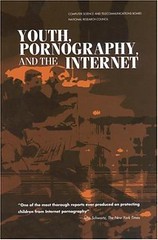
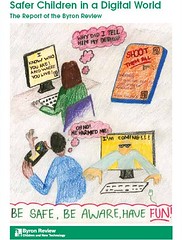
By way of background, over the past decade, five major online safety task forces or blue ribbon commissions have been convened to study online safety issues. Two of these task forces were convened in the United States and issued reports in 2000 (“COPA Commission”) and 2002 (“Thornburgh Commission“). Another was commissioned by the British government in 2007 and issued in a major report in March 2008 (“Byron Review“). Finally, two additional online safety task forces were formed in the U.S. in 2008 and concluded their work, respectively, in January (“Internet Safety Technical Task Force“) and July (“Point Smart. Click Safe.“) of 2009. [And yet another task force — the Online Safety Technology Working Group — was recently formed and has now gotten underway.]
In a new PFF white paper, ”
Five Online Safety Task Forces Agree: Education, Empowerment & Self-Regulation Are the Answer,” I walk through a chronological summary of each of these past task forces [click on covers of each report below to read them in their entirety] and highlight some of the similar themes and recommendations from them.


 Continue reading →

 The Technology Liberation Front is the tech policy blog dedicated to keeping politicians' hands off the 'net and everything else related to technology.