Alice Marwick, assistant professor of communication and media studies at Fordham University, discusses her newly-released book, Status Update: Celebrity, Publicity, and Branding in the Social Media Age. Marwick reflects on her interviews with Silicon Valley entrepreneurs, technology journalists, and venture capitalists to show how social media affects social dynamics and digital culture. Marwick answers questions such as: Does “status conscious” take on a new meaning in the age of social media? Is the public using social media the way the platforms’ creators intended? How do you quantify the value of online social interactions? Are social media users becoming more self-censoring or more transparent about what they share? What’s the difference between self-branding and becoming a micro-celebrity? She also shares her advice for how to make Twitter, Tumblr, Instagram and other platforms more beneficial for you.
Download
Related Links
 I think I owe Tom Brokaw an apology. When I first started reading his most recent Wall Street Journal column, “Imagine the Tweets During the Cuban Missile Crisis,” I assumed that I was in for one of those hyper-nosalgic essays about how the ‘good ‘ol days’ of mass media had passed us by and why the new media era is an unmitigated disaster. Instead, I was pleased to read his very balanced and sensible view of the old versus news media environments. Reflecting on the evolution of the media marketplace over the past 50 years since JFK’s assassination, Brokaw notes that:
The media climate has changed dramatically. The New Frontier, as Kennedy liked to call his administration, received a great deal of attention, but 50 years ago the major national information sources consisted of a handful of big-city daily newspapers, a few weekly news periodicals and two dominant TV network evening newscasts. Now the political news comes at us 24/7 on cable, through the air, the digital universe, on radio and print. And it comes to us more and more as opinion rather than a recitation of the facts as best they can be determined. News is a hit-and-run game, for the most part, with too little accountability for error.
This leads Brokaw to wonder if the amazing media metamorphosis has been, on net, positive or negative. “The virtual town square has been wired and expanded,” he notes, “but the question remains whether more voices make for a healthier political climate. With a keystroke we can easily move from an online credible source of information to a website larded with opinion or deliberately malicious erroneous claims. Have we simply enlarged the megaphone, cranked up the decibel level, and rallied the like-minded without regard to facts or consequences?” Continue reading →
Timothy B. Lee, founder of The Washington Post’s blog The Switch discusses his approach to reporting at the intersection of technology and policy. He covers how to make tech concepts more accessible; the difference between blogs and the news; the importance of investigative journalism in the tech space; whether paywalls are here to stay; Jeff Bezos’ recent purchase of The Washington Post; and the future of print news.
Download
Related Links
David Garcia, post doctoral researcher at the Swiss Federal Institute of Technology and co-author of Social Resilience in Online Communities: The Autopsy of Friendster, discusses the concept of social resilience and how online communities, like Facebook and Friendster, withstand changes in their environment.
Garcia’s paper examines one of the first online social networking sites, Friendster, and analyzes its post-mortem data to learn why users abandoned it.
Garcia goes on to explain how opportunity cost and cost benefit analysis can affect a user’s decision whether or not to remain in an online community.
Download
Related Links
As I noted in an addendum to my previous post, less than an hour after I posted an essay about how the District of Columbia’s subsidy deal with LivingSocial was potentially set to unravel, I received a call from two representatives of the D.C. Mayor’s office asking me to clarify a few aspects of the deal. The tone and substance of the call was courteous and profession from the start and I told them I would be happy to post a quick update to my essay letting readers know of the points that they wanted stressed.
After I did so, however, I kept thinking how strange it was that I received such a quick response from the Mayor’s office about my little post. After all, I can’t imagine that the
Technology Liberation Front is on the top of their morning reading list! I just figured that someone in the Mayor’s office probably had a Google Alert set up that caught it. But then, as luck would have it, I was reading through the Wall Street Journal at lunch and came across a story entitled, “In D.C., Social-Media Surveillance Pays Off” by Sarah Portlock. She reports that:
The local government in the nation’s capital is paying hundreds of thousands of dollars to a startup to gather comments on Twitter, Facebook and other online message boards as well as the government’s own website. The data help form a letter grade for the bureaucracies that handle drivers licenses, building permits and the like. These social-media analytics services are already common for businesses such as restaurants and hotel chains that want to go beyond the comment cards most customers ignore. The D.C. experiment suggests governments are beginning to mirror the private sector in seeking real-time unvarnished feedback.
The D.C. government apparently has a 2-year $670,000 contract with newBrandAnalytics, Inc. to gather social media feedback and insights about the District. So, I figure that’s how the folks in the D.C. Mayor’s office stumbled upon my little rant. I had posted a link to my essay on both Twitter and Google+ and they probably got an immediate report back about it.
In any event, that got me wondering about how people are going to respond to this sort of “surveillance” of social media sites and activities by governments. Continue reading →
The Mercatus Center at George Mason University has just released my new white paper, “The Perils of Classifying Social Media Platforms as Public Utilities.” [PDF] I first presented a draft of this paper last November at a Michigan State University conference on “The Governance of Social Media.” [Video of my panel here.]
In this paper, I note that to the extent public utility-style regulation has been debated within the Internet policy arena over the past decade, the focus has been almost entirely on the physical layer of the Internet. The question has been whether Internet service providers should be considered “essential facilities” or “natural monopolies” and regulated as public utilities. The debate over “net neutrality” regulation has been animated by such concerns.
While that debate still rages, the rhetoric of public utilities and essential facilities is increasingly creeping into policy discussions about other layers of the Internet, such as the search layer. More recently, there have been rumblings within academic and public policy circles regarding whether social media platforms, especially social networking sites, might also possess public utility characteristics. Presumably, such a classification would entail greater regulation of those sites’ structures and business practices.
Proponents of treating social media platforms as public utilities offer a variety of justifications for regulation. Amorphous “fairness” concerns animate many of these calls, but privacy and reputational concerns are also frequently mentioned as rationales for regulation. Proponents of regulation also sometimes invoke “social utility” or “social commons” arguments in defense of increased government oversight, even though these notions lack clear definition.
Social media platforms do not resemble traditional public utilities, however, and there are good reasons why policymakers should avoid a rush to regulate them as such. Continue reading →
I have a lot of respect for danah boyd and have had the pleasure to interact with her when we both served on the Harvard online child safety task force, and at other times. She’s a very gifted social media researcher. But there are three big problems with her argument that Facebook should be treated as a “utility” and regulated as such. (See: “
Facebook is a Utility; Utilities Get Regulated.”)
What a Utility Is, and Isn’t
First, and most obviously, the term “utility” has a fairly well-understood meaning in economic literature and Facebook does not possess the same qualities:
- A utility is usually something thought to be an “essential facility” in that the service or network in question is highly unique and possess few (or no) good alternatives. (Regulators typically require “non-discriminatory access” for that reason.)
- The service in question is also typically regarded as being something approximating a “life-essential” service, like water or electricity. (Regulators typically require all to be served in a fairly uniform fashion for that reason.)
- The service is also something that typically entails significant fixed costs and that requires us to pay good money to use. (Regulators typically impose price regulation for fear of “gouging” for that reason.)
Again, Facebook possess none of those qualities. Continue reading →
In an earlier post, I mentioned an important new online child safety task force report that has just been released from the “Point Smart. Click Safe.” Blue Ribbon Working Group. It’s a great report and I encourage you to read the whole thing. It was my great pleasure to serve on this task force, and as we started finalizing our conclusions and recommendations, I started thinking about how much of what we were finding and recommending was consistent with what past online safety task forces had also concluded.
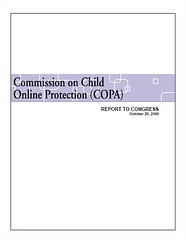
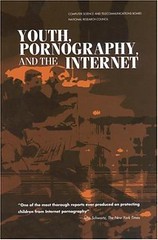
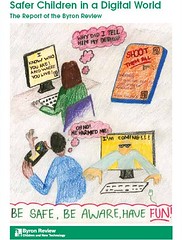
By way of background, over the past decade, five major online safety task forces or blue ribbon commissions have been convened to study online safety issues. Two of these task forces were convened in the United States and issued reports in 2000 (“COPA Commission”) and 2002 (“Thornburgh Commission“). Another was commissioned by the British government in 2007 and issued in a major report in March 2008 (“Byron Review“). Finally, two additional online safety task forces were formed in the U.S. in 2008 and concluded their work, respectively, in January (“Internet Safety Technical Task Force“) and July (“Point Smart. Click Safe.“) of 2009. [And yet another task force — the Online Safety Technology Working Group — was recently formed and has now gotten underway.]
In a new PFF white paper, ”
Five Online Safety Task Forces Agree: Education, Empowerment & Self-Regulation Are the Answer,” I walk through a chronological summary of each of these past task forces [click on covers of each report below to read them in their entirety] and highlight some of the similar themes and recommendations from them.

 Continue reading →

 The Technology Liberation Front is the tech policy blog dedicated to keeping politicians' hands off the 'net and everything else related to technology.