The Mercatus Center at George Mason University has just released a new paper on,”Permissionless Innovation and Immersive Technology: Public Policy for Virtual and Augmented Reality,” which I co-authored with Jonathan Camp. This 53-page paper can be downloaded via the Mercatus website, SSRN or Research Gate.
Here is the abstract for the paper:
Immersive technologies such as augmented reality, virtual reality, and mixed reality are finally taking off. As these technologies become more widespread, concerns will likely develop about their disruptive social and economic effects. This paper addresses such policy concerns and contrasts two different visions for governing immersive tech going forward. The paper makes the case for permissionless innovation, or the general freedom to innovate without prior constraint, as the optimal policy default to maximize the benefits associated with immersive technologies.
The alternative vision — the so-called precautionary principle — would be an inappropriate policy default because it would greatly limit the potential for beneficial applications and uses of these new technologies to emerge rapidly. Public policy for immersive technology should not be based on hypothetical worst-case scenarios. Rather, policymakers should wait to see which concerns or harms emerge and then devise ex post solutions as needed.
To better explain why precautionary controls on these emerging technologies would be such a mistake, Camp and I provide an inventory of the many VR, AR, and mixed reality applications that are already on the market–or soon could be–and which could provide society with profound benefits. A few examples include: Continue reading →
Today, the U.S. Department of Transportation released its eagerly-awaited “Federal Automated Vehicles Policy.” There’s a lot to like about the guidance document, beginning with the agency’s genuine embrace of the potential for highly automated vehicles (HAVs) to revolutionize this sector and save thousands of lives annually in the process.
It is important we get HAV policy right, the DOT notes, because, “35,092 people died on U.S. roadways in 2015 alone” and “94 percent of crashes can be tied to a human choice or error.” (p. 5) HAVs could help us reverse that trend and save thousands of lives and billions in economic costs annually. The agency also documents many other benefits associated with HAVs, such as increasing personal mobility, reducing traffic and pollution, and cutting infrastructure costs.
I will not attempt here to comment on every specific recommendation or guideline suggested in the new DOT guidance document. I could nit-pick about some of the specific recommended guidelines, but I think many of the guidelines are quite reasonable, whether they are related to safety, security, privacy, or state regulatory issues. Other issues need to be addressed and CEI’s Marc Scribner does a nice job documenting some of them is his response to the new guidelines.
Instead of discussing those specific issues today, I want to ask a more fundamental and far-reaching question which I have been writing about in recent papers and essays:
Is this guidance or regulation? And what does the use of informal guidance mechanisms like these signal for the future of technological governance more generally? Continue reading →
In previous essays here I have discussed the rise of “global innovation arbitrage” for genetic testing, drones, and the sharing economy. I argued that: “Capital moves like quicksilver around the globe today as investors and entrepreneurs look for more hospitable tax and regulatory environments. The same is increasingly true for innovation. Innovators can, and increasingly will, move to those countries and continents that provide a legal and regulatory environment more hospitable to entrepreneurial activity.” I’ve been working on a longer paper about this with Samuel Hammond, and in doing research on the issue, we keep finding interesting examples of this phenomenon.
The latest example comes from a terrific new essay (“Humans: Unsafe at Any Speed“) about driverless car technology by Wall Street Journal technology columnist L. Gordon Crovitz. He cites some important recent efforts by Ford and Google and he notes that they and other innovators will need to be given more flexible regulatory treatment if we want these life-saving technologies on the road as soon as possible. “The prospect of mass-producing cars without steering wheels or pedals means U.S. regulators will either allow these innovations on American roads or cede to Europe and Asia the testing grounds for self-driving technologies,” Crovitz observes. “By investing in autonomous vehicles, Ford and Google are presuming regulators will have to allow the new technologies, which are developing faster even than optimists imagined when Google started working on self-driving cars in 2009.” Continue reading →
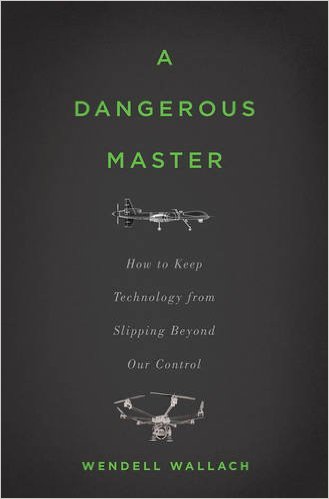
On May 3rd, I’m excited to be participating in a discussion with Yale University bioethicist Wendell Wallach at the Microsoft Innovation & Policy Center in Washington, DC. (RSVP here.) Wallach and I will be discussing issues we write about in our new books, both of which focus on possible governance models for emerging technologies and the question of how much preemptive control society should exercise over new innovations.
Of all the books of technological criticism or skepticism that I’ve read in recent years—and I have read stacks of them!—
A Dangerous Master is by far the most thoughtful and interesting. I have grown accustomed to major works of technological criticism being caustic, angry affairs. Most of them are just dripping with dystopian dread and a sense of utter exasperation and outright disgust at the pace of modern technological change.
Although he is certainly concerned about a wide variety of modern technologies—drones, robotics, nanotech, and more—Wallach isn’t a purveyor of the politics of panic. There are some moments in the book when he resorts to some hyperbolic rhetoric, such as when he frets about an impending “techstorm” and the potential, as the book’s title suggests, for technology to become a “dangerous master” of humanity. For the most part, however, his approach is deeper and more dispassionate than what is found in the leading tracts of other modern techno-critics.
One of my favorite themes, and not just in the field of tech policy, is the “Unintended Consequences of Well-Intentioned Regulations.” I believe that all laws and regulations have dynamic effects and that to fully appreciate the true impact of any particular public policy, you must always closely investigate the potential opportunity costs and unintended consequences associated with those policies. Because all too often laws and regulations are hastily put on the books with the very best of intentions in mind, only to later be shown to produce the opposite of what was intended.
Today’s case in point comes from a Wall Street Journal article by Rachel Bachman and it involves how the growing wave of cycling helmet laws are having a net negative impact on public health because they discourage ridership in the aggregate. Thus, those potential riders are then either (a) just less active overall or (b) driving their cars to get where they need to go. And both of those results are, ultimately, riskier than cycling without a helmet. For that reason, Bachman reports, cycling advocates “are pushing back against mandatory bike-helmet laws in the U.S. and elsewhere. They say mandatory helmet laws, particularly for adults, make cycling less convenient and seem less safe, thus hindering the larger public-health gains of more people riding bikes.” Supporting evidence comes from this 2012 paper in the journal Risk Analysis by Piet de Jong, a professor in the department of applied finance and actuarial studies at Sydney’s Macquarie University. His paper included an empirical model that showed how mandatory bike-helmet laws “have a net negative health impact.”
This strikes me as one of the very best examples of how to do dynamic benefit-cost analysis and show the full range of societal impacts associated with well-intentioned regulations. And it reminds me of the playground example I use in several of my papers: Laws and liability threats discouraged tall playground climbing structures in the ’80s and ’90s. Continue reading →
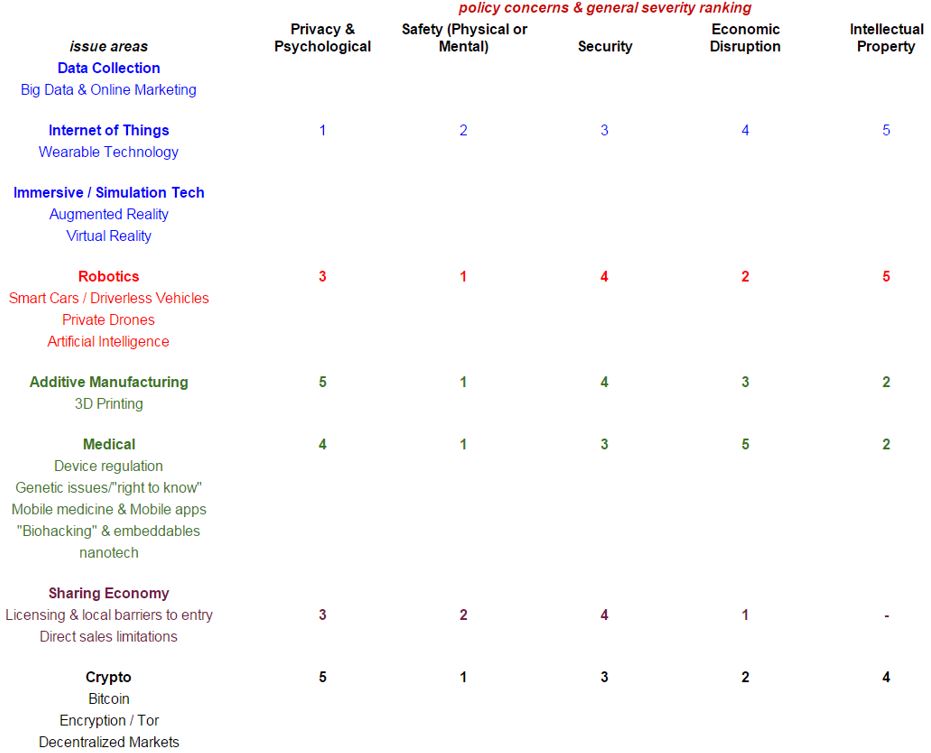
On the whiteboard that hangs in my office, I have a giant matrix of technology policy issues and the various policy “threat vectors” that might end up driving regulation of particular technologies or sectors. Along with my colleagues at the Mercatus Center’s Technology Policy Program, we constantly revise this list of policy priorities and simultaneously make an (obviously quite subjective) attempt to put some weights on the potential policy severity associated with each threat of intervention. The matrix looks like this: [Sorry about the small fonts. You can click on the image to make it easier to see.]
I use 5 general policy concerns when considering the likelihood of regulatory intervention in any given area. Those policy concerns are:
privacy (reputation issues, fear of “profiling” & “discrimination,” amorphous psychological / cognitive harms);
safety (health & physical safety or, alternatively, child safety and speech / cultural concerns);
security (hacking, cybersecurity, law enforcement issues);
I want to highlight an important new blog post (“Slow Down That Runaway Ethical Trolley“) on the ethical trade-offs at work with autonomous vehicle systems by Bryant Walker Smith, a leading expert on these issues. Writing over at Stanford University’s Center for Internet and Society blog, Smith notes that, while serious ethical dilemmas will always be present with such technologies, “we should not allow the perfect to be the enemy of the good.” He notes that many ethical philosophers, legal theorists, and media pundits have recently been actively debating variations of the classic “Trolley Problem,” and its ramifications for the development of autonomous or semi-autonomous systems. (Here’s some quick background on the Trolley Problem, a thought experiment involving the choices made during various no-win accident scenarios.) Commenting on the increased prevalence of the Trolley Problem in these debates, Smith observes that:
Unfortunately, the reality that automated vehicles will eventually kill people has morphed into the illusion that a paramount challenge for or to these vehicles is deciding who precisely to kill in any given crash. This was probably not the intent of the thoughtful proponents of this thought experiment, but it seems to be the result. Late last year, I was asked the “who to kill” question more than any other — by journalists, regulators, and academics. An influential working group to which I belong even (briefly) identified the trolley problem as one of the most significant barriers to fully automated motor vehicles.
Although dilemma situations are relevant to the field, they have been overhyped in comparison to other issues implicated by vehicle automation. The fundamental ethical question, in my opinion, is this: In the United States alone, tens of thousands of people die in motor vehicle crashes every year, and many more are injured. Automated vehicles have great potential to one day reduce this toll, but the path to this point will involve mistakes and crashes and fatalities. Given this stark choice, what is the proper balance between caution and urgency in bringing these systems to the market? How safe is safe enough?
I’ve spent much of the past year studying the potential public policy ramifications associated with the rise of the Internet of Things (IoT). As I was preparing some notes for my Jan. 6th panel discussing on “Privacy and the IoT: Navigating Policy Issues” at this year’s 2015 CES show, I went back and collected all my writing on IoT issues so that I would have everything in one place. Thus, down below I have listed most of what I’ve done over the past year or so. Most of this writing is focused on the privacy and security implications of the Internet of Things, and wearable technologies in particular.
I plan to stay on top of these issues in 2015 and beyond because, as I noted when I spoke on a previous CES panel on these issues, the Internet of Things finds itself at the center of what we might think of a perfect storm of public policy concerns: Privacy, safety, security, intellectual property, economic / labor disruptions, automation concerns, wireless spectrum issues, technical standards, and more. When a new technology raises one or two of these policy concerns, innovators in those sectors can expect some interest and inquiries from lawmakers or regulators. But when a new technology potentially touches all of these issues, then it means innovators in that space can expect an avalanche of attention and a potential world of regulatory trouble. Moreover, it sets the stage for a grand “clash of visions” about the future of IoT technologies that will continue to intensify in coming months and years.
That’s why I’ll be monitoring developments closely in this field going forward. For now, here’s what I’ve done on this issue as I prepare to head out to Las Vegas for another CES extravaganza that promises to showcase so many exciting IoT technologies. Continue reading →
The Mercatus Center at George Mason University has just released my latest working paper, “The Internet of Things and Wearable Technology: Addressing Privacy and Security Concerns without Derailing Innovation.” The “Internet of Things” (IoT) generally refers to “smart” devices that are connected to both the Internet and other devices. Wearable technologies are IoT devices that are worn somewhere on the body and which gather data about us for various purposes. These technologies promise to usher in the next wave of Internet-enabled services and data-driven innovation. Basically, the Internet will be “baked in” to almost everything that consumers own and come into contact with.
Some critics are worried about the privacy and security implications of the Internet of Things and wearable technology, however, and are proposing regulation to address these concerns. In my new 93-page article, I explain why preemptive, top-down regulation would derail the many life-enriching innovations that could come from these new IoT technologies. Building on a recent book of mine, I argue that “permissionless innovation,” which allows new technology to flourish and develop in a relatively unabated fashion, is the superior approach to the Internet of Things.
As I note in the paper and my earlier book, if we spend all our time living in fear of the worst-case scenarios — and basing public policies on them — then best-case scenarios can never come about. As the old saying goes: nothing ventured, nothing gained. Precautionary principle-based regulation paralyzes progress and must be avoided. We instead need to find constructive, “bottom-up” solutions to the privacy and security risks accompanying these new IoT technologies instead of top-down controls that would limit the development of life-enriching IoT innovations. Continue reading →
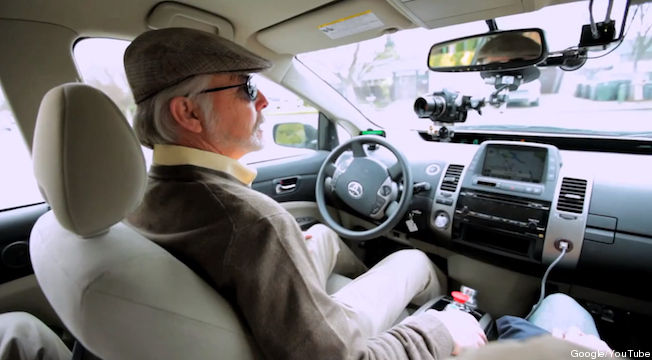
I’m pleased to announce that the Mercatus Center at George Mason University has just released my latest working paper, “Removing Roadblocks to Intelligent Vehicles and Driverless Cars.” This paper, which was co-authored with Ryan Hagemann, has been accepted for publication in a forthcoming edition of the Wake Forest Journal of Law & Policy.
In the paper, Hagemann and I explore the growing market for both “connected car” technologies as well as autonomous (or “driverless”) vehicle technology. We argue that intelligent-vehicle technology will produce significant benefits. Most notably, these technologies could save many lives. In 2012, 33,561 people were killed and 2,362,000 injured in traffic crashes, largely as a result of human error. Reducing the number of accidents by allowing intelligent vehicle technology to flourish would constitute a major public policy success. As Philip E. Ross noted recently at IEEE Spectrum, thanks to these technologies, “eventually it will be positively hard to use a car to hurt yourself or others.” The sooner that day arrives, the better.
These technologies could also have positive environmental impacts in the form of improved fuel economy, reduced traffic congestion, and reduced parking needs. They might also open up new mobility options for those who are unable to drive, for whatever reason. Any way you cut it, these are exciting technologies that promise to substantially improve human welfare.
Of course, as with any new disruptive technology, connected cars and driverless vehicles raise a variety of economic, social, and ethical concerns. Hagemann and I address some of the early policy concerns about these technologies (safety, security, privacy, liability, etc.) and we outline a variety of “bottom-up” solutions to ensure that innovation continues to flourish in this space. Importantly, we also argue that policymakers should keep in mind that individuals have gradually adapted to similar disruptions in the past and, therefore, patience and humility are needed when considering policy for intelligent-vehicle systems. Continue reading →
The Technology Liberation Front is the tech policy blog dedicated to keeping politicians' hands off the 'net and everything else related to technology. Learn more about TLF →

 The Technology Liberation Front is the tech policy blog dedicated to keeping politicians' hands off the 'net and everything else related to technology.