Posts tagged as:

Mike Wendy and I have just released a new PFF white paper, “The Constructive Alternative to Net Neutrality Regulation and Title II Reclassification Wars.” In it, we discuss the Federal Communications Commission’s (FCC) misguided effort to pigeonhole the Internet and broadband networks into the regulatory regime of a bygone era. Specifically, the agency’s recent efforts to impose “Net neutrality” regulations on broadband networks, or reclassify them as Title II services under the Communications Act, raises the likelihood of delayed or foregone investment, will discourage innovation at both the core and edge of networks, and increases the likely politicization and bureaucratization of high-technology policy more generally.

We believe there are constructive alternatives to such a destructive regulatory path.  The better alternative would be based on (1) a new legislative framework centered on an FTC-like enforcement model of ex post adjudication grounded in antitrust law; (2) increased industry self-regulation, technical collaboration, and alternative dispute resolution mechanisms; and (3) greater reliance on community policing and expert third-party oversight.

For more details, you can read our entire paper down below the fold: Continue reading →

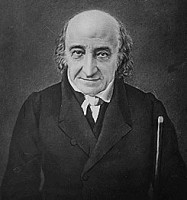
Over the weekend, I published an op-ed in The Des Moines Register encouraging the FCC to heed the lessons of the first national broadband plan, the one Secretary of the Treasury Albert Gallatin sent to Congress in 1808.

Gallatin was a remarkable figure in the early history of the federal government, and his accomplishments include being the longest-serving Treasury secretary (1801-1812) to date. His report on the Subject of Public Roads and Canals, completed at the request of Congress, remains one of the seminal documents in the history of American infrastructure. It is a masterpiece of dispassionate policy-making and clear-headed writing.

Alas, the document is available nowhere online, and the only in-print copy I can find is published by the aptly-named Dodo Press. This is indeed unfortunate given the renewed interest in network infrastructure as a form of national technology. The NBP published in March by the FCC, despite its nearly 400 pages and thousands of footnotes, makes no reference to Gallatin or his plan. Continue reading →

I appeared this afternoon on the inaugural edition of TechCrunch TV to talk about–what else?–Net Neutrality.

http://c.brightcove.com/services/viewer/federated_f9/63890987001?isVid=1&isUI=1 Multiple media sources are now reporting that the FCC, contrary to reports from earlier this week, has decided to go ahead with an effort to change the classification of broadband Internet service from a Title I “information service” to a Title II “telecommunications service,” if only to salvage the proposed rulemaking on the open and transparent Internet.  (See stories on The Wall Street Journal and The Washington Post as well as Ars Technica.) Those of us who aren’t on the FCC’s official leak list will have to wait with the rest of the rabble to get a look at just how the FCC proposes to effect this radical change in communications law.  Will it apply to all broadband Internet–including cable, fiber, DSL, satellite, wireless and broadband over power lines?  Will the FCC propose to regulate only as much as needed to get the jurisdiction the D.C. Circuit says it doesn’t have under Title I to implement the NPRM, or will they throw in some additional provisions to achieve other goals–such as the reform of the Universal Service Fund?  Will state and local regulators get to share in the fun of telling ISPs how best to run their business? Continue reading →

The Washington Post carried an article earlier this week by Cecilia Kang that noted the Federal Trade Commission could gain enforcement power over online businesses as a result of the financial services legislation under discussion in Congress. Ms. Kang contrasted the possibility of an empowered FTC issuing fast-track regulations against the recent experience of the Federal Communications Commission, which has become bogged down in its search for legal authority to issue net neutrality regulations. 

The comparison is insightful, but not for the reasons you might expect. Part of the debate over the FTC revolves around language in the House financial services bill that would repeal the “Magnuson-Moss” provisions that govern FTC promulgation of consumer protection regulations. (The name comes from the fact that these restrictions on FTC rulemaking were included in the Magnuson-Moss Warranty Act, which got the FTC into the business of regulating car warranties.)

If the FTC wants to regulate some type of general business practice under the FTC Act, it has to establish a factual record substantiating that there is actually a systemic problem that regulation can solve, hold a public hearing, allow cross-examination on factual matters, and conduct an economic analysis of the regulation’s effects.  In short, the commission has to do the homework necessary to demonstrate that its proposed regulation will actually solve a widespread problem that actually exists.

When Tim Muris directed the FTC’s Bureau of Consumer Protection in the early 1980s, he authored an article in Regulation magazine pointing out that when the FTC does careful analysis before issuing a rule, the rule is more likely to benefit consumers, more likely to be upheld in court, and more likely to be issued expeditiously. He contrasted the evidence-based eyeglass rule, which took three years to issue, with the anecdote-based funeral rule, which took ten. Muris noted wryly, “Some critics of my position charge that it is revolutionary to ask a body of lawyers and economists not to impose its own view of proper regulation on the world without first systematically evaluating the problem.” Muris went on to serve as chairman of the FTC between 2001-04, and last month he defended the Magnuson-Moss restrictions in testimony before Congress.  

What does this have to do with the FCC?  The FCC lost its case against Comcast on appeal, precisely because the FCC tried to take shortcuts. The FCC tried to promote net neutrality by enforcing a set of “principles” that originated in a former chairman’s speech and were never promulgated in a notice-and-comment rulemaking. The FCC commissioners endorsed these principles without investigating whether there was a systemic problem (ie, more than a few anecdotes of misbehavior). Indeed, Chairman Martin’s Notice of Inquiry on “Broadband Industry Practices” that was launched around the same time the FCC took its enforcement action against Comcast turned up no evidence of a systemic problem. If the FCC now tries to impose net neutrality by reclassifying broadband as a “Title II” common carrier, it will have to do the difficult but necessary work of demonstrating, with real factual evidence, that broadband is more like a common carrier than like the lightly-regulated “information service” the commission previously decided it was.

We don’t need Congress to free the FTC from Magnuson-Moss. Instead, Congress should impose the same requirements on the FCC. Sometimes, taking the time to do your homework leads to better decisions, sooner.

I have a long opinion piece on CNet today, arguing that much of the talk of “reclassifying” or “relabeling” broadband Internet access to bring it under the FCC’s regulatory authority is just that—talk.

On April 6th, the D.C. Circuit Court of Appeals ruled definitively that the squishy doctrine of “ancillary jurisdiction” provides no authority for the FCC to impose its net neutrality rules on broadband Internet providers.

Law professors and paid advocates are doing a good job of convincing journalists who don’t understand the finer points of administrative law that all the FCC needs to undo that decision is the will to change the classification of broadband and…problem solved.

Not quite.  Those who argue the FCC can simply waive a regulatory wand and give itself all the jurisdiction it needs under Title II of the Communications Act are engaging in serious wishful thinking, or worse.

Continue reading →

Last week the D.C. Circuit Court of Appeals ruled that the Federal Communications Commission cannot impose net neutrality rules on broadband providers under its “ancillary jurisdiction” under the Communications Act.  If it wants to impose net neutrality, the FCC must first reverse previous decisions and reclassify broadband as a “Title II” common carrier.

Whoa!  The previous two sentences prove that this economist has been spending way too much time around telecom lawyers.

In almost-plain English, the court decision means the FCC cannot impose net neutrality regulations unless it publicly changes its five-headed mind and decides that broadband is much like an old-fashioned telephone monopoly and should be regulated much the same way. 

A lot of regulatory economists pretty much gag at this idea, or worse. Non-economists wonder what triggers this visceral reaction.

Let me explain.  As the recipient of 8 years of excellent Jesuit education, of course I have three reasons.

First, anyone who follows the scholarly literature on economic regulation generally knows that this form of regulation has a pretty checkered track record. In a wide variety of industries, economic regulation has increased prices, inflated costs, stunted innovation, and/or created shortages. In addition, because this regulation transfers enormous amounts of wealth — $75 billion annually in the case of federal telecommunications regulation — it creates enormous incentives for firms to lobby and litigate to bend the rules in their favor. While big corporations may feel they benefit from these expenditures, from a society-wide perspective the fight over wealth transfers is pure waste because it rarely produces anything of value for consumers. 

Utility regulation works best in relatively stangant industries where a company makes a big capital investment, pays a few employees to run it, and doesn’t need to innovate much.  In those kinds of situations, it’s easier for regulators and other outsiders to determine costs, set some rates that let the utility earn a reasonable rate of return, and keep the regulated company from gaming the system too much. If you think this describes broadband, well, good luck. A local water utility is probably the best example.

Second, anyone knowledgeable about the economic theory underlying utility regulation (which includes most economists who specialize in the area, and some lawyers) understands that regulation is supposed to be a last resort for “natural monopoly” industries where it’s cheaper to have one firm serve the entire market. A monopolist protected from competition could increase prices, degrade service, or do other things that increase its profits while harming consumers; economic regulation seeks to prevent those behaviors. But if competition is possible, competition is preferable. 

When phone, cable, wireless, and satellite companies bombard us continually with solicitations to switch to their broadband services, and I can see multiple wires running down the street outside my house when I go up on the roof to adjust the satellite dish, it’s pretty darn obvious that broadband is NOT a natural monopoly, even if competition isn’t “perfect.”  Therefore, broadband lacks a key prerequisite for public utility regulation to possibly increase consumer welfare.  Indeed, the most anti-consumer results of economic regulation have occurred when government created monopolies, cartels and/or shortages by imposing this regulation on industries where competition is possible, such as cable TV, trucking, railroads, airlines, oil, and natural gas.

Third, recent economic studies find that the FCC’s decision to classify cable, DSL, and fiber broadband as a less-heavily-regulated “information service” generated a tsunami of investment and spurred competition. See, for example, this study by my GMU colleagues Thomas Hazlett and Anil Caliskan. Some more cites are available on pp. 17-18 of this comment to the FCC. If you don’t believe economic studies, just keep in mind that the aggressive marketing of dirt-cheap entry-level DSL tracks pretty closely with the FCC’s decision that DSL is an information service not subject to Title II regulation.  Coincidence?

So, please excuse those of us regulatory economists who vomit when the subject of Title II comes up. If you check out the links above, perhaps the reaction will be more understandable.

I have not addressed the question of whether it’s realistic to think that reclassification of broadband under Title II could be a workable mechanism to impose just a limited, targeted, surgical, light-handed, smart, data-driven, evidence-based, transparent, transformative, sustainable, green, hybrid, itsy bitsy teenie weeny yellow polka-dot bikini smidgen of net neutrality regulation to prevent only certain forms of anti-consumer discrimination, without imposing the customary broad panpoly of public utility price and service regulation. Whether that’s possible in theory, or likely in real-world political practice, is a different issue for a different day. (Whether the other name for that kind of regulation is “antitrust” is also a different  issue for a different day.) For the moment, I just wanted to provide some context on the broader Title II issue.

And now I’ll go clean off my shoes.

Several years ago at a conference on universal telecommunications service, one panel moderator noted, “Everything that can be said about universal service has already been said, but not everybody has had a chance to say it, so that’s why we still have these conferences.” After hearings and a study by the Federal Trade Commission, a Federal Communications Commission Notice of Inquiry during the previous administration, the National Broadband Plan, the FCC’s still-open Open Internet proceeding, and Wednesday’s extension of the reply comment period in the Open Internet proceeding, net neutrality is starting to have the same vibe.

That’s why, instead of virtually killing some more virtual trees by writing more lengthy comments and replies, Jerry Brito and I signed onto a declaration by telecommunications researchers which explains that there is no empirical evidence of a systemic problem that would justify net neutrality rules, and these rules might actually ban practices that benefit consumers. Since the world probably doesn’t need another blog post rehashing arguments about this issue, I’ll simply point you to the comment here. It was masterfully written by economist Jeff Eisenach, a veteran of the Federal Trade Commission. (The teeming throngs of humanity who are curious to know whether Jerry and I have any original thoughts to contribute to the issue can read this CommLaw Conspectus article.)

Now that I’ve gotten the shameless self-promotion out of the way, let me MoveOn to a broader point. The debate over net neutrality illustrates how important it is to identify and demonstrate the nature of the problem before trying to solve it.  This applies whether the issue is net neutrality or health care or financial market regulation. Two points in particular bear repeating.

First, ensure that there is empirical evidence of a system-wide problem. The arguments for net neutrality are based on concerns about things the broadband companies might have the ability to do – not empirical proof of widespread abuses that have actually occurred. Less than a handful of famous anecdotes support the argument for net neutrality. Sweeping, systemwide policy changes should only occur when a sweeping, systemwide problem actually exists.

Second, understand the actual nature of the problem. Have a coherent theory of cause and effect that explains why the problem occurs with reasoning that is consistent with what we know about human behavior. Ignoring this point has led to some odd decisions on issues far afield from net neutrality. In 2009, for example, the Department of Energy proposed energy efficiency standards for clothes washers to be used in laundromats and apartment buildings. The justification for the regulation assumed that greedy business owners and landlords willfully ignored opportunities to earn higher profits by investing in energy-efficient appliances! One might argue about whether consumers always identify and act on opportunities to save energy, but assuming that businesses will ignore opportunities to save money is a much bigger stretch.

If you don’t get the problem right, you won’t get the solution right!

Well, you got it!  Here’s a essay of mine that The Daily Caller ran today discussing the ramifications of the decision.

___________

Internet freedom got a reprieve Tuesday when the U.S. Court of Appeals for the District of Columbia slapped down a brazen attempt by the Federal Communications Commission (FCC) to ignore the rule of law and begin imposing onerous regulations on broadband network operators. The decision, Comcast v. FCC, deals with arcane matters of regulatory agency jurisdiction, but the stakes were profound and the ramifications for the future of the Internet will reverberate for years to come.

In a nutshell, the FCC argued it had the right to impose so-called “Net neutrality” regulations on a private broadband operator based merely on a handful of principles that the agency had previously said it would not be enforcing as law. Net neutrality regulations would put FCC bureaucrats in the Internet’s driver’s seat and let them determine what was “just and reasonable” of private networks. Critics have rightly feared that Net neutrality sounded all too much a Fairness Doctrine for the Internet since similar language had been used in the broadcast era to justify all sorts of FCC meddling and micromanagement.

Regardless, the FCC’s original position—that its Net neutrality principles were only principles and nothing more—made sense since even a high school civics student can tell you that only Congress can make laws. Moreover, for a brief time, even the FCC seem to realize that laws that would comprehensively regulate such an important sector of the American economy, as Net neutrality rules would, almost certainly require our elected leaders in Congress to reopen and tweak existing statutes like the Telecommunications Act of 1996. After all, Congress had never authorized wide-reaching regulation of the Net or broadband networks, and so, if the agency wanted to extend its regulatory tentacles and wrap them around the Internet it only seems reasonable they get the blessing of lawmakers before doing so. And, for a time, the FCC stuck to a “Hands Off the Net” approach.

Continue reading →

(Adam beat me to the punch (he’s on East Coast time, after all), but I wanted to make a few preliminary remarks about the FCC loss today anyway.)

The D.C. Circuit Court of Appeals issued its opinion today in Comcast’s appeal of sanctions issued in 2008, rejecting the FCC’s authority to issue the sanctions in the first place.  (Brent Kendall of The Wall Street Journal has already reported the story, see “Court Strikes at Net Neutrality.”)

The ruling punished the cable company’s efforts to throttle peer-to-peer traffic over its network of some customers using the BitTorrent application, a network management principle the FCC said violated its “policy” on open and transparent Internet or “net neutrality.”   Since Comcast agreed to more subtle forms of traffic management and to make such decisions more transparent, the FCC left them with a slap on the wrist.  Comcast appealed nonetheless.  (Appeals of FCC adjudications go directly to the D.C. Circuit.)

I’ve read through the court’s 36-page opinion, which will serve as an important marker in the “net neutrality” debate.  It largely follows the harsh line of questioning taken during the oral arguments for the case back in January, where the panel challenged the FCC to identify a specific statutory provision that gave them authority to impose the neutrality principles—in this case, in an adjudication that Comcast had failed to follow the rules.

Continue reading →

The decision in Comcast v. FCC is out and it’s a resounding defeat for the Federal Communications Commission and the agency’s creative interpretations of “ancillary jurisdiction.”  The U.S. Court of Appeals for the District of Columbia just wasn’t buying the FCC’s claim that it had “ancillary jurisdiction” to enforce amorphous policy principles against Comcast under past case law or, more amazingly, via some deregulatory-minded passages from the Telecommunications Act of 1996. [For all the background on this case and the definitive refutation of the agency’s jurisdictional assertions, see this paper and this filing by my colleague Barbara Esbin. Barbara practically wrote the script for the Court’s decision today through her meticulous debunking of each of the agency’s creative theories of law.]

I’m just working my way through the decision for a second time and will likely have more to say about it in coming days, but I just had to reprint this one passage from the decision on pg. 23-4, in which the Court notes that the FCC is basically asking for “anything goes” authority over all networks and the Internet:

Continue reading →