 Tim Lee’s long anticipated Cato Institute Policy Analysis has been released today.
The Durable Internet: Preserving Network Neutrality without Regulation is a must-read for people on both sides of the debate over network neutrality regulation.
What I like best about this paper is how Tim avoids joining one “team” or another. He evenly gives each side its due – each side is right about some things, after all – and calls out the specific instances where he thinks each is wrong.
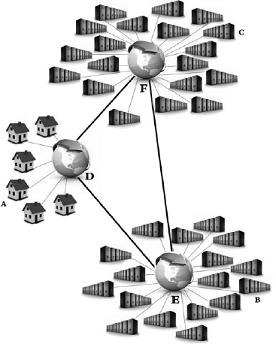
Tim makes the case for treating the “end-to-end principle” as an important part of the Internet’s fundamental design. Tim disagrees with the people who argue for a network with “smarter” innards and believes that neutrality advocates seek the best engineering for the network. But they are wrong to believe that the network is fragile or susceptible to control. The Internet’s end-to-end architecture is durable, despite examples where it is not an absolute.
Tim has history lessons for those who believe that regulatory control of network management will have salutary effects. Time and time again, regulatory agencies have fallen into service of the industries they regulate.
“In 1970,” Tim tells us, “a report released by a Ralph Nader group described the [Interstate Commerce Commission] as ‘primarily a forum at which transportation interests divide up the national transportation market.'” Such is the likely fate of the Internet were management of it given to regulators at the FCC and their lobbyist friends at Verizon, AT&T, Comcast, and so on.
This paper has something for everyone, and will be a reference work as the network neutrality discussion continues. Highly recommended: The Durable Internet: Preserving Network Neutrality without Regulation.
There’s much to discuss as Obama shapes his administration (more on this at OpenMarket.org) but arguably one of the most important unanswered questions is who Obama will pick to staff the Federal Communications Commission.
CNET reports that Henry Rivera, a lawyer and former FCC Commissioner, has been selected to head the transition team tasked with reshaping the FCC. This selection gives us a glimpse of what the FCC’s agenda will look like under Obama, and it’s quite troubling.
Rivera has embraced a media “reform” agenda aimed at promoting minority ownership of broadcast media outlets. A couple weeks ago, Rivera sent a letter to the FCC that backed rules originally conceived by the Media Access Project to create a new class of stations to which only “small and distressed businesses” (SDB) could belong. The S-Class stations would be authorized to sublease digital spectrum and formulate must-carry programming, with the caveat that only half of the content can be “commercial”. To avoid the Constitutional issues surrounding racial quotas, eligibility for SDB classification would be based on economic status, rather than the racial composition of would-be station owners.
The S-Class proposal, like other media reform proposals, falsely assumes that current owners of media outlets are failing to meet the demands of their audience for a diverse range of content. The proposal also ignores the fact that consumers already enjoy an abundance of voices from all viewpoints, as we’ve discussed extensively here on TLF.
Continue reading →
With the Federal Communications Commission’s decision to allow “white spaces” devices at its open meeting on Election Day, it may make sense to ask: how are other nations approaching the issue of “white spaces”? Do other countries that make use of flexible and transferable spectrum licensing find that taking the approach that the FCC took on Tuesday — allowing unlicensed wireless devices to share vacant television frequencies — helps or hinders in getting more spectrum available for the “highest and best use”?

As readers of this blog are probably aware, I work part-time at the Information Economy
Project at George Mason University School of Law, which sits at the intersection of academic research and telecommunications policy.
IEP is pleased to sponsor one of its “Big Ideas About Information” Lecture next Wednesday, November 12, at the law school in Arlington. The school is conveniently located at the Virginia Square/GMU Metro station, and is a short ride away from downtown Washington.
At 4 p.m. on November 12, William Webb, the head of research and development and the senior technologist at OFCOM, the British telecommunications regulator, will be speaking about this and other subjects. The title of his remarks is: “The Theory, Practice, Politics and Problems of Spectrum Reform: A U.K. Regulator’s Perspective,” and you can learn more about it here, or by clicking on the badge below.
Admission is free, but seating is limited. To reserve your spot, please email me, Drew Clark, at this address: iep.gmu@gmail.com
Today was a big day — and not just because there was an election going on! As I mentioned yesterday, the other big news was that the U.S. Supreme Court was hearing oral arguments in the potentially historic free speech case of Federal Communications Commission v. Fox Television Stations, Inc. Again, all the background you need can be found in my post yesterday, so here I will just be summarizing my general thoughts about how the oral arguments played out this morning.
Unfortunately, because no electronic devices or even notepads are allowed in the courtroom, much of what I am relaying here is from memory or from the notes that I surreptitiously scribbled on a tiny piece of scrap paper when the guards weren’t looking. (And yes, I have been reprimanded before for taking notes in the Court!) The transcript has just been released, however, so you can read it through and judge for yourself. Anyway, here are some general thoughts:
Continue reading →
Four-and-a-half years ago, I wrote this piece about how a converging media undermines the FCC’s rationalle for indecency enforcement. The piece, “TV Has Grown Up. Shouldn’t FCC Rules?” first appeared in the Washington Post Outlook section on Sunday, May 16, 2004, and it remains more relevant today than ever: the Supreme Court is today considering Federal Communications Commission v. Fox Television Station, a case about whether the FCC acted properly in sanctioning Fox over the use of the words “fuck” and “shit” on broadcast television.
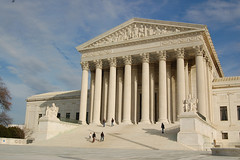 Tomorrow morning, the U.S. Supreme Court will hear oral arguments in the potentially historic free speech case of Federal Communications Commission v. Fox Television Stations, Inc. I plan on attending and will try to post some thoughts about how the arguments played out here later tomorrow afternoon or evening. [I won’t be able to live blog of Twitter it because no electronic devices are allowed in the courtroom, which I’ve always thought is outrageous.] In the meantime, here again is the background of the case.
The
FCC v. Fox case is the indecency case involving the FCC’s new policy for “fleeting expletives.” I wrote about the Second Circuit Court of Appeals decision here and the full 2nd Circuit decision is here. [By contrast, the so-called “Janet Jackson case” — CBS v. FCC — took place in the Third Circuit Court of Appeals and that court recently handed down a decision that also went against the FCC. I wrote about the Third Circuit’s decision here.]
In a 2-1 decision, the Second Circuit ruled that “the FCC’s new policy sanctioning “fleeting expletives” is arbitrary and capricious under the Administrative Procedure Act for failing to articulate a reasoned basis for its change in policy.” The decision demonstrates how, over just the past few years, the FCC has arbitrarily thrown out 30+ years worth of precedent and greatly expand the scope of its regulatory authority over speech on broadcast TV and radio. As a result, the FCC’s order was vacated and remanded to the agency. The agency appealed the decision, however, and the Supreme Court accepted it for review.
Continue reading →
I’m fond of quoting Diane Mermigas, editor-at-large at MediaPost, who is one of the finest media market watchers in the journalism business today. Her latest MediaPost column offers another sobering look at the radical changing sweeping through the media marketplace today. In that article, she notes that even though we are in an era of Big Government bailouts for financial institutions and (possibly) auto makers, old media operators will be left to to fend for themselves, and many will likely die off as a result:
What we do know is there will be no federally funded bail for media, Internet, entertainment and advertising. Big media by definition is not nimble and innovative enough to simply dump what’s not working, modify what can be saved, and grow what works. There isn’t much that big media companies can bank on or reliably forecast moving into 2009. They are hamstrung between deteriorating traditional costs and revenues and evolving digital business models that do not offset the losses, generating less than 10% of their overall incomes. Big media isn’t just being ravaged by recession; it is being sacked by a technological transformation of enormous proportions.
I discussed a lot of the forces behind the current media meltdown in my recent PFF special report, “Media Metrics: The True State of America’s Marketplace.” As I noted there, this Schumpeterian “creative destruction” we are witnessing today is a normal (but gut-wrenching) part of any major technological transformation, and it need not be addressed with government subsides or interference. However, the problem for many traditional media providers is, as I noted in my special report:
Continue reading →
In a City Journal article earlier this year, I wondered “how long some local papers have left when they are barred from restructuring their businesses or partnering with other local media operators to stem the bleeding and reinvent their business models.” I was responding to the Senate’s smack-down of a half-hearted reform effort that FCC chairman Kevin Martin pushed through in November 2007, which proposed relaxing the FCC’s newspaper/broadcast cross-ownership rule. That rule, unrevised since going into effect in 1975, prohibits a newspaper operator from also owning a radio or television station in the same media market. However, waivers were granted to grandfather in some combined newspaper and broadcast operations that had existed long before the ban took effect. Martin’s proposal was to simply tweak the rule to permit similar combinations in just the nation’s 20 largest media markets.
Martin’s limited liberalization proposal, however, led to howls of disapproval from FCC democrats like Michael Copps and many folks on both side of the aisle in Congress. Supposedly, this was nothing more than a “giveaway” to the newspaper industry, which critics said was doing just fine. It really makes you wonder if any of those critics even both reading the news about newspapers today.
As I have documented here on many occasions, as well as in my big Media Metrics report, the newspaper industry is in huge trouble with every financial variable of importance rapidly heading south. Alan Mutter does a good job here of summarizing “the secular forces dragging down newspapers: Declining readership, shrinking advertising, high fixed costs and growing online competition that makes it increasingly difficult to charge the premium ad rates that were possible prior to the Internet.” As a result of these forces, everyday brings another headline like this one today in the New York Times: “The Star-Ledger of Newark Plans 40% Cut,” or this one in the Wall Street Journal: “Some Newspapers Shed Unprofitable Readers.” The numbers are just miserable, and they just get worse and worse.
Continue reading →
National Freedom of Speech Week is here again. As I point out each time it comes around, it’s good opportunity for those of us in America to remember how lucky we are to live in a country that respects freedom of the press, speech, and assembly. In my essay commemorating the first Freedom of Speech Week, I explained why I felt this way:
what speech critics consistently fail to appreciate is that in a free society different people will have different values and tolerance levels when it comes to speech and media content. It would be a grave mistake, therefore, for government to impose the will of some on all. To protect the First Amendment and our heritage of freedom of speech and expression from government encroachment, editorial discretion over content should always remain housed in private, not public, hands.
However, there will always be those who respond by arguing that speech regulation is important because “it’s for the children.” […] Personally, I think the most important thing I can do for my children is to preserve our nation’s free speech heritage and fight for their rights to enjoy the full benefits of the First Amendment when they become adults. Until then, I will focus on raising my children as best I can. And if because of the existence of the First Amendment they see or hear things I find troubling, offensive or rude, I will sit down with them and talk to them in the most open, understanding and loving fashion I can about the realities of the world around them.
I would hope that the critics of the First Amendment would do the same instead of seeking to undercut our nation’s rich history of freedom of speech and expression. It is one of our Founders’ enduring gifts to future generations and a precious freedom worth fighting for.
Happy Freedom of Speech Week everyone.
I’ve been trying to catch up after a week-long cruise with my kids down in the Caribbean and as I was doing my best to sort through thousands of e-mails and articles in my RSS reader, I stopped and did a double-take when I saw some headlines from last week about how the Federal Communications Commission is spending $350,000 taxpayer dollars to sponsor a NASCAR team. For that money, NASCAR driver David Gilliland “has agreed to use his No. 38 car as a high-speed billboard promoting the February 2009 national transition to digital television,” according to Multichannel News.
In the annuls of idiotic government spending initiatives this one has to be a potential hall of fame entry. Over on the PFF Blog, my PFF colleague Barbara Esbin has a humorous piece explaining why:
what signal does FCC sponsorship of a stock car racer send to the beleaguered American public in this autumn of our discontent? The FCC Chairman claims that this sponsorship is an “extremely effective way for the FCC to raise DTV awareness among people of all ages and income levels across the United States who loyally follow one of the most popular sports in America.” Well, those loyal sports fans will have to be following No. 38 at the three sponsored races with some pretty high-speed binoculars to catch the DTV message. Although the $350,000 does get the government posting of its informational website URL, www.dtv.gov, along the track — doubtless not the only advertisement to lure spectator eyeballs — it is primarily receiving posting on the car’s sides and on the driver’s helmet and suit. Let’s just hope No. 38 has a large fan base, does exceeding well in the three races, and, more importantly, avoids accidents, injuries, and fleeting expletives.
Maybe this is just another federal government bailout. On the same day that the FCC announced its investment in NASCAR, the Raleigh News & Observer ran an article entitled, “Global crisis threatens NASCAR.” It seems that “motor sport” team sponsorship has been down this year, “with sinking auto showroom sales, declining attendance and rising operating costs.” And let’s not even talk about the carbon footprint of stock car racing.
Of course, what’s even more pathetic about this move is that FCC Chairman Kevin Martin’s likely motivation for doing this is probably political: He probably thinks this is a good way to win blue collar votes with all the NASCAR fans down in North Carolina for a future run for office. [It’s widely rumored that he will seek some office down in his home state after his tenure at the FCC is up.] After all, NASCAR is hugely popular in that state. I don’t know about you, but I’m none too happy subsidizing a get-out-the-NASCAR-vote effort for one of the most regulatory-minded FCC Chairmen in history.

 The Technology Liberation Front is the tech policy blog dedicated to keeping politicians' hands off the 'net and everything else related to technology.