 I’ve written several articles in the last few weeks critical of the dangerously unprincipled turn at the Federal Communications Commission toward a quixotic, political agenda. But as I reflect more broadly on the agency’s behavior over the last few years, I find something deeper and even more disturbing is at work. The agency’s unreconstructed view of communications, embedded deep in the Communications Act and codified in every one of hundreds of color changes on the spectrum map, has become dangerously anachronistic.
The FCC is required by law to see separate communications technologies delivering specific kinds of content over incompatible channels requiring distinct bands of protected spectrum. But that world ceased to exist, and it’s not coming back. It is as if regulators from the Victorian Age were deciding the future of communications in the 21
st century. The FCC is moving from rogue to steampunk.
With the unprecedented release of the staff’s draft report on the AT&T/T-Mobile merger, a turning point seems to have been reached. I wrote on
CNET (see “FCC: Ready for Reform Yet?”) that the clumsy decision to release the draft report without the Commissioners having reviewed or voted on it, for a deal that had been withdrawn, was at the very least ill-timed, coming in the midst of Congressional debate on reforming the agency. Pending bills in the House and Senate, for example, are especially critical of how the agency has recently handled its reports, records, and merger reviews. And each new draft of a spectrum auction bill expresses increased concern about giving the agency “flexibility” to define conditions and terms for the auctions.
The release of the draft report, which edges the independent agency that much closer to doing the unconstitutional bidding not of Congress but the White House, won’t help the agency convince anyone that it can be trusted with any new powers. Let alone the novel authority to hold voluntary incentive auctions to free up underutilized broadcast spectrum.
 Continue reading →
 On NPR’s Marketplace this morning, I talk about net neutrality litigation with host John Moe.
Nearly a year after the FCC passed controversial new “Open Internet” rules by a 3-2 vote, the White House finally gave approval for the rules to be published last week, unleashing lawsuits from both supporters and detractors.
The supporters don’t have any hope or expectation of getting a court to make the rules more comprehensive. So why sue? When lawsuits challenging federal regulations are filed in multiple appellate courts, a lottery determines which court hears a consolidated appeal.
So lawsuits by net neutrality supporters are a procedural gimmick, an effort to take cases challenging the FCC’s authority out of the D.C. Circuit Court of Appeals, which has already made clear the FCC has no legal basis here.
Continue reading →
I can’t help but think that there might be a big advantage of having the AT&T-T-Mobile merger go to court. For once, the high-profile action everyone pays attention to will occur in an antitrust forum where the decision criterion is the effects of the merger on consumer welfare, period. Regardless of what one thinks about the merger, it’s nice to see that we’ll finally have a knock-down, drag-out fight based on whether a big telecommunications merger harms consumers and competition. That’s the antitrust standard the Department of Justice has to satisfy in order to prevent the merger.
This will be a refreshing change from the Federal Communications Commission’s “public interest” standard, which allows the commission to object on grounds other than consumer welfare and demand all manner of concessions that have nothing to do with remedying anticompetitive effects of a deal. Case in point: Comcast must now offer broadband service for $9.95 per month to low-income households as a condition for getting approval to buy 51 percent of NBCUniversal. Now, I’m all for seeing low-income households get access to broadband, but subsidizing one subset of customers has little to do with mitigating any possible anticompetitive effects of allowing a cable company to own NBCUniversal. As FCC Commissioners McDowell and Baker said in their statement on that transaction, “Any proposed remedies should be narrow and transaction specific, tailored to address particular anti-competitive harms. License transfer approvals should not serve as vehicles to extract from petitioners far-reaching and non-merger specific policy concessions that are best left to broader rulemaking or legislative processes.”
In short, if AT&T wins in court, the FCC should approve the merger promptly without additional conditions.
 For Forbes.com this morning, I take a close look at last month’s controversial FCC order requiring facilities-based wireless carriers to negotiate data roaming agreements with other carriers.
There are business, technical, and legal reasons why the order stands on unsteady ground, which the article looks at in detail.
The order, by encouraging artificial competition in nationwide mobile broadband, could also undermine arguments against AT&T’s merger with T-Mobile USA.
How so? If every regional, local, or rural carrier can offer their customers access to the nationwide coverage of Verizon, AT&T, or Sprint, on terms overseen for “commercial reasonableness” by the FCC, what’s the risk of consumer harm from combining AT&T and T-Mobile’s infrastructure? Indeed, doing so would create stronger nationwide 3G and 4G networks for other carriers to use. In that sense, it’s actually pro-competitive, and a pragmatic solution to spectrum exhaustion. Continue reading →
On Forbes
this morning, I analyze the legislative and judicial challenges to last year’s FCC Open Internet rules, the so-called net neutrality order.
Despite the urgency of Friday’s budget machinations, the House took time out to pass House Joint Resolution 37, which “disapproves” the FCC’s December rulemaking. If passed by the Senate and not vetoed by President Obama, HJR 37 would effectively nullify the net neutrality rules, and ensure the FCC cannot pass alternate versions of them absent new authority to do so from Congress.
Most commentators believe that the House action was merely symbolic. Passage in the Senate requires only a simple majority, but the neutrality fight has turned violently partisan since the mid-term elections and getting a few Democratic Senators on-board may be hard. More to the point, the White House last week pre-emptively threatened to veto the resolution.
Continue reading →
 (Follow the links for Part I, Part II, Part III and Part IV.)
In this final post on the FCC’s Dev. 23, 2010 Open Internet Report and Order, I’ll look briefly at the problematic legal foundation on which the FCC has built its new regulations on broadband Internet access. That discussion need only be brief largely because the extended legal analysis has already been admirably detailed by FCC Commissioner Robert McDowell. His dissent (see pages 145-177 of the Report and Order) calmly and systematically dismantles the case made by the majority (See ¶¶ 115-150).
This is no theoretical discussion of statutory interpretation. Even before the rules have been published on the Federal Register, two broadband providers—Verizon and then MetroPCS—have already filed lawsuits in the D.C. Circuit Court of Appeals challenging the FCC’s authority to regulate. (See Jim DeLong’s definitive deciphering of Verizon’s efforts to secure exclusive jurisdiction in the D.C. Circuit) The arguments sketched out in Commissioner McDowell’s dissent are likely to mirror the complainants’ briefs in these and likely other Petitions for Review of the Order.
Continue reading →
At this week’s excellent State of the Net 2011 event, I participated in a panel discussion about the future of the online video marketplace. Unsurprisingly, a great deal of time was spent discussing the Federal Communications Commission’s (FCC) recent approval of the proposed merger of Comcast and NBC Universal (NBCU). On Tuesday, the agency voted 4-1 to approve the deal with myriad conditions and “voluntary” concessions being attached. The FCC voted on the matter and issued a short press release and late today issued its final 279-page order.
The Commission’s Comcast-NBCU order represents an unprecedented regulatory shakedown of a company that obviously would have done just about anything to gain approval of the deal. I believe the conditions the FCC has imposed on the deal, which are to run for seven years, are tantamount to a death by a thousand cuts for the deal and, ultimately, could lead to its failure. That’s because the requirements placed on the new entity make it practically impossible for Comcast to leverage the content it is acquiring from NBCU and profit from it such that they can recoup the significant costs associated with the deal.
In essence, Comcast-NBCU was forced to preemptively surrender much of its intellectual property rights by agreeing to share most of their content properties with others on terms someone else will determine. That’s a recipe for disaster. If Comcast-NBCU doesn’t have the right and ability to cut deals on terms that they find advantageous to the company and its shareholders, then why go through with this deal at all? Isn’t the whole point of such a deal with get some additional in-house content properties — something Comcast almost completely lacked previously — such that it would have some content gems to highlight and leverage in an attempt to attract new customers (or just keep old ones)? If someone else is constantly setting the terms of their deals, it will limit the inherent value of the IP owned by Comcast-NBCU and sap most of the value from the deal. Continue reading →
 At the last possible moment before the Christmas holiday, the FCC published its Report and Order on “Preserving the Open Internet,” capping off years of largely content-free “debate” on the subject of whether or not the agency needed to step in to save the Internet.
In the end, only FCC Chairman Julius Genachowski fully supported the final solution. His two Democratic colleagues concurred in the vote (one approved in part and concurred in part), and issued separate opinions indicating their belief that stronger measures and a sounder legal foundation were required to withstand likely court challenges. The two Republican Commissioners vigorously dissented, which is not the norm in this kind of regulatory action. Independent regulatory agencies, like the U.S. Courts of Appeal, strive for and generally achieve consensus in their decisions. Continue reading →
 When the only tool you have is a hammer, as the old cliché goes, everything looks like a nail.
Net neutrality, as I first wrote in 2006, is a complicated issue at the accident-prone intersection of technology and policy. But some of its most determined—one might say desperate—proponents are increasingly anxious to simplify the problem into political slogans with no melody and sound bites with no nutritional value. Even as—perhaps precisely because—a “win-win-win” compromise seems imminent, the rhetorical excess is being amplified. The feedback is deafening.
In one of the most bizarre efforts yet to make everything be about net neutrality, Public Knowledge issued several statements this week “condemning” Fox’s decision to prohibit access to its online programming from Cablevision internet users. In doing so, the organization claims, Fox has committed “the grossest violations of the open Internet committed by a U.S. company.”
This despite the fact that the open Internet rules (pick whatever version you like) apply only to Internet access providers. Indeed, the rules are understood principally as a protection for content providers. You know, like Fox. Continue reading →
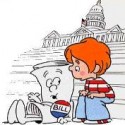 My article for CNET News.com this morning analyzes the “leaked” net neutrality bill from Rep. Henry Waxman, chair of the House Energy and Commerce Committee. I put leaked in quotes because so many sources came up with this document yesterday that its escape from the secrecy of the legislative process hardly seems dramatic. Reporters with sources inside Waxman’s office, including The Hill and The Washington Post, expect Waxman to introduce the bill sometime this week.
The CNET article goes through the bill in some detail, and I won’t duplicate the analysis here. It is a relatively short piece of legislation that makes limited changes to Title I of the Communications Act, giving the FCC only the authority it needs to implement “core” regulations that would allow the agency to enforce violations of the open Internet principles. Continue reading →


 The Technology Liberation Front is the tech policy blog dedicated to keeping politicians' hands off the 'net and everything else related to technology.