 As I’ve noted before, I didn’t start my professional life in the early 1990s as a tech policy wonk. My real passion 20 years ago was free trade policy. Unfortunately for me, as my boss rudely informed me at the time, the world was already brimming with aspiring trade analysts and probably didn’t need another. This was the time of NAFTA and WTO negotiations and seemingly everybody was lining up to get into the world of trade policy during that period.
And so, while I was finishing a master’s degree with trade theory applications and patiently hoping for opportunities to open up, I decided to take what I thought was going to be a brief detour into the strange new world of the Internet and information technology policy. Of course, I never looked backed. I was hooked on Net policy from Day 1. But I never stopped caring about trade theory and I have always remained passionate about the essential role that free trade plays in expanding commerce, improving human welfare, and facilitating more peaceful interactions among the diverse cultures and countries of this planet.
I only tell you this part of my own backstory so that you understand why I was so excited to receive a copy of Anupam Chander’s new book, The Electronic Silk Road: How the Web Binds the World Together in Commerce. Chander’s book weaves together trade theory and modern information technology policy issues. His over-arching goal is to sketch out and defend “a middle ground between isolation and unregulated trade, embracing free trade and also its regulation.” (p. 209) Continue reading →
 I’m pleased to announce the release of my latest law review article, “A Framework for Benefit-Cost Analysis in Digital Privacy Debates.” It appears in the new edition of the George Mason University Law Review. (Vol. 20, No. 4, Summer 2013)
This is the second of two complimentary law review articles I am releasing this year dealing with privacy policy. The first, “The Pursuit of Privacy in a World Where Information Control is Failing,” was published in Vol. 36 of the Harvard Journal of Law & Public Policy
this Spring. (FYI: Both articles focus on privacy claims made against private actors — namely, efforts to limit private data collection — and not on privacy rights against governments.)
My new article on benefit-cost analysis in privacy debates makes a seemingly contradictory argument: benefit-cost analysis (“BCA”) is extremely challenging in online child safety and digital privacy debates, yet it remains essential that analysts and policymakers attempt to conduct such reviews. While we will never be able to perfectly determine either the benefits or costs of online safety or privacy controls, the very act of conducting a regulatory impact analysis (“RIA”) will help us to better understand the trade-offs associated with various regulatory proposals. Continue reading →
Timothy B. Lee, founder of The Washington Post’s blog The Switch discusses his approach to reporting at the intersection of technology and policy. He covers how to make tech concepts more accessible; the difference between blogs and the news; the importance of investigative journalism in the tech space; whether paywalls are here to stay; Jeff Bezos’ recent purchase of The Washington Post; and the future of print news.
Download
Related Links
On Sunday, the New York Times ran a story by Natasha Singer on the ongoing generic top-level domain (gTLD) expansion. Singer correctly notes that there is a great deal of skepticism that the new gTLDs will add social value. After all, what is the social value of .book when there is already .book.com?
Singer also raises cultural, expression, and competition concerns:
There’s a larger issue at stake, however. Advocates of Internet freedom contend that such an expanded address system effectively places online control over powerful commercial and cultural interests in the hands of individual companies, challenging the very idea of an open Internet. Existing generic domains, like .net and .com, overseen by Verisign Inc., a domain registry, have an open-use policy; that means consumers can buy domain names ending in .com directly from retail registrars like GoDaddy. With a new crop of applicants, however, Icann initially accepted proposals for closed or restricted generic domains, a practice that could limit competing views and businesses.
It’s true that there is concern over “closed generics,” but I think there is a deeper problem than anti-competitiveness that could emerge from TLD expansion. Continue reading →
 There are few things more likely to get constituents to call their representative than TV programming blackouts, and the increase in broadcasting disruptions arising from licensing disputes in recent years means Congress may be forced to once again fix television and copyright laws. As Jerry Brito explains at Reason, the current standoff between CBS and Time Warner Cable is the result of bad regulations, which contribute to more frequent broadcaster blackouts. While each type of TV distributor (cable, satellite, broadcasters, telcos) is both disadvantaged and advantaged through regulation, broadcasters are particularly favored. As the US Copyright Office has said, the rule at issue in CBS-TWC is “part of a thicket of communications law requirements aimed at protecting and supporting the broadcast industry.”
But as we approach a damaging tipping point of rising programming costs and blackouts, Congress’ potential rescuer–Aereo–appears on the horizon, possibly buying more time before a major regulatory rewrite. Aereo, for the uninitiated, is a small online company that sets up tiny antennas in certain cities to capture broadcast television station signals–like CBS, NBC, ABC, Fox, the CW, and Univision–and streams those signals online to paying customers, who can watch live or record the local signals captured by their own “rented” Aereo antenna. Broadcasters hate this because the service deprives them of lucrative retransmission fees and unsuccessfully sued to get Aereo to cease operations. Continue reading →

Over at Reason.com, I write today about the ongoing Time Warner-CBS blackout and point out that Congress and the FCC have tipped the scales in favor of broadcasters with, inter alia, free spectrum, must-carry power, retrans consent rights, network non-duplication rules, and my personal favorite, syndicated exclusivity privileges. It’s just not a fair negotiating environment. But, and this is important, two wrongs don’t make a right.
Trying to plan the market got us into this mess, and making new rules to try to “even out” the playing field is only further distorting the market. As I say,
Congress should completely deregulate the video distribution marketplace by repealing broadcaster’s special rights. While the they’re at it they should also end compulsory copyright licensing that allows video distributors like cable companies to pay regulated rates for the programs they retransmit, rather than negotiate. And they should privatize the spectrum, rather than continue to give it away to broadcasters in the name of the “public interest.”
You can read the whole thing here. And after you’re done, you can listen to my colleague Adam Thierer make much the same case opposite Susan Crawford on the Diane Rehm Show earlier today. Audio is available here.
Plugs out of the way, I want to take a moment to address a small point that really grinds my gears, as Home Simpson would say. It’s the constant refrain I hear about blackouts that consumers are being “victimized” by the impasse in negotiations. Some examples,
Continue reading →
Sherwin Siy, Vice President of Legal Affairs at Public Knowledge, discusses emerging issues in digital copyright policy. He addresses the Department of Commerce’s recent green paper on digital copyright, including the need to reform copyright laws in light of new technologies. This podcast also covers the DMCA, online streaming, piracy, cell phone unlocking, fair use recognition, digital ownership, and what we’ve learned about copyright policy from the SOPA debate.
Download
Related Links
 CBS and Time Warner Cable have been embroiled in a heated contractual battle over the past week that has resulted in viewers in some major markets losing access to CBS programming. When disputes like these go nuclear and signal blackouts occur, it is inevitable that some folks will call for policy interventions since nobody likes it when the content they love goes dark.
While some policy responses are warranted in this matter, policymakers should proceed with caution. Heated contractual negotiations are a normal part of any capitalist marketplace. We shouldn’t expect lawmakers to intervene to speed up negotiations or set content prices because that would disrupt the normal allocation of programming by placing a regulatory thumb too heavily on one side of the scale. This is why I am somewhat sympathetic to CBS in this fight. In an age when content creators struggle to protect their copyrighted content and get compensation for it, the last thing we need is government intervention that undermines the few distribution schemes that actually work well.
On the other hand, Time Warner Cable deserves sympathy here, too, since CBS currently enjoys some preexisting regulatory benefits. As I noted in this 2012
Forbes oped, “Toward a True Free Market in Television Programming,” many layers of red tape still encumber America’s video marketplace and prevent a truly free market in video programming from developing. The battle here revolves around the “retransmission consent” rules that were put in place as part of the Cable Act of 1992 and govern how video distributors carry signals from TV broadcasters, which includes CBS.
But those “retrans” rules are not the only part of the regulatory mess here. Continue reading →
Answer: To check health information. Seniors who can investigate a symptom online will save a trip to the hospital. Not knowing whether a symptom is serious and not having the ability to investigate the condition online, many seniors without internet access go to emergency room to answer their health related questions.
This is the fourth post in a series about broadband. It investigates criticisms about America’s broadband market by Susan Crawford. Other posts are available here and here.
Crawford notes on a recent blog post, “One recent 2012 study showed that even after going through digital literacy training, 22% of participants still did not have a connection.” The part that Crawford doesn’t mention is that 78% of the 33,000 people who participated in the digital literacy program (30 hours of classroom instruction on the basics of the computers and internet) went on to become sustainable broadband adopters (SBAs), meaning they secured their own broadband connection at home. Continue reading →
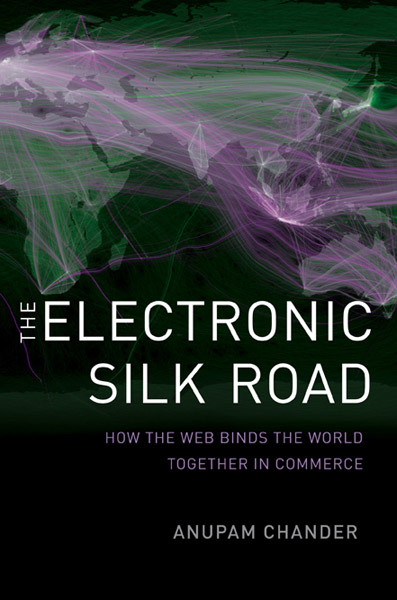 As I’ve noted before, I didn’t start my professional life in the early 1990s as a tech policy wonk. My real passion 20 years ago was free trade policy. Unfortunately for me, as my boss rudely informed me at the time, the world was already brimming with aspiring trade analysts and probably didn’t need another. This was the time of NAFTA and WTO negotiations and seemingly everybody was lining up to get into the world of trade policy during that period.


 The Technology Liberation Front is the tech policy blog dedicated to keeping politicians' hands off the 'net and everything else related to technology.