The Recovery Accountability and Transparency Board has finally made the first big move toward building Recovery.gov. According to Federal Times:
GSA announced last night that it has awarded a contract for the Recovery.gov redesign; the $18 million contract went to Smartronix, a Maryland-based IT firm. It beat out 58 other bidders.
The first part of the contract is worth about $9.5 million through January; other options, which extend through January 2014, are worth another $8.5 million or so.
Does anyone have a link to the actual contract? I’d like to know what we’re getting for $9.5 million. The core functionality of USASpending.gov, which is supposed to track
all federal spending, was acquired for less than $1 million. In a recent Mercatus briefing paper I took a look at the spending transparency sites of 10 states and the most expensive one cost $300,000. So what is this $9.5 million website going to have on it? Is Smartronix also building out the central reporting database at FederalReporting.gov?
Quick drum bang: Make the raw spending data available and you will see corporations, non-profits, newspapers, and opengov nerds put up dozens of Recovery.govs with more features than the RAT Board can conceive or afford.
UPDATE: Crack reporter Aliya Sternstein at Nextgov has been doing a fantastic job covering the Recovery.gov story and she reports today that the RAT Board promises to make all the raw data available. Also in her piece, FederalReporting.gov has its own contractor, CGI Federal. So, that can’t account for the $9.5 million price tag. Still looking for the contract.
UPDATE 2: Folks have been saying that Smartronix beat out 58 other bidders for the contract. That is not correct. If you read the GSA release carefully, they say “59 companies were eligible to compete for the award.” There were reports last week that there were only two bidders. Today Jason Miller said on the radio that he could only confirm 3 bidders, including Smartronix.
In an earlier post, I mentioned an important new online child safety task force report that has just been released from the “Point Smart. Click Safe.” Blue Ribbon Working Group. It’s a great report and I encourage you to read the whole thing. It was my great pleasure to serve on this task force, and as we started finalizing our conclusions and recommendations, I started thinking about how much of what we were finding and recommending was consistent with what past online safety task forces had also concluded.
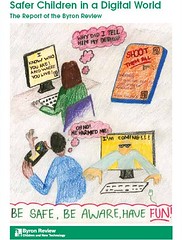
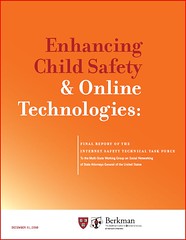
By way of background, over the past decade, five major online safety task forces or blue ribbon commissions have been convened to study online safety issues. Two of these task forces were convened in the United States and issued reports in 2000 (“COPA Commission”) and 2002 (“Thornburgh Commission“). Another was commissioned by the British government in 2007 and issued in a major report in March 2008 (“Byron Review“). Finally, two additional online safety task forces were formed in the U.S. in 2008 and concluded their work, respectively, in January (“Internet Safety Technical Task Force“) and July (“Point Smart. Click Safe.“) of 2009. [And yet another task force — the Online Safety Technology Working Group — was recently formed and has now gotten underway.]
In a new PFF white paper, ”
Five Online Safety Task Forces Agree: Education, Empowerment & Self-Regulation Are the Answer,” I walk through a chronological summary of each of these past task forces [click on covers of each report below to read them in their entirety] and highlight some of the similar themes and recommendations from them.


 Continue reading →
Wired Magazine editor Chris Anderson has an important new book out, “Free: The Future of a Radical Price.” He focuses on the economics of free services, building on the excellent analysis of thinkers like Mike Masnick (whose 2007 essay, “The Grand Unified Theory on The Economics of Free,” succinctly sums up the concept).
Following up on his book, Anderson has a new op-ed up on CNN.com in which he explores how the emergence of free services in the digital age has raised new challenges for antitrust regulators:
Now Google has Microsoft-like dominance in search and search advertising. What should it not be allowed to do? That question may come to define this era of antitrust law. When [Christine] Varney was confirmed, she withdrew the Bush administration’s report setting relatively conservative standards of antitrust enforcement and declared, “The Antitrust Division will be aggressively pursuing cases where monopolists try to use their dominance in the marketplace to stifle competition and harm consumers…
Varney and her team of economists and lawyers are no doubt tangling with the question of how to enforce antitrust laws in a way that ensures an “even” playing field for competition without causing consumers to lose access to free services that are growing more abundant by the day.
But there’s a more important question that Varney should be asking: what actually constitutes market dominance in the age of free? Is the fact that a firm has a substantial share of a distinct marketplace a reliable indicator of dominance? And if the result of firms achieving high market share is an explosion of free goods and services, is it even in consumers’ interests for government to go after “dominant” firms?
Continue reading →
 Over the July 4th weekend, websites in the United States and South Korea were under heavy assault. As the New York Times reported:
The Treasury Department, Secret Service, Federal Trade Commission and Transportation Department Web sites were all down at varying points over the holiday weekend and into this week, The A.P. reported, citing officials inside and outside the American government.
The Washington Post, which was also attacked over the weekend, reported that 26 government and commercial sites were targeted in attacks that the National Intelligence Service are calling “elaborately prepared and executed at the level of a group or a state.” Officially, no one is pointing their finger at North Korea, but the targets of the attacks and other recent provocations from the North make it a very likely suspect.
But what’s truly scary isn’t
who is attacking US computers, but how. The only real cost of an attack such as this one is writing an effective bit of malware that can spread itself around, compromise tens of thousands of machines, and allow an attacker to call on this army of unwilling silicon conscripts whenever it wishes. When viewed from the hundred-billion-dollar heights of nation-state budgets, this cost is essentially zero.
Continue reading →
A major new online child safety task report by the “Point Smart. Click Safe.” Blue Ribbon Working Group has just been released. First, some background. In June 2007, the National Cable & Telecommunications Association (NCTA), the principal trade association of the cable industry in the United States, announced “Cable Puts You in Control: PointSmart. ClickSafe.” a new campaign by its members to offer parents assistance in keeping their children safe online. As part of the initiative, the NCTA hosted a major online child safety summit and also announced the formation of the “Point Smart. Click Safe. Blue Ribbon Working Group” in partnership with the Internet KeepSafe Coalition (iKeepSafe) and Common Sense Media. These three organizations, along with the cable industry’s “Cable in the Classroom” program, agreed to bring together a collection of online safety experts from many disciplines to study these issues and develop a set of “best practice” recommendations that could be implemented across the Internet industry. [Disclosure: It was my pleasure to serve as a member of this blue ribbon working group.]
Today, the “Point Smart. Click Safe.” working group produced its final report and concluded that:
Ensuring children’s online safety is a difficult and complex task that calls for input from and action by a wide variety of stakeholders. There is no “silver bullet”—no single technology or approach that has proved effective. Rather, what is required is:
- A combination of different technologies,
- Continuing digital literacy education for parents, educators, and children, and
- Active participation by all concerned companies, groups and individuals.
Similarly, a singular focus on safety is insufficient. Children must learn to minimize risks but also learn appropriate and ethical behaviors in this digital world. In addition, they need an understanding of media literacy, in order to be able to think critically about the content they consume and increasingly create. Therefore, best practices must be part of a larger effort to provide an entertaining, educational, and safe experience for children.
Compared to previous online child safety task forces, which I will discuss in a subsequent post, the major contribution of this task force was its focus on detailed industry best practices that various online providers could adopt to help parents, policymakers, and law enforcement better keep kids safe online. As the working group’s final report noted:
Continue reading →
Over the July 4 weekend, relatives and friends kept asking me:
Which mobile phone should I buy? There are so many choices.
I told them I love my iPhone, but all kinds of new devices from BlackBerries and Samsungs to Palm’s new Pre make strong showings, and the less well-known HTC, one of the biggest innovators of the last couple years, is churning out cool phones across the price-point and capability spectrum. Several days before, on Wednesday, July 1, I had made a mid-afternoon stop at the local Apple store. It was packed. A short line formed at the entrance where a salesperson was taking names on a clipboard. After 15 minutes of browsing, it was my turn to talk to a salesman, and I asked: “Why is the store so crowded? Some special event?”
“Nope,” he answered. “This is pretty normal for a Wednesday afternoon, especially since the iPhone 3G S release.”
So, to set the scene: The retail stores of Apple Inc.,
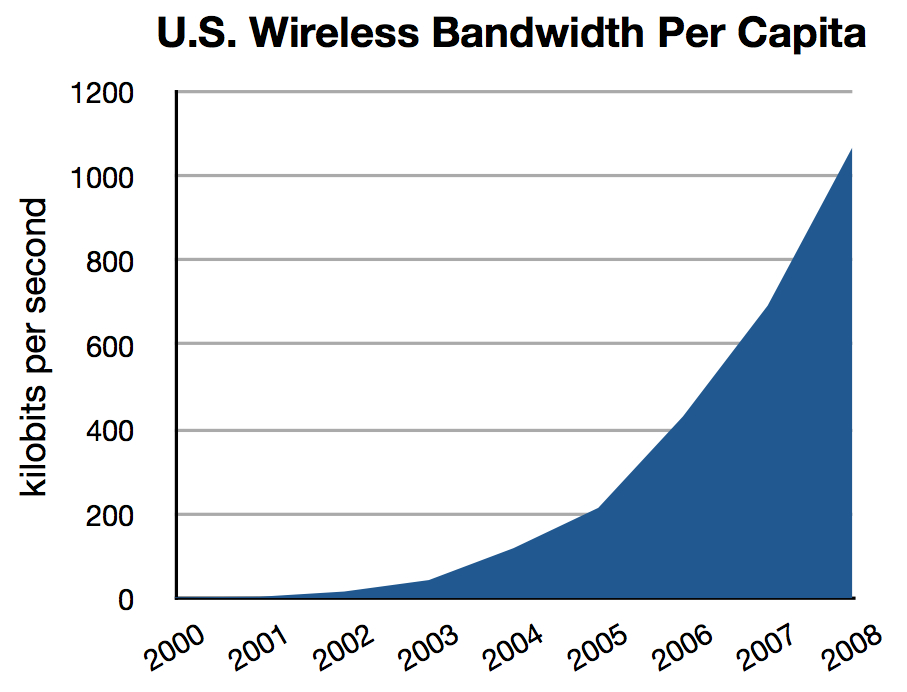
a company not even in the mobile phone business two short years ago, are jammed with people craving iPhones and other networked computing devices. And competing choices from a dozen other major mobile device companies are proliferating and leapfrogging each other technologically so fast as to give consumers headaches.
Continue reading →
The painful issue of cyberbullying has recently taken center stage in the ongoing debate about online child safety. Last week I wrote about Lori Drew’s acquittal on charges related to Megan Meier’s tragic suicide, suggesting that the judge in the case was right to overturn her conviction on a very expansive reading of the federal anti-hacking statute. While I think that decision was necessary on legal grounds, it’s sure to add “fuel to the fire” of calls for “action” in Congress. Thus, I emphasized that observers of the case need to separate their understandable outrage from the from the questions of (1) whether that statute was properly applied and (2) how the law should treat such cases in the future.
On the second question, Adam and I recently released a major entitled, “Cyberbullying Legislation: Why Education is Preferable to Regulation.” We distinguish among:
- Cyberbullying: kid-on-kid abuse online
- Cyberharassment generally: people of all ages using the Internet to harass each other
- Adult-on-kid cyberharassment: For example, Lori Drew’s alleged (but still unclear) role in the Megan Meier case
In a nutshell, we argue that education is the better approach to cyberbullying (Problem #1)—an approach taken by a bill introduced in the Senate by Sen. Robert Menendez (D-NJ) and in the House by Rep. Debbie Wasserman Schultz (D-FL) . We go on to argue that, while it would be difficult to create criminal sanctions for cyberharassment generally (Problem #2) without infringing free speech and due process rights, it might be possible to craft laws narrowly tailored to cyberharassment of kids by adults (Problem #3). Continue reading →

He Wants to Terminate Your First Amendment Rights
Robert Corn-Revere, a partner with the law firm of Davis Wright Tremaine and one of America’s greatest living defenders of the First Amendment, has a new essay up on the Media Institute website entitled “The Terminator Cometh.” Corn-Revere takes on the former Terminator himself, California Gov. Arnold Schwarzenegger, who along with other Calif. lawmakers, has asked the Supreme Court to review a Ninth Circuit Court of Appeals decision holding that a California video game statute was unconstitutional. (More background in my previous post here). California’s decision to appeal the law up to the Supreme Court [petition is here] sets up a potential historic First Amendment decision (if they Court agrees to take the case, that is). Corn-Revere points out why this case is so important:
In seeking review, California is asking the Supreme Court to reverse 60 years of First Amendment jurisprudence and to hold that “excessively violent” material — whatever that may be –“deserves no constitutional protection.” It is also asking the Court to relieve government from actually having to demonstrate the purported harmfulness of speech it seeks to regulate, but instead to defer to “reasonable inferences” and “legislative judgments.”

The John Connor of Your First Amendment Freedoms
In other words, Corn-Revere notes, “the state is asking the Court simply to lower the bar so that protected speech may be regulated based on legislative whim.” He continues:
Thus, like the Terminator, no matter how many times you kill it, the government drive that motivates these laws keeps on going and going until it achieves its programmed goal. If California is successful, it will open the door to regulate not just video games, but a wide range of speech that is currently protected under the First Amendment.
Corn-Revere is right. The ramifications of this case could be profound. As I pointed out in my previous essay on this case:
Continue reading →
In April 2008, L. Gordon Crovitz, the former publisher of the Wall Street Journal, launched his “Information Age” column with a brilliant piece entitled “Optimism and the Digital World” (which Adam lauded here). Crovitz noted the problem of “information overload,” then creeping into the public consciousness, but was unabashed in his optimism:
My own bias is that as information becomes more accessible, individuals gain choice, control and freedom. Established institutions – governments, large companies and special-interest groups – need to work harder to justify their authority. As information and knowledge spread, financial and human capital become more global and more competitive. The uncertainties and dislocations from new technology can be wrenching, but genies don’t go back into bottles.
The First Law of Technology says that “with every change in technology that affects consumer behavior, we always overestimate the impact in the short term, but then underestimate the full impact over the long term.”
Crovitz picks up where he left off in today’s column: “Information Overload? Relax: We survived copy machines. We’ll survive Twitter.”
Our era in the information age is a transition period of learning how to navigate information abundance. Rather than pitch our BlackBerrys and iPhones into the sea, imagine the benefits once we have figured out how to manage the chaos of endless data and routine multitasking, a process that will help refine our judgment about information and refocus our attention on what’s truly important….
Humans adapt, so we’ll learn how to live with information overabundance. Young people growing up multitasking are already less anxious about using technology and may well cope better than those of us in older generations. They have no choice but to get more sophisticated at separating the important from the unimportant and the authoritative from the unreliable, even while sampling from among many new kinds of information tools…
Young people will cope first as we all evolve to become more sophisticated, less anxious users of information.
Crovitz also notes, with approval, GMU economist Tyler Cowen’s new book, “Create Your Own Economy,” which Cord blogged about here. I recently heard Cowen talk about the book and thoroughly enjoyed the talk.
Really, what would we do without European antitrust regulators protecting us from the evils of browser innovation? If Microsoft was allowed to actually bundle its Internet Explorer browser alongside its operating system we might actually do something really crazy… like perhaps try it! After all, the latest browser stats make it pretty clear most of us have a choice and that fewer and fewer of us rely on IE. As Erick Schonfeld noted on Tech Crunch today:
The new browser wars on on. More than a decade after Microsoft killed off Netscape with Internet Explorer, competition in the browser market has never been stronger. Just last week, Mozilla released Firefox 3.5, which has now been downloaded nearly 14 million times. Earlier in June, Apple released Safari 4. In March, Microsoft introduced Internet Explorer 8, and Google came out with a speedier beta of its Chrome browser. Some early data is coming in showing relative market share and how fast people are upgrading. If you look at the chart above from Statcounter, it indicates that since March Internet Explorer has lost 11.4 percent market share to other browsers. [..] Where did that go? It went to Firefox, Safari, and Chrome. Nearly 5 percent of that, or about half, went to Firefox 3.0, which currently has 27.6 percent market share. That doesn’t count last week’s upgrade.

Alas, as I pointed out in my essay a few weeks ago (“European Regulators Think Consumers Too Stupid to Know How to Download a Different Browser“), some Euro-crats still seem to believe that changing browsers requires great detective skills to unearth alternatives. It’s just pure poppycock and yet another sad example of how antitrust law is usually hopelessly behind the times and has absolutely nothing to do with protecting consumers or fostering innovation.
Now, please excuse me while I get back to surfing the Net via Firefox and Chrome (and Opera on my mobile phone). My God, how did I ever find these browser alternatives!

 The Technology Liberation Front is the tech policy blog dedicated to keeping politicians' hands off the 'net and everything else related to technology.