As I continue to do research for what will become a chapter-length version of my old essay, “Are You An Internet Optimist or Pessimist? The Great Debate over Technology’s Impact on Society,” I am reading or re-reading some old books that have touched upon these debates through the years. Earlier this week, after an event over at ITIF, my friend Rob Atkinson reminded me that he had discussed some of these issues in his 2004 book, The Past and Future of America’s Economy. Specifically, in Chapter 6, “The New Economy and Its Discontents,” Rob showed how “American history is rife with resistance to change,” as he recounts some of the heated battles over previous industrial / technological revolutions. I really loved this bit on page 201:
This conflict between stability and progress, security and prosperity, dynamism and stasis, has led to the creation of a major political fault line in American politics. On one side are those who welcome the future and look at the New Economy as largely positive. On the other are those who resist change and see only the risks of new technologies and the New Economy. As a result, a political divide is emerging between preservationists who want to hold onto the past and modernizers who recognize that new times require new means.
I like those “Preservationists” vs. “Modernizers” descriptors, and I like the fact that Rob also uses the “dynamism and stasis” paradigm, which he borrowed from Virginia Postrel, who contrasted those conflicting worldviews in her 1998 book,
The Future and Its Enemies. As I noted in my essay about “Two Schools of Internet Pessimism,” I think that “dynamist vs. stasis” model — more than anything else I’ve read before or since — best explains the chasm that separates competing schools of thinking about the Internet’s impact on culture, economy, and society. Continue reading →
An interesting and thought-provoking piece by Malcolm Gladwell over at
The New Yorker
this month takes a look at the intersection between true civic activism (the kind that could get you killed) and “social networking” activism (the kind that only takes a retweet or hitting the “like” button on Facebook).
Gladwell’s piece starts off retelling the story of how the Civil Rights “sit-in” movement of the early 1960s spread like wildfire among the younger set without the aid of, god forbid, Facebook or Twitter. Contrast that historical example with the more recent happenings in Iran and the Twitter Revolution, where it seemed that tens of thousands of Twitter users stood in solidarity with the protesting Iranians, some of who were literally dying in the streets. The point Gladwell is making, and one with which I concur, is that for all the hype regarding social networking tools, relying on said tools to advocate significant change will end up in a losing battle or inefficient result.
A big reason, Gladwell postulates, is that social networks are at their core good at increasing participation but inefficient at execution. It’s easy to hit the “like” button on Facebook to agree that “I support Darfur victims,” or “down with big government,” but it’s another thing to put your literal neck on the line — as the protestors in South Carolina and Iran did.
Continue reading →
[Over at the Concurring Opinions blog, I’ve posted my latest installment in the excellent online symposium they’ve been running on the themes set forth in Jonathan Zittrain’s Future of the Internet and How to Stop It. My previous post is here. My latest is “On Defining Generativity, Openness, and Code Failure,” I’ve pasted the entire essay down below.]
_______
I’ve really enjoyed the back-and-forth in this symposium about the many issues raised in Jonathan Zittrain’s
Future of the Net, and I appreciate that several of the contributors have been willing to address some of my concerns and criticisms in a serious way. I recognize I’m a bit of a skunk at the garden party here, so I really do appreciate being invited by the folks at Concurring Opinions to play a part in this. I don’t have much more to add beyond my previous essay, but I wanted to stress a few points and offer a challenge to those scholars and students who are currently researching these interesting issues.
As I noted in my earlier contribution, I’m very much hung up on this whole “open vs. closed” and “generative vs. sterile/tethered” definitional question. Much of the discussion about these concepts takes place at such a high level of abstraction that I get very frustrated and want to instead shift the discussion to real-world applications of these concepts. Because when we do, I believe we find that things are not so clear-cut. Again, “open” devices and platforms rarely are perfectly so; and “closed” systems aren’t usually completely clamped down. Same goes for the “generative vs. sterile/tethered” dichotomy. Continue reading →
TLF readers will definitely want to check out the online symposium underway over at the Concurring Opinions blog debating the thesis set forth in Jonathan Zittrain’s important 2008 book, The Future of the Internet and How to Stop It. The symposium will feature a terrific cast of thinkers, including: Steven Bellovin, Ryan Calo, Laura DeNardis, James Grimmelmann, Orin Kerr, Lawrence Lessig, Harry Lewis,Daithí Mac Síthigh, Betsy Masiello, Salil Mehra, Quinn Norton, Alejandro Pisanty, Joel Reidenberg, Barbara van Schewick and me! Regular contributors to the Concurring Opinions blog, such as Frank Pasquale, are also taking part.
Faithful readers will recall that I named Zittrain’s book the most important Internet policy book of 2008 and one of the most important books of the past decade. It’s impact has already been enormous. But I’ve also been unrelenting in my criticism of the book and Zittrain’s dour forecast for the future of Internet “openness” and digital “generativity.” Down below I have reproduced my contribution to the Concurring Opinions symposium, but I encourage you to hop over there to check out all the essays that are pouring in on this topic.


 In his opening essay in this symposium, Jonathan Zittrain ensures us that he is “not exactly a pessimist.” “I recognize, and celebrate,” he says, “the fact that the digital environment of 2010 is the coolest, most interesting, most option-filled it’s ever been.” Terrific! I am glad to hear that because the crux of my repeated critiques of his book, The Future of the Internet, over the past two years has been focused on its unrelenting – and largely unwarranted – pessimism about our possible cyber-futures. Alas, his essay on these pages still displays much of that underlying techno-pessimism and begs me to ask: Will the real Jonathan Zittrain please stand up? Continue reading →
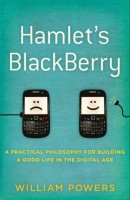 Information overload is a hot topic these days. I’ve really enjoyed recent essays by Aaron Saenz (“Are We Too Plugged In? Distracted vs. Enhanced Minds”), Michael Sacasas (“Technology Sabbaths and Other Strategies for the Digitized World“), and Peggy Noonan (“Information Overload is Nothing New“) discussing this concern in a thoughtful way. Thoughtful discussion about this issue is sometimes hard to find because, as I’ve noted here before, information overload is a subject that bitterly divides Internet optimists and pessimists. The pessimists tend to overplay the issue and discuss it in apocalyptic terms. The optimists, by contrast, often dismiss the concern out of hand. Certainly there must be some reasonable middle ground on this issue, no?
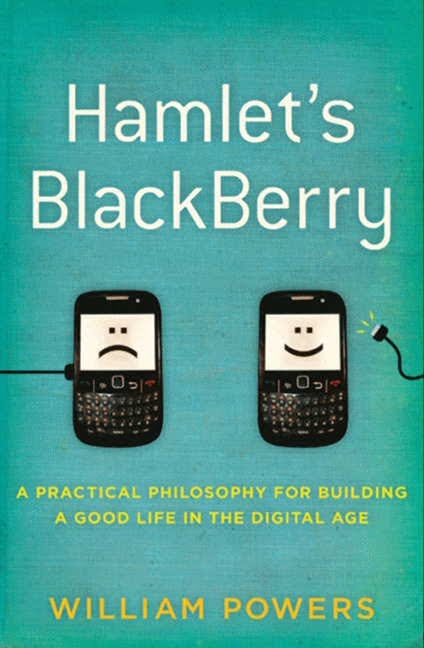
There is, and some of it can be found in a fine new book,
Hamlet’s BlackBerry: A Practical Philosophy for Building a Good Life in the Digital Age, by William Powers. Powers, a former staff writer for the Washington Post
, is a gifted storyteller and his walk though the history of philosophy and technology makes this slender volume an enjoyable, quick read. He begins by reminding us that:
whenever new devices have emerged, they’ve presented the kinds of challenges we face today — busyness, information overload, that sense of life being out of control. These challenges were as real two millennia ago as they are today, and throughout history, people have been grappling with them and looking for creative ways to manage life in the crowd. (p. 5)
His key insight is that humans
can adapt to new technology, but it takes time, patience, humility, and a little effort. “The key is to strike a balance,” he says, between “the call of the crowd” and the “need for time and space apart” from it. (p. 4) The problem we face today is that all the pressure is on us to be what he calls “Digital Maximalists.” That is, many of us are increasingly out to maximize the time spent in front of various digital “screens” whether we have made the determination that is really in our best interest or not. It has just gradually happened, Powers argues, because “The goal is no longer to be ‘in touch’ but to erase the possibility of ever being out of touch.” (p. 15)
Continue reading →
[I am currently helping Berin Szoka edit a collection of essays from various Internet policy scholars for a new PFF book called “The Next Digital Decade: Essays about the Internet’s Future.” I plan on including two chapters of my own in the book responding to the two distinct flavors of Internet pessimism that I increasingly find are dominating discussions about Internet policy. Below you will see how the first of these two chapters begins. I welcome input as I refine this draft. ]
Surveying the prevailing mood surrounding cyberlaw and Internet policy circa 2010, one is struck by the overwhelming sense of pessimism about our long-term prospects for a better future. “Internet pessimism,” however, comes in two very distinct flavors:
- Net Skeptics, Pessimistic about the Internet Improving the Lot of Mankind: The first variant of Internet pessimism is rooted in general skepticism regarding the supposed benefits of cyberspace, digital technologies, and information abundance. The proponents of this pessimistic view often wax nostalgic about some supposed “good ‘ol days” when life was much better (although they can’t seem to agree when those were). At a minimum, they want us to slow down and think twice about life in the Information Age and how it is personally affecting each of us. Other times, however, their pessimism borders on neo-Ludditism, with proponents recommending steps be taken to curtail what they feel is the destructive impact of the Net or digital technologies on culture or the economy. Leading proponents of this variant of Internet pessimism include: Neil Postman (Technopoly: The Surrender of Culture to Technology), Andrew Keen, (The Cult of the Amateur: How Today’s Internet is Killing our Culture), Lee Siegel, (Against the Machine: Being Human in the Age of the Electronic Mob), Mark Helprin, (Digital Barbarism) and, to a lesser degree, Jaron Lanier (You Are Not a Gadget) and Nicholas Carr (The Big Switch and The Shallows).
- Net Lovers, Pessimistic about the Future of Openness: A different type of Internet pessimism is on display in the work of many leading cyberlaw scholars today. Noted academics such as Lawrence Lessig, (Code and Other Laws of Cyberspace), Jonathan Zittrain (The Future of the Internet & How to Stop It), and Tim Wu (The Master Switch The Rise and Fall of Information Empires), embrace the Internet and digital technologies, but argue that they are “dying” due to a lack of sufficient care or collective oversight. In particular, they fear that the “open” Internet and “generative” digital systems are giving way to closed, proprietary systems, typically run by villainous corporations out to erect walled gardens and quash our digital liberties. Thus, they are pessimistic about the long-term survival of the wondrous Internet that we currently know and love.
Despite their different concerns, two things unite these two schools of techno-pessimism. Continue reading →
As a cyber-libertarian, I’ve been lucky enough to work with people of all ideological stripes in pursuit of various public policy objectives. I’ve made selective alliances with people on the Right on economic policy issues (like opposing Net Neutrality regulation, Internet taxes, etc) and also worked closely with folks on the Left on speech and culture issues (content controls, anonymity, online safety concerns, etc).
While engaging with with people on both sides of the political fence, I’m often struck by some of their internal inconsistencies. Conservatives, for example, talk about a big game about personal responsibility on some issues, but quickly abandon that notion when they claim media content or online speech should be regulated by the State (typically “for the children.”) In this essay, I’d like to discuss interesting inconsistencies on the political Left, especially among advocates of strong privacy regulation (most of whom tend to be Left-leaning in their worldview). In particular, here are the two things I find most interesting about modern privacy advocates:
(1)
Most privacy advocates are vociferous First Amendment supporters, yet they abandon their free speech values and corresponding constitutional tests when it comes to privacy regulation. When it comes to proposals to regulate media content or online speech, most folks on the Left have a very principled, clear-cut position: people (or parents) should take responsibility for unwanted information flows in their lives (or the lives of their children). In particular, they rightly argue that the many user empowerment tools on the market (filters, monitoring software, other parental control technologies) constitute a so-called “less-restrictive means” of controlling content when compared to government regulation.
Advocacy groups that I have a great deal of respect for and work with quite closely on these issues–such as EFF, CDT and ACLU—all take this position. Generally speaking, they argue that, when it comes to speech regulation, “household standards” (user-level controls) should trump “community standards” (government regulation). And in Court—where I frequently file joint amicus briefs with them—they repeatedly employ the “less-restrictive means” test to counter government efforts to regulate information flows.
But when it comes to privacy, they throw all this out the window! Continue reading →
 I’ve noted here before that Gordon Crovitz is my favorite technology policy columnist and that everything he pens for his “Information Age” column for The Wall Street Journal is well worth reading. His latest might be his best ever. It touches upon the great debate between Internet optimists and pessimists regarding the impact of digital technology on our culture and economy. His title is just perfect: “Is Technology Good or Bad? Yes.” His point is that you can find evidence that technological change has both beneficial and detrimental impacts, and plenty of people on both sides of the debate to cite it for you.
He specifically references the leading pessimist, Nicholas Carr, and optimist, Clay Shirky, of our time. In The Shallows: What the Internet is Doing to Our Brains and The Big Switch: Rewiring the World, From Edison to Google, Carr paints a dismal portrait of what the Internet is doing us and the world around us. Clay Shirky responds in books like Here Comes Everybody and Cognitive Surplus: Creativity and Generosity in the a Connected Age, arguing that we are much better off because of the rise of the Net and digital technology.
This is a subject I’ve spent a lot of time noodling over here through the years and, most recently, I compiled all my random thoughts into a mega-post asking, “
Are You an Internet Optimist or Pessimist?” That post tracks all the leading texts on both sides of this debate. I was tickled, therefore, when Gordon contacted me and asked for comment for his story after seeing my piece. [See, people really do still read blogs!] Continue reading →
Today, China renewed Google’s license to do business in the country, reports The Washington Post. The announcement means that Google will maintain its presence in the country for the foreseeable future. Google will likely meet criticism, but this is good news nonetheless for Chinese Internet users.
The rapidly unfolding Google-China saga has made headline after headline since January, when Google announced that it had suffered an intrusion originating in China. In March, after months of internal debate and heavy public criticism, Google shut down its China-based search engine Google.cn, redirecting all queries to its Hong Kong-based Google.com.hk site. Late last month, Google reactivated some of its China-based services and has continued to operate in China, albeit on a limited basis.
Operating in China has long been a headache for Google, due to the Chinese government’s notorious disregard for Internet freedom, embodied by its infamous “Great Firewall of China.” China surveils all Internet traffic that traverses its borders and attempts to block its citizens from accessing information sources which the government considers unfavorable. China also gleans data from its network to identify and retaliate against political dissidents.
Human rights advocates have long derided Google and other U.S. tech companies, such as Microsoft and Yahoo, for doing business in China. China requires all search engines operating in the country to censor a broad range of information, like photos of the 1989 Tiananmen Square massacre. Critics contend that complying with the Chinese government’s oppressive demands is unethical and that facilitating censorship and suppression is morally unacceptable on its face.
Such criticisms, however principled, miss the forest for the trees. If Google were to cease its Chinese operations entirely, the result would be one less U.S. Internet firm accessible to Chinese citizens. While Google is the worldwide search leader, in the Chinese search market Google lags behind Baidu, a search company based in China. Baidu’s market share increased after Google shut down its China-based search site. If Google were to pull out of China entirely, chances are Baidu would pick up many more users.
Continue reading →
I spend a lot of my time as an Internet policy analyst railing against elitist suggestions that “ordinary” users are just too dumb to take care of themselves online, no matter how effectively technology empowers them to make decisions for themselves about the content they and their children consume, what data they allow to be shared about themselves on social networking sites or while browsing, etc. Indeed, Adam Thierer and I wrote a lengthy paper about What Unites Advocates of Speech Controls & Privacy Regulation? attacking such elitism when enforced by paternalist laws that assume everyone has the same values and that only the wise philosopher-kings of technology policy can possibly protect us all from our own stupidity.
But of course there
are plenty of stupid people in the world, and they often do very stupid things—like walking on the side of a highway with just a few feet between a noise barrier and passing cars just because “Google Maps told you to do so!” That’s essentially what Lauren Rosenberg claims in her very stupid lawsuit against Google, after she was hit by a passing car following directions from the beta walking directions tool in Google Maps—and despite the warning Google provided. Danny Sullivan tells the full story at SearchEngine Land, complete with photos that should have caused any reasonably prudent person to think, “Hey, what a minute, maybe that warning label I saw telling me the suggested route might lack sidewalks or pedestrian paths was actually there for a reason!”
Rosenberg seeks several hundred thousand dollars in damages from Harwood (the driver who hit her) and Google, asserting Google was negligent and failed to adequately warn her. The key policy issue this case raises is the same as in many, many aspects of Internet policy: How much disclosure is enough? As clearly shown by the photos in Danny’s post, Google did warn Rosenberg; so the real danger in this case is that the courts (or lawmakers in the future) could set ever-higher standards for increasingly obnoxious warning labels on websites than they would provide on their own. This reminds me of my all-time favorite warning label (on a collapsible baby stroller): “REMOVE BABY BEFORE FOLDING!” (A contest for similarly inane real-life warnings can be found here.) Continue reading →


 The Technology Liberation Front is the tech policy blog dedicated to keeping politicians' hands off the 'net and everything else related to technology.