Articles by Adam Thierer 
 Senior Fellow in Technology & Innovation at the R Street Institute in Washington, DC. Formerly a senior research fellow at the Mercatus Center at George Mason University, President of the Progress & Freedom Foundation, Director of Telecommunications Studies at the Cato Institute, and a Fellow in Economic Policy at the Heritage Foundation.
The Parents Television Council (PTC) released a new report today entitled Women in Peril: A Look at TV’s Disturbing New Storyline Trend. The report argues that “by depicting violence against women with increasing frequency, or as a trivial, even humorous matter, the broadcast networks may ultimately be contributing to a desensitized atmosphere in which people view aggression and violence directed at women as normative, even acceptable,” said PTC President Tim Winter. As evidence the report cites… Nicole Kidman. OK, it cites more than Nicole Kidman, but the 7-page report and accompanying press release does seem to place a lot of stock in the fact that, while being questioning by a House Foreign Affairs subcommittee hearing about violence against women overseas, “Ms. Kidman conceded that Hollywood has probably contributed to violence against women by portraying them as weak sex objects, according to the Associated Press.” I’m not sure what Ms. Kidman was doing testifying before Congress on the matter of violence against women overseas — dare I suggest some congressmen were out for another photo-op with a Hollywood celeb? — but the better question is whether Ms. Kidman’s opinion has any bearing on the question of what relationship, if any, there is between televised violence and real-world violence against women. (Incidentally, if she really feels passionately about all this, is she prepared to go back and recut some of her old scenes in “Dead Calm,” “To Die For,” and “Eyes Wide Shut“?)
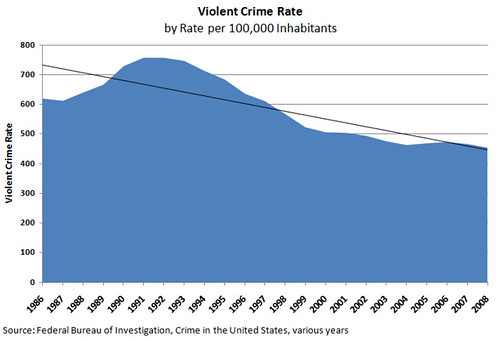
But let’s not nitpick about the credentials Ms. Kidman brings to the table or whether it makes any sense for PTC to elevate her opinions to proof of theory when it comes to a supposed connection between depictions of violence against women in film or television and real world acts of violence against women. PTC, however, suggests that’s exactly what is going on today. They allude to a few lab studies which are of the “monkey see, monkey do” variety — where the results of artificial lab experiments are used to claim that watching depictions of violence will turn us all into killing machines, rapists, robbers, or just plain ol’ desensitized thugs.
There’s just one problem with such studies, and the PTC report: Reality. Continue reading →
Interesting lunchtime forum taking place this coming Monday, Nov. 2nd about “Media, Kids, and The First Amendment.” It’s being co-hosted by Georgetown Law Center and Common Sense Media. Here’s the event description:
The rapidly changing world of digital media – including TV, videogames, the Internet and mobile devices – creates many opportunities for children, but also presents potential dangers, from cyber-bullying to exposure to inappropriate content. The Supreme Court has remanded FCC v. Fox Television back to the Third Circuit for further consideration. The Senate recently held a hearing on the Children’s Television Act in the digital age. Is new legislation or regulation imminent?
Panelists include:
- Daniel Brenner, Partner, Hogan and Hartson
- Angela Campbell, Professor, Georgetown Law Center
- Kim Matthews, Attorney Advisor, Media Bureau, Policy Division, Federal Communications Commission
- Douglas Gansler, Attorney General of Maryland
- Jim Steyer, CEO & Founder, Common Sense Media [moderator]
Location is the Gewirz Student Center, 120 F Street, NW, 12th Floor. Start time = 12:00 Noon.
It’s an open event but those interested should RSVP via email to:
rsvp2@law.georgetown.edustrong>rsvp2@law.georgetown.edu</strong and indicate that they are replying for the Nov 2nd event. I have already told my friends at Common Sense Media I will be there to cause some trouble! (and get a free lunch, of course).
Well, I don’t often get a chance to sing the praises of Hillary Clinton, so let me take the opportunity to loudly applaud her stand on religious defamation policies, which are becoming a growing international concern. According to The Washington Post, while unveiling the State Department’s 2009 Report on International Religious Freedom:
Secretary of State Hillary Rodham Clinton criticized on Monday an attempt by Islamic countries to prohibit defamation of religions, saying such policies would restrict free speech. … While unnamed in Clinton’s speech, the Organization of the Islamic Conference, a group of 56 Islamic nations, has been pushing hard for the U.N. Human Rights Council to adopt resolutions that broadly bar the defamation of religion. The effort has raised concerns that such resolutions could be used to justify crackdowns on free speech in Muslim countries.
Here’s specifically what Secretary Clinton had to say:
some claim that the best way to protect the freedom of religion is to implement so-called anti-defamation policies that would restrict freedom of expression and the freedom of religion. I strongly disagree. The United States will always seek to counter negative stereotypes of individuals based on their religion and will stand against discrimination and persecution. But an individual’s ability to practice his or her religion has no bearing on others’ freedom of speech. The protection of speech about religion is particularly important since persons of different faiths will inevitably hold divergent views on religious questions. These differences should be met with tolerance, not with the suppression of discourse.
Quite right. Thank you, Secretary Clinton, for this bold stand. Freedom of religious worship and expression — including the criticism of religion — is essential. Now, can we talk about your old positions on video game regulation?!
http://c.brightcove.com/services/viewer/federated_f8/1705667530
Just a reminder about this week’s event on the 50th anniversary of Ronald Coase’s seminal article, “The Federal Communications Commission.” As Jerry noted here before, Coase’s critique of the political allocation of radio spectrum, and his arguments for achieving efficient allocation by allowing the government to sell rights to the spectrum, has had a profound effect on the course of communications policy. This event will explore the impact of Coase’s ideas and the legacy of his article and life’s work on communications and media policy.
This event will take place on
Thursday morning at 9:00 in Hazel Hall, Room 121 (ground floor) at the George Mason University School of Law in Arlington. The event is being co-hosted by The Mercatus Center at George Mason University and The Progress & Freedom Foundation and Jerry Brito and I will be co-moderating the session.
Opening remarks will be given by
Commissioner Robert M. McDowell of the Federal Communications Commission and his remarks will be followed by a panel discussion that includes:
- Prof. Thomas W. Hazlett, George Mason University School of Law
- Dr. Jeffrey A. Eisenach, Empiris LLC & George Mason University School of Law
- Dr. Evan Kwerel, Federal Communications Commission
- John Williams, Federal Communications Commission
We hope you can make it!
Please RSVP here.
On Friday, the Federal Communications Commission (FCC) released a new Notice of Inquiry entitled, “Empowering Parents and Protecting Children in an Evolving Media Landscape” (MB Docket No. 09-194). The purpose of this investigation is to:
seek information on the extent to which children are using electronic media today, the benefits and risks these technologies bring for children, and the ways in which parents, teachers, and children can help reap the benefits while minimizing the risks. (p. 2)… Our goal with this NOI is to gather data and recommend-ations from experts, industry, and parents that will enable us to identify actions that all stakeholders can take to enable parents and children to navigate this promising electronic media landscape safely and successfully. (p. 3)
This
Notice builds on the FCC’s August 31st Report to Congress (“Implementation of the Child Safe Viewing Act; Examination of Parental Control Technologies for Video or Audio Programming”) that was required pursuant to the “Child Safe Viewing Act of 2007,” which Congress passed last year and President Bush signed last December. The goal of that bill and the FCC’s proceeding (MB Docket No. 09-26) was to study “advanced blocking technologies” that “may be appropriate across a wide variety of distribution platforms, including wired, wireless, and Internet platforms.” [I filed 150+ pages worth of comments in that proceeding, and here’s my analysis of why the bill and the FCC’s proceedings are worth monitoring. In previous posts here, I also listed all the major filings and reply comments that were submitted to the FCC in the matter.]
While the FCC’s new
Notice outlines several positive impacts that media use may have for children, it then goes on to itemize a variety of concerns about media exposure: Continue reading →
Joe Tighe, an IT Infrastructure Consultant, has an interesting essay up over at Circle ID. He takes a hard look at Rep. Ed Markey’s proposed “Internet Freedom Preservation Act of 2009” and makes an argument that many of us here have made ad nauseum — regulation involves trade-offs and unintended consequences:
One of the main problems with the proposed legislation is the lack of recognition of costs to provide internet services. Some applications, such as video are bandwidth hogs and require significantly greater network infrastructure and associated costs to deliver when compared to the network infrastructure costs to deliver email access. Under the proposed legislation, services providers would have to charge the low bandwidth users (casual browsers and email readers) more to offset the higher costs of the video users. One result of the proposed legislation would be less consumer choice and a hidden “bandwidth hog tax”. Today, most service providers offer tiered products and pricing to consumers and businesses to account for the additional costs to deliver bandwidth intensive applications. You pay more if you use more under the tiered pricing model. These are not “discriminatory” practices. Rather, tiered pricing and application prioritization are sound business models delivering reliable, profitable product choices and unburdened internet ecommerce. Consumers and businesses currently have choices. The proposed legislation takes away choice and increases costs to consumers and businesses.
Quite right. Read the whole essay here.
I’ve been meaning to say something about this new paper by Renee Newman Knake of Michigan State University College of Law, which calls for a new paradigm to analyze, and then likely regulate, video game content. Knake’s paper is entitled, “From Research Conclusions to Real Change: Understanding the First Amendment’s (Non)Response to Negative Effects of Mass Media on Children by Looking to the Example of Violent Video Game Regulations.” In it, she proposes to extend an emerging legal philosophy known as “ecogenerism” to the field of video games and the First Amendment treatment thereof. “Ecogenerism” is largely the creation of Barbara Bennett Woodhouse and the theory argues that we should apply lessons or legal frameworks from the field of environmental law to the area of media and children. “Under an ecogenerist model,” states Knake, “media harm decisions should prioritize concern about the level of ‘toxic’ media which children are exposed over free speech interests.” Simply stated, we should treat “toxic media” like toxic chemicals.
There have been other efforts to get courts to relax the legal scrutiny applied to video game content from “strict” to something more relaxed or intermediate in character. For example, there is the “violence as obscenity” approach proposed by Kevin Saunders, who, like Knake, is also with the Michigan State University College of Law. But whereas Saunders has proposed applying an adjacent legal theory or framework (obscenity law) to legal analysis of the constitutionality of regulation of video game content, Woodhouse and now Knake propose a much broader, and more radical, reformulation of First Amendment law along the lines of entirely different body of jurisprudence — again, environment law and regulation.
Of course, this is nuts. The notion that words or images are as “toxic” as chemicals is preposterous, and yet that is exactly what Knake and Woodhouse want us to accept. We can determine with a great deal of certainly the physiological impact of too much mercury or lead on the development of the human brain or body. Generally speaking, we know what dose would kill or deform. The same cannot possibly be said of media, and the very allusion to toxic materials or chemicals is ludicrous to begin with since words and images have never directly killed anyone. EVER! Continue reading →
 I very much enjoyed Dennis Baron’s new book, A Better Pencil: Readers, Writers, and the Digital Revolution, and highly recommend you pick it up. Baron does a wonderful job exploring the history of techno-pessimism and the endless battles about the impact of new technologies on life and learning, something I have written about here before in my essays on “Internet optimists vs. pessimists” (See: 1, 2, 3).
I have a complete review of Baron’s
A Better Pencil now up on the City Journal‘s website here. I’ve also pasted it down below.
Plato Wrote it Down
by Adam Thierer
a review of A Better Pencil: Readers, Writers, and the Digital Revolution, by Dennis Baron (Oxford University Press, 280 pp., $24.95)
In the beginning, Dennis Baron reminds us in his new book,
A Better Pencil, there was the word—the spoken word, that is. Oral tradition, the passing of knowledge through stories and lectures, was the primary method of instruction and learning throughout early human civilization. But then a few innovative souls decided to start writing everything down on stones and clay. Almost as soon as they did, a great debate began on the impact of new communications technology on culture and education. And it rages on today, with a new generation of optimists and skeptics battling over the impact that computing, the Internet, and digital technologies have on our lives and on how we learn about the world.
Continue reading →
We’ve talked here before about the dangers of a government-subsidized press as a way of “saving journalism.” But I don’t think I’ve ever read anything quite as eloquent on the issue as Seth Lipsky’s editorial in today’s Wall Street Journal entitled “All the News That’s Fit to Subsidize.” Mr. Lipsky is a member of the adjunct faculty at the Columbia Journalism School. In his essay today, he warns of the very real slippery slope associated with proposal to have government step in and somehow bailout newspapers as they find themselves in a time of crisis.Specifically, Mr. Lipsky addressees a new report (“The Reconstruction of American Journalism“) by Leonard Downie (former executive editor of the Washington Post) and co-author Michael Schudson (also of Columbia Journalism School), in which the authors call for a mixture of legal and regulatory changes as well as government subsidies to help prop up failing news operations.
Mr. Lipsky argues that they have “stepped onto an exceptionally slippery slope”: Continue reading →
This morning, I testified before the House Committee on Energy and Commerce’s Subcommittee on Communications, Technology, and the Internet about “Video Competition in a Digital Age.” The focus of the hearing was to “examine competition in the video programming marketplace, including access by multichannel video programming providers and consumers to programming both via television and the Internet.” Testifying along with me were: Verizon Vice President Terrence Denson; Sunflower Broadband CEO Patrick Knorr; “Battlestar Galactica” executive producer Ronald Moore; Disney Media Networks President of Global Distribution Benjamin Pyne; and Cablevision Chief Operating Officer Thomas Rutledge.
I my remarks, I argued that the critical question that should govern debates about the state of the media marketplace is: “Do citizens have more news, information, and entertainment choices at their disposal today than in the past?” As told the Committee, “all the evidence suggests the answer to that question is, unambiguously, “yes.””
Indeed, although humans have lived in a state of extreme information poverty for most of history, we now live in a world of unprecedented media abundance: Increasingly, we can obtain and consume whatever media we want, wherever and whenever we want. Citizens of all backgrounds and beliefs benefit from this modern media cornucopia.
Nowhere has this abundance been more evident than in video programming. … we have more video options and diversity at our disposal today than ever before, and generally at falling prices. In sum, there’s more competition for our eyes than ever before. […]
America’s video marketplace should be viewed as a pro-consumer success story. With an abundance of choices, competition, and diverse viewing options, the only real scarcity remaining today is our personal time and attention spans—not video options.
My full testimony, including all the exhibits and tables I referenced in my remarks, is pasted down below. Continue reading →

 The Technology Liberation Front is the tech policy blog dedicated to keeping politicians' hands off the 'net and everything else related to technology.