 Information overload is a hot topic these days. I’ve really enjoyed recent essays by Aaron Saenz (“Are We Too Plugged In? Distracted vs. Enhanced Minds”), Michael Sacasas (“Technology Sabbaths and Other Strategies for the Digitized World“), and Peggy Noonan (“Information Overload is Nothing New“) discussing this concern in a thoughtful way. Thoughtful discussion about this issue is sometimes hard to find because, as I’ve noted here before, information overload is a subject that bitterly divides Internet optimists and pessimists. The pessimists tend to overplay the issue and discuss it in apocalyptic terms. The optimists, by contrast, often dismiss the concern out of hand. Certainly there must be some reasonable middle ground on this issue, no?
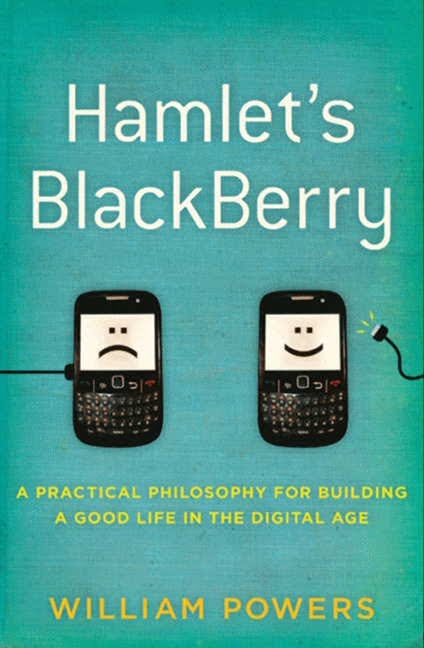
There is, and some of it can be found in a fine new book, Hamlet’s BlackBerry: A Practical Philosophy for Building a Good Life in the Digital Age, by William Powers. Powers, a former staff writer for the Washington Post , is a gifted storyteller and his walk though the history of philosophy and technology makes this slender volume an enjoyable, quick read. He begins by reminding us that:
whenever new devices have emerged, they’ve presented the kinds of challenges we face today — busyness, information overload, that sense of life being out of control. These challenges were as real two millennia ago as they are today, and throughout history, people have been grappling with them and looking for creative ways to manage life in the crowd. (p. 5)
His key insight is that humans can adapt to new technology, but it takes time, patience, humility, and a little effort. “The key is to strike a balance,” he says, between “the call of the crowd” and the “need for time and space apart” from it. (p. 4) The problem we face today is that all the pressure is on us to be what he calls “Digital Maximalists.” That is, many of us are increasingly out to maximize the time spent in front of various digital “screens” whether we have made the determination that is really in our best interest or not. It has just gradually happened, Powers argues, because “The goal is no longer to be ‘in touch’ but to erase the possibility of ever being out of touch.” (p. 15)

 The Technology Liberation Front is the tech policy blog dedicated to keeping politicians' hands off the 'net and everything else related to technology.