Here’s a sharp editorial from The Economist about Internet governance entitled, “In Praise of Chaos: Governments’ Attempts to Control the Internet Should be Resisted.” In the wake of the recent Internet Governance Forum meeting, many folks are once again debating the question of who rules the Net? Along with Wayne Crews, I edited a huge collection of essays on that topic back in 2003 and it’s a subject that continues to interest me greatly. As I noted here last week, many of those who desire greater centralization of control over Net governance decisions are using the fear that “fragmentation” will occur without some sort of greater plan for the Net’s future. I believe these fears are greatly overstated and are being used to justify expanded government meddling with online culture and economics.
The new
Economist piece nicely brings into focus the key question about who or what we should trust to guide the future of the Internet. It rightly notes that the current state of Net governance is, well, messy. But that’s not such a bad thing when compared to the alternative: Continue reading →
I’m at the mid-point of an online debate hosted by the Economist.com on the proposition: “This house believes that governments must do far more to protect online privacy.”
I’m on the “No” side. In my opening statement, I tried to give some definition to the many problems referred to as “privacy,” and I argued for personal responsibility on the part of Internet users. I even gave out instructions for controlling cookies, by which people can deny ad networks their most common source of consumer demographic information if they wish. Concluding, I said:
Government “experts” should not dictate social rules. Rather, interactions among members of the internet community should determine the internet’s social and business norms.
In the “rebuttal” stage, which started today, I dedicated most of my commentary to documenting how governments undermine privacy—and I barely scratched the surface.
Along with surveillance program after surveillance program, I discussed how government biases protocols and technologies against privacy, using the Social Security number as an example. I don’t know what syndrome causes many privacy advocates to seek protection in the arms of governments, which are systematic and powerful privacy abusers themselves.
Nonetheless, I’m opposing the “free lunch” argument, which holds that a group of government experts can come up with neutral and balanced, low-cost solutions to many different online problems without thwarting innovation. Right now the voting is with the guy offering people the free lunch, not the guy arguing for consumer education and personal responsibility.
You can vote here.
 I just finished reading through The Economist’s new 14-page special report on cloud computing, “Let It Rise” in which Ludwig Siegele provides an outstanding overview of cloud computing and why it is so important:
The rise of the cloud is more than just another platform shift that gets geeks excited. It will undoubtedly transform the information technology (IT) industry, but it will also profoundly change the way people work and companies operate. It will allow digital technology to penetrate every nook and cranny of the economy and of society, creating some tricky political problems along the way.
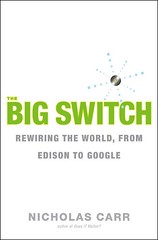
Even if you are very familiar with cloud computing, I recommend you take a look at the article. Anyway, while I was reading it, I was unsurprised to come across some comments from Nicholas Carr, whose new book
The Big Switch: Rewiring the World, from Edison to Google, is essentially an early history of cloud computing and an investigation into its effects on our economy, culture, and society. And that also reminded me that, even though I have mentioned Carr’s book here several times since it was released earlier this year, I have failed to give it a dedicated review. And it certain deserves one because “The Big Switch” is easily one of the most important technology policy books of 2008.
Continue reading →

 The Technology Liberation Front is the tech policy blog dedicated to keeping politicians' hands off the 'net and everything else related to technology.