
[last updated 4/3/2025 – Check my Medium page for latest posts]
This a running list of all the essays and reports I’ve already rolled out on the governance of artificial intelligence (AI), machine learning (ML), and robotics. Why have I decided to spend so much time on this issue? Because this will become the most important technological revolution of our lifetimes. Every segment of the economy will be touched in some fashion by AI, ML, robotics, and the power of computational science. It should be equally clear that public policy will be radically transformed along the way.
Eventually, all policy will involve AI policy and computational considerations. As AI “eats the world,” it eats the world of public policy along with it. The stakes here are profound for individuals, economies, and nations. As a result, AI policy will be the most important technology policy fight of the next decade, and perhaps next quarter century. Those who are passionate about the freedom to innovate need to prepare to meet the challenge as proposals to regulate AI proliferate.
There are many socio-technical concerns surrounding algorithmic systems that deserve serious consideration and appropriate governance steps to ensure that these systems are beneficial to society. However,
there is an equally compelling public interest in ensuring that AI innovations are developed and made widely available to help improve human well-being across many dimensions. And that’s the case that I’ll be dedicating my life to making in coming years.
Here’s the list of what I’ve done so far. I will continue to update this as new material is released: Continue reading →
There was an important article about online age verification in The New York Times yesterday entitled, “Verifying Ages Online Is a Daunting Task, Even for Experts.” It’s definitely worth a read since it reiterates the simple truth that online age verification is enormously complicated and hugely contentious (especially legally). It’s also worth reading since this issue might be getting hot again as Facebook considers allowing kids under 13 on its site.
Just five years ago, age verification was a red-hot tech policy issue. The rise of MySpace and social networking in general had sent many state AGs, other lawmakers, and some child safety groups into full-blown moral panic mode. Some wanted to ban social networks in schools and libraries (recall that a 2006 House measure proposing just that actually received 410 votes, although the measure died in the Senate), but mandatory online age verification for social networking sites was also receiving a lot of support. This generated much academic and press inquiry into the sensibility and practicality of mandatory age verification as an online safety strategy. Personally, I was spending almost all my time covering the issue between late 2006 and mid-2007. The title of one of my papers on the topic reflected the frustration many shared about the issue: “Social Networking and Age Verification: Many Hard Questions; No Easy Solutions.”
Simply put, too many people were looking for an easy, silver-bullet solution to complicated problems regarding how kids get online and how to keep them safe once they get there. For a time, age verification became that silver bullet for those who felt that “we must do something” politically to address online safety concerns. Alas, mandatory age verification was no silver bullet. As I summarized in this 2009 white paper, “Five Online Safety Task Forces Agree: Education, Empowerment & Self-Regulation Are the Answer,” all previous research and task force reports looking into this issue have concluded that a diverse toolbox and a “layered approach” must be brought to bear on these problems. There are no simple fixes. Specifically, here’s what each of the major online child safety task forces that have been convened since 2000 had to say about the wisdom of mandatory age verification: Continue reading →
In an earlier post, I mentioned an important new online child safety task force report that has just been released from the “Point Smart. Click Safe.” Blue Ribbon Working Group. It’s a great report and I encourage you to read the whole thing. It was my great pleasure to serve on this task force, and as we started finalizing our conclusions and recommendations, I started thinking about how much of what we were finding and recommending was consistent with what past online safety task forces had also concluded.
By way of background, over the past decade, five major online safety task forces or blue ribbon commissions have been convened to study online safety issues. Two of these task forces were convened in the United States and issued reports in 2000 (“COPA Commission”) and 2002 (“Thornburgh Commission“). Another was commissioned by the British government in 2007 and issued in a major report in March 2008 (“Byron Review“). Finally, two additional online safety task forces were formed in the U.S. in 2008 and concluded their work, respectively, in January (“Internet Safety Technical Task Force“) and July (“Point Smart. Click Safe.“) of 2009. [And yet another task force — the Online Safety Technology Working Group — was recently formed and has now gotten underway.]
In a new PFF white paper, ”
Five Online Safety Task Forces Agree: Education, Empowerment & Self-Regulation Are the Answer,” I walk through a chronological summary of each of these past task forces [click on covers of each report below to read them in their entirety] and highlight some of the similar themes and recommendations from them.
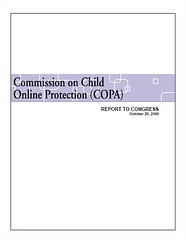
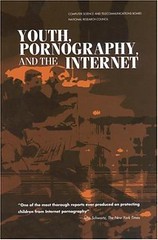
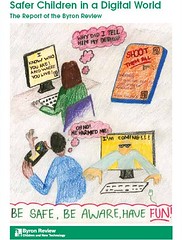
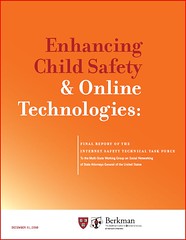
 Continue reading →
A major new online child safety task report by the “Point Smart. Click Safe.” Blue Ribbon Working Group has just been released. First, some background. In June 2007, the National Cable & Telecommunications Association (NCTA), the principal trade association of the cable industry in the United States, announced “Cable Puts You in Control: PointSmart. ClickSafe.” a new campaign by its members to offer parents assistance in keeping their children safe online. As part of the initiative, the NCTA hosted a major online child safety summit and also announced the formation of the “Point Smart. Click Safe. Blue Ribbon Working Group” in partnership with the Internet KeepSafe Coalition (iKeepSafe) and Common Sense Media. These three organizations, along with the cable industry’s “Cable in the Classroom” program, agreed to bring together a collection of online safety experts from many disciplines to study these issues and develop a set of “best practice” recommendations that could be implemented across the Internet industry. [Disclosure: It was my pleasure to serve as a member of this blue ribbon working group.]
Today, the “Point Smart. Click Safe.” working group produced its final report and concluded that:
Ensuring children’s online safety is a difficult and complex task that calls for input from and action by a wide variety of stakeholders. There is no “silver bullet”—no single technology or approach that has proved effective. Rather, what is required is:
- A combination of different technologies,
- Continuing digital literacy education for parents, educators, and children, and
- Active participation by all concerned companies, groups and individuals.
Similarly, a singular focus on safety is insufficient. Children must learn to minimize risks but also learn appropriate and ethical behaviors in this digital world. In addition, they need an understanding of media literacy, in order to be able to think critically about the content they consume and increasingly create. Therefore, best practices must be part of a larger effort to provide an entertaining, educational, and safe experience for children.
Compared to previous online child safety task forces, which I will discuss in a subsequent post, the major contribution of this task force was its focus on detailed industry best practices that various online providers could adopt to help parents, policymakers, and law enforcement better keep kids safe online. As the working group’s final report noted:
Continue reading →
The first meeting of the Online Safety Technology Working Group (OSTWG) took place today and I just wanted to provide interested parties with relevant info and links in case they want to keep track of the task force’s work. As I mentioned back in late April, this new task force was established by the “Protecting Children in the 21st Century Act,” (part of the ‘‘Broadband Data Improvement Act’,’ Pub. L. No. 110-385) and it will report to the Assistant Secretary of Commerce for Communications and Information at the U.S. Department of Commerce’s National Telecommunications and Information Administration (NTIA).
I’m happy to be serving on this new working group and I am particularly honored to be serving as the chairman of 1 of the 4 subcommittees. The four subcommittees will address: data retention, child pornography, educational efforts, and parental controls technologies. I am chairing that last subcommittee on parental controls. The task force has about 35 members and we have a year to conduct our research and report back to Congress. Here are some relevant links from the NTIA website that provide additional details about this task force:
Of course, this is certainly not the first task force to explore online safety issues. There was the COPA Commission (2000), the “Thornburgh Commission” report (2002), the U.K. “Byron Commission” report (2008), the Harvard Berkman Center’s Internet Safety Technical Task Force (2008), and the NCTA-iKeepSafe-CommonSenseMedia “Point Smart, Click Safe” working group, which is due to issue its final report shortly. [Full disclosure: I was a member of that last two task forces as well.] I’m currently working on a short paper that attempts to summarize the remarkably similar findings of these important child safety working groups. Generally speaking, they all concluded that education and empowerment, not regulation, were the real keys to moving forward and making our kids safer online.
Today, the U.S. Department of Commerce’s National Telecommunications and Information Administration (NTIA) announced the members of the new Online Safety and Technology Working Group (OSTWG). I am honored to be among those chosen to participate in this new task force and I look forward to continuing the work started last year with the Harvard Berkman Center’s Internet Safety Technical Task Force (ISTTF), which I also served on. I was very proud of the work done by the ISTTF and the impressive final report that Prof. John Palfrey crafted to reflect our findings. I am eager to investigate these issues further and take a look at the latest research and technologies that can help us better understand how to protect our kids online while also protecting the free speech and privacy rights of Netizens.
The new NTIA working group, which was established under the “Protecting Children in the 21st Century Act,” will report to the Assistant Secretary of Commerce for Communications and Information on industry-implemented online child safety tools and efforts. Within a year of convening its first meeting, the group will submit a report of its findings and make recommendations on how to increase online safety measures.
Below the fold I have listed the complete roster of OSTWG task force members. I very much looking forward to working with this outstanding group. And I’m happy to report that my TLF blogging colleague Braden Cox will be joining me on this task force!
Continue reading →
The Internet Safety Technical Task Force (ISTTF), which was formed a year ago to study online safety concerns and technologies, today issued its final report to the U.S. Attorneys General who authorized its creation. It was a great honor for me to serve as a member of the ISTTF and I believe this Task Force and its report represent a major step forward in the discussion about online child safety in this country.
The ISTTF was very ably chaired by John Palfrey, co-director of Harvard University’s Berkman Center for Internet & Society, and I just want to express my profound thanks here to John and his team at Harvard for doing a great job herding cats and overseeing a very challenging process. I encourage everyone to examine the full ISTTF report and all the submissions, presentations, and academic literature that we collected. [It’s all here.] It was a comprehensive undertaking that left no stone unturned.
Importantly, the ISTTF convened (1) a Research Advisory Board (RAB),which brought together some of the best and brightest academic researchers in the field of child safety and child development and (2) a Technical Advisory Board (TAB), which included some of America’s leading technologists, who reviewed child safety technologies submitted to the ISTTF. I strongly recommend you closely examine the RAB literature review and TAB assessment of technologies because those reports provide very detailed assessments of the issues. They both represent amazing achievements in their respective arenas.
There are a couple of key takeaways from the ISTTF’s research and final 278-page report that I want to highlight here. Most importantly, like past blue-ribbon commissions that have studied this issue, the ISTTF has generally concluded
there is no silver-bullet technical solution to online child safety concerns. The better way forward is a “layered approach” to online child protection. Here’s how we put it on page 6 of the final report:
The Task Force remains optimistic about the development of technologies to enhance protections for minors online and to support institutions and individuals involved in protecting minors, but cautions against overreliance on technology in isolation or on a single technological approach. Technology can play a helpful role, but there is no one technological solution or specific combination of technological solutions to the problem of online safety for minors. Instead, a combination of technologies, in concert with parental oversight, education, social services, law enforcement, and sound policies by social network sites and service providers may assist in addressing specific problems that minors face online. All stakeholders must continue to work in a cooperative and collaborative manner, sharing information and ideas to achieve the common goal of making the Internet as safe as possible for minors.
Continue reading →
I’ve spent a lot of time in recent years trying to debunk various myths about online child safety or at least put those risks into perspective. Too often, press reports and public policy initiatives are being driven by myths, irrational fears, or unjustified “moral panics.” Luckily, the New York Times reports that there’s another study out this week that helps us see things in a more level-headed light. This new MacArthur Foundation report is entitled Living and Learning with New Media: Summary of Findings from the Digital Youth Project. This white paper is a summary of three years of research on kids’ informal learning with digital media. The survey incorporates the insights from 800 youth and young adults and over 5000 hours of online observations. The information will eventually be contained in a book from MIT Press (“Hanging Out, Messing Around, Geeking Out: Living and Learning with New Media.”)
From the summary of the study on the MacArthur website:
“It might surprise parents to learn that it is not a waste of time for their teens to hang out online,” said Mizuko Ito, University of California, Irvine researcher and the report’s lead author. “There are myths about kids spending time online – that it is dangerous or making them lazy. But we found that spending time online is essential for young people to pick up the social and technical skills they need to be competent citizens in the digital age.”
Importantly, regarding the concerns many parents and policymakers have about online predation, Ms. Ito told the
New York Times that, “Those concerns about predators and stranger danger have been overblown.” “There’s been some confusion about what kids are actually doing online. Mostly, they’re socializing with their friends, people they’ve met at school or camp or sports.”
In the report, according to the summary, the researchers “identified two distinctive categories of teen engagement with digital media: friendship-driven and interest-driven. While friendship-driven participation centered on “hanging out” with existing friends, interest-driven participation involved accessing online information and communities that may not be present in the local peer group.” The specific findings of the study are as follows:
Continue reading →

 The Technology Liberation Front is the tech policy blog dedicated to keeping politicians' hands off the 'net and everything else related to technology.
Running List of My Research on AI, ML & Robotics Policy
by Adam Thierer on July 29, 2022 · 0 comments
[last updated 4/3/2025 – Check my Medium page for latest posts]
This a running list of all the essays and reports I’ve already rolled out on the governance of artificial intelligence (AI), machine learning (ML), and robotics. Why have I decided to spend so much time on this issue? Because this will become the most important technological revolution of our lifetimes. Every segment of the economy will be touched in some fashion by AI, ML, robotics, and the power of computational science. It should be equally clear that public policy will be radically transformed along the way.
Eventually, all policy will involve AI policy and computational considerations. As AI “eats the world,” it eats the world of public policy along with it. The stakes here are profound for individuals, economies, and nations. As a result, AI policy will be the most important technology policy fight of the next decade, and perhaps next quarter century. Those who are passionate about the freedom to innovate need to prepare to meet the challenge as proposals to regulate AI proliferate.
There are many socio-technical concerns surrounding algorithmic systems that deserve serious consideration and appropriate governance steps to ensure that these systems are beneficial to society. However, there is an equally compelling public interest in ensuring that AI innovations are developed and made widely available to help improve human well-being across many dimensions. And that’s the case that I’ll be dedicating my life to making in coming years.
Here’s the list of what I’ve done so far. I will continue to update this as new material is released: Continue reading →