Just caught this LA Times editorial from a couple of days ago on the “Overreaction to Online Harassment.” The piece makes many of the same points that Berin Szoka and I stress in our PFF paper on “Cyberbullying Legislation: Why Education is Preferable to Regulation.” [Also, here’s a video of a debate on these issues that I took part in up on Cap Hill this summer.]
The
Times editorial notes that, “Because of a past tragedy, lawmakers and prosecutors are becoming overzealous in combating noxious behavior on the Web.” Specifically, they are referring to the tragic case of Megan Meier, the teen who committed suicide after being harassed on MySpace. “Members of Congress often try to expand the powers of federal prosecutors and courts when state law doesn’t produce the results they seek, especially when confronted with cases as heart-wrenching as Meier’s,” the Times noted. For example, in may 2008, Rep. Linda Sánchez (D-CA) introduced H.R. 1966 (originally H.R. 6123), the “Megan Meier Cyberbullying Prevention Act,” which would create a new federal felony to deal with this concern.
But creating a federal crime for something that is mostly peer-on-peer activity seems like overkill. Moreover, the
Times notes, “the bill is so vaguely written” that it “would have a hard time withstanding a 1st Amendment challenge if it ever became law.” As you’ll see in our paper, Berin and I agree, but we also point out that cyberbullying is a very serious matter since evidence suggests the cyberbullying is on the rise and that it can have profoundly damaging consequences for children.
Continue reading →
The Economist magazine has just released an important feature article entitled, “Sex Laws: Unjust and Ineffective.” In an indirect way, the article makes a point that I have been trying to get across in my work on this issue: If you want to keep your kids safe from real sex offenders, we need to scrap our current sex offender registries and completely rethink the way we define and punish sex offenses in this country. That’s because, currently, a significant percentage of those people listed in sex offender registries pose almost no threat to children, making it difficult for us to know who really does pose a threat to our kids and what we should do about them.
Simply stated, we’ve dumbed-down the notion of “sex crimes” in this country. As a nation, we have foolishly come to equate almost all sex offenses equally. While sex offender registry laws vary from state to state, many basically say that that two teens caught engaging in consensual oral sex in high school belong on the same list alongside child rapists. That is insanity. And it leaves many in the public, especially parents, thinking that the whole world is full of predators lurking on every corner just waiting to snatch, rape, and kill their children. [
For the actual facts, see the appendix I have included down below: “Is America Suffering from a National Child Abduction Epidemic”?] In reality, as The Economist feature story points out, the truth is quite different: Continue reading →
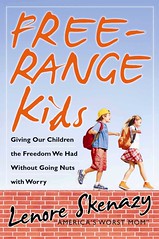 When it comes to theories about how to best raise kids, I’m a big believer in what might be referred to “a resiliency approach” to child-rearing. That is, instead of endlessly coddling our children and hovering over them like “helicopter parents,” as so many parents do today, I believe it makes more sense to instill some core values and common sense principles and then give them some breathing room to live life and learn lessons from it. Yes, that includes making mistakes. And, oh yes, your little darlings might actually gets some bump and bruises along the way — or at least have their egos bruised in the process. But this is how kids learn lessons and become responsible adults and citizens. Wrapping them in bubble wrap and filling their heads without nothing but fear about the outside would will ultimately lead to the opposite: sheltered, immature, irresponsible, and unprepared young adults — many of whom expect someone else (the government, their college, their employer, or still their parents!) to be there to take care of them well into their 20’s or even 30’s. Again, you gotta let kids live a little and learn from their experiences.
This explains why I find Lenore Skenazy’s new book,
Free-Range Kids: Giving Our Children the Freedom We Had Without Going Nuts with Worry
, to be such a breath of fresh air. [Here’s her blog of the same name.] She argues that “if we try to prevent every possible danger of difficult in our child’s everyday life, that child never gets a chance to grow up.” (p. 5) As she told
Salon recently:
You want kids to feel like the world isn’t so dangerous. You want to teach them how to cross the street safely. You want to teach them that you never go off with a stranger. You teach them what to do in an emergency, and then you assume that generally emergencies don’t happen, but they’re prepared if they do. Then, you let them go out.
The fun of childhood is not holding your mom’s hand. The fun of childhood is when you don’t have to hold your mom’s hand, when you’ve done something that you can feel proud of. To take all those possibilities away from our kids seems like saying: “I’m giving you the greatest gift of all, I’m giving you safety. Oh, and by the way I’m taking away your childhood and any sense of self-confidence or pride. I hope you don’t mind.”
Exactly right, in my opinion. Again, let kids live and learn from it. Teach lessons but then encourage ‘learning by doing’ and let them understand these things for themselves. That is resiliency theory in a nutshell.
Continue reading →
As anyone who has spent time searching for comments on the FCC’s website can tell you, the agency doesn’t exactly have the most user-friendly website. In the interest of making it easier for others to read the comments that came in last week in the agency’s “Child Safe Viewing Act” Notice of Inquiry, I have compiled all the major comments (those over 3 or 4 pages) and provided links to them below the fold.
Again, this proceeding was required under the “Child Safe Viewing Act of 2007,” which Congress passed last year and President Bush signed last December. The goal of the bill and the FCC’s proceeding (MB 09-26) is to study “advanced blocking technologies” that “may be appropriate across a wide variety of distribution platforms, including wired, wireless, and Internet platforms.” I filed 150+ pages worth of comments in this matter last week, and here’s my analysis of why this bill and the FCC’s proceeding are worth monitoring closely.
Continue reading →
Today I filed comments with the Federal Communications Commission (FCC) in its proceeding examining the marketplace for “advanced blocking technologies.” This proceeding was required under the “Child Safe Viewing Act of 2007,” which Congress passed last year and President Bush signed last December. The goal of the bill and the FCC’s proceeding (MB 09-26) is to study “advanced blocking technologies” that “may be appropriate across a wide variety of distribution platforms, including wired, wireless, and Internet platforms.” My colleagues will no doubt laugh about the fact that I have dropped an absurd 150 pages worth of comments on the FCC in this matter, but I had a lot to say on this topic! Parental controls, child safety, and free speech issues have been the focus of much of my research agenda over the past 10 years.
In my filing, I argue that the FCC should tread carefully in this matter since the agency has no authority over most of the media platforms and technologies described in the Commission’s recent Notice of Inquiry. Moreover, any related mandates or regulatory actions in in this area could diminish future innovation in this field and would violate the First Amendment rights of media creators and consumers alike. The other major conclusions of my filing are as follows:
- There exists an unprecedented abundance of parental control tools to help parents decide what constitutes acceptable media content in their homes and in the lives of their children.
- There is a trade-off between complexity and convenience for both tools and ratings, and no parental control tool is completely foolproof.
- Most homes have no need for parental control technologies because parents rely on other methods or there are no children in the home.
- The role of household media rules and methods is underappreciated and those rules have an important bearing on this debate.
- Parental control technologies work best in combination with educational efforts and parental involvement.
- The search for technological silver-bullets and “universal” solutions represent a quixotic, Holy Grail-like quest and it will destroy innovation in this marketplace.
- Enforcement of “household standards” made possible through use of parental controls and other methods negates the need for “community standards”-based content regulation.
My entire filing can be found here and down below in a Scribd reader. All comments in the matter are due tomorrow and then reply comments are due on May 18th.
Continue reading →

 The Technology Liberation Front is the tech policy blog dedicated to keeping politicians' hands off the 'net and everything else related to technology.