 The Supreme Court wasn’t playing games with the First Amendment today. With its 7-2 decision in Brown v. EMA, the Court has protected video game creators and players from unconstitutional restrictions on what we can produce and play.
Today’s decision ensures that video games have First Amendment protection on par with books, film, music and other forms of entertainment and will help block other regulatory efforts that are justified by blindly alluding to the rationale that “it’s for the children.” The decision fits nicely alongside an impressive and growing string of recent First Amendment cases from the Court that significantly raise the bar against legislative efforts to regulate freedom of speech and expression.
Quick background: In May 2010, the Supreme Court announced that it would review a California law regulating the sale of violently-themed video games to minors. The case was Schwarzenegger v. Entertainment Merchants Association, but the name of the case changed to after Jerry Brown became governor of California. The Ninth Circuit Court of Appeals had struck down a California law which prohibited the sale or rental of “violent video games” to minors, but California appealed and the SCOTUS took up the issue. [Note: When we were still with the Progress & Freedom Foundation, Berin Szoka and I filed a big amicus brief with the Court in the case along with some folks at the Electronic Frontier Foundation.] By a 7-2 vote, the Supreme Court backed the Ninth Circuit and overturned the California law. Justice Scalia wrote for the majority. Justices Thomas and Breyer dissented.
The crucial holdings in the decision are as follows: Continue reading →
The Parents Television Council (PTC) released a new report today entitled Women in Peril: A Look at TV’s Disturbing New Storyline Trend. The report argues that “by depicting violence against women with increasing frequency, or as a trivial, even humorous matter, the broadcast networks may ultimately be contributing to a desensitized atmosphere in which people view aggression and violence directed at women as normative, even acceptable,” said PTC President Tim Winter. As evidence the report cites… Nicole Kidman. OK, it cites more than Nicole Kidman, but the 7-page report and accompanying press release does seem to place a lot of stock in the fact that, while being questioning by a House Foreign Affairs subcommittee hearing about violence against women overseas, “Ms. Kidman conceded that Hollywood has probably contributed to violence against women by portraying them as weak sex objects, according to the Associated Press.” I’m not sure what Ms. Kidman was doing testifying before Congress on the matter of violence against women overseas — dare I suggest some congressmen were out for another photo-op with a Hollywood celeb? — but the better question is whether Ms. Kidman’s opinion has any bearing on the question of what relationship, if any, there is between televised violence and real-world violence against women. (Incidentally, if she really feels passionately about all this, is she prepared to go back and recut some of her old scenes in “Dead Calm,” “To Die For,” and “Eyes Wide Shut“?)
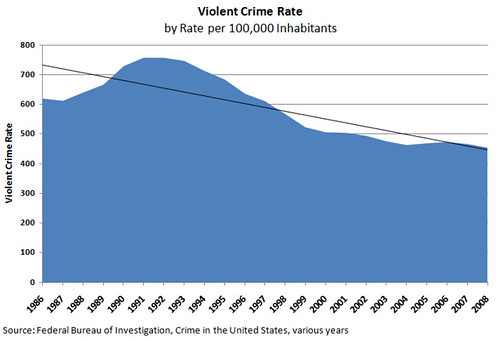
But let’s not nitpick about the credentials Ms. Kidman brings to the table or whether it makes any sense for PTC to elevate her opinions to proof of theory when it comes to a supposed connection between depictions of violence against women in film or television and real world acts of violence against women. PTC, however, suggests that’s exactly what is going on today. They allude to a few lab studies which are of the “monkey see, monkey do” variety — where the results of artificial lab experiments are used to claim that watching depictions of violence will turn us all into killing machines, rapists, robbers, or just plain ol’ desensitized thugs.
There’s just one problem with such studies, and the PTC report: Reality. Continue reading →
I’ve been meaning to say something about this new paper by Renee Newman Knake of Michigan State University College of Law, which calls for a new paradigm to analyze, and then likely regulate, video game content. Knake’s paper is entitled, “From Research Conclusions to Real Change: Understanding the First Amendment’s (Non)Response to Negative Effects of Mass Media on Children by Looking to the Example of Violent Video Game Regulations.” In it, she proposes to extend an emerging legal philosophy known as “ecogenerism” to the field of video games and the First Amendment treatment thereof. “Ecogenerism” is largely the creation of Barbara Bennett Woodhouse and the theory argues that we should apply lessons or legal frameworks from the field of environmental law to the area of media and children. “Under an ecogenerist model,” states Knake, “media harm decisions should prioritize concern about the level of ‘toxic’ media which children are exposed over free speech interests.” Simply stated, we should treat “toxic media” like toxic chemicals.
There have been other efforts to get courts to relax the legal scrutiny applied to video game content from “strict” to something more relaxed or intermediate in character. For example, there is the “violence as obscenity” approach proposed by Kevin Saunders, who, like Knake, is also with the Michigan State University College of Law. But whereas Saunders has proposed applying an adjacent legal theory or framework (obscenity law) to legal analysis of the constitutionality of regulation of video game content, Woodhouse and now Knake propose a much broader, and more radical, reformulation of First Amendment law along the lines of entirely different body of jurisprudence — again, environment law and regulation.
Of course, this is nuts. The notion that words or images are as “toxic” as chemicals is preposterous, and yet that is exactly what Knake and Woodhouse want us to accept. We can determine with a great deal of certainly the physiological impact of too much mercury or lead on the development of the human brain or body. Generally speaking, we know what dose would kill or deform. The same cannot possibly be said of media, and the very allusion to toxic materials or chemicals is ludicrous to begin with since words and images have never directly killed anyone. EVER! Continue reading →
 The latest edition (Version 4.0) of my PFF special report on “Parental Controls and Online Child Protection: A Survey of Tools & Methods” is now up. For those not familiar with the report, it explores the market for parental control tools, rating schemes, education and media literacy efforts, and various other tools, methods, and initiatives aimed at promoting online child safety. After evaluating that state of this market, I conclude: “There has never been a time in our nation’s history when parents have had more tools and methods at their disposal to help them decide what constitutes acceptable media content in their homes and in the lives of their children.” Moreover, I believe that the parental controls and content management tools cataloged in the report represent a better, less restrictive alternative to government regulation.
Version 4.0 of the report is now over 250 pages long (up from 200 pages in Version 3.0) and it contains almost 70 exhibits (up from 50), 725 references (up from roughly 500), and numerous updates in all five sections of the book. Major updates have been made to the Internet, social networking, and mobile media sections, reflecting the growing importance of those sectors and issues. Other new sections or appendices have also been added to the report, including:
- a new section examining how many households really need parental control tools;
- a new appendix on the downsides of mandatory parental controls and restrictive default settings;
- a new section on the dangers of “deputizing the online middleman” solution as an approach to solving child safety concerns;
- a new appendix reviewing the findings of 5 past online safety task forces;
- … and much more.
I issue major updates once a year and 1 or 2 minor tweaks during the course of the year to reflect the evolution of the parental control and online child safety marketplace and debate. The report is available free-of-charge on the PFF website, and the previous editions of the report are housed there too in case you want to see how it has evolved over the past couple of years. For those interested in taking a quick look at the report, I have embedded it down below the fold as a Scribd file. Finally, as is always the case, I encourage readers to send me updates and suggestions for how to improve the report and I will incorporate them into future versions.
Continue reading →
As I mentioned in a post last month, dozens of comments were filed with the Federal Communications Commission (FCC) as part of the agency’s “Child Safe Viewing Act” Notice of Inquiry. Again, this proceeding was required under the “Child Safe Viewing Act of 2007,” which Congress passed last year and President Bush signed last December. The goal of the bill and the FCC’s proceeding (MB 09-26) is to study “advanced blocking technologies” that “may be appropriate across a wide variety of distribution platforms, including wired, wireless, and Internet platforms.” I filed 150+ pages worth of comments in this matter, and here’s my analysis of why this bill and the FCC’s proceeding are worth monitoring closely.
Anyway, this week saw many of the same groups that filed before (and some new ones) file reply comments about those earlier submissions. To make things simple, I have collected most of the notable reply comments down below in case anyone is interested.
Continue reading →
As anyone who has spent time searching for comments on the FCC’s website can tell you, the agency doesn’t exactly have the most user-friendly website. In the interest of making it easier for others to read the comments that came in last week in the agency’s “Child Safe Viewing Act” Notice of Inquiry, I have compiled all the major comments (those over 3 or 4 pages) and provided links to them below the fold.
Again, this proceeding was required under the “Child Safe Viewing Act of 2007,” which Congress passed last year and President Bush signed last December. The goal of the bill and the FCC’s proceeding (MB 09-26) is to study “advanced blocking technologies” that “may be appropriate across a wide variety of distribution platforms, including wired, wireless, and Internet platforms.” I filed 150+ pages worth of comments in this matter last week, and here’s my analysis of why this bill and the FCC’s proceeding are worth monitoring closely.
Continue reading →
Today I filed comments with the Federal Communications Commission (FCC) in its proceeding examining the marketplace for “advanced blocking technologies.” This proceeding was required under the “Child Safe Viewing Act of 2007,” which Congress passed last year and President Bush signed last December. The goal of the bill and the FCC’s proceeding (MB 09-26) is to study “advanced blocking technologies” that “may be appropriate across a wide variety of distribution platforms, including wired, wireless, and Internet platforms.” My colleagues will no doubt laugh about the fact that I have dropped an absurd 150 pages worth of comments on the FCC in this matter, but I had a lot to say on this topic! Parental controls, child safety, and free speech issues have been the focus of much of my research agenda over the past 10 years.
In my filing, I argue that the FCC should tread carefully in this matter since the agency has no authority over most of the media platforms and technologies described in the Commission’s recent Notice of Inquiry. Moreover, any related mandates or regulatory actions in in this area could diminish future innovation in this field and would violate the First Amendment rights of media creators and consumers alike. The other major conclusions of my filing are as follows:
- There exists an unprecedented abundance of parental control tools to help parents decide what constitutes acceptable media content in their homes and in the lives of their children.
- There is a trade-off between complexity and convenience for both tools and ratings, and no parental control tool is completely foolproof.
- Most homes have no need for parental control technologies because parents rely on other methods or there are no children in the home.
- The role of household media rules and methods is underappreciated and those rules have an important bearing on this debate.
- Parental control technologies work best in combination with educational efforts and parental involvement.
- The search for technological silver-bullets and “universal” solutions represent a quixotic, Holy Grail-like quest and it will destroy innovation in this marketplace.
- Enforcement of “household standards” made possible through use of parental controls and other methods negates the need for “community standards”-based content regulation.
My entire filing can be found here and down below in a Scribd reader. All comments in the matter are due tomorrow and then reply comments are due on May 18th.
Continue reading →
I’ve got a new PFF paper out today entitled, “Who Needs Parental Controls? Assessing the Relevant Market for Parental Control Technologies.” In this piece, I address the argument made by some media and Internet critics who say that government intervention (perhaps even censorship) may be necessary because parental control technologies are not widely utilized by most Americans. But, as I note in the paper, the question that these critics always fail to ask is: How many homes really need parental control technologies? The answer: Far fewer than you think. Indeed, the relevant universe of potential parental control users is actually quite limited.
I find that the percentage of homes that might need parental control technologies is certainly no greater than the 32% of U.S. households with children in them. Moreover, the relevant universe of potential parental control users is likely much less than that because households with very young children or older teens often have little need for parental control technologies. Finally, some households do not utilize parental control technologies because they rely on alternative methods of controlling media content and access in the home, such as household media rules. Consequently, policymakers should not premise regulatory proposals upon the limited overall “take-up” rate for parental control tools since only a small percentage of homes might actually need or want them.
If you don’t care to read the whole nerdy thing, I’ve created this short video summarizing the major findings of the paper.
http://www.youtube.com/v/a7Fnf3Ztt-U&hl=en&fs=1
And the document is embedded below the fold in a Scribd reader.
Continue reading →
Today, President Bush signed S. 602, “The Child Safe Viewing Act.”(CNet story here). The measure requires the Federal Communications Commission (FCC) to conduct an inquiry to examine the availability of, and methods of encouraging the use of, advanced blocking technologies that help parents protect their children from transmitted video and audio programming that the parents determine to be indecent or objectionable. The FCC has 270 days to complete the report.
I wrote about the measure more extensively when it passed the Senate back in October. As I noted in then, the measure was modified slightly when it passed through the Commerce Committee last year, but it still contains some provision that could be problematic. Specifically, as part of the FCC’s required study, the bill commands the FCC to “consider advanced blocking technologies” that:
- may be appropriate across a wide variety of distribution platforms, including wired, wireless, and Internet platforms;
- operate independently of ratings pre-assigned by the creator of such video or audio programming.
Those two provisions are cause for concern since they raise the specter of what I referred to as “convergence-era content regulation” in a PFF paper about the bill last year. It does so in two ways. First, it opens the door to FCC bureaucrats investigating media content controls for wireless and Internet platforms, something it has never been empowered to do before. Second, by specifying that these new advanced content blocking technologies should “operate independently of ratings pre-assigned by the creator,” the law seems to imply that existing voluntary rating and labeling systems cannot be trusted. That is a dangerous presumption that suggests the FCC might be able to come up with better media ratings on its own.
Continue reading →

 Do we have any Australian TLF readers out there? If so, I’d be interested in their input about how well video game censorship works down under.
I follow Australian content regulation via the wonderful “Somebody Think of the Children!” blog, operated by Michael Meloni of Brisbane, Australia. (Mike, if you’re listening, you have at least one big fan here in the U.S. and thank you for keeping the rest of us up-to-speed about censorship developments on the other side of the globe!) This week, Mike reports that another video game (“F.E.A.R. 2”) was refused classification by the Australian government’s Classification Board. Apparently, the “refused classification” designation is the equivalent of a ban in Australia. And F.E.A.R. 2 is the fifth game to receive that designation in 2008. (Other games that have been censored, or subject to some sort of political investigation or pressure, are inventoried at the “Refused Classification.com” website.)
First, let me just say that this again reminds me how lucky we are to have strong free speech protections here in the United States thanks to the First Amendment of our Constitution. I do so much bitching about efforts to regulate speech and media content (especially video games) that I sometimes fail to step back and appreciate how fortunate we are here in the U.S. to not have to worry about an official government ratings body overseeing all game releases. This really hit home for me when I read that “Fallout 3” was one of the 5 games banned this year. It’s a brilliant game and I just can believe it would be censored such that the Australian public could not play the same version of it that I can.
Second, I’m wondering how well these bans work in Australia. A big part of my research on speech regulation is focused on the
practicality of censorship in the modern Information Age. [See my “End of Censorship” essay.] Thus — taking off my advocate hat and putting on my academic hat — I would be very interested in hearing from Australians about how effective these regulatory schemes are in practice. Can you still get games from overseas and play them on consoles and PCs in Australia? Do you download uncensored versions (either legally or illegally)? Does the government take steps to stem the flow of unregulated content? Or, are most citizens willing to just played the censored version of games that the Australian government eventually authorizes? Have there been academic studies done on the practical side of content censorship in Australia?
You get the idea. Any input would be greatly appreciated.
[Note: I have also been following the Australian government’s big recent push for centralized Internet filtering. Would be interested in input as that as well from Australians citizens.]
 The Supreme Court wasn’t playing games with the First Amendment today. With its 7-2 decision in Brown v. EMA, the Court has protected video game creators and players from unconstitutional restrictions on what we can produce and play.
 The Technology Liberation Front is the tech policy blog dedicated to keeping politicians' hands off the 'net and everything else related to technology.
Reply Comments in FCC’s “Child Safe Viewing Act” Notice of Inquiry
by Adam Thierer on May 20, 2009 · 17 comments
As I mentioned in a post last month, dozens of comments were filed with the Federal Communications Commission (FCC) as part of the agency’s “Child Safe Viewing Act” Notice of Inquiry. Again, this proceeding was required under the “Child Safe Viewing Act of 2007,” which Congress passed last year and President Bush signed last December. The goal of the bill and the FCC’s proceeding (MB 09-26) is to study “advanced blocking technologies” that “may be appropriate across a wide variety of distribution platforms, including wired, wireless, and Internet platforms.” I filed 150+ pages worth of comments in this matter, and here’s my analysis of why this bill and the FCC’s proceeding are worth monitoring closely.
Anyway, this week saw many of the same groups that filed before (and some new ones) file reply comments about those earlier submissions. To make things simple, I have collected most of the notable reply comments down below in case anyone is interested. Continue reading →