I’ve spent a great deal of time here defending “techno-optimism” or “Internet optimism” against various attacks through the years, so I was interested to see Cory Doctorow, a novelist and Net activist, take on the issue in a new essay at Locus Online. I summarized my own views on this issue in two recent book chapters. Both chapters appear in The Next Digital Decade and are labeled “The Case for Internet Optimism.” Part 1 is sub-titled “Saving the Net From Its Detractors” and Part 2 is called “Saving the Net From Its Supporters.” More on my own thoughts in a moment. But let’s begin with Doctorow’s conception of the term.
Doctorow defines “techno-optimism” as follows:
In order to be an activist, you have to be… pessimistic enough to believe that things will get worse if left unchecked, optimistic enough to believe that if you take action, the worst can be prevented. […]
Techno-optimism is an ideology that embodies the pessimism and the optimism above: the concern that technology could be used to make the world worse, the hope that it can be steered to make the world better.
What this definition suggests is that Doctorow has a very clear vision of what constitutes “good” vs. “bad” technology or technological developments. He turns to that dichotomy next as he seeks to essentially marry “techno-optimism” to a devotion to the free/open software movement and a rejection of “proprietary technology”: Continue reading →
FCC Chairman Julius Genachowski suggested at an FCC field hearing this week that the federal government might create its own “version of iTunes.” Multichannel News reports:
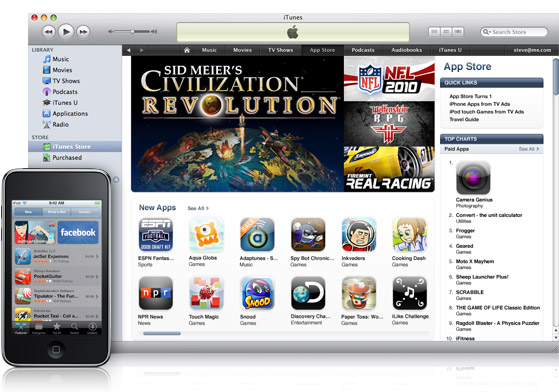
The chairman asked panelists to think about the value of a clearinghouse where best practices could be shared. He suggested that might be a way to spur the spin-off of public-sector apps from private sector initiatives and to prevent reinventing the wheel, rather than tapping into what is already being done. There is not a lot of shared info out there, he said.
If all we’re talking about is a clearinghouse that provides easy access to apps for government-developed apps, Google Code or SourceForge may be a better model than iTunes—though perhaps without the instant name recognition by ordinary consumers. Like SourceForge, Google Code allows hosting and management of open source projects, including Google’s own products. iTunes, by contrast, essentially offers consumers finished apps. Also, iTunes is a stand-alone piece of software, of which the Apps Store is just one part, while I can’t imagine why Genachowski’s “store” need be anything more than a website.
Whatever the analogy, such a “store” could well be a valuable tool for sharing the benefits of software development by government employees, both with the private sector and among federal agencies as well as state, local and even foreign governments. But what, exactly, Genachowski had in mind for the store remains awfully vague: Multichannel News mentions, as examples, “applications that do everything from monitoring heart rates and blood sugar to checking for greenhouse gas levels.” If the idea ever goes anywhere, it should be based on two principles:
- All apps should be open source and available to all users to use as they see fit.
- The store should be limited to apps developed by government employees to meet the needs of government agencies.
Continue reading →

 The Technology Liberation Front is the tech policy blog dedicated to keeping politicians' hands off the 'net and everything else related to technology.