In an earlier post, I mentioned an important new online child safety task force report that has just been released from the “Point Smart. Click Safe.” Blue Ribbon Working Group. It’s a great report and I encourage you to read the whole thing. It was my great pleasure to serve on this task force, and as we started finalizing our conclusions and recommendations, I started thinking about how much of what we were finding and recommending was consistent with what past online safety task forces had also concluded.
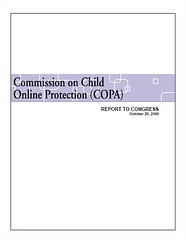
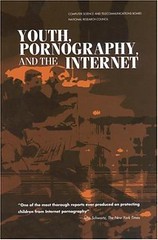
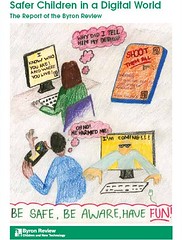
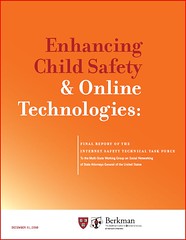
By way of background, over the past decade, five major online safety task forces or blue ribbon commissions have been convened to study online safety issues. Two of these task forces were convened in the United States and issued reports in 2000 (“COPA Commission”) and 2002 (“Thornburgh Commission“). Another was commissioned by the British government in 2007 and issued in a major report in March 2008 (“Byron Review“). Finally, two additional online safety task forces were formed in the U.S. in 2008 and concluded their work, respectively, in January (“Internet Safety Technical Task Force“) and July (“Point Smart. Click Safe.“) of 2009. [And yet another task force — the Online Safety Technology Working Group — was recently formed and has now gotten underway.]
In a new PFF white paper, ”
Five Online Safety Task Forces Agree: Education, Empowerment & Self-Regulation Are the Answer,” I walk through a chronological summary of each of these past task forces [click on covers of each report below to read them in their entirety] and highlight some of the similar themes and recommendations from them.
 Continue reading →
Online child safety — especially the fear of predators lurking on social networking sites (SNS) — continues to spur calls by state and federal lawmakers for regulation. At first, some federal lawmakers advocated outright bans on SNS in schools and libraries via the Deleting Online Predators Act (DOPA). Meanwhile, state and local lawmakers — specifically state Attorneys General (AGs) — have been even more vociferous in their calls for regulation in the form of mandatory age verification for social networking sites, which would cover a broad swath of online sites and activities according to their definitions of SNS. But the question that ultimately gets lost in this debate is: Just how much risk do social networking sites really pose for teens? Which risks are real and which are overblown? And what’s the best way to deal with the risks that we find to be legitimate?
 Nancy Willard devotes her life to answering those questions. Willard is one of America’s leading experts on online safety and risk prevention. She runs the Center for Safe and Responsible Internet Use and she is the author of two outstanding books, Cyberbullying and Cyberthreats and Cyber-Safe Kids, Cyber-Savvy Teens. In my opinion, Willard’s general approach to online child safety is the most enlightened, level-headed, and likely to be effective. That’s because Willard focuses on putting fears in perspective, identifying the actual risks that kids face online, and devising sensible strategies to deal with risks and problems as they are discovered. Her approach is holistic and built upon sound data, targeted risk-identification strategies, and time-tested education and mentoring methods. For my money, it’s the most sensible approach to online safety issues. In fact, when other parents ask me for “just one thing” to read on the topic, I usually recommend Willard’s work — especially her amazing book Cyber-Safe Kids, Cyber-Savvy Teens. And her background in early childhood education, special education for “at risk” children with emotional and behavior difficulties, as well as experience in computer law, means she is uniquely suited to be analyzing these issues. In sum, this is woman we should all be closely listening to on these issues.
Recently, Willard has been responding to criticisms that state AGs have leveled against the Internet Safety Technical Task Force (ISTTF) and its final report. [Disclaimer: I was a member of the ISTTF.] I’ve already outlined the ISTTF’s work at length here, but the three key takeaways from the report were that:
- the risk of predation on social network sites has been over-stated; the data suggest that cyber-bullying is the bigger problem on SNS;
- there is no silver-bullet technical solution to online child safety concerns, and mandatory age verification, in particular, would not make kids safer online but could even create bigger problems in the long-run;
- education and empowerment are the real keys to keeping kids safer online.
Continue reading →
Just wanted draw everyone’s attention to a couple of great podcasts about online safety issues that include comments from members of the Internet Safety Technical Task Force (ISTTF). As I mentioned a few weeks ago, the ISTTF project and final report represent a major milestone in the discussion about online safety in America, and I was honored to serve as a member of this task force.
This in-depth “Radio Berkman” podcast featuring ISTTF director John Palfrey and co-director Dena Sacco is a really excellent (but lengthy!) overview of the ISTTF’s word. Here’s a shorter podcast that Prof. Palfrey did with Larry Magid of CNet. And I also recommend this excellent NPR “On the Media” podcast featuring my friend Stephen Balkam of the Family Online Safety Institute (FOSI).
For those interested, down below you will find a running list I have been keeping of coverage of the ISTTF. (I will try to keep updating this list here).
Continue reading →
I’ve spent a lot of time in recent years trying to debunk various myths about online child safety or at least put those risks into perspective. Too often, press reports and public policy initiatives are being driven by myths, irrational fears, or unjustified “moral panics.” Luckily, the New York Times reports that there’s another study out this week that helps us see things in a more level-headed light. This new MacArthur Foundation report is entitled Living and Learning with New Media: Summary of Findings from the Digital Youth Project. This white paper is a summary of three years of research on kids’ informal learning with digital media. The survey incorporates the insights from 800 youth and young adults and over 5000 hours of online observations. The information will eventually be contained in a book from MIT Press (“Hanging Out, Messing Around, Geeking Out: Living and Learning with New Media.”)
From the summary of the study on the MacArthur website:
“It might surprise parents to learn that it is not a waste of time for their teens to hang out online,” said Mizuko Ito, University of California, Irvine researcher and the report’s lead author. “There are myths about kids spending time online – that it is dangerous or making them lazy. But we found that spending time online is essential for young people to pick up the social and technical skills they need to be competent citizens in the digital age.”
Importantly, regarding the concerns many parents and policymakers have about online predation, Ms. Ito told the
New York Times that, “Those concerns about predators and stranger danger have been overblown.” “There’s been some confusion about what kids are actually doing online. Mostly, they’re socializing with their friends, people they’ve met at school or camp or sports.”
In the report, according to the summary, the researchers “identified two distinctive categories of teen engagement with digital media: friendship-driven and interest-driven. While friendship-driven participation centered on “hanging out” with existing friends, interest-driven participation involved accessing online information and communities that may not be present in the local peer group.” The specific findings of the study are as follows:
Continue reading →

 The Technology Liberation Front is the tech policy blog dedicated to keeping politicians' hands off the 'net and everything else related to technology.