Posts tagged as:

On July 27th, The Progress & Freedom Foundation hosted a Capitol Hill panel discussion entitled “Online Child Safety, Privacy, and Free Speech: An Overview of Challenges in Congress & the States.” The event featured remarks from:

  • Parry Aftab, Executive Director, WiredSafety.org
  • Todd Haiken, Senior Manager of Policy, Common Sense Media
  • Jim Halpert, Partner, DLA Piper
  • Berin Szoka, Senior Fellow, The Progress & Freedom Foundation

We’ve just released the transcript of the event, which I have also pasted down below the fold in a Scribd document reader. Also, the audio for this event can be heard by clicking below:

Download mp3

Here is the full event description: Continue reading →

In an earlier post, I mentioned an important new online child safety task force report that has just been released from the “Point Smart. Click Safe.” Blue Ribbon Working Group. It’s a great report and I encourage you to read the whole thing. It was my great pleasure to serve on this task force, and as we started finalizing our conclusions and recommendations, I started thinking about how much of what we were finding and recommending was consistent with what past online safety task forces had also concluded.

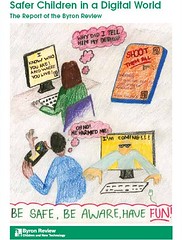
By way of background, over the past decade, five major online safety task forces or blue ribbon commissions have been convened to study online safety issues. Two of these task forces were convened in the United States and issued reports in 2000 (“COPA Commission”) and 2002 (“Thornburgh Commission“). Another was commissioned by the British government in 2007 and issued in a major report in March 2008 (“Byron Review“). Finally, two additional online safety task forces were formed in the U.S. in 2008 and concluded their work, respectively, in January (“Internet Safety Technical Task Force“) and July (“Point Smart. Click Safe.“) of 2009. [And yet another task force — the Online Safety Technology Working Group — was recently formed and has now gotten underway.]

In a new PFF white paper, ” Five Online Safety Task Forces Agree: Education, Empowerment & Self-Regulation Are the Answer,” I walk through a chronological summary of each of these past task forces [click on covers of each report below to read them in their entirety] and highlight some of the similar themes and recommendations from them.

COPA Commission cover Thornburgh Commission cover Byron Commission report cover

ISTTF cover Point Smart Click Safe report cover Continue reading →

Point Smart Click Safe report coverA major new online child safety task report by the “Point Smart. Click Safe.” Blue Ribbon Working Group has just been released. First, some background. In June 2007, the National Cable & Telecommunications Association (NCTA), the principal trade association of the cable industry in the United States, announced “Cable Puts You in Control: PointSmart. ClickSafe.” a new campaign by its members to offer parents assistance in keeping their children safe online.   As part of the initiative, the NCTA hosted a major online child safety summit and also announced the formation of the “Point Smart. Click Safe. Blue Ribbon Working Group” in partnership with the Internet KeepSafe Coalition (iKeepSafe) and Common Sense Media. These three organizations, along with the cable industry’s “Cable in the Classroom” program, agreed to bring together a collection of online safety experts from many disciplines to study these issues and develop a set of “best practice” recommendations that could be implemented across the Internet industry. [Disclosure: It was my pleasure to serve as a member of this blue ribbon working group.]

Today, the “Point Smart. Click Safe.” working group produced its final report and concluded that:

Ensuring children’s online safety is a difficult and complex task that calls for input from and action by a wide variety of stakeholders. There is no “silver bullet”—no single technology or approach that has proved effective. Rather, what is required is:
  • A combination of different technologies,
  • Continuing digital literacy education for parents, educators, and children, and
  • Active participation by all concerned companies, groups and individuals.
Similarly, a singular focus on safety is insufficient. Children must learn to minimize risks but also learn appropriate and ethical behaviors in this digital world. In addition, they need an understanding of media literacy, in order to be able to think critically about the content they consume and increasingly create. Therefore, best practices must be part of a larger effort to provide an entertaining, educational, and safe experience for children.

Compared to previous online child safety task forces, which I will discuss in a subsequent post, the major contribution of this task force was its focus on detailed industry best practices that various online providers could adopt to help parents, policymakers, and law enforcement better keep kids safe online. As the working group’s final report noted:

Continue reading →

As I mentioned in a post last month, dozens of comments were filed with the Federal Communications Commission (FCC) as part of the agency’s “Child Safe Viewing Act” Notice of Inquiry.  Again, this proceeding was required under the “Child Safe Viewing Act of 2007,” which Congress passed last year and President Bush signed last December. The goal of the bill and the FCC’s proceeding (MB 09-26) is to study “advanced blocking technologies” that “may be appropriate across a wide variety of distribution platforms, including wired, wireless, and Internet platforms.”  I filed 150+ pages worth of comments in this matter, and here’s my analysis of why this bill and the FCC’s proceeding are worth monitoring closely.

Anyway, this week saw many of the same groups that filed before (and some new ones) file reply comments about those earlier submissions.  To make things simple, I have collected most of the notable reply comments down below in case anyone is interested. Continue reading →

Readers of Tech Liberation Front may be interested in a new breakfast series that BroadbandCensus.com has recently begun.

The next event in this series, “Should Government Funding Be Part of a National Broadband Plan?” will be held on Tuesday, November 18, from 8 a.m. to 10 a.m., and will include Stan Fendley, the director of legislative and regulatory policy for Corning, Inc., Kyle McSlarrow, CEO of the National Cable and Telecommunications Association (NCTA), and John Windhausen, Jr., president of Telepoly Consulting. I will moderate the discussion.

Two weeks after Election Day, this Broadband Breakfast Club meeting will consider one of the hottest topics in telecom: can and should funding for broadband work its way into a pending fiscal stimulus package?

Future meetings of the breakfast club (December 2008 through March 2009) will consider the role of broadband applications in harnessing demand, how the universal service fund will be changed by high-speed internet, the role of wireless in universal broadband, and the extent of competition in the marketplace.

The Broadband Breakfast Club meets monthly at the Old Ebbitt Grill, at 675 15th Street, NW, in Washington. (It’s right across the street from the Department of the Treasury.)

Beginning at 8 a.m., an American plus Continental breakfast is available downstairs in the Cabinet Room. This is followed by a discussion about the question at hand, which ends at 10 a.m. Except for holidays (like Veteran’s Day), we’ll meet on the second Tuesday of each month, until March 2009. The registration page for the event is http://broadbandbreakfast.eventbrite.com.

Continue reading →

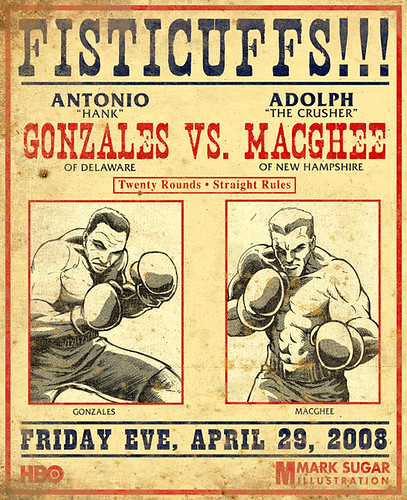
Verizon’s Tom Tauke and NCTA’s Kyle McSlarrow take to fisticuffs in their comments (well worth reading and remarkably… candid) on the Verizon Policy Blog after Tom asked “Will Cable and FCC Thwart Consumer Choice?”  In case you missed it, Verizon has been feuding with cable providers before the FCC about Verizon’s practice of calling customers who ask to cancel their telephone service and offering them incentives to stay with Verizon rather than switch to a cable VoIP service.

Adam Thierer very capably addressed this subject several months ago:

there are two issues here: (1) Is Verizon technically violating any existing FCC regulations; and (2) do those rules make any sense? I’ll leave it to the legal beagles to sort out the answer to question #1. From my perspective, the more important question is, regardless of what the regs say, what’s the impact of all this is on consumers and competition? On that point, it’s hard for me to see how those old number portability regulations make sense if they limit the ability of incumbents to play hard-ball in an attempt to retain customers. After all, that’s what we should want more of in the marketplace: good ol’ fashion head-to-head, facilities-based competition…. Bottom line: the FCC should be careful about regulating customer inducements by incumbents whether those offers happen before or after the porting process. The better approach would be to make sure that the incumbents can offer whatever inducements they want but then also make sure that rivals have a clear opportunity to respond and beat the offer.

Amen!