 The Internet’s greatest blessing — its general openness to all speech and speakers — is also sometimes its biggest curse. That is, you cannot expect to have the most widely accessible, unrestricted communications platform the world has ever known and not also have some imbeciles who use it to spew insulting, vile, and hateful comments.
It is important to put things in perspective, however. Hate speech is not the norm online. The louts who spew hatred represent a small minority of all online speakers. The vast majority of online speech is of a socially acceptable — even beneficial — nature.
Still, the problem of hate speech remains very real and a diverse array of strategies are needed to deal with it. The sensible path forward in this regard is charted by Abraham H. Foxman and Christopher Wolf in their new book, Viral Hate: Containing Its Spread on the Internet. Their book explains why the best approach to online hate is a combination of education, digital literacy, user empowerment, industry best practices and self-regulation, increased watchdog / press oversight, social pressure and, most importantly, counter-speech. Foxman and Wolf also explain why — no matter how well-intentioned — legal solutions aimed at eradicating online hate will not work and would raise serious unintended consequences if imposed.
In striking this sensible balance, Foxman and Wolf have penned the definitive book on how to constructively combat viral hate in an age of ubiquitous information flows. Continue reading →
I’ve written on this blog before about Cyren Call, Nextel founder Morgan O’Brien’s venture to create a national wireless broadband network for first responders. Its plan calls for 30 MHz of spectrum in the 700 MHz band that are slated for auction. A couple of months ago the FCC turned down Cyren Call’s petition, saying Congress’s instructions were quite clear and the Commission didn’t have the authority to refuse to auction the spectrum. Morgan O’Brien spoke at the symposium we held late last year and hinted that he was already working on getting Congress to approve his plan. (Video here.)
Well, today comes word that John McCain has signed on to the Cyren Call plan. This is especially newsworthy since the Senate will soon take a look at the recently passed House bill to implement the 9/11 Commission’s recommendations. As I explained earlier today, that bill addresses first responder communications, but doesn’t mention new spectrum for public safety. McCain said he plans to introduce legislation in the near future to assign the 30 MHz to the Public Safety Broadband Trust the Cyren Call plan calls for. I’m not convinced you need 30 MHz of spectrum to create a viable network, and so I’m not sure it’s time to remove spectrum from efficient allocation by auctions. Verizon hinted a while back that they could do it in just 12 MHz of the 24 already slated for public safety, and the FCC is currently taking comments in a proceeding to create just such a network in 12 MHz. Comments are due on Feb. 26. Note to Verizon: Now would be a fine time to make details of your plan public.
The other problem I see is that the Cyren Call/McCain plan would create one monopoly provider. The FCC plan has the same problem. If it can be done in 12 MHz, why not create two competing networks in the 24 MHz of spectrum already allocated for public safety?
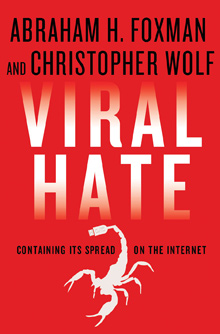 The Internet’s greatest blessing — its general openness to all speech and speakers — is also sometimes its biggest curse. That is, you cannot expect to have the most widely accessible, unrestricted communications platform the world has ever known and not also have some imbeciles who use it to spew insulting, vile, and hateful comments.
 The Technology Liberation Front is the tech policy blog dedicated to keeping politicians' hands off the 'net and everything else related to technology.