 In my work critiquing the Lessig-Zittrain-Wu school of thinking–which fears the decline and fall of online “openness” and digital “generativity”–I have argued that, while there is no such thing as perfect “openness,” things are actually getting more open and generative all the time. All that really counts from my perspective is that we are witnessing healthy innovation across the generativity continuum.
Will some devices and platforms continue to be “closed”? Sure. Think Apple and cable set-top boxes. But (a) there’s a ton of innovation taking place on top of those supposedly “closed” platforms and (b) there are other options consumers can exercise if they don’t like those content /information delivery methods. [See this chapter from the Next Digital Decade book for my fuller critique.]
And, even if one adopts a rigid Zittrainian view of openness and generativity, each day seems to bring more good news. From that perspective it’s hard to find a better headline than this one: ”
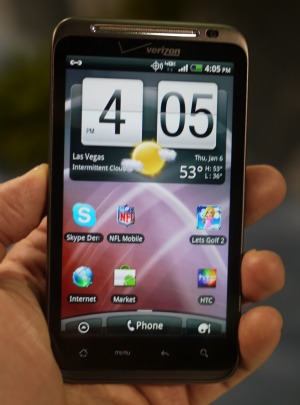
Smartphone Makers Bow to Demands for More Openness.” That’s from ArsTechnica today and it refers to the fact that smartphone giant HTC just announced it would no longer attempt to lock the bootloader on its smartphones, meaning geeks like me can root and hack their devices to their heart’s content. As the Ars story notes:
Continue reading →
 Seems like everywhere I turn someone is gushing about their new Droid phone, including my TLF colleagues Berin Szoka, Braden Cox, and Ryan Radia, who all had great fun rubbing their new toys in my nose over the past couple of days. And why not, it’s a very cool little device. It makes my HTC Touch seems positively archaic in some ways, and it’s only a year old. Apparently, 100,000 people already picked up a Droid in just its first weekend on the market.
But here’s the first thing that pops in my mind every time I see someone showing off their new Droid: How can a device like this even exist when America’s leading cyberlaw experts have been telling us that the whole digital world is increasingly going to hell because of “closed” devices, proprietary code, and managed networks? I’m speaking, of course, about the lamentations of Harvard professors Lawrence Lessig, Jonathan Zittrain, and their many disciples. As faithful readers will recall, I have relentlessly hammered this crew for their unwarranted cyber-Chicken Little-ism and hyper techno-pessimism. (See my many battles with Zittrain [1, 2, 3, 4, 5, 6 + video] and my 2-part debate with Lessig earlier this year).
“Left to itself,” Lessig warned in Code, “cyberspace will become a perfect tool of control.” He went on to forecast a dystopian future in which nefarious corporate schemers would quash our digital liberties unless benevolent public philosopher kings stepped in to save our poor souls. Code was the Old Testament of cyber-collectivism. The New Testament arrived last year with Zittrain’s
The Future of the Internet and How to Stop It. In it, we hear the grim prediction that “sterile and tethered” digital technologies and networks will triumph over the more “open and generative” devices and systems of the past. The iPhone and TiVo are cast as villains in Zittrain’s drama since they apparently represent the latest manifestations of Lessig’s “perfect control” paranoia.
Apple’s “Angel of Death”
How completely out-of-control has this thinking gotten? Well, here’s David Weinberger — another Harvard Berkman Center worrywart — talking about that supposed satanic font of all evil, the Apple AppStore: Continue reading →
 In my work critiquing the Lessig-Zittrain-Wu school of thinking–which fears the decline and fall of online “openness” and digital “generativity”–I have argued that, while there is no such thing as perfect “openness,” things are actually getting more open and generative all the time. All that really counts from my perspective is that we are witnessing healthy innovation across the generativity continuum.
 The Technology Liberation Front is the tech policy blog dedicated to keeping politicians' hands off the 'net and everything else related to technology.