 Faithful readers know of my geeky love for tech policy books. I read lots of ’em. There’s a steady stream of Amazon.com boxes that piles up on my doorstop some days because my mailman can’t fit them all in my mailbox. But I go pretty hard on all the books I review. It’s rare for me pen a glowing review. Occasionally, however, a book will come along that I think is both worthy of your time and which demands a place on your bookshelf because it is such an indispensable resource. Access Controlled: The Shaping of Power, Rights, and Rule in Cyberspace is one of those books.
Smartly organized and edited by Ronald J. Deibert, John G. Palfrey, Rafal Rohozinski, and Jonathan Zittrain, Access Controlled is essential reading for anyone studying the methods governments are using globally to stifle online expression and dissent. As I noted of their previous edition, Access Denied: The Practice and Policy of Global Internet Filtering, there is simply no other resource out there like this; it should be required reading in every cyberlaw or information policy program.
The book, which is a project of the OpenNet Initiative (ONI), is divided into two parts. Part 1 of the book includes six chapters on “Theory and Analysis.” They are terrifically informative essays, and the editors have made them all available online here (I’ve listed them down below with links embedded). The beefy second part of the book provides a whopping 480 pages(!) of detailed regional and country-by-country overviews of the global state of online speech controls and discuss the long-term ramifications of increasing government meddling with online networks.
In their interesting chapter on “Control and Subversion in Russian Cyberspace,” Deibert and Rohozinski create a useful taxonomy to illustrate the three general types of speech and information controls that states are deploying today. What I find most interesting is how, throughout the book, various authors document the increasing movement away from “first generation controls,” which are epitomized by “Great Firewall of China”-like filtering methods, and toward second- and third-generation controls, which are more refined and difficult to monitor. Here’s how Deibert and Rohozinski define those three classes (or “generations”) of controls: Continue reading →
 The latest edition (Version 4.0) of my PFF special report on “Parental Controls and Online Child Protection: A Survey of Tools & Methods” is now up. For those not familiar with the report, it explores the market for parental control tools, rating schemes, education and media literacy efforts, and various other tools, methods, and initiatives aimed at promoting online child safety. After evaluating that state of this market, I conclude: “There has never been a time in our nation’s history when parents have had more tools and methods at their disposal to help them decide what constitutes acceptable media content in their homes and in the lives of their children.” Moreover, I believe that the parental controls and content management tools cataloged in the report represent a better, less restrictive alternative to government regulation.
Version 4.0 of the report is now over 250 pages long (up from 200 pages in Version 3.0) and it contains almost 70 exhibits (up from 50), 725 references (up from roughly 500), and numerous updates in all five sections of the book. Major updates have been made to the Internet, social networking, and mobile media sections, reflecting the growing importance of those sectors and issues. Other new sections or appendices have also been added to the report, including:
- a new section examining how many households really need parental control tools;
- a new appendix on the downsides of mandatory parental controls and restrictive default settings;
- a new section on the dangers of “deputizing the online middleman” solution as an approach to solving child safety concerns;
- a new appendix reviewing the findings of 5 past online safety task forces;
- … and much more.
I issue major updates once a year and 1 or 2 minor tweaks during the course of the year to reflect the evolution of the parental control and online child safety marketplace and debate. The report is available free-of-charge on the PFF website, and the previous editions of the report are housed there too in case you want to see how it has evolved over the past couple of years. For those interested in taking a quick look at the report, I have embedded it down below the fold as a Scribd file. Finally, as is always the case, I encourage readers to send me updates and suggestions for how to improve the report and I will incorporate them into future versions.
Continue reading →
Over at Ars, Ryan Paul has an appropriately sharp-tongued response to the Mozilla Foundation’s troubling move to become a cheerleader for the European Commission’s ongoing antitrust efforts against Microsoft. Apparently Mozilla will assist the EC’s investigation “by offering expertise about the browser market.”
Paul focuses on what’s wrong with this in both a micro and macro sense. He rightly points out that the potential remedies here do not bode well for the future of this sector, since regulatory tinkering with high-tech product standards is bound to end badly and create a terrible precedent for future interventions. “It’s hard to find a rational argument in favor of mandatory standards enforcement,” Paul says. “It would be punitive and unhelpful to the advancement of the web.” Moreover, Paul notes that things have never looked better on the browser front:
Claims that Microsoft’s monopoly status has eliminated competition in the browser market sound hollow in the face of the profoundly vibrant browser market that exists today. The record-setting launch of Firefox 3 added up to over 8 million downloads in the first 24 hours alone. Firefox’s global market share continues to climb every month and the browser has grabbed almost 30 percent of the European market.
And let’s not forget about those two little companies called Google and Apple who have competing products in the field! They’re making serious inroads in the browser wars. Moreover, Microsoft is struggling to hold on to whatever “dominance” they have left in their core market: OS. As Paul concludes:
To the observant tech enthusiast, all signs seem to indicate that Microsoft’s monopoly is on its way out. The Redmond giant is in no danger of annihilation, but it’s definitely not positioned to dictate terms to the rest of the industry anymore.
But what is perhaps most shocking about Mozilla’s call for intervention is the way that Mozilla Foundation chairperson Mitchell Baker minimizes the importance of not just Firefox, but the entire open source movement, when justifying EC intervention in this marketplace.
Continue reading →
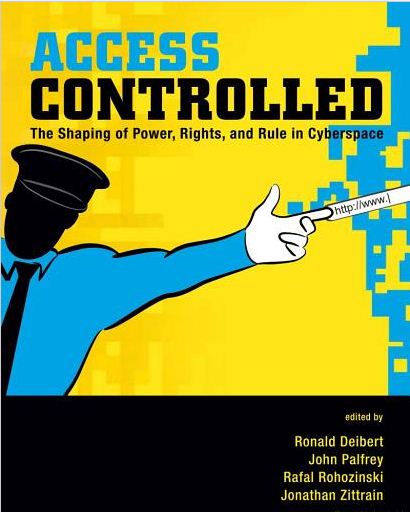 Faithful readers know of my geeky love for tech policy books. I read lots of ’em. There’s a steady stream of Amazon.com boxes that piles up on my doorstop some days because my mailman can’t fit them all in my mailbox. But I go pretty hard on all the books I review. It’s rare for me pen a glowing review. Occasionally, however, a book will come along that I think is both worthy of your time and which demands a place on your bookshelf because it is such an indispensable resource. Access Controlled: The Shaping of Power, Rights, and Rule in Cyberspace is one of those books.
 The Technology Liberation Front is the tech policy blog dedicated to keeping politicians' hands off the 'net and everything else related to technology.