Some lawmakers at the federal, state and local level have advocated video game industry regulation in the name of protecting children from potentially objectionable content, usually of a violent nature. In my opinion, the better approach–and one that doesn’t involve government censorship or regulation of games–is to empower parents to better make these decisions for their own families. And the key to that effort is an effective rating / labeling system for game content that parents understand and use.
Luckily, there are good signs that the video game industry’s voluntary ratings system–the ESRB (the Entertainment Software Rating Board)–is doing exactly that. The game industry established the ESRB in 1994 and it has rated thousands of games since then. (The ESRB estimates it rates over 1,000 games per year). Virtually every title produced by major game developers for retail sale today carries an ESRB rating and content descriptors. Generally speaking, the only games that do not carry ESRB ratings today are those developed by web amateurs that are freely traded or downloaded via the Internet.
The ESRB applies seven different rating symbols and over 30 different content “descriptors” that it uses to give consumers highly detailed information about games. Thus, by simply glancing at the back of each game container, parents can quickly gauge the appropriateness of the title for their children.
So, how effective is this system, as measured by parental awareness and usage of the ESRB ratings and labels? Since 1999, the ESRB has asked Peter D. Hart Research Associates to study that question and conduct polls asking parents if they are aware of the ESRB ratings and if they use them. As this chart illustrates, the results are impressive with both awareness and use growing rapidly since 1999:
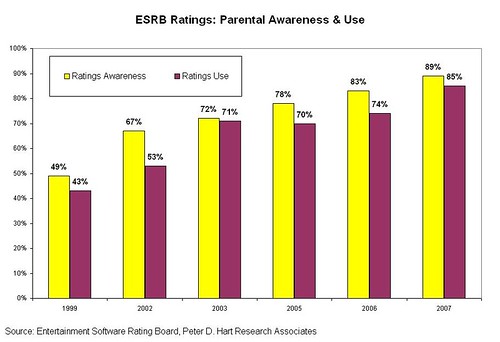
Better yet, all gaming platforms and most PCs can read these ratings and labels and allow parents to block games rated above a certain level they find unacceptable. But the real strength of the ESRB’s ratings system lies in the content descriptors, which give parents plenty of warning about what they will see or hear in each title. That way, parents can talk to their kids about those games or just not buy them for their kids until they think they are ready.
The game industry deserves credit not only for creating such an excellent content rating / labeling system, but also putting significant resources into public education / awareness efforts to ensure parents know how to take advantage of it. So then, why are lawmakers continuing to waste millions of taxpayer dollars litigating unneeded regulatory efforts?

 The Technology Liberation Front is the tech policy blog dedicated to keeping politicians' hands off the 'net and everything else related to technology.