 Regular readers know that I can get a little feisty when it comes to the topic of “regulatory capture,” which occurs when special interests co-opt policymakers or political bodies (regulatory agencies, in particular) to further their own ends. As I noted in my big compendium, “Regulatory Capture: What the Experts Have Found“:
While capture theory cannot explain all regulatory policies or developments, it does provide an explanation for the actions of political actors with dismaying regularity. Because regulatory capture theory conflicts mightily with romanticized notions of “independent” regulatory agencies or “scientific” bureaucracy, it often evokes a visceral reaction and a fair bit of denialism.
Indeed, the more I highlight the problem of regulatory capture and offer concrete examples of it in practice, the more push-back I get from true believers in the idea of “independent” agencies. Even if I can get them to admit that history offers countless examples of capture in action, and that a huge number of scholars of all persuasions have documented this problem, they will continue to persist that, WE CAN DO BETTER! and that it is just a matter of having THE RIGHT PEOPLE! who will TRY HARDER!
Well, maybe. But I am a realist and a believer in historical evidence. And the evidence shows, again and again, that when Congress (a) delegates broad, ambiguous authority to regulatory agencies, (b) exercises very limited oversight over that agency, and then, worse yet, (c) allows that agency’s budget to grow without any meaningful constraint, then the situation is ripe for abuse. Specifically, where unchecked power exists, interests will look to exploit it for their own ends.
In any event, all I can do is to continue to document the problem of regulatory capture in action and try to bring it to the attention of pundits and policymakers in the hope that we can start the push for
real agency oversight and reform. Today’s case in point comes from a field I have been covering here a lot over the past year: commercial drone innovation. Continue reading →
 I am pleased to announce the release of my latest book, “Permissionless Innovation: The Continuing Case for Comprehensive Technological Freedom.” It’s a short manifesto (just under 100 pages) that condenses — and attempts to make more accessible — arguments that I have developed in various law review articles, working papers, and blog posts over the past few years. I have two goals with this book.
First, I attempt to show how the central fault line in almost all modern technology policy debates revolves around “the permission question,” which asks:
Must the creators of new technologies seek the blessing of public officials before they develop and deploy their innovations? How that question is answered depends on the disposition one adopts toward new inventions. Two conflicting attitudes are evident.
One disposition is known as the “precautionary principle.” Generally speaking, it refers to the belief that new innovations should be curtailed or disallowed until their developers can prove that they will not cause any harms to individuals, groups, specific entities, cultural norms, or various existing laws, norms, or traditions.
The other vision can be labeled “permissionless innovation.” It refers to the notion that experimentation with new technologies and business models should generally be permitted by default. Unless a compelling case can be made that a new invention will bring serious harm to society, innovation should be allowed to continue unabated and problems, if they develop at all, can be addressed later.
I argue that we are witnessing a grand clash of visions between these two mindsets today in almost all major technology policy discussions today. Continue reading →
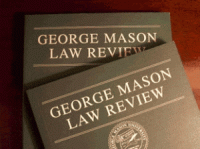 I’m pleased to announce the release of my latest law review article, “A Framework for Benefit-Cost Analysis in Digital Privacy Debates.” It appears in the new edition of the George Mason University Law Review. (Vol. 20, No. 4, Summer 2013)
This is the second of two complimentary law review articles I am releasing this year dealing with privacy policy. The first, “The Pursuit of Privacy in a World Where Information Control is Failing,” was published in Vol. 36 of the Harvard Journal of Law & Public Policy
this Spring. (FYI: Both articles focus on privacy claims made against private actors — namely, efforts to limit private data collection — and not on privacy rights against governments.)
My new article on benefit-cost analysis in privacy debates makes a seemingly contradictory argument: benefit-cost analysis (“BCA”) is extremely challenging in online child safety and digital privacy debates, yet it remains essential that analysts and policymakers attempt to conduct such reviews. While we will never be able to perfectly determine either the benefits or costs of online safety or privacy controls, the very act of conducting a regulatory impact analysis (“RIA”) will help us to better understand the trade-offs associated with various regulatory proposals. Continue reading →
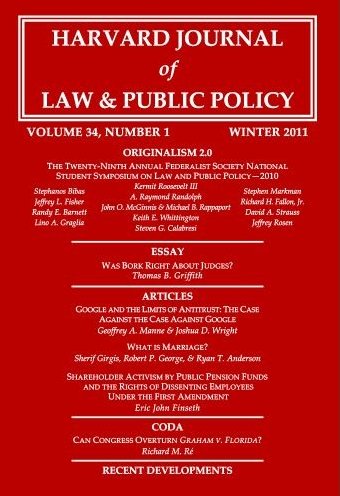
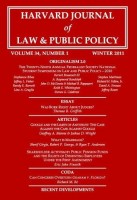 I’m excited to announce the release of my latest law review article, “The Pursuit of Privacy in a World Where Information Control is Failing,” which appears in the next edition (vol. 36) of the Harvard Journal of Law & Public Policy. This is the first of two complimentary law review articles that I will be releasing this year dealing with privacy policy. The second, which will be published later this summer by the George Mason University Law Review, is entitled, “A Framework for Benefit-Cost Analysis in Digital Privacy Debates.” (FYI: Both articles focus on privacy claims made against private actors — namely, efforts to limit private data collection — and not on privacy rights against governments.)
The new
Harvard Journal article is divided into three major sections. Part I focuses on some of normative challenges we face when discussing privacy and argues that there may never be a widely accepted, coherent legal standard for privacy rights or harms here in the United States. It also explores the tensions between expanded privacy regulation and online free speech. Part II turns to the many enforcement challenges that are often ignored when privacy policies are being proposed or formulated and argues that legislative and regulatory efforts aimed at protecting privacy must now be seen as an increasingly intractable information control problem. Most of the problems policymakers and average individuals face when it comes to controlling the flow of private information online are similar to the challenges they face when trying to control the free flow of digitalized bits in other information policy contexts, such as online safety, cybersecurity, and digital copyright.
If the effectiveness of law and regulation is limited by the normative considerations discussed in Part I and the practical enforcement complications discussed in Part II, what alternatives remain to assist privacy-sensitive individuals? I address that question in Part III of the paper and argue that the approach America has adopted to deal with concerns about objectionable online speech and child safety offers a path forward on the privacy front as well. Continue reading →
Adam raises some important questions below about the legislation introduced in Congress to ban silent cell phone cameras. Like many things Congress does, I wonder if the proposed solution might end up being worse than the perceived problem.
Is cell phone camera voyeurism actually a serious problem in the U.S.? Or is this just another problem being blown out of proportion by politicians? Some actual data on the incidence of camera phone “predation” would be useful in deciding whether digital voyeurism is a matter that demands Congress’s attention. The bill’s current language offers up only the vague statement, “Congress finds that children and adolescents have been exploited by photographs taken in dressing rooms and public places with the use of a camera phone.”
I also wonder why the legislation targets phones rather than silent compact cameras of all sorts. Ridding from the market all silent mobile phone cameras would just make bad guys switch to compact, silent cameras with memory cards. (That’s not to say that Congress should ban them, either).
There’s a case to be made that in some situations, it might actually be a good thing for people to have cell phones equipped with silent cameras. What about somebody who’s being assaulted, or mugged, or raped and wants to photograph their attacker but fears retaliation? Or someone who’s just witnessed a crime, unbeknownst to the perpretator, and is trying to get a snapshot of the fleeing suspect? Or a whistleblower who wants to collect evidence of illicit activity by snapping covert photos?
To be sure, these are all hypothetical, unlikely scenarios. But for all we know, incidents involving “cell phone predators” are just as unlikely. And the person with the “good” use for their silent cell phone camera is much more likely to be impacted by a ban, because the bad guys will just skirt the law by hacking their phones or buying regular cameras.
I’m intrigued by this new bill that Rep. Peter King has introduced to prevent video voyeurism. H.R. 414, the “Camera Phone Predator Alert Act” finds that “children and adolescents have been exploited by photographs taken in dressing rooms and public places with the use of a camera phone.” To remedy this problem, King’s “Phone Predator Alert” bill would require that:
any mobile phone containing a digital camera that is manufactured for sale in the United States shall sound a tone or other sound audible within a reasonable radius of the phone whenever a photograph is taken with the camera in such phone. A mobile phone manufactured after such date shall not be equipped with a means of disabling or silencing such tone or sound.
In other words, cameras would have to get noisy again! Old timers will recall the days when our cameras were noisier than a box of rocks. Today’s digital cameras and camera phones, by contrast, are increasingly silent, but that also opens up the door to potential abuse by some creeps out there. While I don’t believe there’s evidence pointing to a national epidemic of digital voyeurism, there’s no doubt that some people — including many youngsters — are having their privacy invaded in this fashion.
I find King’s solution at once to be both ingenious and futile. It’s ingenious in that, if we could truly force it upon everyone, it might actually go along way towards solving this problem. The noisy camera would again act as the prime deterrent to such an act.
Continue reading →


 The Technology Liberation Front is the tech policy blog dedicated to keeping politicians' hands off the 'net and everything else related to technology.