Today the Federal Trade Commission released a new report entitled, “Mobile Apps for Kids: Current Privacy Disclosures Are Disappointing,” which concludes that “confusing and hard-to-find disclosures do not give parents the control that they need in this area. The FTC argues that “parents need consistent, easily accessible, and recognizable disclosures regarding in-app purchase capabilities so that they can make informed decisions about whether to allow their children to use apps with such capabilities.”
It’s hard to be against the FTC’s “the more disclosure, the better” policy recommendation and I’m not about to come out against it here. But the question is:
how much disclosure is enough? Reading through the report and seeing how hard the FTC hammers this point home makes me think the agency wants our app store checkout process to be littered with the pages of fine print disclosure policies that now accompany our credit card statements and home mortgage payments! Seriously, would that make us better off?
As a parent of two kids who both download countless apps on my Android phone, my wife’s iPhone, and our family’s Android tablet, I appreciate a certain amount of disclosure about what sort of information apps are collecting and how they are using it. I think Google’s Android marketplace strikes a nice balance here, providing us with the most crucial facts about what the application will access or share. Apple could do more on disclosure but the company also prides itself (to the dismay of some!) on its rigorous pre-screening process to make sure the apps in the App Store are safe and don’t violate certain privacy and security policies. Yet, as the FTC correctly points out, “the details of this screening process are not clear.” Of course, most Apple users simply don’t give a damn. They’re all too happy to let Apple just take care of it for them even if they’re not really sure what’s happening to their data behind the scenes. The more privacy-sensitive crowd wants greater disclosure and control, of course, and I’m sympathetic to that plea. But again, how much disclosure is enough? Are you going to wade through pages of disclosure policies and privacy opt-ins before downloading that latest iteration of “Angry Birds” or “Cut the Rope”? Yeah, I didn’t think so.
Anyway, I don’t want to dwell on that. The more interested findings in the survey relate to price and market dynamics and I am hoping people don’t ignore them. Continue reading →
Two data points in the news over the past 24 hours to consider:
- A new report on “Smartphone Adoption & Usage” by the Pew Internet Project finds that “one third of American adults – 35% – own smartphones” and that of that group “some 87% of smartphone owners access the Internet or email on their handheld” and “25% of smartphone owners say that they mostly go online using their phone, rather than with a computer.”
- According to the Wall Street Journal, the “Average iPhone Owner Will Download 83 Apps This Year.” That’s up from an average of 51 apps downloaded in 2010. (At first I was astonished when I read that, but then realized that I’ve probably downloaded an equal number of apps myself, albeit on an Android-based device.)
As I explain in my latest
Forbes column, facts like these help us understand “How iPhones And Androids Ushered In A Smartphone Pricing Revolution.” That is, major wireless carriers are in the process of migrating from flat-rate, “all-you-can-eat” wireless data plans to usage-based plans. The reason is simple economics: data demand is exploding faster than data supply can keep up.
“It’s been four years since the introduction of the iPhone and rival devices that run Google’s Android software,” notes Cecilia Kang of The Washington Post. “In that time, the devices have turned much of America into an always-on, Internet-on-the-go society.” Indeed, but it’s not just the iPhone and Android smartphones. It’s all those tablets that have just come online over the past year, too. We are witnessing a tectonic shift in how humans consume media and information, and we are witnessing this revolution unfold over a very short time frame. Continue reading →
 In my work critiquing the Lessig-Zittrain-Wu school of thinking–which fears the decline and fall of online “openness” and digital “generativity”–I have argued that, while there is no such thing as perfect “openness,” things are actually getting more open and generative all the time. All that really counts from my perspective is that we are witnessing healthy innovation across the generativity continuum.
Will some devices and platforms continue to be “closed”? Sure. Think Apple and cable set-top boxes. But (a) there’s a ton of innovation taking place on top of those supposedly “closed” platforms and (b) there are other options consumers can exercise if they don’t like those content /information delivery methods. [See this chapter from the Next Digital Decade book for my fuller critique.]
And, even if one adopts a rigid Zittrainian view of openness and generativity, each day seems to bring more good news. From that perspective it’s hard to find a better headline than this one: ”
Smartphone Makers Bow to Demands for More Openness.” That’s from ArsTechnica today and it refers to the fact that smartphone giant HTC just announced it would no longer attempt to lock the bootloader on its smartphones, meaning geeks like me can root and hack their devices to their heart’s content. As the Ars story notes:
Continue reading →
Every once an awhile I like to post something about my favorite tech toys, apps, and services to highlight what I think are spectacular innovations in the field. I usually do so at the end of the year, like this. But I there’s no reason to wait for end of the year lists. So here are a few things that are currently making my life better. [Note to pesky FTC before they send the Blog Police to my door… I didn’t get paid for any of these “endorsements”!]
http://www.youtube.com/v/yajmD_Xtfno&rel=0&color1=0xb1b1b1&color2=0xd0d0d0&hl=en_US&feature=player_embedded&fs=1
NewsRoom RSS Reader: After months of searching fruitlessly for a decent RSS reader for Android, I finally stumbled upon NewsRoom last month. Wow, what a life-changer. It has become my primary RSS reader largely taking over for Bloglines on my PC (which is an app desperately in need of a makeover). NewsRoom’s slick interface is the most friendly finger-swiping app I’ve ever touched. I can quickly flip (left and right) through headlines for each feed and then easily pull up full text of any particular post with a quick flip of the thumb up. The only downside is the limited number of feeds you can have on the main pages. But that actually helped me go back and sort through my feeds to determine which ones I needed to be reading on a daily basis vs those that I can just monitor every couple days or weekly via my PC. I love this app.
TweetDeck (v.34): I have no idea how the folks at TweetDeck make any money, but they produce one the most spectacular pieces of freeware on the planet. It makes Twittering a real joy by making it a cinch to follow multiple hashtag topics in addition to your primary friends and mentions. And reTweeting is super simple. And version 32 just raises the bar even higher with new features like scheduled Tweets, maps, Buzz and Foresquare integration, and much more. I would gladly pay a few bucks a month for TweetDeck, but this amazing app remains free to the public. Apparently they are booking revenue, but I can’t figure out how. (Seriously, how do they do it?!) Regardless, keep up the great work guys… and hurry up and get the Android version out! I played with TweetDeck for the iPhone and it is outstanding. I’m pretty happy with TwiDroid, but I think I’d prefer TweetDeck for my Droid. Continue reading →
I’ve always generally agreed with the conventional wisdom about micropayments as a method of funding online content or services: Namely, they won’t work. Clay Shirky, Tim Lee, and many others have made the case that micropayments face numerous obstacles to widespread adoption. The primary issue seems to be the “mental transaction cost” problem: People don’t want to be diverted–even for just a few seconds–from what they are doing to pay a fee, no matter how small. [That is why advertising continues to be the primary monetization engine of the Internet and digital services.]
 That being said, I keep finding examples of how micropayments do work in some contexts and it has kept me wondering if there’s still a chance for micropayments to work in other contexts (like funding media content). For example, I mentioned here before how shocked I was when I went back and looked at my eBay transactions for the past couple of years and realized how many “small-dollar” purchases I had made via PayPal (mostly dumb stickers and other little trinkets). And the micropayment model also seems to be doing reasonably well in the online music world. In January 2009, Apple reported that the iTunes Music Store had sold over 6 billion tracks.
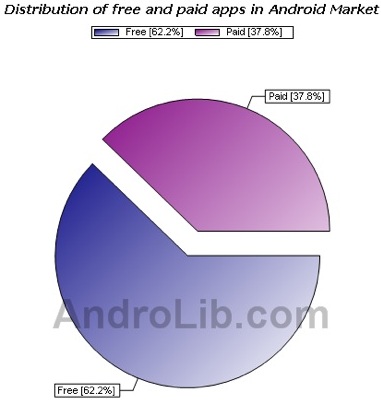
And then there are mobile application stores. Just recently I picked up a Droid and I’ve been taking advantage of the rapidly growing Android marketplace, which recently hit the 20,000 apps mark. Like Apple’s 100,000-strong App Store, there’s a nice mix of paid and free apps, and even though I’m downloading mostly freebies, I’ve started buying more paid apps. Many of them are “upsells” from free apps I downloaded. In most cases, they are just 99 cents. A few examples of paid apps I’ve downloaded or considered buying: Stocks Pro, Mortgage Calc Pro, Currency Guide, Photo Vault, Weather Bug Elite, and Find My Phone. And there are all sorts of games, clocks, calendars, ringtones, heath apps, sports stuff, utilities, and more that are 99 cents or $1.99. Some are more expensive, of course.
Continue reading →
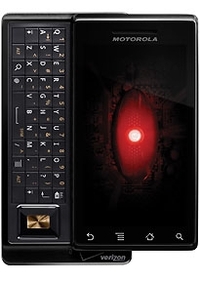 Seems like everywhere I turn someone is gushing about their new Droid phone, including my TLF colleagues Berin Szoka, Braden Cox, and Ryan Radia, who all had great fun rubbing their new toys in my nose over the past couple of days. And why not, it’s a very cool little device. It makes my HTC Touch seems positively archaic in some ways, and it’s only a year old. Apparently, 100,000 people already picked up a Droid in just its first weekend on the market.
But here’s the first thing that pops in my mind every time I see someone showing off their new Droid: How can a device like this even exist when America’s leading cyberlaw experts have been telling us that the whole digital world is increasingly going to hell because of “closed” devices, proprietary code, and managed networks? I’m speaking, of course, about the lamentations of Harvard professors Lawrence Lessig, Jonathan Zittrain, and their many disciples. As faithful readers will recall, I have relentlessly hammered this crew for their unwarranted cyber-Chicken Little-ism and hyper techno-pessimism. (See my many battles with Zittrain [1, 2, 3, 4, 5, 6 + video] and my 2-part debate with Lessig earlier this year).
“Left to itself,” Lessig warned in Code, “cyberspace will become a perfect tool of control.” He went on to forecast a dystopian future in which nefarious corporate schemers would quash our digital liberties unless benevolent public philosopher kings stepped in to save our poor souls. Code was the Old Testament of cyber-collectivism. The New Testament arrived last year with Zittrain’s
The Future of the Internet and How to Stop It. In it, we hear the grim prediction that “sterile and tethered” digital technologies and networks will triumph over the more “open and generative” devices and systems of the past. The iPhone and TiVo are cast as villains in Zittrain’s drama since they apparently represent the latest manifestations of Lessig’s “perfect control” paranoia.
Apple’s “Angel of Death”
How completely out-of-control has this thinking gotten? Well, here’s David Weinberger — another Harvard Berkman Center worrywart — talking about that supposed satanic font of all evil, the Apple AppStore: Continue reading →
by Berin Szoka & Adam Thierer, Progress Snapshot 5.11 (PDF)
Ten years ago, Nobel Prize-winning economist Milton Friedman lamented the “Business Community’s Suicidal Impulse:” the persistent propensity to persecute one’s competitors through regulation or the threat thereof. Friedman asked: “Is it really in the self-interest of Silicon Valley to set the government on Microsoft?” After yesterday’s FCC vote’s to open a formal “Net Neutrality” rule-making, we must ask whether the high-tech industry—or consumers—will benefit from inviting government regulation of the Internet under the mantra of “neutrality.”
The hatred directed at Microsoft in the 1990s has more recently been focused on the industry that has brought broadband to Americans’ homes (Internet Service Providers) and the company that has done more than any other to make the web useful (Google). Both have been attacked for exercising supposed “gatekeeper” control over the Internet in one fashion or another. They are now turning their guns on each other—the first strikes in what threatens to become an all-out, thermonuclear war in the tech industry over increasingly broad neutrality mandates. Unless we find a way to achieve “Digital Détente,” the consequences of this increasing regulatory brinkmanship will be “mutually assured destruction” (MAD) for industry and consumers.
New Fronts in the Neutrality Wars
The FCC’s proposed rules would apply to all broadband providers, including wireless, but not to Google or many other players operating in other layers of the Net who favor such broadband-specific rules. With this rulemaking looming, AT&T came after Google with letters to the FCC in late September and then another last week accusing the company of violating neutrality principles in their business practices and arguing that any neutrality rules that apply to ISPs should apply equally to Google’s panoply of popular services. In particular, AT&T accused Google of “search engine bias,” suggesting that only government-enforced neutrality mandates could protect consumers from Google’s supposed “monopolist” control.
The promise made yesterday by the FCC—to only apply neutrality principles to the infrastructure layer of the Net—is hollow and will ultimately prove unenforceable. Continue reading →
The smell of high-tech regulation is increasingly in the air these days and many lawmakers and some activist groups now have the mobile marketplace in their regulatory cross-hairs. Critics make a variety of claims about the wireless market supposedly lacking competition, choice, innovation, or reasonable pricing. Consequently, they want to wrap America’s wireless sector in a sea of red tape. Two important new studies thoroughly debunk these assertions and set the record straight regarding the state of wireless competition and innovation in the U.S. today. These reports are must-reading for Washington policymakers and FCC officials who are currently contemplating regulatory action.
First, Gerald Faulhaber and Dave Farber have a new report out entitled “Innovation in the Wireless Ecosystem: A Customer-Centric Framework.” Here’s what Faulhaber and Farber find:
the three segments of the wireless marketplace (applications, devices, and core network) have exhibited very substantial innovation and investment since its inception. Perhaps more interesting, innovation in each segment is highly dependent upon innovation in the other segments. For example, new applications depend upon both advances in device hardware capabilities and advances in spectral efficiency of the core network to provide the network capacity to serve those applications. Further, we find that the three segments of the industry are also highly competitive. There are many players in each segment, each of which aggressively seeks out customers through new technology and new business methods. The results of this competition are manifest: (i) firms are driven to innovate and invest in order to win in the competitive marketplace; (ii) new business models have emerged that give customers more choice; and (iii) firms have opened new areas such as wireless broadband and laptop wireless in order to expand their strategic options.
They continue on to address the policy issues in play here and discuss the “consumer-centric” approach they recommend that the FCC adopt: Continue reading →
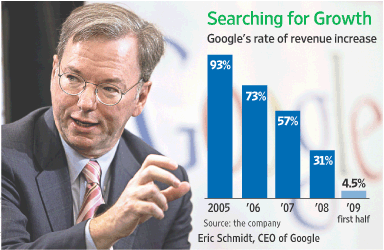 The Google juggernaut’s revenue growth has slowed steadily in the last five years, causing the Wall Street Journal to caution investors about buying Google stock. While much of the slow-down in Google’s revenue may be attributed to the recession, the WSJ cautions that:
- Microsoft is offering stiffer competition in search, which will only intensify once antitrust regulators approve its partnership with Yahoo! and the two companies actually implement their partnership (which could take another year);
- YouTube’s promise as an ad platform remains uncertain;
- Google lags behind Apple and Research in Motion in developing mobile phone operating systems, with Android still unproven;
- It remains unclear how successful the company will be in expanding beyond its existing lead in small text ads into the potentially lucrative realm of banner ads.
Somehow I doubt Google’s fall to Earth will do much to allay the concerns of those who see Google as the kind of evil monopolist Microsoft was made out to be in the 90s.
As the Journal concludes, “It would be foolish to predict that Google won’t have another business success, of course… Google may itself discover the next Google-like business.” As long as someone’s out there working to turn today’s idle fantasies into tomorrow’s multi-billion dollar businesses, consumers win—whoever that bold innovator might be.
Seems like every week the tech rumor mills unveil some new smartphone that’s supposedly going to give the iPhone a run for its money. Over the past couple years, dozens of advanced handsets have been released with much fanfare — the LG Voyager, Palm Pre, Blackberry Storm, Samsung Omnia, to name a few — but time and time again, we end up with a device that can’t hold a candle to the iPhone’s amazing browser, massive app store, and sleek multi-touch interface.
But all this could change later this year. A number of handsets are due for release on several major networks over the next few months that run on Android, Google’s open source mobile operating system. Android is currently available on only a single device, the HTC G1. It’s a decent phone, but it lacks the polish of the iPhone and is only available with a contract from T-Mobile, which lags behind Sprint, AT&T, and Verizon in terms of 3G coverage.
I’m especially excited about the Android 2.0-based Motorola “Sholes,” a great-looking phone that’s supposedly due for release in November 2009 from Verizon. If rumors pan out, the Sholes should come with a slide-out keyboard, an extremely high-res display, a 5MP camera, and all-around solid specs. Via Android and Me:
Continue reading →

 The Technology Liberation Front is the tech policy blog dedicated to keeping politicians' hands off the 'net and everything else related to technology.