Wired Magazine editor Chris Anderson has an important new book out, “Free: The Future of a Radical Price.” He focuses on the economics of free services, building on the excellent analysis of thinkers like Mike Masnick (whose 2007 essay, “The Grand Unified Theory on The Economics of Free,” succinctly sums up the concept).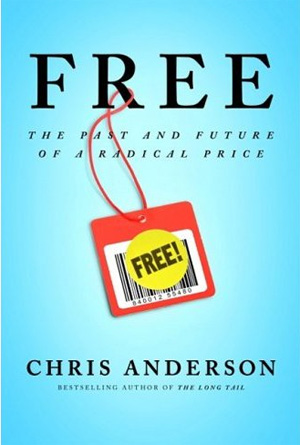
Following up on his book, Anderson has a new op-ed up on CNN.com in which he explores how the emergence of free services in the digital age has raised new challenges for antitrust regulators:
Now Google has Microsoft-like dominance in search and search advertising. What should it not be allowed to do? That question may come to define this era of antitrust law. When [Christine] Varney was confirmed, she withdrew the Bush administration’s report setting relatively conservative standards of antitrust enforcement and declared, “The Antitrust Division will be aggressively pursuing cases where monopolists try to use their dominance in the marketplace to stifle competition and harm consumers…
Varney and her team of economists and lawyers are no doubt tangling with the question of how to enforce antitrust laws in a way that ensures an “even” playing field for competition without causing consumers to lose access to free services that are growing more abundant by the day.
But there’s a more important question that Varney should be asking: what actually constitutes market dominance in the age of free? Is the fact that a firm has a substantial share of a distinct marketplace a reliable indicator of dominance? And if the result of firms achieving high market share is an explosion of free goods and services, is it even in consumers’ interests for government to go after “dominant” firms?

 The Technology Liberation Front is the tech policy blog dedicated to keeping politicians' hands off the 'net and everything else related to technology.