The D.C. Circuit has struck down as arbitrary and capricious the FCC’s “cable cap.” The cap prevented a single cable operator from serving more than 30% of U.S. homes—precisely the same percentage limit struck down by the court in 2001. The court ruled that the FCC had failed to demonstrate that “allowing a cable operator to serve more than 30% of all cable subscribers would threaten to reduce either competition or diversity in programming.”
The court’s decision rested on the two critical charts (both generated by my PFF colleague Adam Thierer in his excellent Media Metrics special report) at the heart of the PFF amicus brief I wrote with our president, Ken Ferree:
First, the record is replete with evidence of ever increasing competition among video providers: Satellite and fiber optic video providers have entered the market and grown in market share since the Congress passed the 1992 Act, and particularly in recent years. Cable operators, therefore, no longer have the bottleneck power over programming that concerned the Congress in 1992.
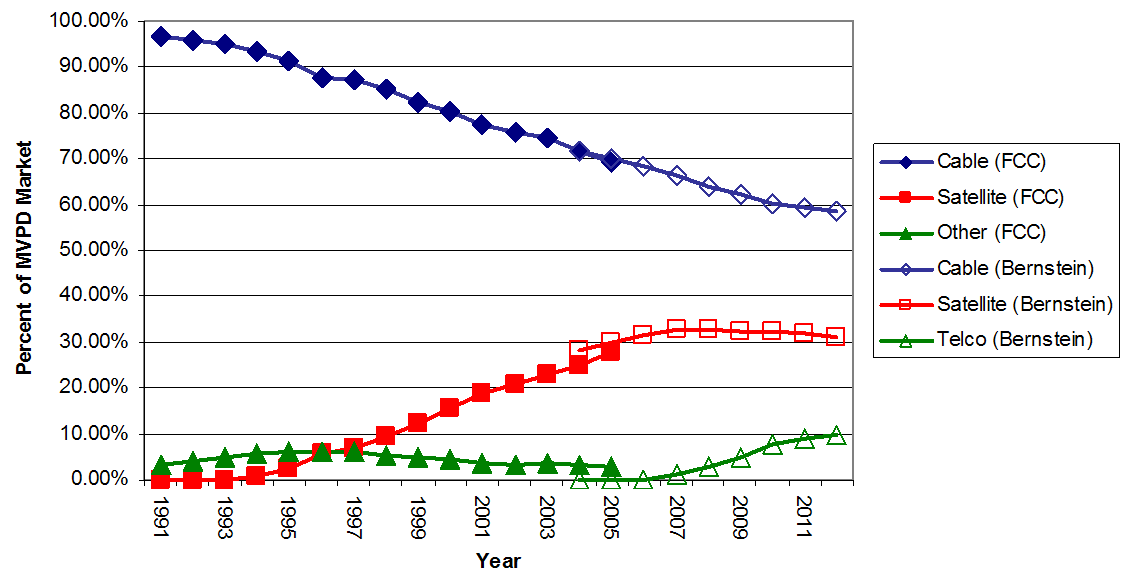
Second, over the same period there has been a dramatic increase both in the number of cable networks and in the programming available to subscribers.
Our chart shows the explosion in the number of programmers (though not the total amount of programming), as well as the falling rate of affiliation between cable operators and programmers, which was among the prime factors motivating Congress when it authorized a cable cap in the 1992 Cable Act:
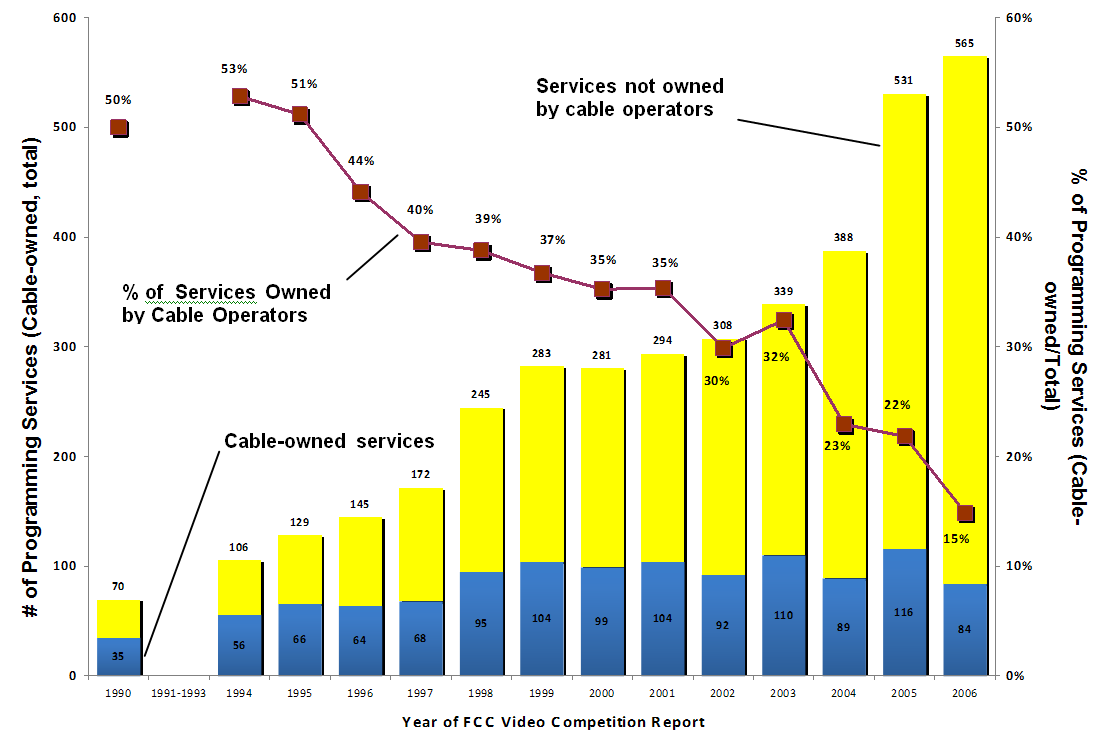
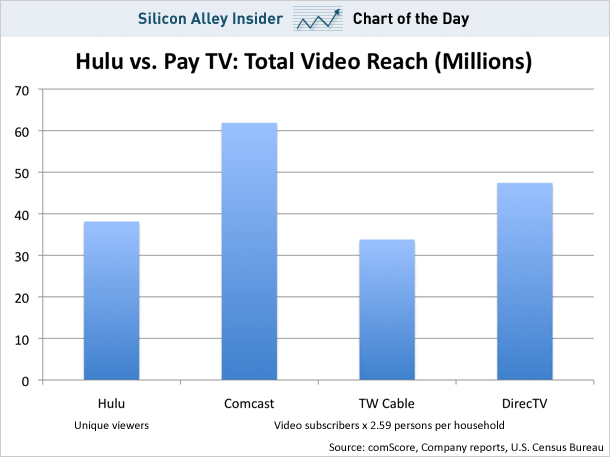
These two charts show how much less defensible the FCC’s 30% cap is now than it was back in 2001. If the Court had needed still more evidence, it could have cited the broader trend towards “Cutting the Video Cord.” As we explained in our amicus brief, viewers are shifting away from cable, satellite and fiber (“Multichannel Video Programming Distributors,” in FCC-speak) towards sites like Hulu and Netflix (which we dubbed “Internet Video Programming Distributors” in the hopes that a familiar-sounding acronym might resonate inside a regulatory agency that can’t even figure out how to stream its own meetings properly). Nothing better demonstrates how the Internet is revolutionizing video distribution than the fact that Hulu.com has actually overtaken TimeWarner cable in viewership:


 The Technology Liberation Front is the tech policy blog dedicated to keeping politicians' hands off the 'net and everything else related to technology.