In several of our previous podcasts (see episodes 34, 35,and 37), we’ve discussed what we’ve called the “Comcast Kerfuffle,” which was the controversy surrounding the steps Comcast took to manage BitTorrent traffic on its networks. Critics called it a violation of Net neutrality principles while Comcast and others called it sensible network management.
This week we saw a new kerfuffle of sorts develop over the revelation in a Monday front-page Wall Street Journal story that Google had approached major cable and phone companies and supposedly proposed to create a fast lane for its own content. What exactly is it that Google is proposing, and does it mean – as the Wall Street Journal and some others have suggested – that Google is somehow going back on their support for Net neutrality principles and regulation? More importantly, what does it all mean for the future of the Internet, network management, and consumers. That’s what we discussed on the TLF’s latest “Tech Policy Weekly” podcast.
Today’s 30-minute discussion featured two of our regular contributors at the TLF, who both wrote about this issue multiple times this week.
Cord Blomquist of the Competitive Enterprise Institute wrote about the issue here and here, and Bret Swanson of the Progress & Freedom Foundation wrote about it here and here. To help us wade through some of the more technical networking issues in play, we were also joined on the podcast by Richard Bennett, a computer scientist and network engineer guru who blogs at Broadband Politics as well as Circle ID and he also pens occasional columns for The Register. Also appearing on the show was Adam Marcus, Research Fellow & Senior Technologist at PFF, who wrote a “nuts and bolts” essay full of excellent technical background on edge caching and net neutrality.
You can download the MP3 file here, or use the online player below to start listening to the show right now.
[display_podcast]
The introduction below was originally written by Adam Thierer, but now that I (Adam Marcus) am a full-fledged TLF member, I have taken authorship.
My PFF colleague Bret Swanson had a nice post here yesterday talking about the evolution of the debate over edge caching and network management (“Bandwidth, Storewidth, and Net Neutrality“), but I also wanted to draw your attention to related essay by another PFF colleague of mine. Adam Marcus, who serves as a Research Fellow and Senior Technologist at PFF, has started a wonderful series of “Nuts & Bolts” essays meant to “provide a solid technical foundation for the policy debates that new technologies often trigger.” His latest essay is on Network neutrality and edge caching, which has been the topic of heated discussion since the Wall Street Journal’s front-page story on Monday that Google had approached major cable and phone companies and supposedly proposed to create a fast lane for its own content.
Anyway, Adam Marcus gave me permission to reprint the article in its entirety down below. I hope you find this background information useful.
Nuts and Bolts: Network neutrality and edge caching
by Adam Marcus, Progress & Freedom Foundation
December 17, 2008
This is the second in a series of articles about Internet technologies. The first article was about web cookies. This article explains the network neutrality debate. The goal of this series is to provide a solid technical foundation for the policy debates that new technologies often trigger. No prior knowledge of the technologies involved is assumed.
To understand the network neutrality debate, you must first understand bandwidth and latency. There are lots of analogies equating the Internet to roadways, but it’s because the analogies are quite instructive. For example, if one or two people need to travel across town, a fast sports car is probably the fastest method. But if 50 people need to travel across town, it may require 25 trips in a single sports car. So a bus which can transport all 50 people in a single trip may be “faster” overall. The sports car is faster, but the bus has more capacity. Bandwidth is a measure of capacity, of how much data can be transmitted in a fixed period of time. It is usually measured in Megabits per second (Mbps). Latency is a measure of speed, of the time it takes a single packet data to travel between two points. It is usually measured in milliseconds. The “speeds” that ISPs advertise have nothing to do with latency; they’re actually referring to bandwidth. ISPs don’t advertise latency because its different for each different site you’re trying to reach.
Continue reading →
Over just the past 24 hours, there’s been quite a hullabaloo surrounding the Wall Street Journal’s controversial front-page story on Google’s edge caching plan and whether it violates Net neutrality. (See Cord’s post and Bret’s). Lessig calls it a “made-up drama“, David Isenberg says it’s “bogus” and “bullshit,” and Google’s Rick Whitt has said it’s much ado about nothing.
Regardless, here’s the important thing not to overlook about this episode: It is a prime example of the what Tim Lee has referred to as “the fundamental problem of backlash” that ensues whenever there is even
a hint of a potential violation of network neutrality (however one defines it). As Tim argued in his excellent Cato paper on Net neutrality, “No widespread manipulation would go unnoticed for very long,” and a “firestorm of controversy would… be unleashed if a major network owner embarked on a systematic campaign of censorship on its network.” (p. 23). Indeed, this (non-)story about Google’s edge-caching plans have spawned an intense “firestorm of controversy” over the past 24 hours and it doesn’t even involve serious network meddling or censorship! I’ve been trying to keep up with all the traffic about this on TechMeme and Google News during that time, but I have given up trying to digest it all. (Take a look at those snapshots I pasted down below to get a feel for the volume we are talking about here).
In that regard, I love this quote from the always-bloodthirsty Tim Karr of the (inappropriately-named) regulatory activist group Free Press:
If Google or any other tech company were secretly violating Net Neutrality, there would be an absolute and cataclysmic backlash from the grassroots and netroots who have made Net Neutrality a signature issue in 21st Century politics. The Internet community would come crashing down on their heads like Minutemen on Benedict Arnold.
Indeed, that’s exactly what we saw today. But it wasn’t just pro-regulatory fanatics like Free Press. The entire tech and business blogoshere and even some of the mainstream media were on top of this. That’s the “fundamental problem of backlash” at work, and with a vengeance.


In an essay I posted here back in October called “Cutting the (Video) Cord: The Shift to Online Video Continues” (part of an ongoing series), I reflected on an interesting piece by the Wall Street Journal’s Nick Wingfield’s entitled “Turn On, Tune Out, Click Here.” Wingfield’s article illustrated how rapidly the online video marketplace is growing and noted that so many shows are now available online that many people are cutting the cord entirely by canceling their cable or satellite subscriptions and just downloading everything they want to watch via sites like Hulu and supplmenting that with services like Netflix. In today’s Washington Post, Mike Musgrove writes about these same trends and developments in a column entitled, “TV Breaks Out of the Box.” Musgrove notes:
This has been a big year for both Netflix and online video services like Hulu.com, where people can watch episodes of popular shows such as “The Office” for free, though users do have to sit through a few commercials. When Tina Fey debuted her impression of Sarah Palin on “Saturday Night Live” last month, more people watched the comedy sketch online at NBC.com or Hulu.com than during the show’s broadcast. Last week, YouTube announced that it would start carrying old TV shows and movies from the film studio MGM.
As for Netflix, it seems that somebody there has been busy this year. While most customers still use the online video rental site mainly for movie deliveries by mail, the company now has a library of online content available for viewing on your TV through a variety of devices. A $99 appliance from Roku that plugs into your TV set and connects to the Web has been popular among some folks dropping their cable subscriptions. A couple of new, Web-connected Blu-ray players from Samsung and LG Electronics also allow Netflix subscribers to instantly watch titles from the company’s online collection.
Musgrove continues and notes that it’s about more than just Hulu and Netflix:
Continue reading →
In a City Journal article earlier this year, I wondered “how long some local papers have left when they are barred from restructuring their businesses or partnering with other local media operators to stem the bleeding and reinvent their business models.” I was responding to the Senate’s smack-down of a half-hearted reform effort that FCC chairman Kevin Martin pushed through in November 2007, which proposed relaxing the FCC’s newspaper/broadcast cross-ownership rule. That rule, unrevised since going into effect in 1975, prohibits a newspaper operator from also owning a radio or television station in the same media market. However, waivers were granted to grandfather in some combined newspaper and broadcast operations that had existed long before the ban took effect. Martin’s proposal was to simply tweak the rule to permit similar combinations in just the nation’s 20 largest media markets.
Martin’s limited liberalization proposal, however, led to howls of disapproval from FCC democrats like Michael Copps and many folks on both side of the aisle in Congress. Supposedly, this was nothing more than a “giveaway” to the newspaper industry, which critics said was doing just fine. It really makes you wonder if any of those critics even both reading the news about newspapers today.
As I have documented here on many occasions, as well as in my big Media Metrics report, the newspaper industry is in huge trouble with every financial variable of importance rapidly heading south. Alan Mutter does a good job here of summarizing “the secular forces dragging down newspapers: Declining readership, shrinking advertising, high fixed costs and growing online competition that makes it increasingly difficult to charge the premium ad rates that were possible prior to the Internet.” As a result of these forces, everyday brings another headline like this one today in the New York Times: “The Star-Ledger of Newark Plans 40% Cut,” or this one in the Wall Street Journal: “Some Newspapers Shed Unprofitable Readers.” The numbers are just miserable, and they just get worse and worse.
Continue reading →
It is a difficult thing for me to say, but I am man enough to do it: I must congratulate our intellectual opponents on their amazing victory in the battle to impose Net neutrality regulations on the Internet. With the Wall Street Journal reporting last night that the FCC is on the verge of acting against Comcast based on the agency’s amorphous Net neutrality principles, it is now clear that the folks at the Free Press, Public Knowledge, and the many other advocates of comprehensive Internet regulation have succeeded in convincing a Republican-led FCC to get on the books what is, in essence, the nation’s first Net Neutrality law. It is quite an accomplishment when you think about it.
Even though, as Jerry Brito has noted, “the FCC has no authority to enforce a non-binding policy statement,” it is clear that is not about to stop the activist-minded FCC Chairman Kevin Martin or his allies on the Left from advancing the cause of arbitrary, bureaucratic governance of the Internet. And that means the “Hands Off the Net” era will gradually start giving way to the “Hands All Over the Net” era. As I told Bob Fernandez of the Philadelphia Inquirer when he called to interview me for a story about these developments:
“This is the foot in the door for big government to regulate the Internet,” […] “This is the beginning of a serious regulatory regime. For the first time, the FCC is making law around net neutrality.”
And now that they have that foot in the door, I fully expect that it will be exploited for everything it’s worth to grow the scope of the FCC’s coercive bureaucratic authority over all things digital. The Left is salivating at the prospect of imposing their top-down vision of forced egalitarianism on the the Net, while the Right is figuring out how quickly they can exploit this to impose speech controls on anything they don’t want the public to see or hear.
It is a historic moment in the history of communications and media regulation, and freedom has lost—miserably. The tentacles of the regulatory Leviathan have grown infinitely longer and a little bit more of the Net’s freedom died today. And, again, what’s most amazing about this is that we have a Republican FCC to thank for that. So much for the GOP being for smaller government.
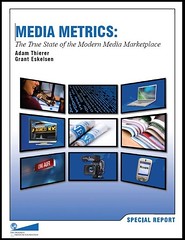 Faithful readers will recall that, several months ago, I penned a 7-part “Media Metrics” series that took a hard look at the health of the media marketplace. Today, the Progress & Freedom Foundation is releasing a greatly expanded version of these essays that I have put together with my PFF colleague Grant Eskelsen. In this 100-page special report, “Media Metrics: The True State of the Modern Media Marketplace,” we begin by noting that heated debates about the state of the media marketplace continue to rage in Washington, and opinions seem to range from grim to outright apocalyptic. As we note on pg. 1:
Many people—including a large number of legislators and regulators—argue that America’s media marketplace is in a miserable state. Some claim that citizens lack choice in media outlets and that options are just as scarce as ever. Others believe that media “localism” is dead or that many groups or niches go underserved because of a lack of true “diversity” in media. Others argue that the market is hopelessly over-concentrated in the hands of a few evil media barons who are hell-bent on force-feeding us corporate propaganda. And still others say that the quality of news and entertainment in our society has deteriorated because of a combination of all of the above. It all sounds quite troubling, but is any of it true?
After taking an objective look at the true state of America’s media marketplace, we conclude that such pessimism is unwarranted. Indeed, a careful review of the facts reveals that—contrary to what those media critics suggest—we have more media choice, more media competition, and more media diversity than ever before. Indeed, to the extent there was ever a “golden age” of media in America, we are living in it today. The media sky has never been brighter and it is getting brighter with each passing year.
Continue reading →

 The Technology Liberation Front is the tech policy blog dedicated to keeping politicians' hands off the 'net and everything else related to technology.