The war among the states to see who can lavish the film industry with more generous tax credits in their attempt to become “the next Hollywood” continues, and it is quickly descending into a classic race to the bottom. A front-page article in today’s Wall Street Journal notes that the tax incentive bidding war has gotten so intense that it is hollowing out the old Hollywood labor pool and sending it on a road trip across the America in search of tax-induced job activity:
As film and TV production scatters around the country, more workers… are packing up from California and moving to where the jobs are. Driving this exodus of lower-wage workers — stunt doubles, makeup artists, production assistants and others who keep movie sets humming — are successful efforts by a host of states to use tax incentives to poach production business from California. […]
Only two movies with production budgets higher than $100 million filmed in Los Angeles in 2013, according to Film L.A. Inc., the city’s movie office. In 1997, the year “Titanic” was released, every big-budget film but one filmed at least partially in the city. The number of feature-film production days in Los Angeles peaked in 1996 and fell by 50% through last year, according to Film L.A. Projects such as reality television and student films have picked up some of the slack. But overall entertainment-industry employment has slid. About 120,000 Californians worked in the industry in 2012, down from 136,000 in 2004, according to the U.S. Bureau of Labor Statistics.
The labor migration has arisen in part because California hasn’t competed aggressively on the tax-break front, officials and executives say, while states like Georgia have made efforts to grab a sizable chunk of the industry. More than 40 states and 30 foreign countries are offering increasingly generous and creative tax incentives to lure entertainment producers.
On one hand, hooray for labor mobility! But seriously, this stinks because this labor shift is taking place in a wholly unnatural way, with a complex and growing web of tax inducements leading to massive distortions in this marketplace. Continue reading →
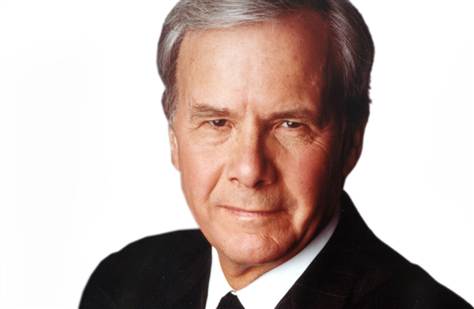
 I think I owe Tom Brokaw an apology. When I first started reading his most recent Wall Street Journal column, “Imagine the Tweets During the Cuban Missile Crisis,” I assumed that I was in for one of those hyper-nosalgic essays about how the ‘good ‘ol days’ of mass media had passed us by and why the new media era is an unmitigated disaster. Instead, I was pleased to read his very balanced and sensible view of the old versus news media environments. Reflecting on the evolution of the media marketplace over the past 50 years since JFK’s assassination, Brokaw notes that:
The media climate has changed dramatically. The New Frontier, as Kennedy liked to call his administration, received a great deal of attention, but 50 years ago the major national information sources consisted of a handful of big-city daily newspapers, a few weekly news periodicals and two dominant TV network evening newscasts. Now the political news comes at us 24/7 on cable, through the air, the digital universe, on radio and print. And it comes to us more and more as opinion rather than a recitation of the facts as best they can be determined. News is a hit-and-run game, for the most part, with too little accountability for error.
This leads Brokaw to wonder if the amazing media metamorphosis has been, on net, positive or negative. “The virtual town square has been wired and expanded,” he notes, “but the question remains whether more voices make for a healthier political climate. With a keystroke we can easily move from an online credible source of information to a website larded with opinion or deliberately malicious erroneous claims. Have we simply enlarged the megaphone, cranked up the decibel level, and rallied the like-minded without regard to facts or consequences?” Continue reading →
As I noted in an addendum to my previous post, less than an hour after I posted an essay about how the District of Columbia’s subsidy deal with LivingSocial was potentially set to unravel, I received a call from two representatives of the D.C. Mayor’s office asking me to clarify a few aspects of the deal. The tone and substance of the call was courteous and profession from the start and I told them I would be happy to post a quick update to my essay letting readers know of the points that they wanted stressed.
After I did so, however, I kept thinking how strange it was that I received such a quick response from the Mayor’s office about my little post. After all, I can’t imagine that the
Technology Liberation Front is on the top of their morning reading list! I just figured that someone in the Mayor’s office probably had a Google Alert set up that caught it. But then, as luck would have it, I was reading through the Wall Street Journal at lunch and came across a story entitled, “In D.C., Social-Media Surveillance Pays Off” by Sarah Portlock. She reports that:
The local government in the nation’s capital is paying hundreds of thousands of dollars to a startup to gather comments on Twitter, Facebook and other online message boards as well as the government’s own website. The data help form a letter grade for the bureaucracies that handle drivers licenses, building permits and the like. These social-media analytics services are already common for businesses such as restaurants and hotel chains that want to go beyond the comment cards most customers ignore. The D.C. experiment suggests governments are beginning to mirror the private sector in seeking real-time unvarnished feedback.
The D.C. government apparently has a 2-year $670,000 contract with newBrandAnalytics, Inc. to gather social media feedback and insights about the District. So, I figure that’s how the folks in the D.C. Mayor’s office stumbled upon my little rant. I had posted a link to my essay on both Twitter and Google+ and they probably got an immediate report back about it.
In any event, that got me wondering about how people are going to respond to this sort of “surveillance” of social media sites and activities by governments. Continue reading →
Psychologists Daniel Simons and Christopher Chabris had an interesting editorial in The Wall Street Journal this weekend asking, “Do Our Gadgets Really Threaten Planes?” They conducted an online survey of 492 American adults who have flown in the past year and found that “40% said they did not turn their phones off completely during takeoff and landing on their most recent flight; more than 7% left their phones on, with the Wi-Fi and cellular communications functions active. And 2% pulled a full Baldwin, actively using their phones when they weren’t supposed to.”
Despite the widespread prevalence of such law-breaking activity, planes aren’t falling from the sky and yet the Federal Aviation Administration continues to enforce the rule prohibiting the use of digital gadgets during certain times during flight. “Why has the regulation remained in force for so long despite the lack of solid evidence to support it?” Simons and Chabris ask. They note:
Human minds are notoriously overzealous “cause detectors.” When two events occur close in time, and one plausibly might have caused the other, we tend to assume it did. There is no reason to doubt the anecdotes told by airline personnel about glitches that have occurred on flights when they also have discovered someone illicitly using a device. But when thinking about these anecdotes, we don’t consider that glitches also occur in the absence of illicit gadget use. More important, we don’t consider how often gadgets have been in use when flights have been completed without a hitch. Our survey strongly suggests that there are multiple gadget violators on almost every flight.
That’s all certain true, but what actually motivated this ban — and has ensured its continuation despite a lack of evidence it is needed to diminish technological risk — is the precautionary principle. As the authors correct note: Continue reading →
In the wake of last week’s big SOPA showdown, a lot of people are talking about the expanded presence and power of the Internet, online operators, and digital Netizens in Washington policy debates. I certainly don’t mean to diminish the importance of this particular episode. It certainly is historic, regardless of how you feel about the specifics of SOPA. What does concern me, however, is the way this episode is prompting questions about how much more “engagement” Internet companies need to consider inside the Beltway. For example, today’s Wall Street Journal features an article on “The Web’s Growing Muscle” and notes:
The Internet industry has found a rare sweet spot in Washington. With Google in the lead, the companies have begun building a strong traditional lobbying force in Washington. And, to complement that inside game, websites’ millions of users have become a powerful outside weight on Congress. What’s more, in a rare Washington double play, the concerns of Internet companies have found a sympathetic ear both in the Democratic White House and among Republican presidential candidates who otherwise can’t agree with Barack Obama on anything.
The piece concludes with a quote from an anonymous media executive saying “People are looking at what Google spent on lobbying and wondering, ‘Can we match that?’ It has to be a big spend.”
I cannot possibly think of anything more demoralizing than that. Continue reading →
Of all the shockingly naive and shamelessly self-serving editorials I’ve read by businesspeople in recent years, today’s Wall Street Journal oped by Netflix general counsel David Hyman really takes the cake. It’s an implicit plea to policymakers for broadband price controls. Hyman doesn’t like the idea of broadband operators potentially pricing bandwidth according to usage /demand and he wants action taken to stop it. Of course, why wouldn’t he say that? It’s in Netflix’s best interest to ensure that somebody else besides them picks up the tab for increased broadband consumption!
But Hyman tries to pull a fast one on the reader and suggest that scarcity is an economic illusion and that any effort by broadband operators to migrate to usage-based pricing schemes is simply a nefarious, anti-consumer plot that must be foiled. “Consumers and regulators need to take heed of what is happening and avoid winding up like the proverbial frog in a pot of boiling water,” Hyman warns. “It’s time to jump before it’s too late.”
Rubbish! The only thing policymakers need to do is avoid myopic, misguided advice like Hyman’s, which isn’t based on one iota of economic theory or evidence.
Continue reading →
I enjoyed this Wall Street Journal essay by Daniel H. Wilson on “The Terrifying Truth About New Technology.” It touches on many of the themes I’ve discussed here in my essays on techno-panics, fears about information overload, and the broader battle throughout history between technology optimists and pessimists regarding the impact of new technologies on culture, life, and learning. Wilson correctly notes that:
The fear of the never-ending onslaught of gizmos and gadgets is nothing new. The radio, the telephone, Facebook — each of these inventions changed the world. Each of them scared the heck out of an older generation. And each of them was invented by people who were in their 20s.
He continues:
Young people adapt quickly to the most absurd things. Consider the social network Foursquare, in which people not only willingly broadcast their location to the world but earn goofy virtual badges for doing so. My first impulse was to ignore Foursquare—for the rest of my life, if I have to.
And that’s the problem. As we get older, the process of adaptation slows way down. Unfortunately, we depend on alternating waves of assimilation and accommodation to adapt to a constantly changing world. For [developmental psychologist Jean] Piaget, this balance between what’s in the mind and what’s in the environment is called equilibrium. It’s pretty obvious when equilibrium breaks down. For example, my grandmother has phone numbers taped to her cellphone. Having grown up with the Rolodex (a collection of numbers stored next to the phone), she doesn’t quite grasp the concept of putting the numbers in the phone.
Why are we so nostalgic about the technology we grew up with? Old people say things like: “This new technology is stupid. I liked (new, digital) technology X better when it was called (old, analog) technology Y. Why, back in my day….” Which leads inexorably to, “I just don’t get it.”
There’s a simple explanation for this phenomenon: “adventure window.” At a certain age, that which is familiar and feels safe becomes more important to you than that which is new, different, and exciting. Think of it as “set-in-your-ways syndrome.”
Continue reading →
Loyal readers know of my generally bullish, optimistic outlook regarding the Internet’s impact on society, economy, and even politics. On that last front, columnist Peggy Noonan has a nice piece in today’s Wall Street Journal entitled, “The Internet Helps Us Get Serious.” Serious about politics and political rhetoric, she means. Speaking about how politicians are addressing the current fiscal crisis in the U.S., Noonan argues:
One way to change minds about the current crisis is through information. We all know this, and we all know about the marvelous changes in technology that allow for the spreading of messages that are not necessarily popular with gatekeepers and establishments. But there’s something new happening in the realm of political communication that must be noted. Speeches are back. They have been rescued and restored as a political force by the Internet.
She then makes the point that I always stress when debating Net pessimists: You have to measure progress against the yardstick of the past and ask yourself if we really better off in a world of information scarcity. Noonan does that beautifully when she notes: Continue reading →
I absolutely loved this quote about the dangers of regulatory capture from Holman Jenkins in today’s Wall Street Journal in a story (“Let’s Restart the Green Revolution“) about how misguided agricultural / environmental policies are hurting consumers:
When some hear the word “regulation,” they imagine government rushing to the defense of consumers. In the real world, government serves up regulation to those who ask for it, which usually means organized interests seeking to block a competitive threat. This insight, by the way, originated with the left, with historians who went back and reconstructed how railroads in the U.S. concocted federal regulation to protect themselves from price competition. We should also notice that an astonishingly large part of the world has experienced an astonishing degree of stagnation for an astonishingly long time for exactly such reasons.
I’ve just added it to my growing compendium of notable quotations about regulatory capture. It’s essential that we not ignore how — despite the very best of intentions — regulation often has unintended and profoundly anti-consumer / anti-innovation consequences.
 I’ve noted here before that Gordon Crovitz is my favorite technology policy columnist and that everything he pens for his “Information Age” column for The Wall Street Journal is well worth reading. His latest might be his best ever. It touches upon the great debate between Internet optimists and pessimists regarding the impact of digital technology on our culture and economy. His title is just perfect: “Is Technology Good or Bad? Yes.” His point is that you can find evidence that technological change has both beneficial and detrimental impacts, and plenty of people on both sides of the debate to cite it for you.
He specifically references the leading pessimist, Nicholas Carr, and optimist, Clay Shirky, of our time. In The Shallows: What the Internet is Doing to Our Brains and The Big Switch: Rewiring the World, From Edison to Google, Carr paints a dismal portrait of what the Internet is doing us and the world around us. Clay Shirky responds in books like Here Comes Everybody and Cognitive Surplus: Creativity and Generosity in the a Connected Age, arguing that we are much better off because of the rise of the Net and digital technology.
This is a subject I’ve spent a lot of time noodling over here through the years and, most recently, I compiled all my random thoughts into a mega-post asking, “
Are You an Internet Optimist or Pessimist?” That post tracks all the leading texts on both sides of this debate. I was tickled, therefore, when Gordon contacted me and asked for comment for his story after seeing my piece. [See, people really do still read blogs!] Continue reading →

 The Technology Liberation Front is the tech policy blog dedicated to keeping politicians' hands off the 'net and everything else related to technology.