 My friend Larry Magid, the co-director of ConnectSafely.org (with Anne Collier) and founder of SafeKids.com, has a sharp new piece up at CBS News.com entitled, “Stop Cyberbullying with Education,” in which he rightly points out how “we need to be careful with legislation that would outlaw cyberbullying.” He points out that although cyberbullying is “not an epidemic and it’s not killing our children”:
Bullying has always been a problem among adolescents and, sadly, so has suicide. In the few known cases of suicide after cyberbullying, there are other contributing factors. That’s not to diminish the tragedy or suggest that the cyberbullying didn’t play a role but–as with all online youth risk, we need to look at what else was going on in the child’s life. Even when a suicide or other tragic event doesn’t occur, cyberbullying is often accompanied by a pattern of offline bullying and sometimes there are other issues including long-term depression, problems at home, and self-esteem issues.
He goes on to provide some solid advice:
Continue reading →
In an earlier post, I mentioned an important new online child safety task force report that has just been released from the “Point Smart. Click Safe.” Blue Ribbon Working Group. It’s a great report and I encourage you to read the whole thing. It was my great pleasure to serve on this task force, and as we started finalizing our conclusions and recommendations, I started thinking about how much of what we were finding and recommending was consistent with what past online safety task forces had also concluded.
By way of background, over the past decade, five major online safety task forces or blue ribbon commissions have been convened to study online safety issues. Two of these task forces were convened in the United States and issued reports in 2000 (“COPA Commission”) and 2002 (“Thornburgh Commission“). Another was commissioned by the British government in 2007 and issued in a major report in March 2008 (“Byron Review“). Finally, two additional online safety task forces were formed in the U.S. in 2008 and concluded their work, respectively, in January (“Internet Safety Technical Task Force“) and July (“Point Smart. Click Safe.“) of 2009. [And yet another task force — the Online Safety Technology Working Group — was recently formed and has now gotten underway.]
In a new PFF white paper, ”
Five Online Safety Task Forces Agree: Education, Empowerment & Self-Regulation Are the Answer,” I walk through a chronological summary of each of these past task forces [click on covers of each report below to read them in their entirety] and highlight some of the similar themes and recommendations from them.
 Continue reading →
A major new online child safety task report by the “Point Smart. Click Safe.” Blue Ribbon Working Group has just been released. First, some background. In June 2007, the National Cable & Telecommunications Association (NCTA), the principal trade association of the cable industry in the United States, announced “Cable Puts You in Control: PointSmart. ClickSafe.” a new campaign by its members to offer parents assistance in keeping their children safe online. As part of the initiative, the NCTA hosted a major online child safety summit and also announced the formation of the “Point Smart. Click Safe. Blue Ribbon Working Group” in partnership with the Internet KeepSafe Coalition (iKeepSafe) and Common Sense Media. These three organizations, along with the cable industry’s “Cable in the Classroom” program, agreed to bring together a collection of online safety experts from many disciplines to study these issues and develop a set of “best practice” recommendations that could be implemented across the Internet industry. [Disclosure: It was my pleasure to serve as a member of this blue ribbon working group.]
Today, the “Point Smart. Click Safe.” working group produced its final report and concluded that:
Ensuring children’s online safety is a difficult and complex task that calls for input from and action by a wide variety of stakeholders. There is no “silver bullet”—no single technology or approach that has proved effective. Rather, what is required is:
- A combination of different technologies,
- Continuing digital literacy education for parents, educators, and children, and
- Active participation by all concerned companies, groups and individuals.
Similarly, a singular focus on safety is insufficient. Children must learn to minimize risks but also learn appropriate and ethical behaviors in this digital world. In addition, they need an understanding of media literacy, in order to be able to think critically about the content they consume and increasingly create. Therefore, best practices must be part of a larger effort to provide an entertaining, educational, and safe experience for children.
Compared to previous online child safety task forces, which I will discuss in a subsequent post, the major contribution of this task force was its focus on detailed industry best practices that various online providers could adopt to help parents, policymakers, and law enforcement better keep kids safe online. As the working group’s final report noted:
Continue reading →
Lori Drew was convicted late last year on charges related to her role in a cruel hoax that led to the tragic suicide of thirteen-year old Megan Meier in Missouri in 2006. But today, at her sentencing, the judge threw out her convictions. Millions around the world were horrified by Megan’s fate, and many will probably be upset that Drew might go unpunished. But we need to separate three questions in this case:
- Should the federal anti-hacking law under which she was convicted really be applied in such cases?
- What, precisely, was Drew’s involvement?
- The key question: What should be done about the general problems of cyberbullying and cyberharassment?
Misuse of the Anti-Hacking Statute
Judge Wu has yet to issue his written opinion but seems to have agreed with the various experts on Internet law who argued that, however tragic the Meier case was, the Computer Fraud & Abuse Act (CFAA) should not have been applied to Drew. Most notably, the Electronic Frontier Foundation filed an Amicus Brief in support of Drew’s motion to dismiss the charges against her—summarized by Groklaw and the Harvard Journal of Law & Technology. Orin Kerr, a leading Internet law professor, felt so strongly about the consequences of using the CFAA to criminalize violations of privately written terms of service that he joined Drew’s defense team. Kerr demonstrated the problems of essentially allowing private parties to create the grounds for criminal offenses (if violated by users) by suggesting obviously ridiculous new terms of service for the Volokh Conspiracy, the group blog he writes on.
Hard as it may be for those who want to “see justice done” in this case, the CFAA just isn’t the right law to apply—which raises the question of whether new laws are needed, discussed below.
Uncertainty About Drew’s Role
The judge may also have been influenced by uncertainty as to Drew’s actual role in the case. Initial coverage of the story suggested that Drew created the fake MySpace persona of a teen boy (“Josh Evans”), then used that profile to woo Meier, a classmate of Drew’s daughter, only to deliberately—and cruelly—break her heart. After Missouri prosecutors and the FBI declined to press charges against Drew, federal prosecutors in California decided to do so, but Drew consistently maintained that it was not her idea to create the account. Continue reading →
As I noted recently, Berin Szoka and I just released a big PFF white paper (PDF) entitled, “Cyberbullying Legislation: Why Education is Preferable to Regulation,” which examines two very different federal approaches to the issue. One approach is focused on the creation of a new federal crime to punish cyberbullying, which would include fines and jail time for violators. One approach, set forth by Rep. Linda Sánchez (D-CA) in H.R. 1966 (originally H.R. 6123), the “Megan Meier Cyberbullying Prevention Act,” would create a new federal felony: “Whoever transmits in interstate or foreign commerce any communication, with the intent to coerce, intimidate, harass, or cause substantial emotional distress to a person, using electronic means to support severe, repeated, and hostile behavior, shall be fined under this title or imprisoned not more than two years, or both.”
The other legislative approach is education-based and would create an Internet safety education grant program to address the issue in schools and communities. In mid-May, the “School and Family Education about the Internet (SAFE Internet) Act” (S. 1047) was introduced in the Senate by Sen. Robert Menendez (D-NJ) and in the House by Rep. Debbie Wasserman Schultz (D-FL). The measure proposes an Internet safety education grant program that will be administered by the Department of Justice, in concurrence with the Department of Education, and the Department of Health & Human Services.
On June 12, the Family Online Safety Institute (FOSI) hosted a discussion about these bill on Cap Hill, which was moderated by FOSI CEO Stephen Balkam. Representatives from both Rep. Sanchez’s and Sen. Menendez’s offices were on hand to discuss their bills, and I provided some feedback based upon what Berin and I concluded in our paper. It was a good discussion and I encourage you to watch the whole thing because there were some good questions from the audience later in the show.
http://www.youtube.com/v/FsCpOgwTqQM&hl=en&fs=1&
By Berin Szoka & Adam Thierer
 We’ve just released a new PFF white paper (PDF) entitled, “Cyberbullying Legislation: Why Education is Preferable to Regulation.” In this 24-page study we note that, compared to previous fears about online predation, which have been greatly overblown, concerns about cyberbullying are more well-founded. Evidence suggests the cyberbullying is on the rise and that it can have profoundly damaging consequences for children.
Unsurprisingly, in the wake of a handful of high-profile cyberbullying incidents that resulted in teen/tween suicides, some state lawmakers began floating legislation to address the issue. More recently, two very different federal approaches have been proposed. One approach is focused on the creation of a new federal crime to punish cyberbullying, which would include fines and jail time for violators. In April 2008, Rep. Linda Sánchez (D-CA) introduced H.R. 1966 (originally H.R. 6123), the “Megan Meier Cyberbullying Prevention Act,” a bill that would create a new federal felony:
“Whoever transmits in interstate or foreign commerce any communication, with the intent to coerce, intimidate, harass, or cause substantial emotional distress to a person, using electronic means to support severe, repeated, and hostile behavior, shall be fined under this title or imprisoned not more than two years, or both.”
The other legislative approach is education-based and would create an Internet safety education grant program to address the issue in schools and communities. In mid-May, the “School and Family Education about the Internet (SAFE Internet) Act” (S. 1047) was introduced in the Senate by Sen. Robert Menendez (D-NJ) and in the House by Rep. Debbie Wasserman Schultz (D-FL). The measure proposes an Internet safety education grant program that will be administered by the Department of Justice, in concurrence with the Department of Education, and the Department of Health & Human Services. These agencies will also work in consultation with education, Internet safety, and other relevant experts to administer a five-year grant program, under which each grant will be awarded for a two-year period.
Continue reading →
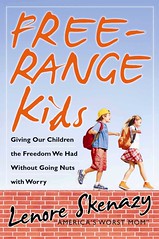 When it comes to theories about how to best raise kids, I’m a big believer in what might be referred to “a resiliency approach” to child-rearing. That is, instead of endlessly coddling our children and hovering over them like “helicopter parents,” as so many parents do today, I believe it makes more sense to instill some core values and common sense principles and then give them some breathing room to live life and learn lessons from it. Yes, that includes making mistakes. And, oh yes, your little darlings might actually gets some bump and bruises along the way — or at least have their egos bruised in the process. But this is how kids learn lessons and become responsible adults and citizens. Wrapping them in bubble wrap and filling their heads without nothing but fear about the outside would will ultimately lead to the opposite: sheltered, immature, irresponsible, and unprepared young adults — many of whom expect someone else (the government, their college, their employer, or still their parents!) to be there to take care of them well into their 20’s or even 30’s. Again, you gotta let kids live a little and learn from their experiences.
This explains why I find Lenore Skenazy’s new book,
Free-Range Kids: Giving Our Children the Freedom We Had Without Going Nuts with Worry
, to be such a breath of fresh air. [Here’s her blog of the same name.] She argues that “if we try to prevent every possible danger of difficult in our child’s everyday life, that child never gets a chance to grow up.” (p. 5) As she told
Salon recently:
You want kids to feel like the world isn’t so dangerous. You want to teach them how to cross the street safely. You want to teach them that you never go off with a stranger. You teach them what to do in an emergency, and then you assume that generally emergencies don’t happen, but they’re prepared if they do. Then, you let them go out.
The fun of childhood is not holding your mom’s hand. The fun of childhood is when you don’t have to hold your mom’s hand, when you’ve done something that you can feel proud of. To take all those possibilities away from our kids seems like saying: “I’m giving you the greatest gift of all, I’m giving you safety. Oh, and by the way I’m taking away your childhood and any sense of self-confidence or pride. I hope you don’t mind.”
Exactly right, in my opinion. Again, let kids live and learn from it. Teach lessons but then encourage ‘learning by doing’ and let them understand these things for themselves. That is resiliency theory in a nutshell.
Continue reading →
The first meeting of the Online Safety Technology Working Group (OSTWG) took place today and I just wanted to provide interested parties with relevant info and links in case they want to keep track of the task force’s work. As I mentioned back in late April, this new task force was established by the “Protecting Children in the 21st Century Act,” (part of the ‘‘Broadband Data Improvement Act’,’ Pub. L. No. 110-385) and it will report to the Assistant Secretary of Commerce for Communications and Information at the U.S. Department of Commerce’s National Telecommunications and Information Administration (NTIA).
I’m happy to be serving on this new working group and I am particularly honored to be serving as the chairman of 1 of the 4 subcommittees. The four subcommittees will address: data retention, child pornography, educational efforts, and parental controls technologies. I am chairing that last subcommittee on parental controls. The task force has about 35 members and we have a year to conduct our research and report back to Congress. Here are some relevant links from the NTIA website that provide additional details about this task force:
Of course, this is certainly not the first task force to explore online safety issues. There was the COPA Commission (2000), the “Thornburgh Commission” report (2002), the U.K. “Byron Commission” report (2008), the Harvard Berkman Center’s Internet Safety Technical Task Force (2008), and the NCTA-iKeepSafe-CommonSenseMedia “Point Smart, Click Safe” working group, which is due to issue its final report shortly. [Full disclosure: I was a member of that last two task forces as well.] I’m currently working on a short paper that attempts to summarize the remarkably similar findings of these important child safety working groups. Generally speaking, they all concluded that education and empowerment, not regulation, were the real keys to moving forward and making our kids safer online.
As Berin mentioned last week, we have a new paper out on proposals to expand the Children’s Online Privacy Protection Act (COPPA) of 1998. We generically refer to those COPPA-expansion efforts as “COPPA 2.0.” Hence, the title of our paper: “COPPA 2.0: The New Battle over Privacy, Age Verification, Online Safety & Free Speech.” To recap what Berin already noted, in the name of improving online child safety, some legislators and state attorneys general (AGs) are advocating the expansion of COPPA’s “verifiable parental consent” model of age verification before certain sites or services may collect, or enable the sharing of, personal information for children.
Unlike “COPPA 1.0,” however, which only applied to children under the age of 13, “COPPA 2.0” would apply to all minors up to age 17. Moreover, the range of sites covered by the new law would generally be expanded to include just about any site or service with social networking functionality.
Since Berin has already summarized our general concerns with efforts to expand COPPA’s “verifiable parental consent” online age verification system to cover more online users and sites, I thought I would focus here on what I believe will be the most controversial (and important) part of our paper — our discussion about how COPPA 2.0 affects the speech rights of both adults
and adolescents.
Continue reading →
As faithful readers no doubt know, I’m a big fan of Section 230 and believe it has been the foundation of a great many of the online freedoms we enjoy (dare I say, take for granted?) today. That’s why I’m increasingly concerned about some of the emerging thinking and case law I am seeing on this front, which takes a decidedly anti-230 tone.
Consider, for example, how some might weaken Sec. 230 in the name of “child safety.” You will recall the friendly debate about the future of Sec. 230 that I engaged in with Harvard’s John Palfrey. Prof. Palfrey has argued that: “The scope of the immunity the CDA provides for online service providers is too broad” and that the law “should not preclude parents from bringing a claim of negligence against [a social networking site] for failing to protect the safety of its users.” Similarly, Andrew LaVallee of The Wall Street Journal reported from a conference this week that Sec. 230 became everyone’s favorite whipping boy, with several participants suggesting that the law needs to be re-opened and altered to somehow solve online “cyber-bullying” problems.
Continue reading →

 The Technology Liberation Front is the tech policy blog dedicated to keeping politicians' hands off the 'net and everything else related to technology.